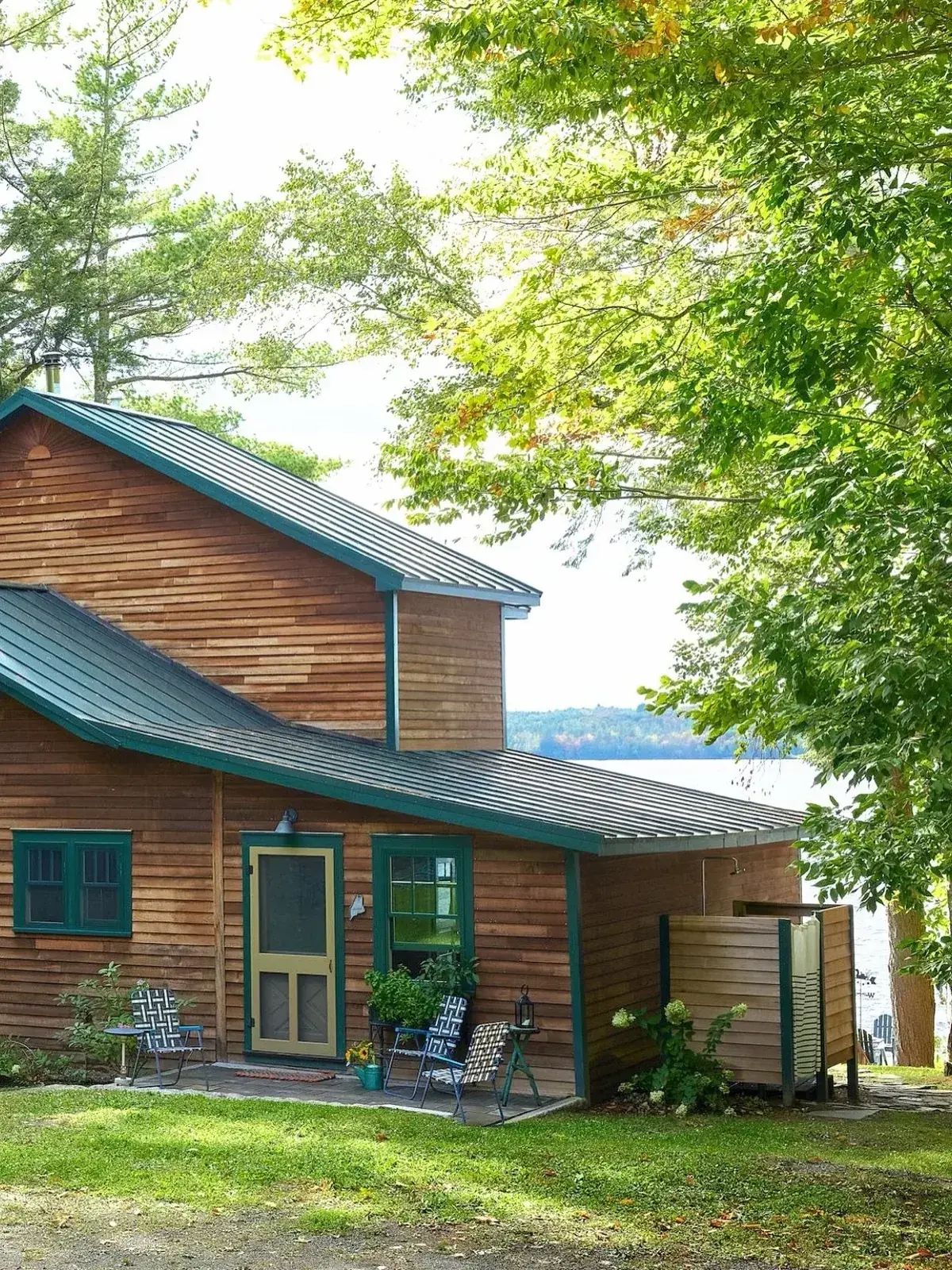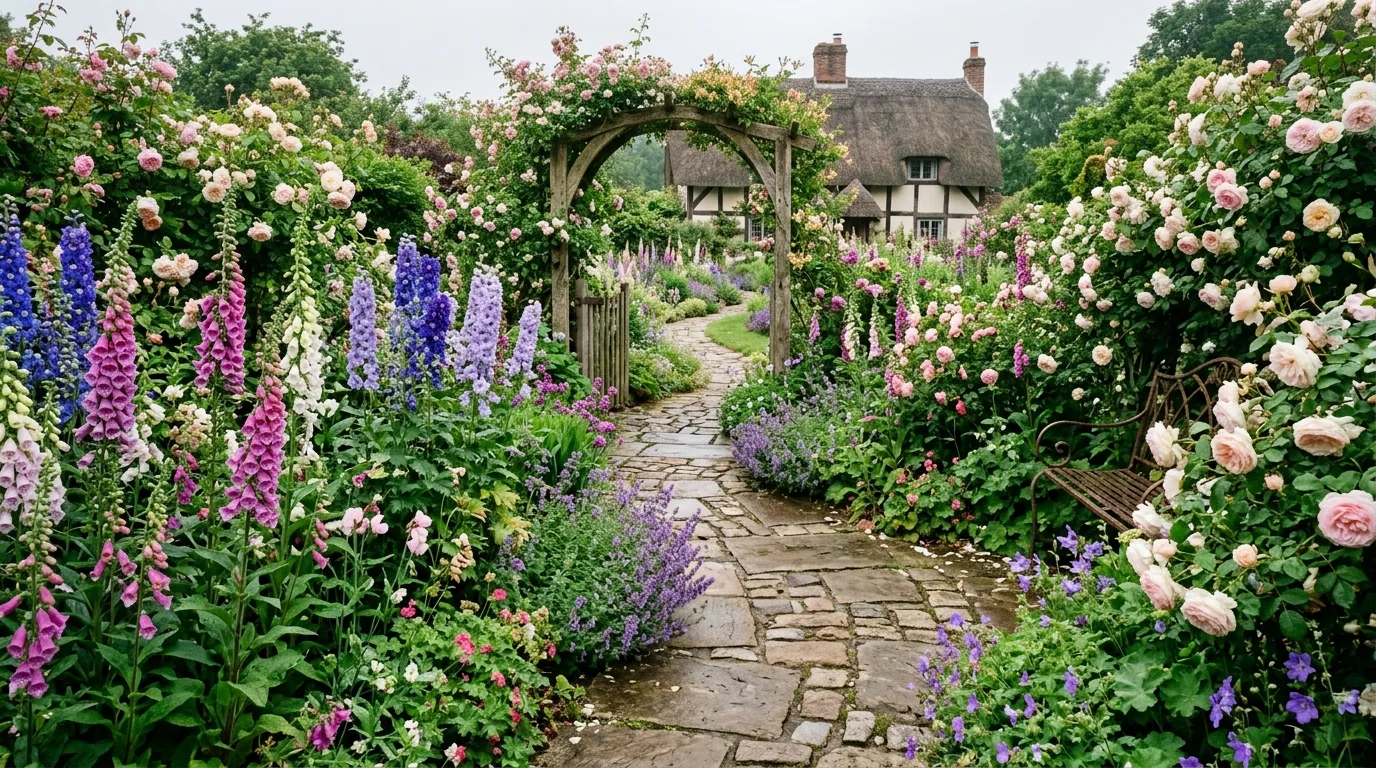
15 Coastal Lake House Shingle Exteriors Built for the Water Side First

Add us as a preferred source to see more stories on Google.
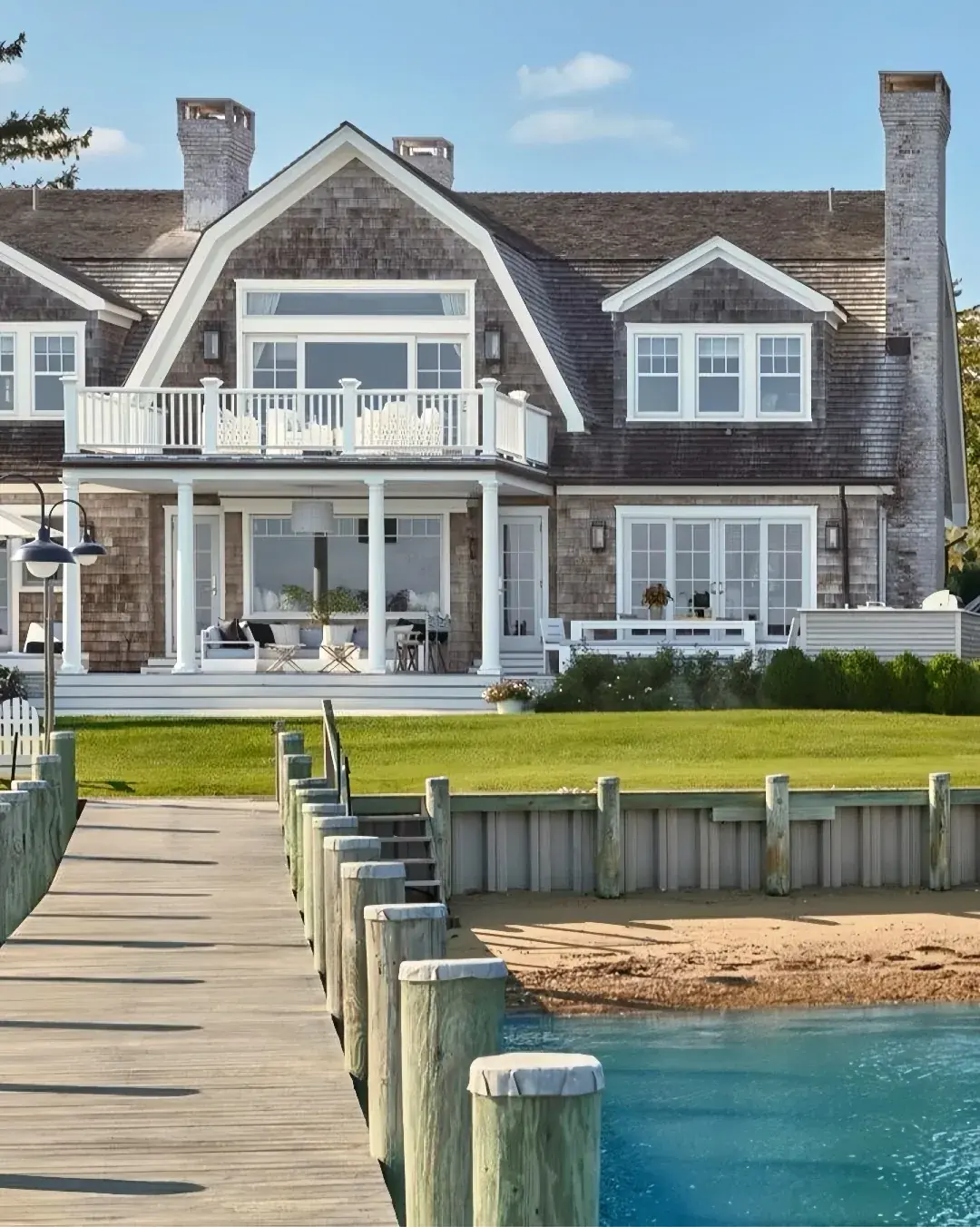
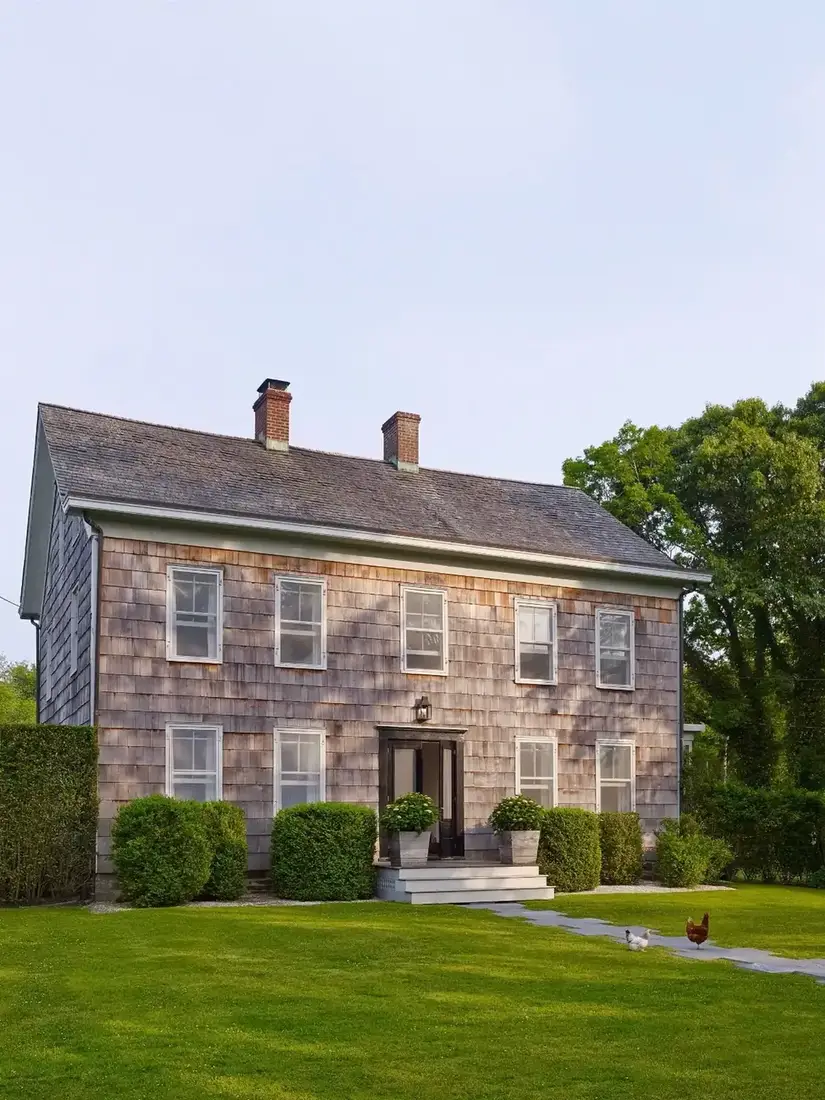
Look at the house below from the dock, because that is the elevation that decides everything.
The street side dries in hours. The water side holds damp for days after the same rain, silvers in patches, greens first along the shaded courses.
So detail for the wet wall and the dry one takes care of itself. That order runs through all fifteen houses here.
Start with the wet elevation
The irreversible decision comes before the first course goes on: whether the wall can dry from both faces. A ventilated gap behind the shingle, battens holding courses off the sheathing with air entering at the bottom and leaving at the top, roughly doubles wall life against direct fixing. It costs little at first fix stage and saves you a full strip out later. It cannot be retrofitted without stripping the wall, so it belongs on the drawings and not in a later snag list.
Fix the water path second. Roof water must never wash shingle that already dries slowly, which means gutters on every slope draining toward cladding with downspouts carried to daylight or a drain. A wall that takes eaves runoff greens in stripes exactly one storey below the eaves within two seasons. That green is not a cleaning problem. It is a plumbing problem wearing algae.
Then choose the finish for the blotchy middle years. Sunlit faces silver first, sheltered faces follow, and the field looks patchy for a season or longer. A semi-transparent stain in weathered grey evens that stage. Sealers promising permanent honey trap moisture on the damp side and peel there first, which leaves a two tone house plus a scraping job nobody priced.
| Detail | Sheltered rule | Water side rule |
|---|---|---|
| Shingle exposure, 450mm cedar | 190mm | 165mm |
| Shingle to ground clearance | 150mm minimum | 150mm plus gravel band |
| Planting setback from wall | 300mm | 450mm |
| Nail spec | Stainless 304 ring shank | Stainless 316 ring shank |
Fixings and flashings before colour
Salt and lake spray find metal before timber. Hot dip galvanised nails lose their zinc coat within a few years near breaking water, then bleed brown streaks from every head. Those streaks sit in the grain. No wash lifts them, and the cure is refixing one wall at a time at scaffold prices.
Specify stainless ring shanks in 32mm and 38mm lengths for cedar, grade 316 within sight of water, 304 further inland. Simpson Strong-Tie and Maze Nails list both grades, while Owlett-Jaton and Tacwise stock the common lengths in the UK. Budget about 4kg of nails per 100 square metres of wall at standard exposure. Against £90 to £160 per square metre to re-shingle in 2026, the extra £200 or so that 316 adds across a whole house barely registers.
Flash every head that faces the lake: window heads, door heads, deck ledgers, porch roof junctions. Lap metal so each layer sheds onto the one below and leave the bottom edge open for drainage. Sealed shut joints trap the water they were meant to stop, and rot shows behind perfect trim about two years later. Open lapped metal looks fussy during the build. It stays dry for decades after.
| Fixing | Suits | Rough cost per kg in 2026 |
|---|---|---|
| Hot dip galvanised ring shank | Inland only | £6 to £9 |
| Stainless 304 ring shank | Moderate exposure | £18 to £25 |
| Stainless 316 ring shank | Marine and lake spray zones | £28 to £40 |
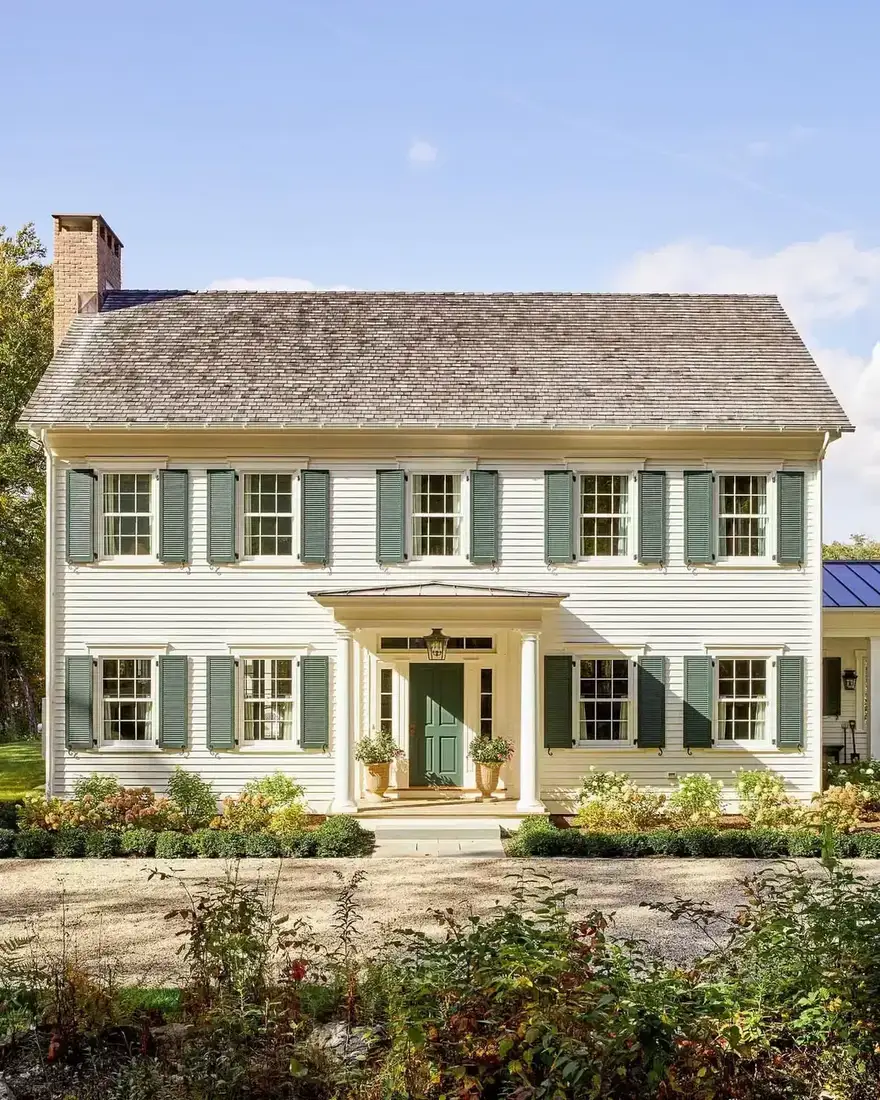
Colonial shingle with room to breathe
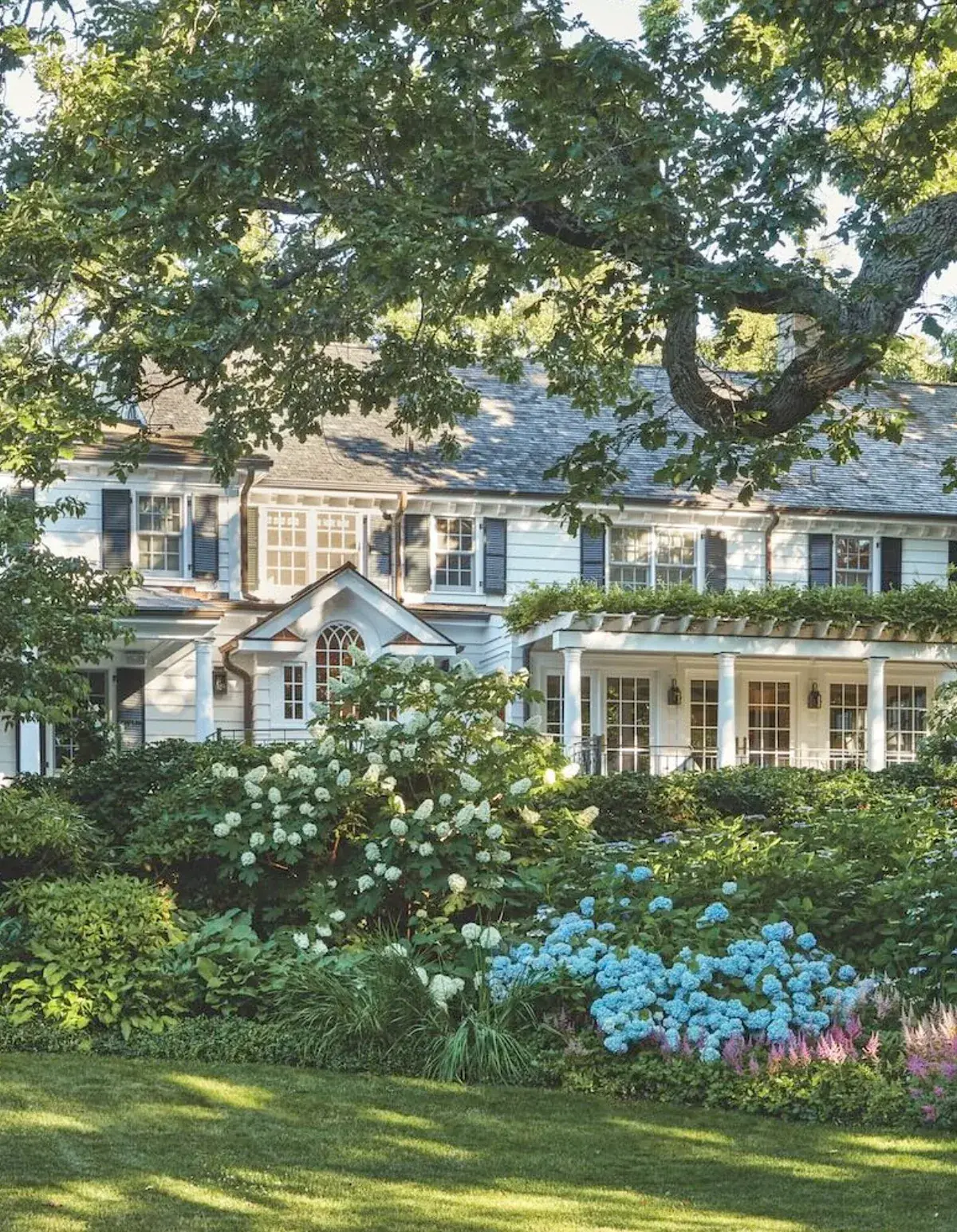
In this photo the hydrangeas mass beside the wall instead of against it, and that gap is doing structural work. Dense shrubs trap humid air, block morning sun, and hold each rain an extra day. Algae colonises that still air first, usually on the north and east courses. The cure costs nothing: pull beds back so you can walk behind every shrub with shoulders square, and keep mulch below the lowest course.
Look at the wall above the planting. Even silver with slight variation between shingles reads as bare cedar left to weather, most likely three to five seasons old on this aspect. A grey stain from a tin coats every shingle identically and reads flat by comparison. Weather leaves each piece a touch different, which is why this field looks alive. For a close colour match in paint terms, Farrow & Ball Pointing No.2003 on trim with Benjamin Moore White Dove OC-17 as an alternative gives the same chalky calm beside silver.
The one detail to copy is the shadow line at the base. Soil sits low, the bottom course shows clear, air moves. Where beds creep up each spring with fresh mulch, that line disappears and the lowest two courses darken within one winter. Sweep the edge each spring and the wall keeps drying.
Festoon lights over a lawn that drains
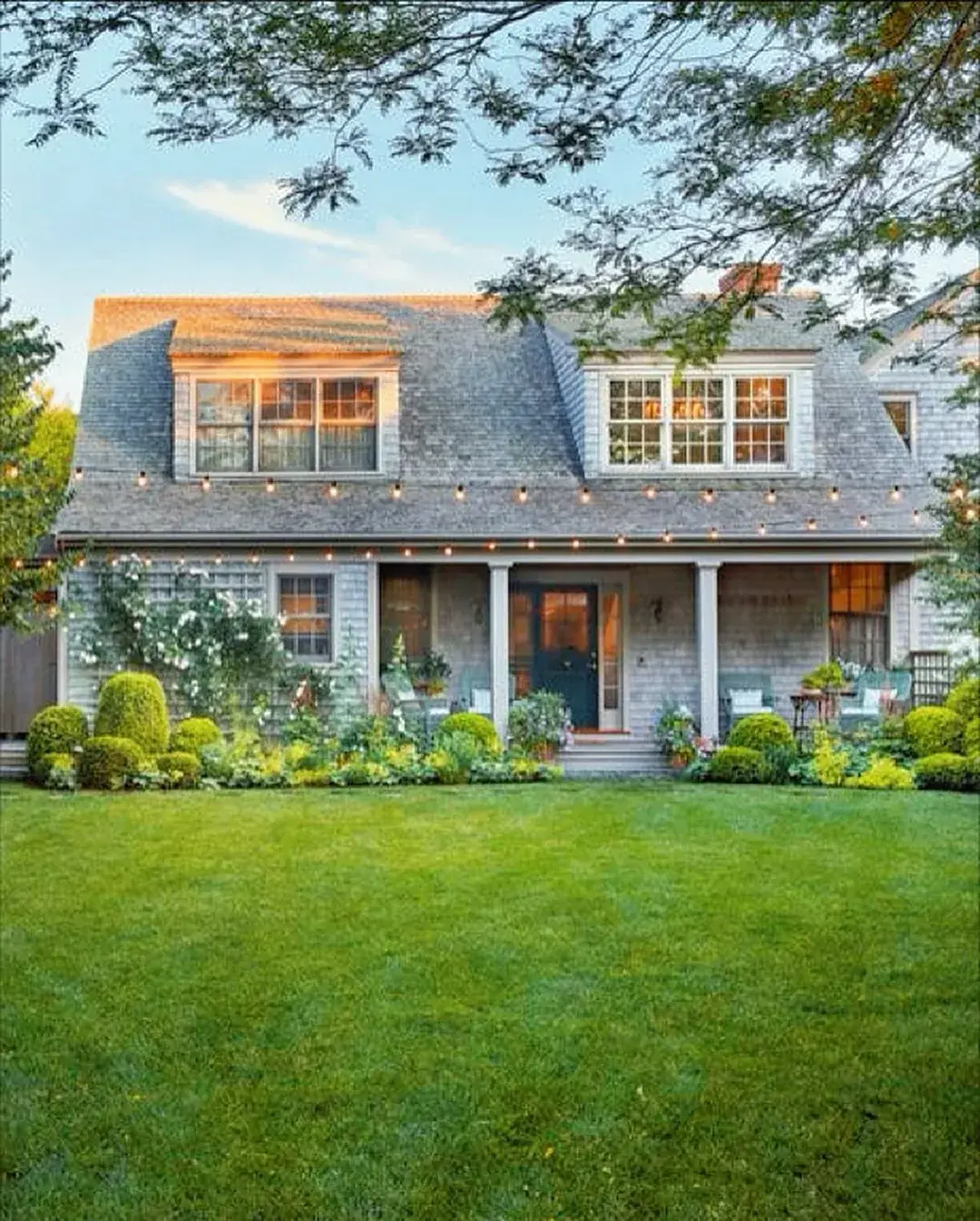
Notice how the lawn runs plain to the cottage with no bed piled to the courses. Turf against shingle still splashes, but it splashes less than bare soil and it never wicks like bark. The lawn here is the splash control, and the catenary lights above do the evening work without a single fixing through the shingle field. That matters more than it looks: every screw through cedar wants the same stainless grade as the nails, since one galvanised screw bleeds brown down a stainless wall.
See the tone of the wall in the dusk light. Mid brown with grey at the butts suggests young cedar partway through its colour run, honey pink first, then orange brown, then tan, then silver between the third and fifth season where sun strikes full on. Do not force the timetable with a sealer. Let sun and rain pull extractives down the wall and accept the stripes for a season. A soft brush with plain water lifts early green where you spot it on the shaded corner. A pressure washer furs the surface and the next algae crop grips faster, so keep the machine for the path.
Festoon cable wants its own posts or gable brackets, never nail holes through courses. Warm 2700K lamps suit the timber; 4000K lamps turn it chalky after dark.
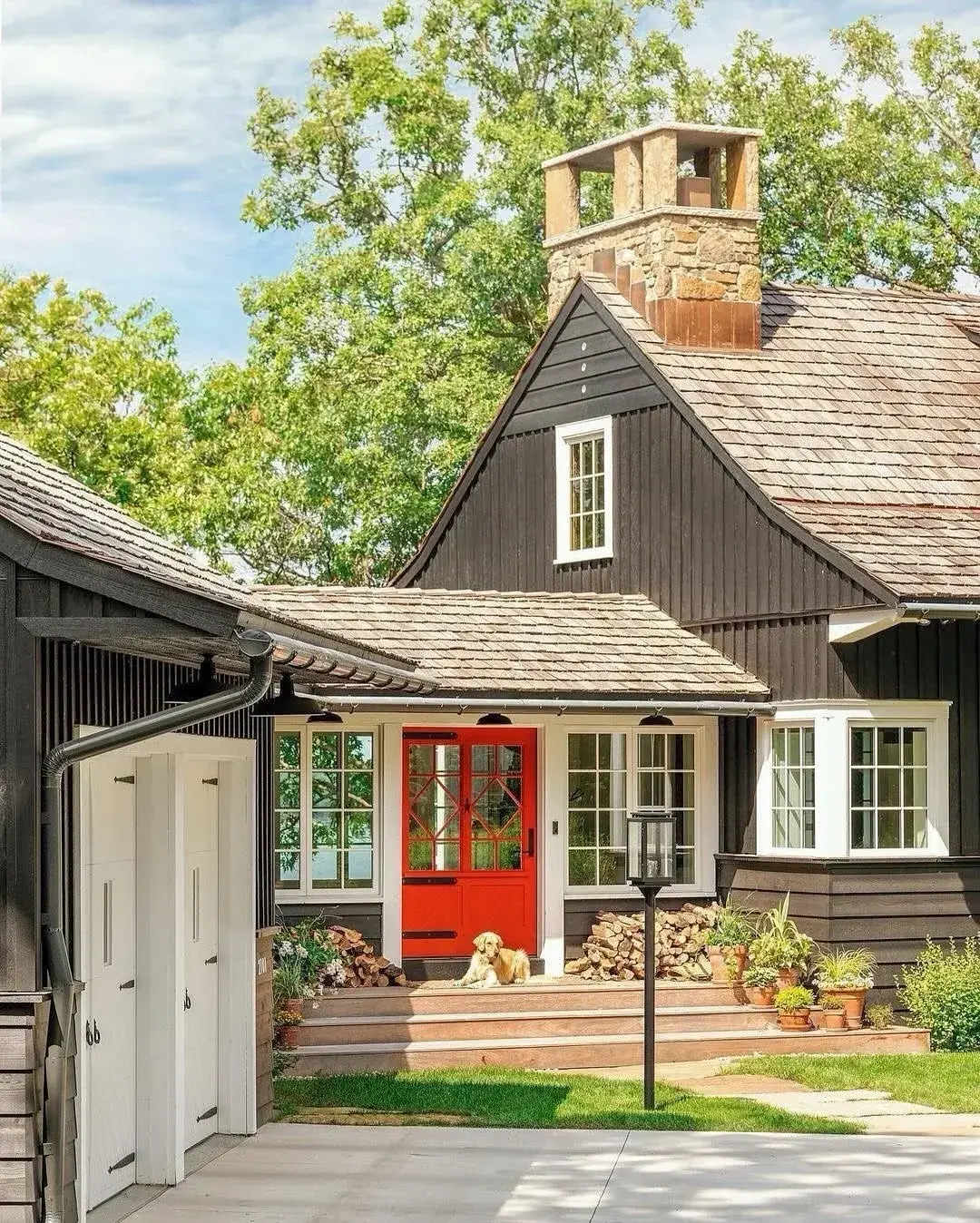
Stone below, cedar above, one green door
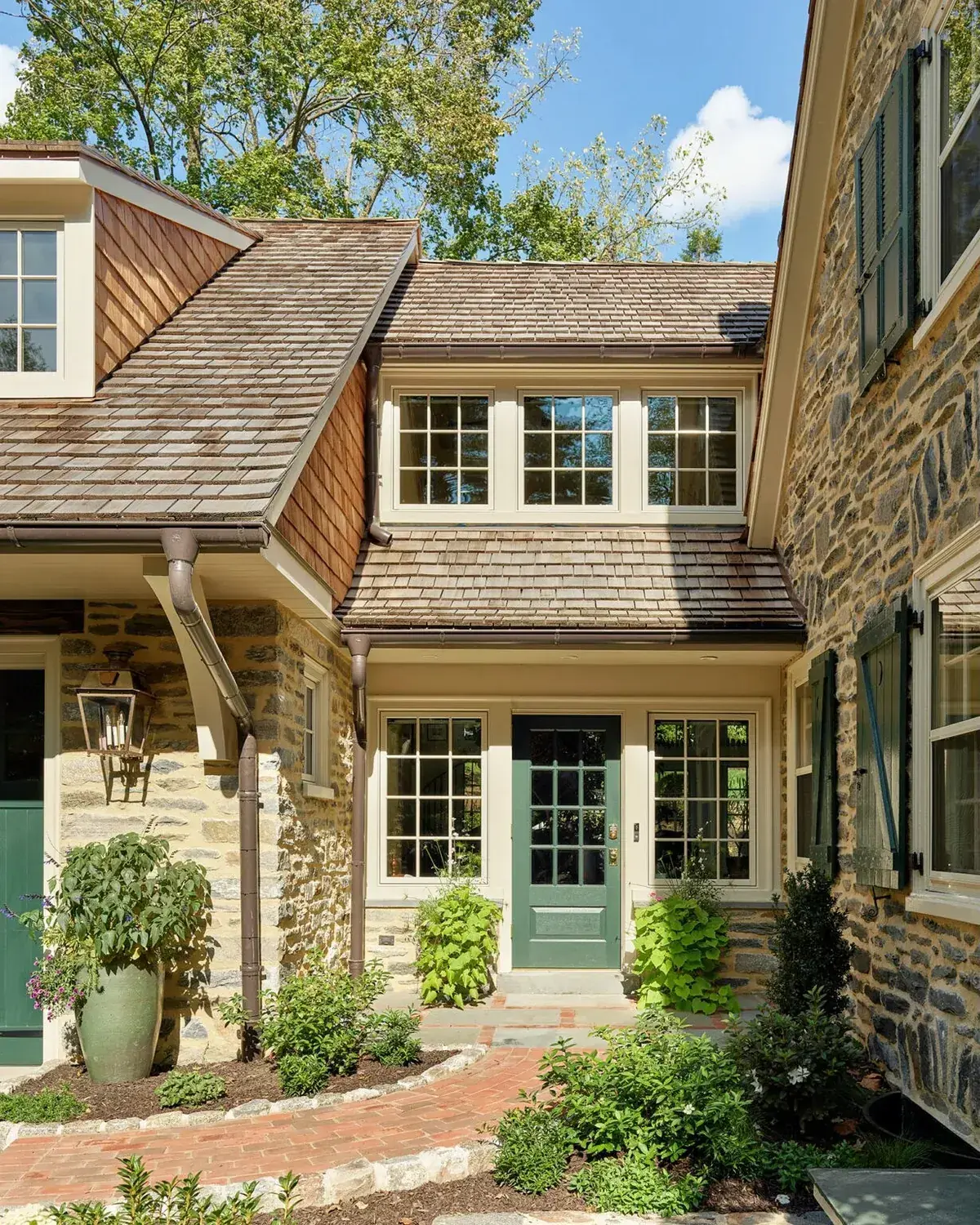
This cottage stacks materials the honest way: stone where the building meets ground spray, lighter shingle above. Salt spray with driven rain hits the lower wall hardest, and stone does not mind. Shingle at grade in an exposed position deteriorates faster than the same shingle two storeys up, so the stone plinth is doing years of quiet work.
The door colour carries the whole front. Deep green echoes pines with lake water without competing against silver, and one confident door beats scattered colour every time. A near match sits in Farrow & Ball Green Smoke No.47 or Little Greene Dock Blue 252 for a bluer take, with exterior eggshell at £70 to £90 for 2.5 litres in 2026 through premium ranges. Keep remaining trim in a single warm white so the door stands alone. Matching shutters with matching planters plus a matching bench turns one good decision into clutter.
Check the junction where stone meets shingle. A generous drip throws water clear of the masonry below. Where that detail is missing, splash rebounds onto the lowest timber courses and they cup within three winters. The fix at build stage is a double starter course with an open drip. The fix later is a scaffold.
An arched timber door with flashing that matters
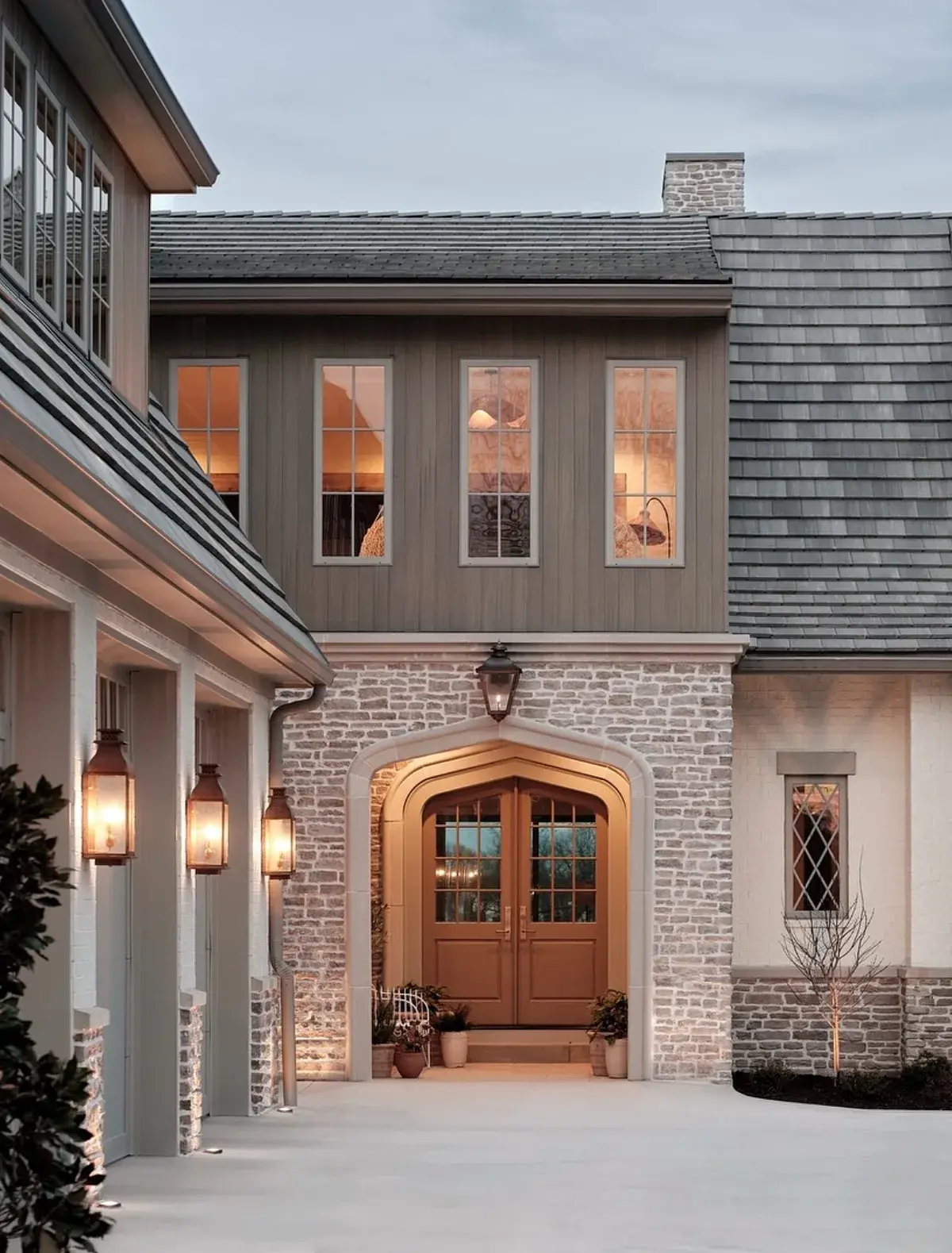
The arch is the thing most viewers remember, yet the head above it is the thing that keeps the wall sound. Curved openings shed water unevenly, dumping runoff at the springing points on each side. Without a proper head flashing lapped into the courses above, those two points stay damp and the shingle beside the arch darkens first. Caulk alone at that joint fails within a few freeze thaw cycles. Metal behind the trim does the lasting work.
Look at the timber tone of the door against the field. Oiled oak or cedar joinery with a penetrating finish suits a stone and shingle house, finished with Osmo or an equivalent exterior oil around £30 to £55 for a litre in 2026. Film forming varnish on an entrance that faces weather peels in sheets by year three and then demands a full strip. Oil fades instead of peeling, which means a wash with a fresh coat and no drama.
Keep the step clear of soil and keep the threshold swept. Leaves pinned against the door sill hold damp to the jamb, and the bottom of the frame softens before the wall shows anything. One minute with a brush after leaf fall beats a joiner callout.
Vines on a pergola, not on the shingle
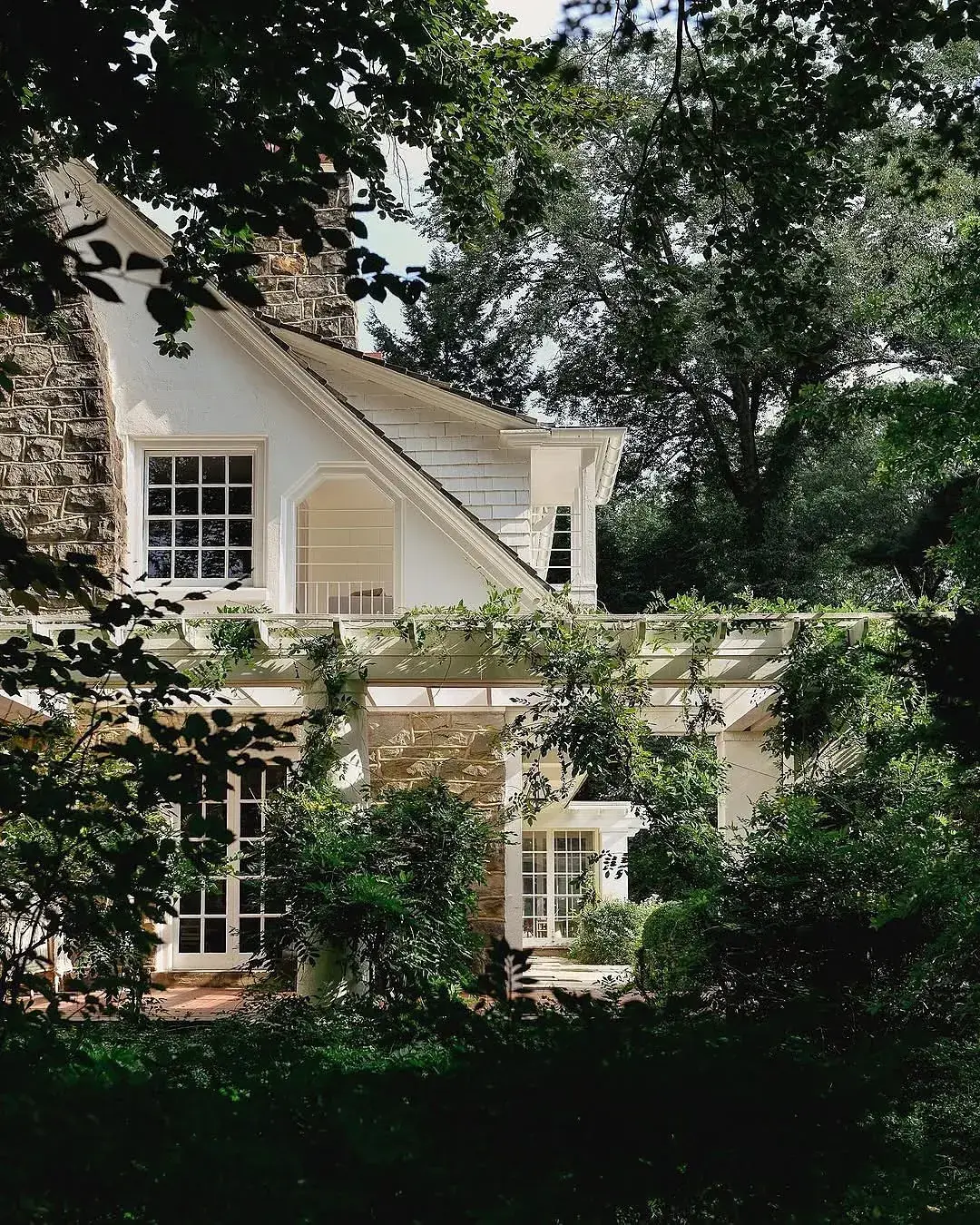
In this photo the greenery climbs a standalone pergola frame while the shingle behind stays in air. That separation is the whole lesson. Ivy or wisteria planted straight to cedar holds damp to every course it touches, shades the wall from its daily drying hour, and roots work into butt joints. Pull it back so a hand passes between leaf and wall, and the wall dries.
The pergola itself wants the right metal. Post bases, bolts, and brackets within splash range should match the wall fixings in stainless, since runoff from galvanised brackets streaks shingle below within two seasons. Through bolts with 50mm washers spread load without crushing soft cedar. Timber posts want a 100mm concrete upstand or a stainless foot so end grain never sits in wet soil. End grain in soil wicks all winter and the post base blackens by year four.
Notice how the vine shades the pergola bay while the wall beside it keeps sun. Shade the sitting place all day long; give the wall its drying hour. That split keeps both the lunch spot and the cladding sound.
A timber frame that throws roof water clear
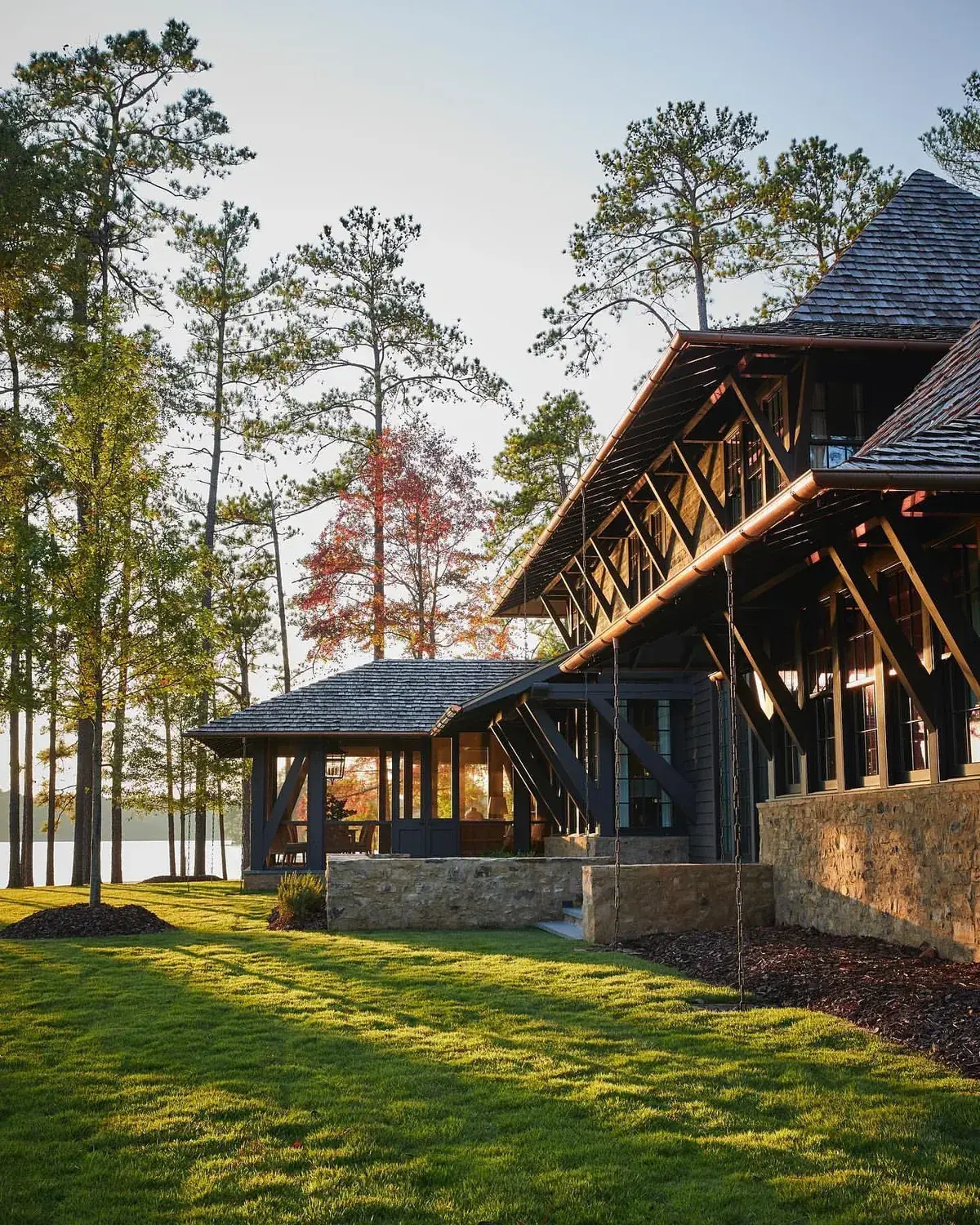
The pavilion roof in this photo shows what generous eaves do for timber walls. Deep overhangs throw rain clear of the courses below, which matters most on the elevation that already dries last. A roof without gutters above shingle dumps a waterfall onto the slowest drying band of the house, and stain streaks in vertical stripes exactly one storey down. A gutter on any roof plane shedding toward the cladding costs far less than residing that band.
Size the section for the storm, not the brochure. Half round aluminium or painted steel at 125mm with 75mm downspouts suits most lake houses, carried to daylight or a soakaway at least 3m from foundations. Where gutters offend, fit a 25mm deep drip edge with a 600mm gravel bed below to break the fall. Either way roof water should never wash the wall. Check the pavilion posts too: feet held on plates above paving outlast feet buried in soil by a decade.
The frame stain reads as a mid brown semi-transparent, a sensible pick for oak or larch that will take sun. Solid film stains on horizontal timbers crack at the grain by year five; penetrating transiuscent finishes fade and recoat without stripping.
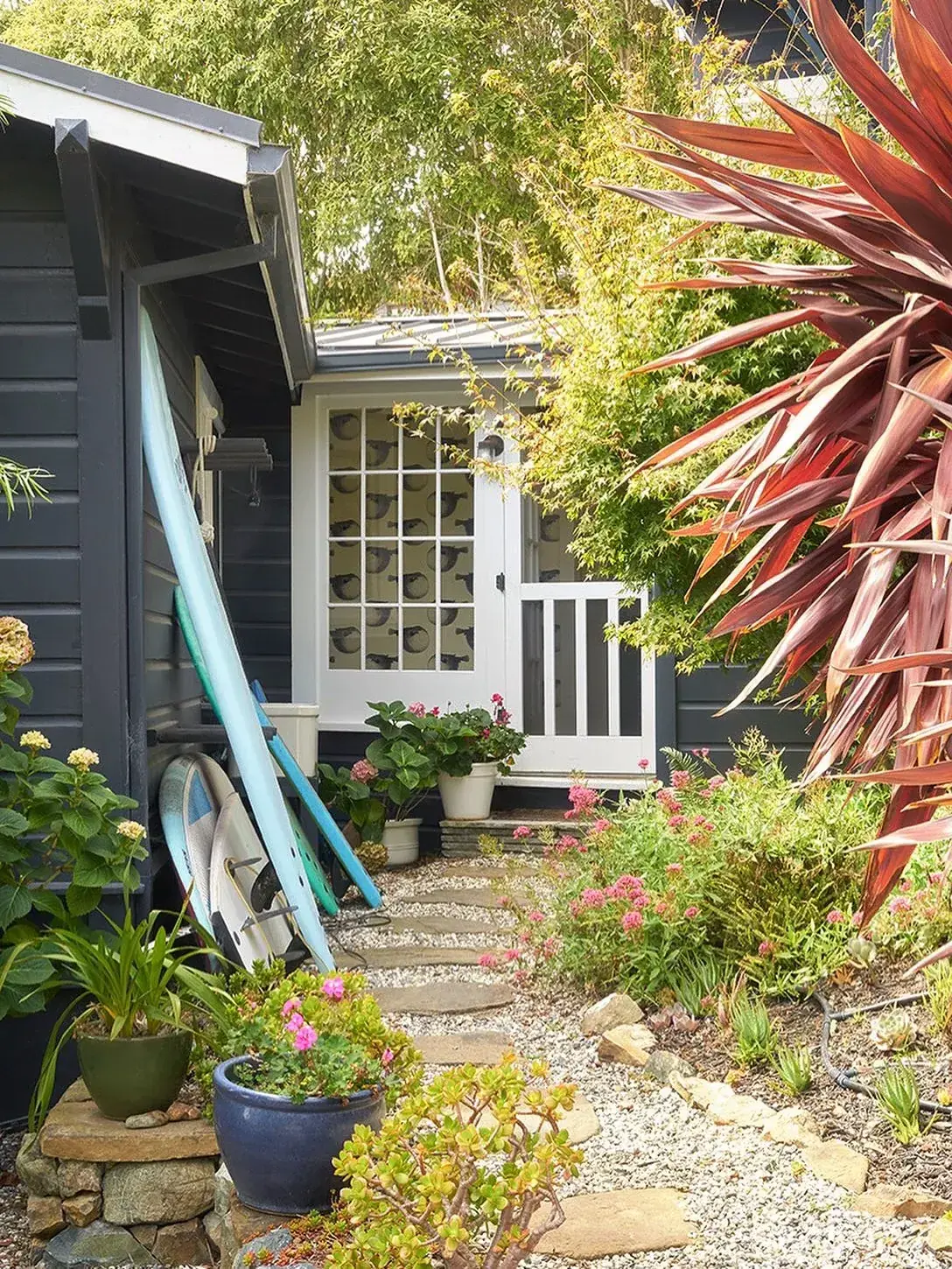
A weathered cape with honest silver
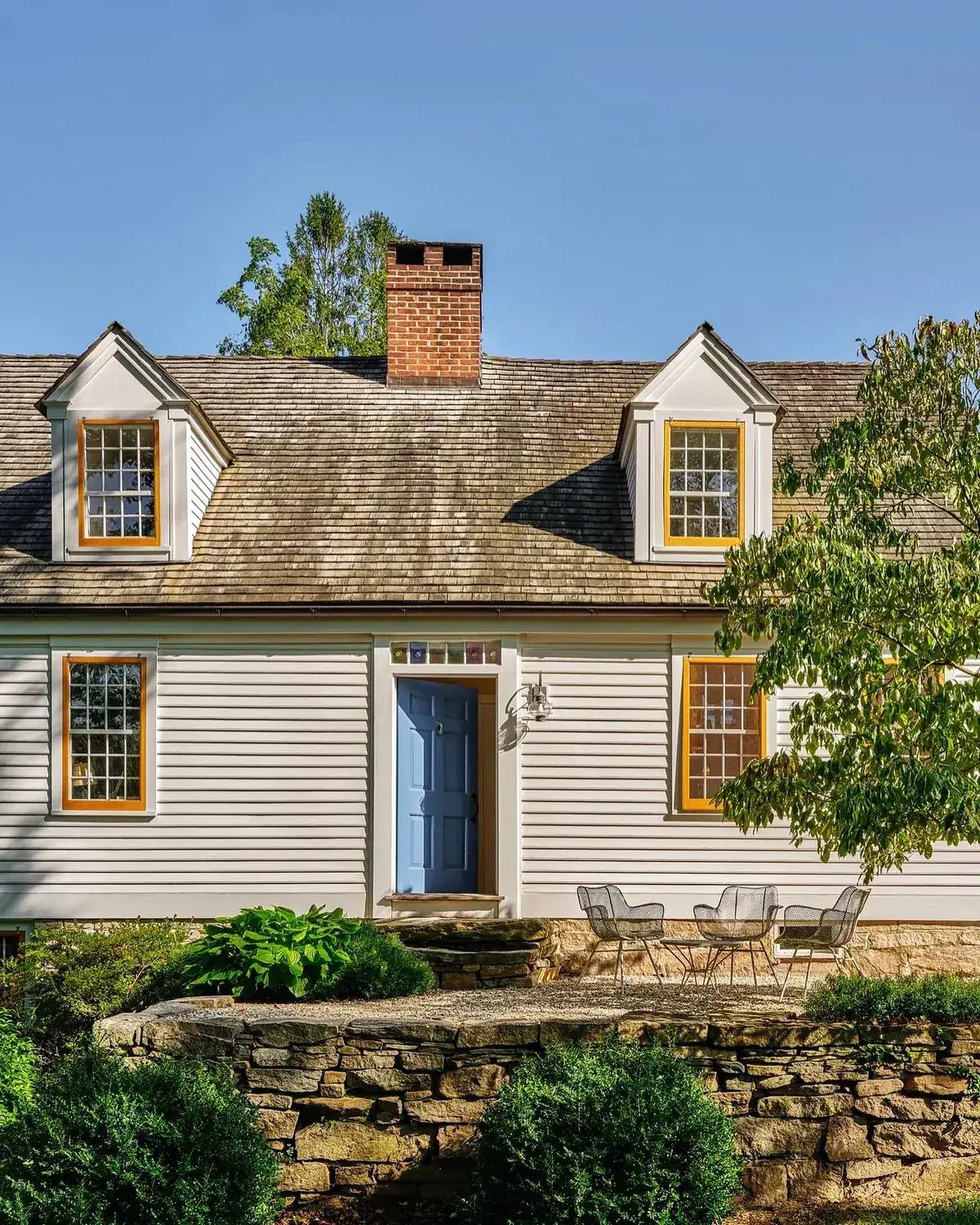
That wall is the target: even silver grey with grain showing, no coating sitting on the face. Bare western red cedar reaches this tone in two to five years on sunny faces, longer on shaded ones, and coastal air speeds the run. The blue door beside it works because it is the only strong colour after white trim. Little Greene Dock Blue 252 or Farrow & Ball Stiffkey Blue No.281 get close, with 2.5 litres of exterior eggshell around £65 to £90 in 2026.
Check for rust tears under every nail head when you walk the elevation each spring. None show here, which points to stainless fixings doing quiet work. Ordinary steel near water bleeds orange within one to two seasons, and each streak means a head losing section. By the time the streak reaches 100mm long, the shingle above it moves in wind. Refusing substitutes at siding stage is the cheapest structural insurance on the house.
The one thing to copy is restraint at the base. Grade sits low, the bottom course shows its shadow, planting stays forward. That 150mm of air with mulch held below it is doing more for wall life than any tin of treatment.
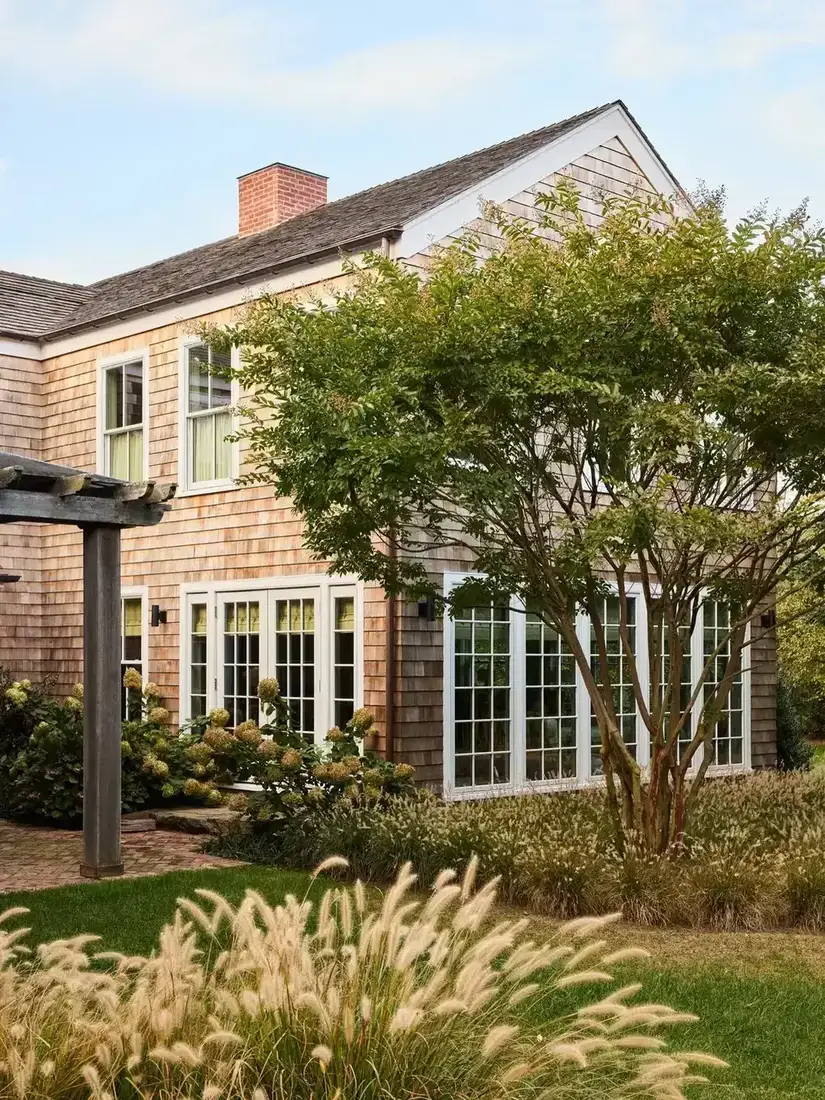
Crepe myrtle against patchy silver
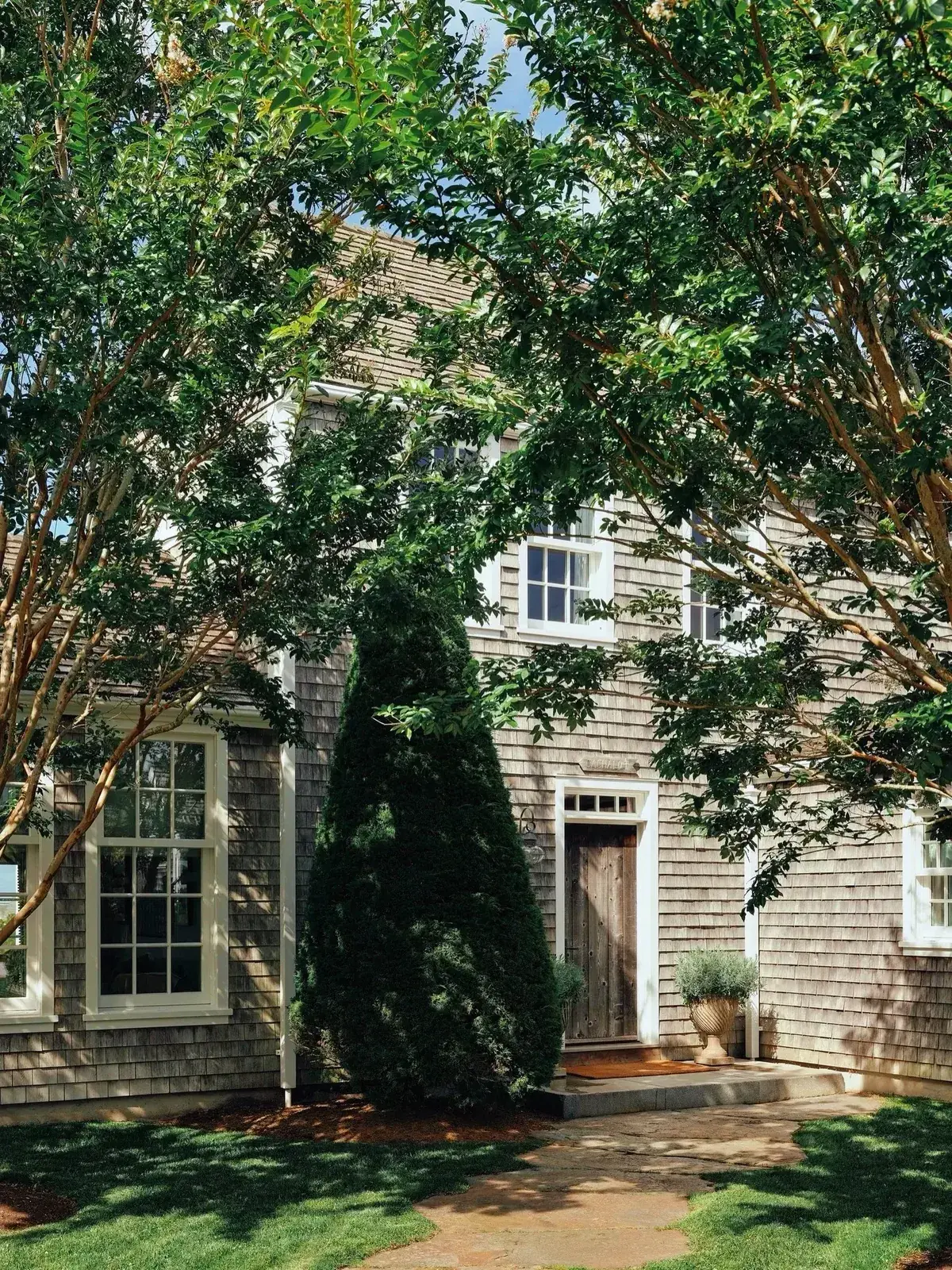
The crepe myrtle blooms pink against a wall still travelling toward silver, tan courses beside grey ones. That patchiness is normal in year two or three, since sunlit planes lighten before sheltered ones and thick butts lag thin tips. The mistake is reaching for an opaque stain to force a match. Opaque film makes both walls the same flat tone for one season, then weathers differently underneath and asks for a recoat every five to eight years at £1,500 to £3,000 for the weather elevations of a small cottage in 2026.
A semi-transparent weathered grey, such as Benjamin Moore Arborcoat in a silver tone or Sadolin Superdec in a muted grey, evens the field without hiding grain. Two coats on bare dry timber after a soft brush down, applied when no rain threatens for 48 hours. The shaded side still catches up on its own schedule underneath. The result reads as one calm colour years sooner, and later silver arrives without a stripping job.
Keep the shrub pruned so no branch touches the courses you just evened. Constant rubbing polishes stain off the butts in one summer and leaves pale scars.
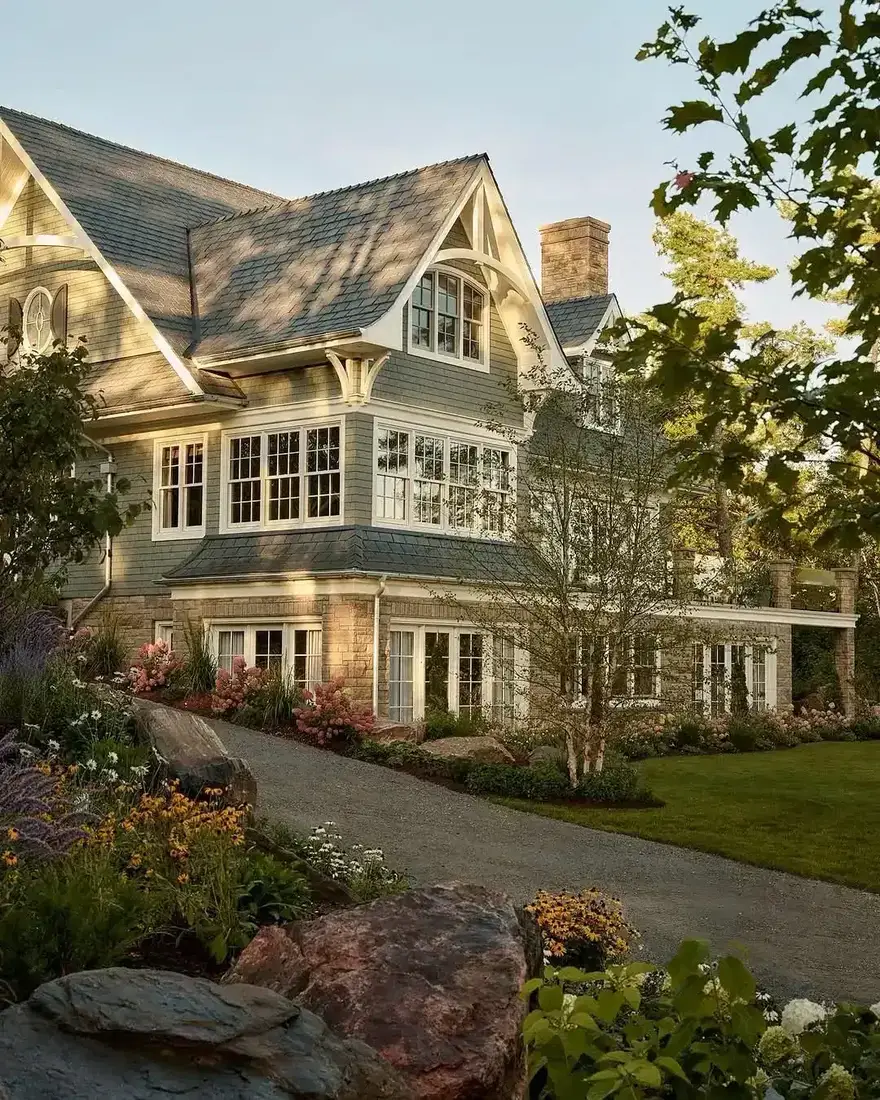
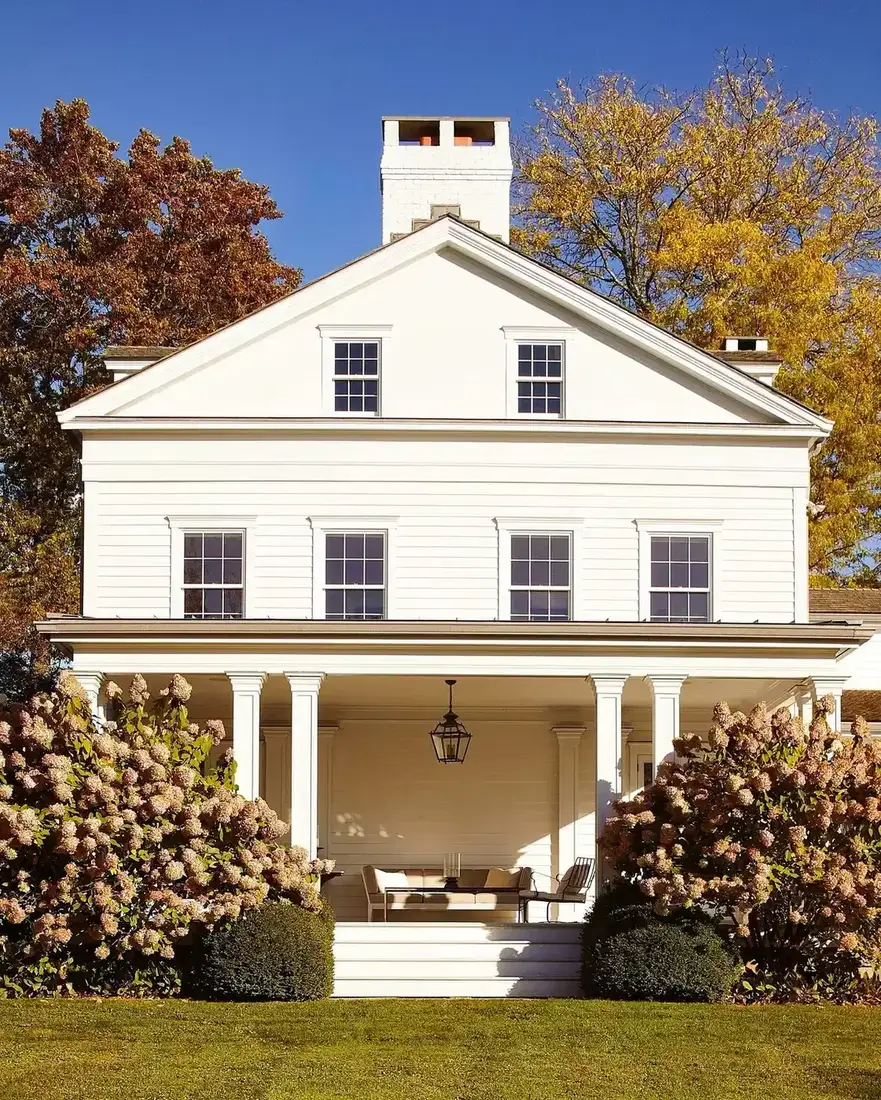
A white gable that steadies the roof
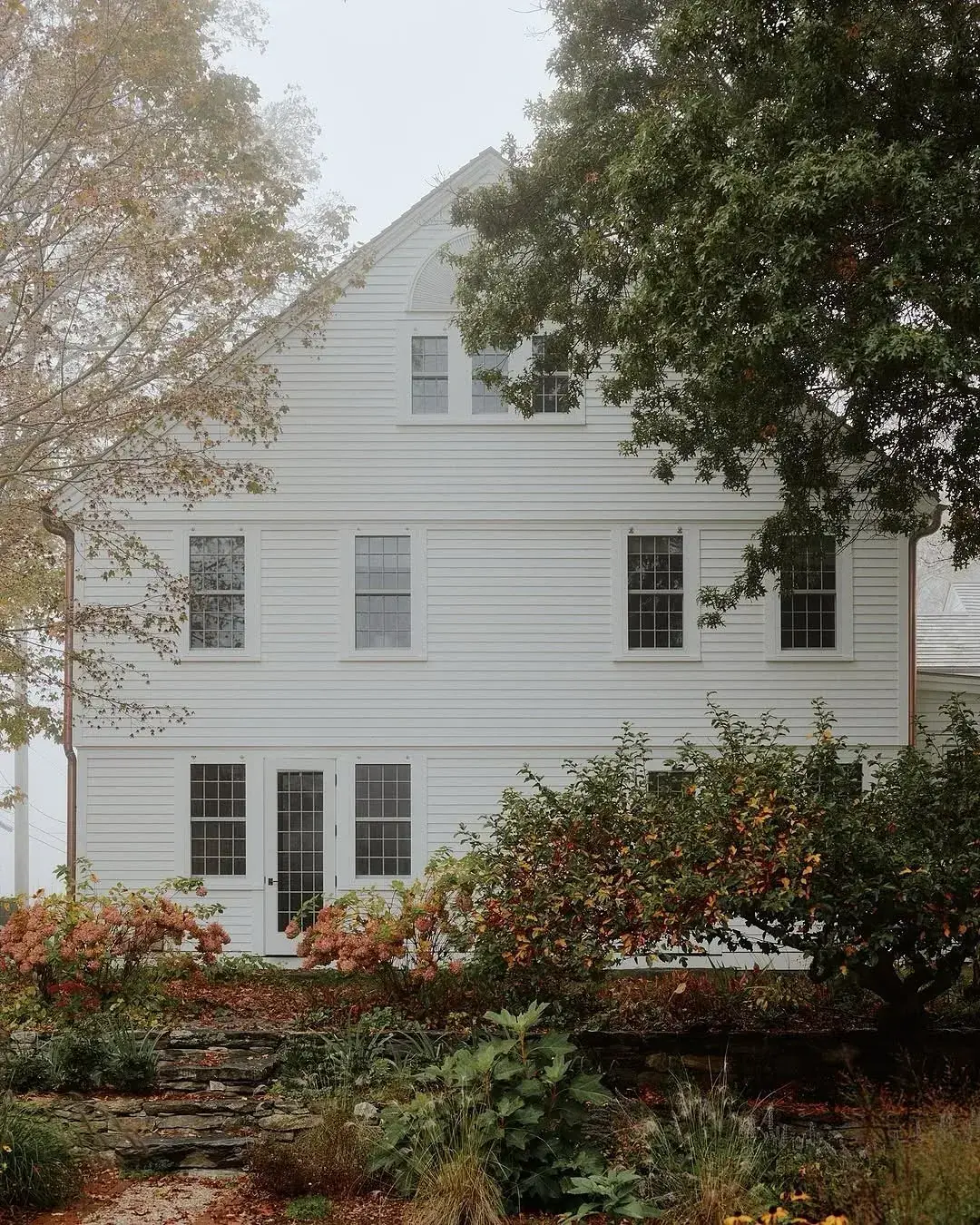
The white gable here does the drawing while the shingle roof does the weathering, and the pairing is calmer than shingle everywhere. White painted clapboard in shade reads cooler than the same paint in sun, so judge the white on the water side in morning light. A slightly warm white with cream in it, such as Benjamin Moore White Dove OC-17 or Farrow & Ball Pointing No.2003, stays calm in both aspects. A blue white glares against silver after dusk.
The beds below the wall show the next detail to copy. Edging holds soil back from the cladding line with room to walk the edge, which keeps splashback off the lowest boards. Bare soil rebounds rain onto timber; a 600mm gravel margin with fieldstone edging drains instead. Top up mulch in spring and recheck the gap, because beds creep upward each year and bury the clearance quietly.
The shingle roof above silvers faster than a wall on the same house, since the weather slope catches sun and rain at once. Keep the eaves clear of leaf fall and keep festoon clips on standoffs. Nails through butts for lights become 50 small leaks by year six.
Screening without darkening the gable
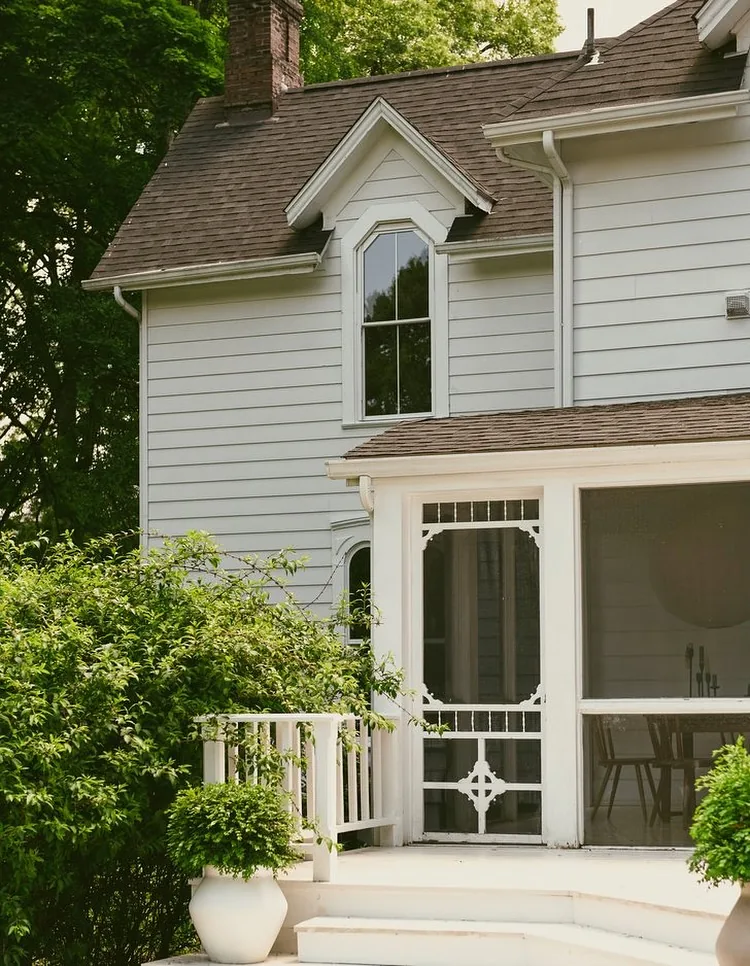
The screened porch sits under the gable with floor to near ceiling mesh and a mid rail, which reads calmer than fussy divided panels and disappears so the view stays whole. Screens add real living months on water where midges own the dusk, but they also slow air across the wall behind them. That wall needs its ventilation gap more than any other, since the screen bay dries last of all.
Frame the opening simply in painted softwood or Accoya, primed on all six faces before fixing, since end grain left raw at a screen bay wicks within one winter. Mesh in charcoal fibreglass reads clearer than bright aluminium and costs £8 to £15 per square metre in 2026. A ceiling fan moves humid evening air better than any gadget; fit the fan before you consider heaters. The fan wants a braced ceiling rose and a 25mm conduit run decided before linings close.
That gable shingle above the screen head takes the weather the porch roof sheds. Flash the junction with an open kick out flashing so water leaves the wall instead of running behind the screen frame. Sealed render or caulk at that kick out fails first, and the rot sits inside the frame head where nobody looks for three years.
Shakes on the gable, boards below
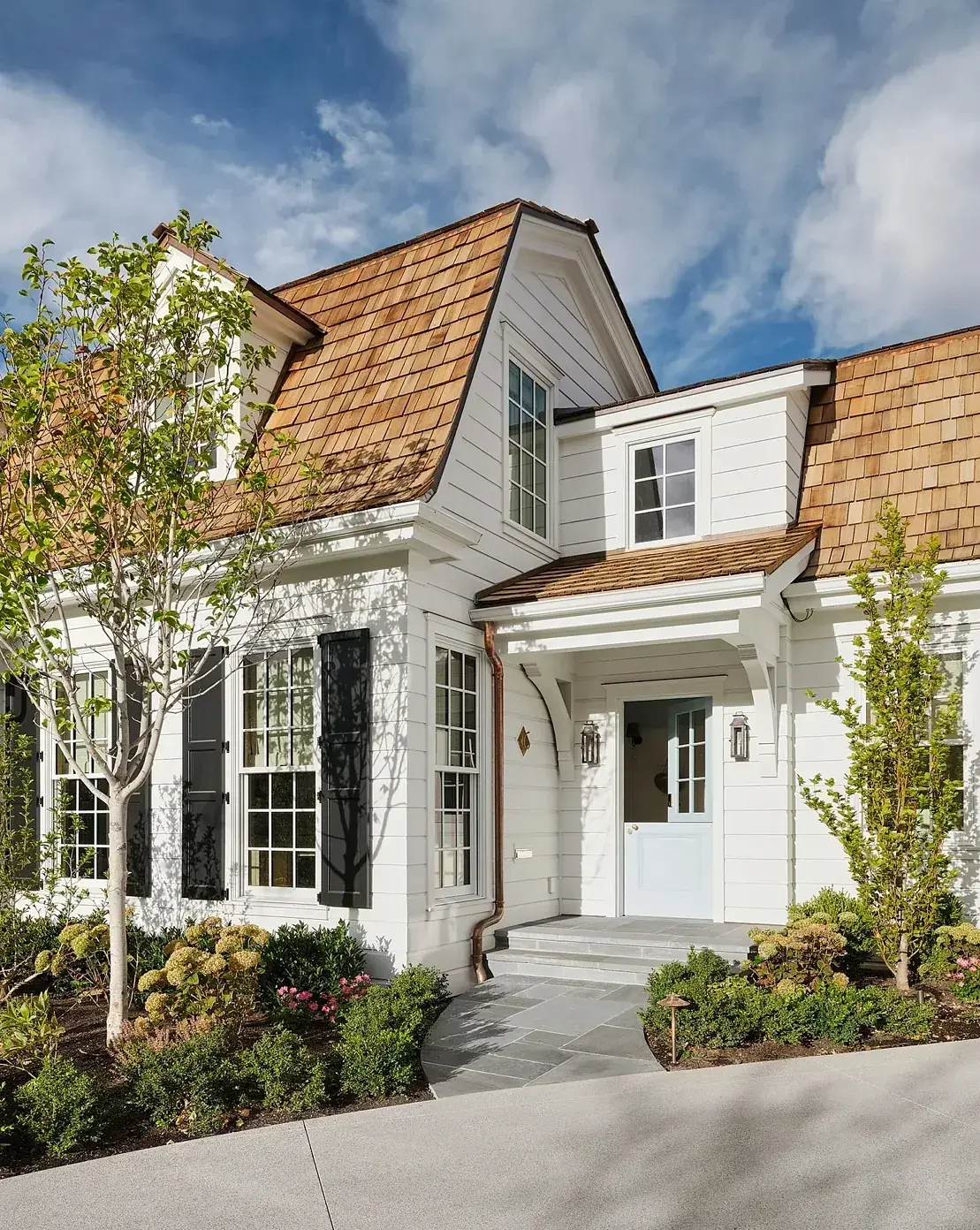
The gable here wears thick shakes while the walls below wear smooth boarding, and the two age on different clocks. Shakes are split, not sawn, so they run thicker and rougher than shingles, hold water longer after rain, and keep their brown years longer. Expect the boarded walls to settle to an even tone while the gable still reads tan. That lag is normal and the cure is patience, since grey stain on shakes hides the very texture that justified their price.
Fix shakes with a ventilated gap as standard, never tight to sheathing. Backs that cannot dry rot out of sight, showing as cupped edges that curl away from the wall by year six or seven. Exposure wants 165mm on a 450mm shake in coastal positions instead of the sheltered 190mm, about 15 per cent more material with labour to match. Get the figure in millimetres in writing before comparing quotes, since a cheap price often means stretched exposure.
The dormer cheeks take the worst of wind driven rain on this elevation. Flash them like a chimney: step flashing lapped into courses with a counter flashing over, never a bead of sealant and a hope.
A shake roof doing the same silver run
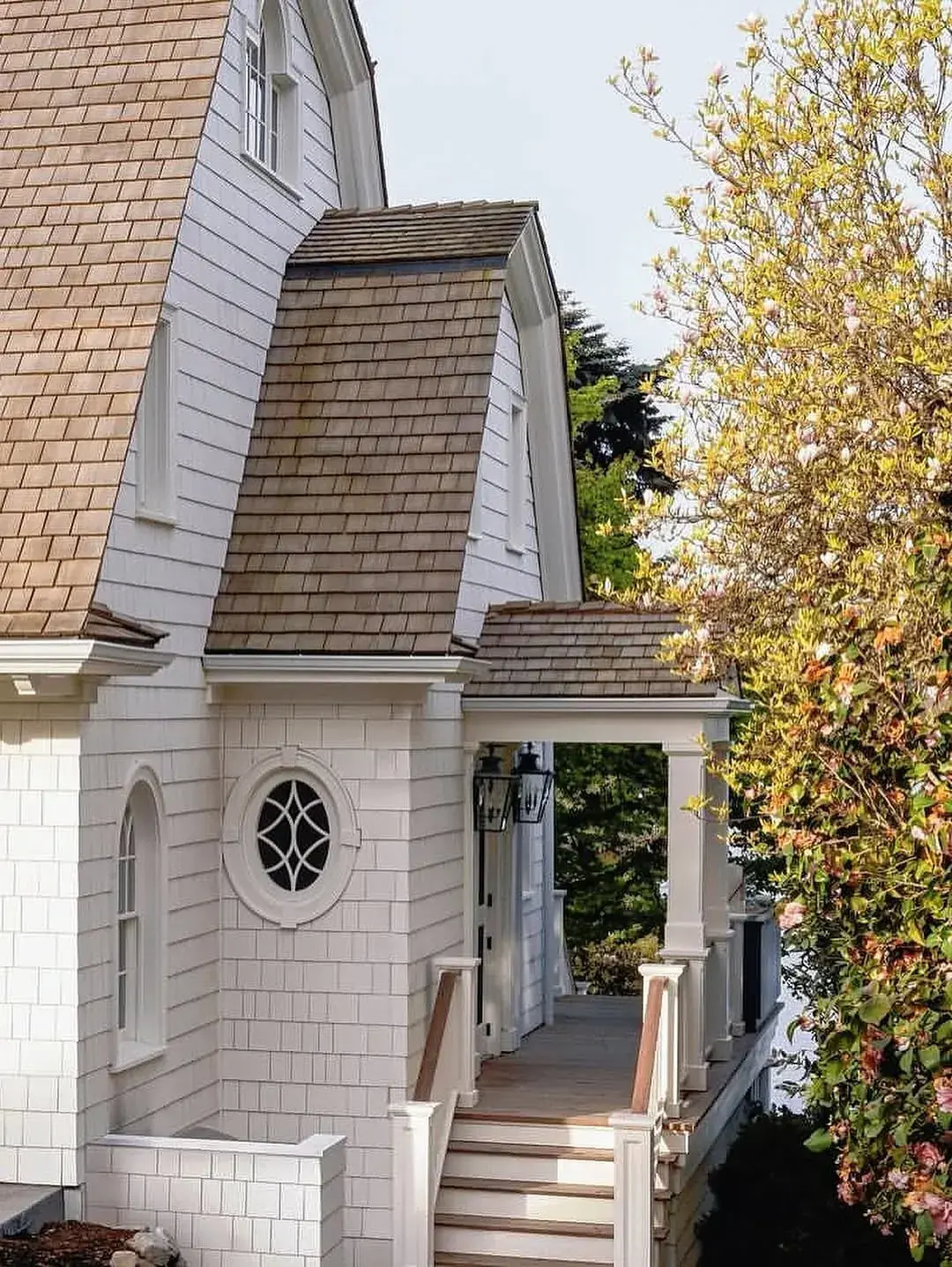
In this photo the shingle is on the roof, not the walls, and the same silver logic applies faster. The weather slope takes sun with rain together, so it silvers ahead of any wall on the plot. The ridge stays darker a season longer. Leave it bare and the field settles; force it with grey stain and the roof reads painted and flat, hiding the shadow lines at each butt that give a shake roof its depth.
Roof shingles want stainless fixings as strictly as walls, in copper clouts or 316 ring shanks depending on tradition and exposure, £18 to £40 per kilogram in 2026 by grade. Every wire for festoon lights wants a clip on a standoff, since wires laid across butts chafe through preservative free timber within a few gales. Keep valleys clear of leaves, because a dammed valley backs water under courses and the leak shows two rooms away.
Gutters at these eaves protect the white walls below as much as the roof itself. Without them, runoff sheets onto the painted clapboard and the paint film fails at the top board first. Repainting that one board every three years costs more across a decade than the gutter did once.
A chimney in a meadow garden
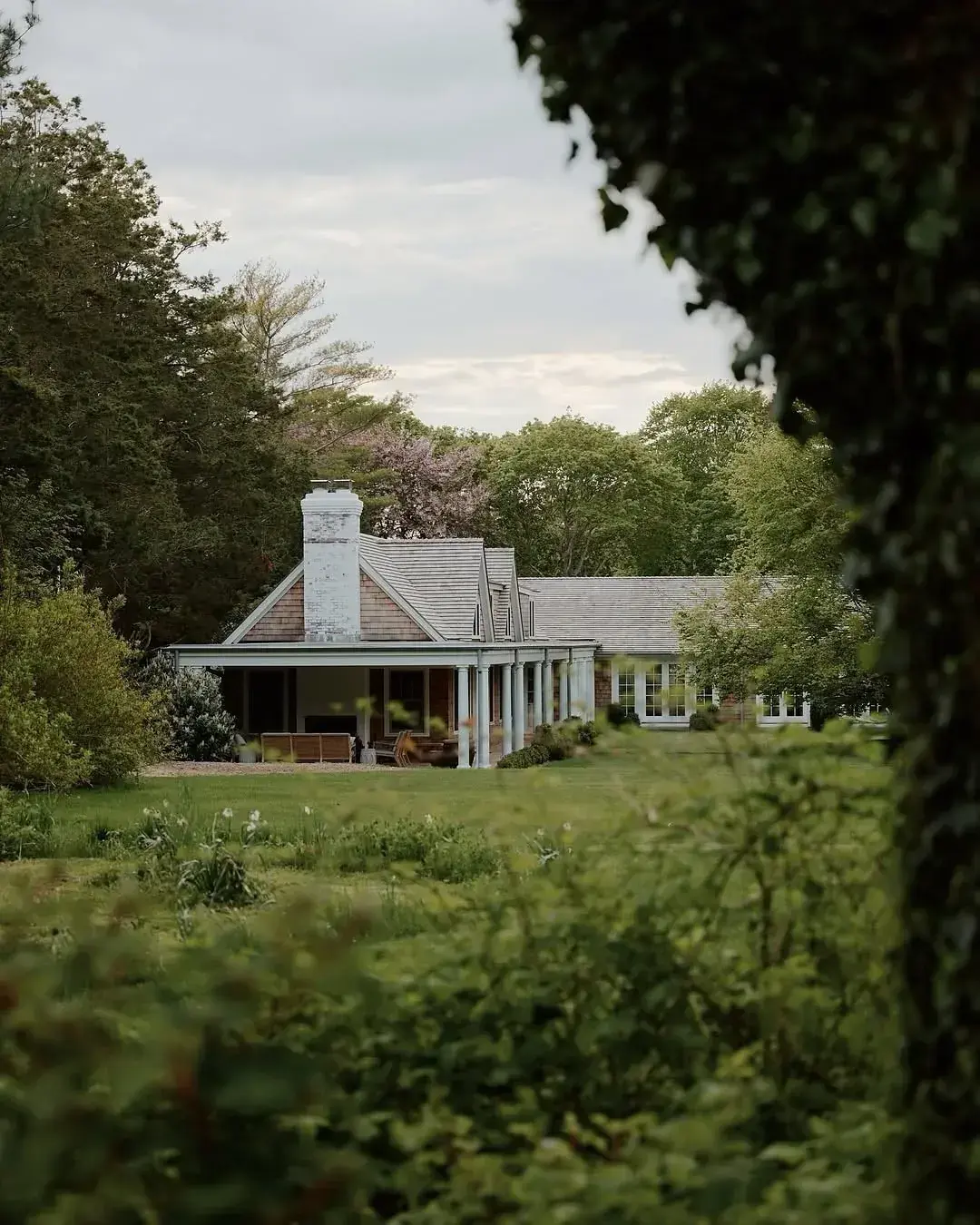
The meadow planting comes right to the cottage yet the wall still breathes, because grasses bend and let air through where shrubs would block it. Massed grasses forgive spray and neglect together, turning gold in autumn exactly when silvered shingle wants warmth beside it. Plant in drifts of five or seven of one variety so they move together in wind. Singles dotted about read as specimens and do nothing for the composition.
The chimney stack shows the flashing lesson for the whole plot. Flash it as the roof would be flashed on an exposed hill: step flashing with counter flashing chased into mortar, lead or a coated equivalent with stainless clips. A bead of mastic around a stack lasts three summers, then opens on the sunny side first. Water entering there tracks inside and shows as damp two courses below the ceiling line. Repointing with a lime rich mix suits older stacks; hard cement pointing cracks the brick shoulders within a few winters.
Cut the meadow back once in late winter and leave it otherwise. One annual cut with a strimmer beats weekly mowing, and the thatch shelters insects through the cold months.
Grasses that suit silver
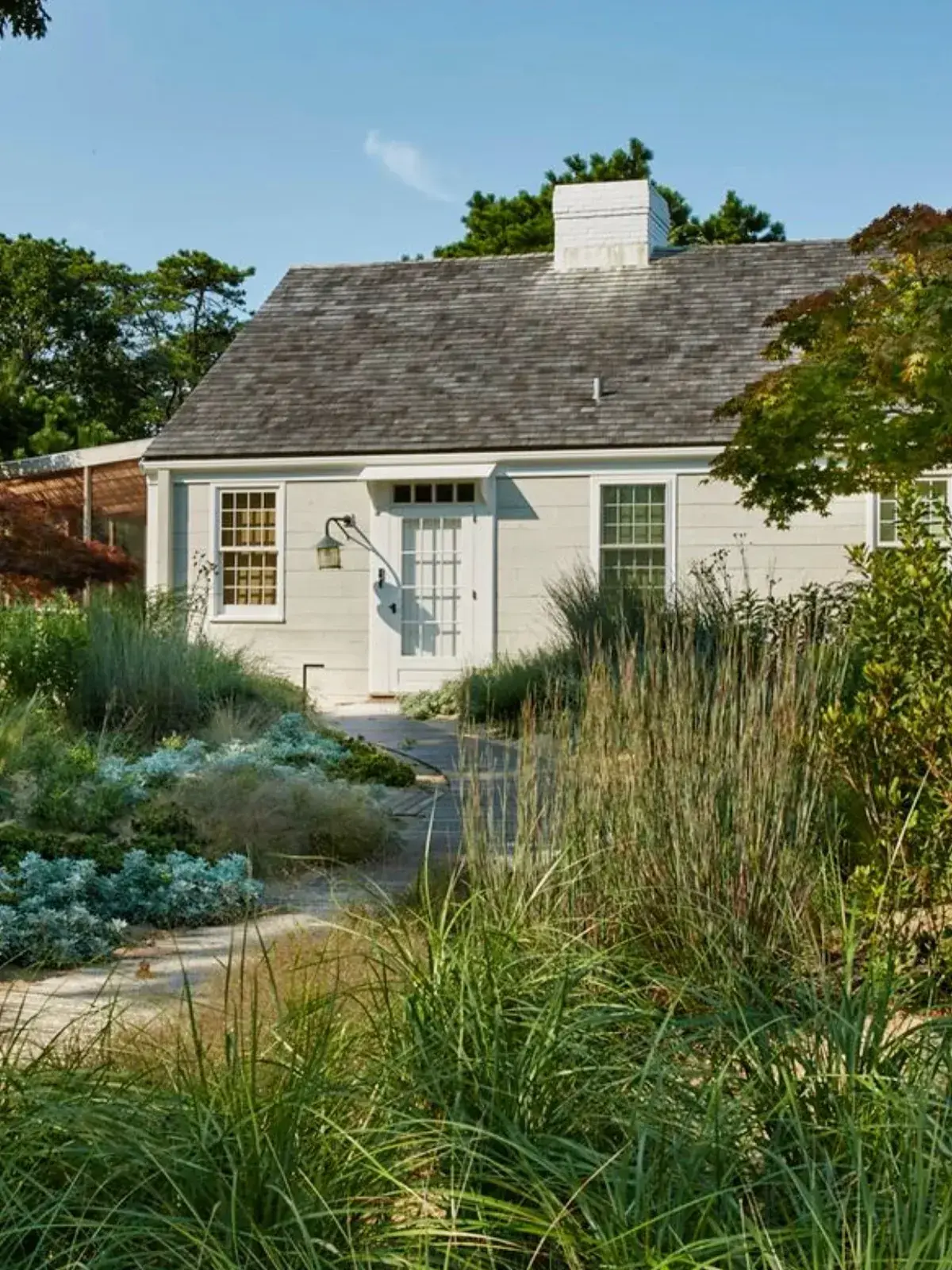
This last front ties the whole thesis together: pale shingle, pale path, tough grasses, nothing fussy within splash range. Lawns struggle at the shoreline since mowers scalp banks and feed runs toward water, while stone with gravel joints drains between rains and never needs feeding. A flagstone path with 10mm gravel joints reads right beside weathered shingle from day one. Edge beds with fieldstone so the plot reads as one material family.
The grasses want the same discipline as the wall. One or two varieties massed, low growers in sightlines, taller screens only where privacy truly matters. Imported foundation shrubs sulk in shore wind while Miscanthus, Festuca, and bayberry thrive on it, needing no irrigation once established after the first season. Keep every crown 450mm off the courses so air reaches the wall and a brush can pass for the annual wash.
Leave the outbuilding smaller than the ambition when its turn comes. Same shingle with same trim white, roof pitch echoing the house, footprint clearly subordinate. A compact store clad to match and tucked into planting on three sides reads as family. A second cottage competing with the first doubles maintenance every year from stain cycles to gutter clears.
Frequently Asked Questions
Should lake house cedar be stained or left bare?
Bare timber goes silver on its own across two to five sunny seasons, with shaded faces following later. A translucent grey stain shortens the patchy middle stage by blending tones sooner. Avoid film forming sealers near water, since trapped damp lifts the coating on the shady elevation first.
Why does the shore elevation turn green first?
Persistent damp feeds algae, and the bank side holds moisture longest after rain while getting the least sun. Open the airflow by moving shrubs forward, admit dappled light through the crown, and clean with a soft brush and plain water. High pressure jets scar softwood and drive damp behind courses.
What gap belongs between soil and shingle?
Keep finished grade at least 150mm below the lowest timber with a gravel strip to absorb splash. Set planting crowns about 450mm out so air circulates and inspection stays possible. Revisit the line each spring, as fresh top dressing quietly buries it.
Which nails survive spray and salt air?
Stainless ring shanks in 32mm or 38mm lengths, grade 316 close to water and 304 further inland. Zinc coated nails lose their coat near spray within a few seasons and weep brown into the grain. Match flashings, screws, and clips to the same grade, or runoff from cheaper metal marks the wall anyway.
Are gutters needed above shingle walls?
Fit them on any slope shedding toward cladding, with downpipes run to daylight or a drain. Bare eaves pour a season of rain onto the slowest drying band, striping the finish one floor down. A deep drip edge with a gravel bed below is the only sound substitute where gutters are refused.
Can planting touch a shingle wall?
Keep leaves off the courses. Vines fixed straight to cedar pin damp and shade out the drying hour, while pergola frames and wires held on standoffs keep green near the house without harm. Hold crowns forward, sweep litter from the base, and lift pots through summer so the foot stays dry.
In order
- Walk the water elevation at dawn and mark the courses that dry last, since that wall sets stain, clearance, and planting for the whole house.
- Build a ventilated gap behind every shingle course with gutters on slopes above cladding before any colour is chosen.
- Specify stainless 316 ring shanks near spray with matching flashings, then lap all head flashings open at the bottom for drainage.
- Hold shingle 150mm above grade with a gravel margin and keep planting 450mm off the wall so air reaches both faces.
- Even the patchy years with semi-transparent grey stain and let silver arrive on its own schedule instead of sealing honey in.
- Judge trim whites on the shaded side in morning light and let one door colour carry the front while everything else stays quiet.
- Clear leaves from eaves and bases each autumn and wash early green with a soft brush, never a pressure washer.
This article may contain affiliate links. We may earn a commission at no extra cost to you.