— DisclosureThis story may contain affiliate links.
We sometimes earn a small commission when you buy through our links. It costs you nothing extra and helps us keep writing. Read our full policy →
A flower garden is not just a patch of color in the yard. It is a decision that changes how you walk outside, how you see your mornings, and how your home greets the world.
Every stunning flower garden you have ever paused to admire started with the same quiet step: someone choosing to plant with intention rather than impulse. Not grabbing random pots from a nursery shelf. Not scattering seeds in a hurry and hoping for the best. But stopping to think about what actually grows in their space, what colors move them, and what kind of garden they want to live with through every season.
The truth is, a beautiful flower garden does not demand years of experience, a sprawling property, or a professional designer. What it does demand is a plan. A few smart choices made before the first shovel hits the soil. Understanding your light, your climate, your soil, and the simple design principles that separate a forgettable yard from one that stops people mid-walk.
Whether you have a wide backyard or a narrow strip of earth beside the driveway, these 31 flower garden ideas will guide you from the first sketch to a garden that blooms with purpose from early spring through the last cold snap of fall.
Part 1: Planning Your Flower Garden
Every great flower garden starts with a plan, not a impulse purchase at the garden center.
1. One Plan Per Season
A flower garden does not look the same in April as it does in August. That is the whole point. The garden that captivates you in spring with tulips and bleeding hearts should feel entirely different by midsummer when dahlias and zinnias take over. Planning for seasonal shifts means your garden is never static. It is always becoming something new.
Start by mapping what blooms in each season. Spring belongs to bulbs: crocuses, daffodils, tulips, alliums, and grape hyacinths push through cold soil and announce the year has turned. Early summer hands the stage to peonies, irises, and poppies. Midsummer is for roses, dahlias, cosmos, and zinnias. Autumn closes with asters, sedums, Japanese anemones, and chrysanthemums. Each season should feel like a completely different garden occupying the same space.
This is the part most beginners skip, and it is the part that separates a forgettable yard from one that gives you a reason to step outside every single month. Sit down with a calendar. Write down what you want blooming in each window. Fill the gaps. If August feels empty, add late-summer phlox or black-eyed Susans. If October looks bare, tuck in a few chrysanthemums and ornamental kale. The plan does not have to be complicated. It just has to exist.

2. Start With Annuals (They Deliver Instant Confidence)
Perennials are wonderful, but they take time. A peony planted this spring may not bloom fully for two or three years. A dahlia planted in May will give you flowers by July. Annuals are the fast track to a garden that looks alive from day one, and they are the secret weapon of every experienced gardener who wants color without waiting.
Zinnias, cosmos, marigolds, sunflowers, sweet peas, and celosia all grow from seed to bloom in a single season. They fill the gaps while your perennials establish themselves. They let you experiment with color combinations each year without permanent commitment. And because they bloom continuously from planting until frost, they give you the instant gratification that keeps new gardeners motivated.
Start with a packet of zinnia seeds and a packet of cosmos. Scatter them along a sunny border, water consistently, and watch what happens. Within eight weeks you will have a cutting garden that looks like it took years to build. The confidence that comes from seeing those first blooms is what turns a casual planter into someone who gardens for life.

3. Color Block Your Beds
The quickest way to make a flower garden look chaotic is to scatter colors randomly. The quickest way to make it look intentional is color blocking. Choose two or three colors and dedicate entire sections of your garden to each one instead of mixing everything together.
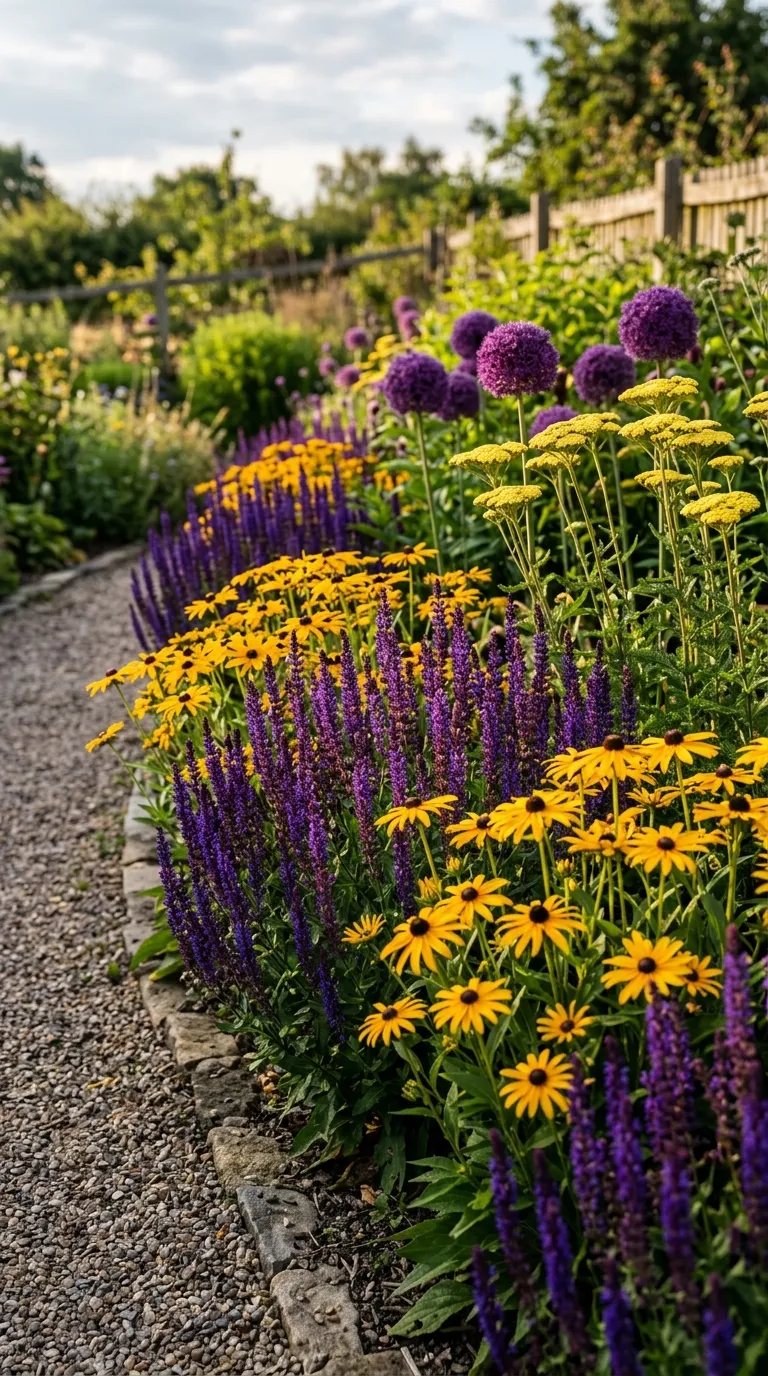
A sweep of deep purple salvia and lavender next to a drift of golden rudbeckia and coreopsis. A bed of crimson dahlias beside a cluster of white cosmos and pale pink zinnias. When colors sit together in groups rather than scattered individually, each one becomes louder, more confident, more visible from the distance. The garden reads as a deliberate composition rather than a random assortment.
Start by mapping your beds on paper. Decide which color family goes where before you buy a single plant. You do not need a rigid garden plan. You need a guiding idea. A purple and white section. A warm section with reds, oranges, and yellows. A soft corner with pinks and creams. The blocks do not have to be geometric. They can curve and flow. But they need to exist, because without them your garden becomes visual noise instead of visual impact.

4. Plant in Drifts, Not Single Stems
A single echinacea looks lonely. A drift of seven echinacea looks like a painting. The difference between a garden that feels scattered and one that feels lush is repetition in numbers, not in species.
Drifts are groups of the same plant arranged in an organic, flowing shape rather than a straight line. Five lavender plants curving along a path edge. Seven coneflowers massed in the middle of a border. Nine black-eyed Susans drifting through a sunny bed. The repetition of the same flower in multiples creates visual weight that a single plant simply cannot achieve.
This is one of the most important design principles in flower gardening, and it is also the easiest to overlook when you are standing in a nursery surrounded by hundreds of beautiful options. The temptation is to buy one of everything. Resist it. Choose fewer varieties and plant more of each one. Your garden will look calmer, more intentional, and far more dramatic than a border stuffed with one of every flower the nursery sells.

5. Keep a Bloom Calendar That Actually Works
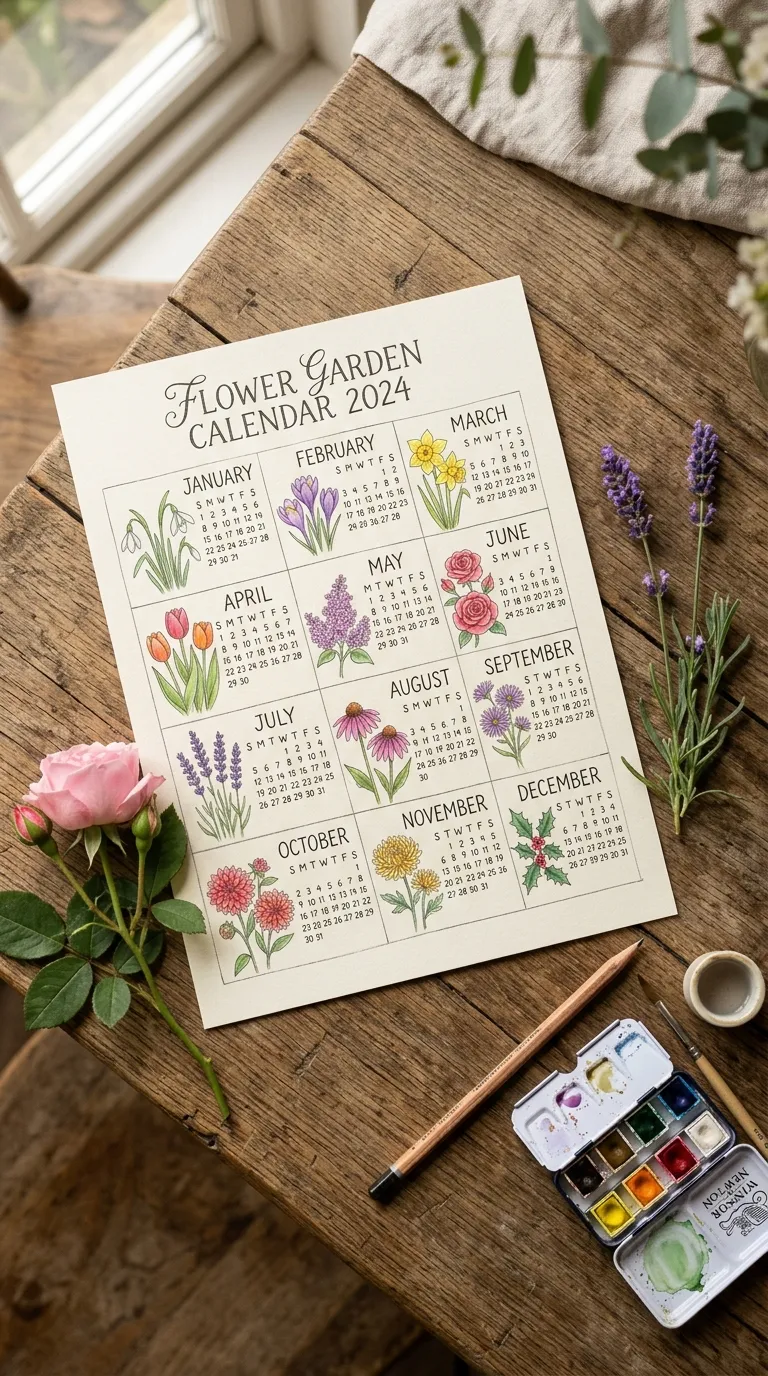
A bloom calendar is not a decoration for your garden wall. It is a working document that prevents the single most common flower garden mistake: gaps. The months where nothing blooms, where the border looks tired and empty, where you wonder why you bothered. A bloom calendar eliminates those gaps before they happen.
Get a simple wall calendar or open a spreadsheet. Mark when each plant in your garden blooms. Look at the result. If June is packed but August is barren, you have a problem. If spring is gorgeous but fall is empty, your garden is only performing for half the year. The fix is always the same: add plants that bloom in the quiet months.
Early spring: crocuses, daffodils, and primroses. Late spring: alliums, lupines, and poppies. Early summer: roses, peonies, and foxgloves. Midsummer: dahlias, zinnias, and lilies. Late summer: rudbeckia, asters, and Japanese anemones. Early fall: chrysanthemums, sedums, and stonecrop. Even winter has hellebores and snowdrops in mild climates. Fill every month and your garden becomes a living calendar that changes with the year.

Part 2: Choosing the Right Flowers
The flowers you choose determine everything. Get this right and the garden practically designs itself.
6. Choose One Focal Point and Build Around It
Every stunning flower garden has one element that anchors the eye. A massive clump of dahlias. A towering stand of hollyhocks. A single Japanese maple surrounded by low perennials. Without a focal point, the garden wanders. With one, it commands attention.
The focal point does not have to be large. It has to be intentional. A cluster of five tall phlox in a unexpected color. A pair of ornamental grasses catching the light at the back of a border. A single bench nestled into a curve of the garden surrounded by fragrant roses. The point is to give the eye somewhere to land before it explores the rest of the space.
Choose your focal point first. Then design everything else to support it. Low plants in front so the focal point is visible. Medium plants on the sides to frame it. Background plants behind to give it depth. The focal point is the sun in your garden’s solar system. Everything else orbits around it.

7. Mix Tall and Low Without Making It Look Messy
The most common flower garden mistake is planting everything at the same height. The result is a flat, featureless border that has no depth and no visual interest. The fix is simple: think in layers.
Tall plants at the back. Medium plants in the middle. Short plants at the front. This three-tier structure creates depth, ensures every plant is visible, and gives the border a natural, graduated look that draws the eye through the entire space.
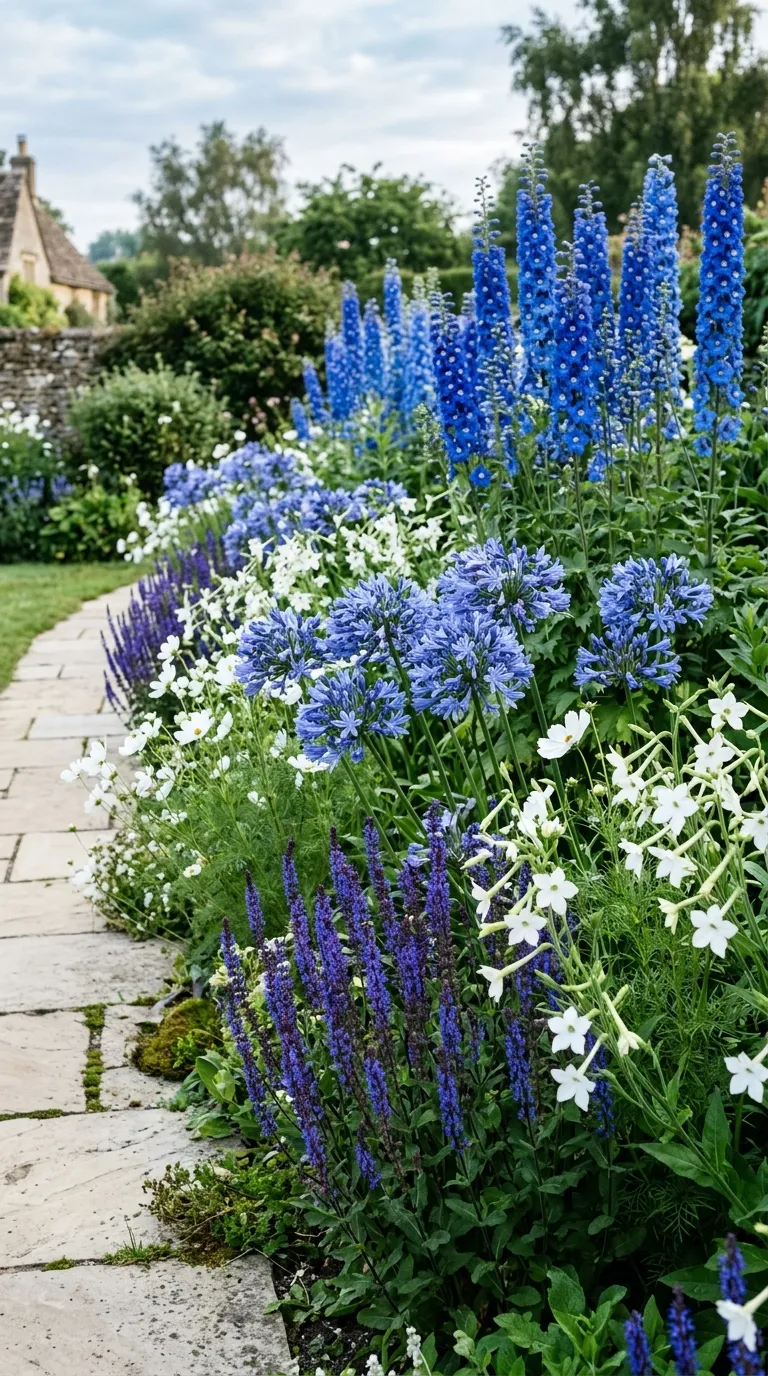
Your tallest growers go against the back wall or fence: delphiniums, hollyhocks, sunflowers, verbena bonariensis. In the middle tier, add plants that reach one to two meters: echinacea, dahlias, phlox, and rudbeckia. Along the front edge, tuck the low growers: catmint, lady’s mantle, creeping thyme, and sweet alyssum. The progression from tall to short creates the illusion of depth even in a narrow bed.
When planting within each layer, use odd-numbered groups. Three delphiniums. Five echinacea. Seven catmint plants. The repetition of odd numbers creates rhythm, and rhythm is what makes a border feel alive rather than regimented.

8. Layer Your Borders for Depth and Drama
Layering takes the tall-medium-low concept further by thinking about depth from front to back, not just height. A layered border has texture at every level, color at every depth, and interest that pulls you deeper into the space.
Start with a ground-level layer: creeping thyme, ajuga, or sedum that spills over the edge of the bed and softens the transition between garden and path. Behind that, add a low layer of mounding plants: catmint, geraniums, or heuchera that create a soft cushion of foliage and flower. Behind that, the mid-layer of upright perennials: echinacea, salvia, and daylilies. And at the very back, the tall backdrop: grasses, hollyhocks, or a climbing rose on a wall.
The layering creates a sense of abundance without chaos. Each level has its own character, but together they form one cohesive composition. Stand at the edge of a layered border and your eye travels naturally from the front to the back, discovering new details at every level.

9. Use Repetition to Tie the Whole Garden Together
A garden that uses fifty different species in fifty different spots looks busy. A garden that repeats the same ten plants throughout the space looks intentional and unified. Repetition is the design principle that turns a collection of individual plants into a coherent garden.
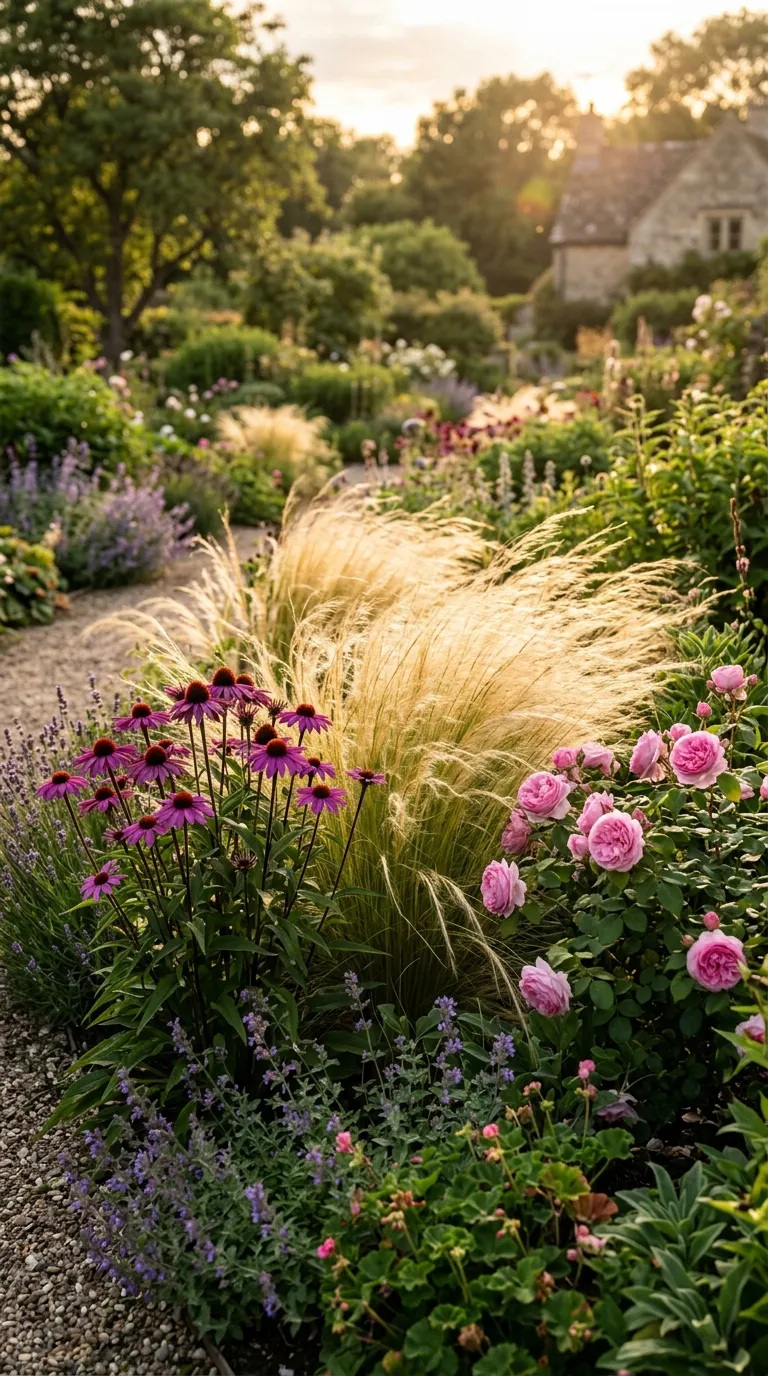
Choose a handful of plants that appear throughout your borders rather than confined to one area. Catmint flowing along the front of one bed and reappearing at the edge of another. Echinacea dotted through the middle of a mixed border and standing tall in a dedicated drift. Ornamental grasses rustling in one corner and repeated in another part of the garden.
The repetition creates visual connections between different areas. Your eye picks up the same plant in multiple places, and your brain reads the garden as one designed space rather than a series of disconnected beds. It is the same principle that makes a well-designed room feel put together: the same wood tone repeated in the furniture, the same metal in the light fixtures and drawer pulls. Recurring elements create unity.

10. Plant a Rose Ribbon Through Your Garden
Roses are the backbone of the classic flower garden, but they do best when woven through the border rather than isolated in a separate rose bed. A rose ribbon is a continuous line of roses that meanders through your garden, connecting different sections with their color and fragrance.
Choose one or two rose varieties and repeat them throughout the garden. A line of ‘Gertrude Jekyll’ along the back of a border, then recurring further down the garden path. Climbing roses trained along a fence that forms one boundary. Shrub roses anchoring the middle of a mixed border. The roses create a thread that ties the entire garden together.
David Austin English roses are ideal for this approach because they bloom repeatedly from June to frost, they have strong fragrance, and they grow in a natural, arching shape that blends beautifully with perennials. Choose one color family: soft pinks for a romantic garden, warm yellows for a sunny border, or deep crimsons for drama. Let the roses be the recurring melody in your garden’s composition.

Part 3: Design and Layout
How you arrange your flowers matters as much as which flowers you choose.
11. Create a Cottage Mix That Looks Effortless (But Is Not)
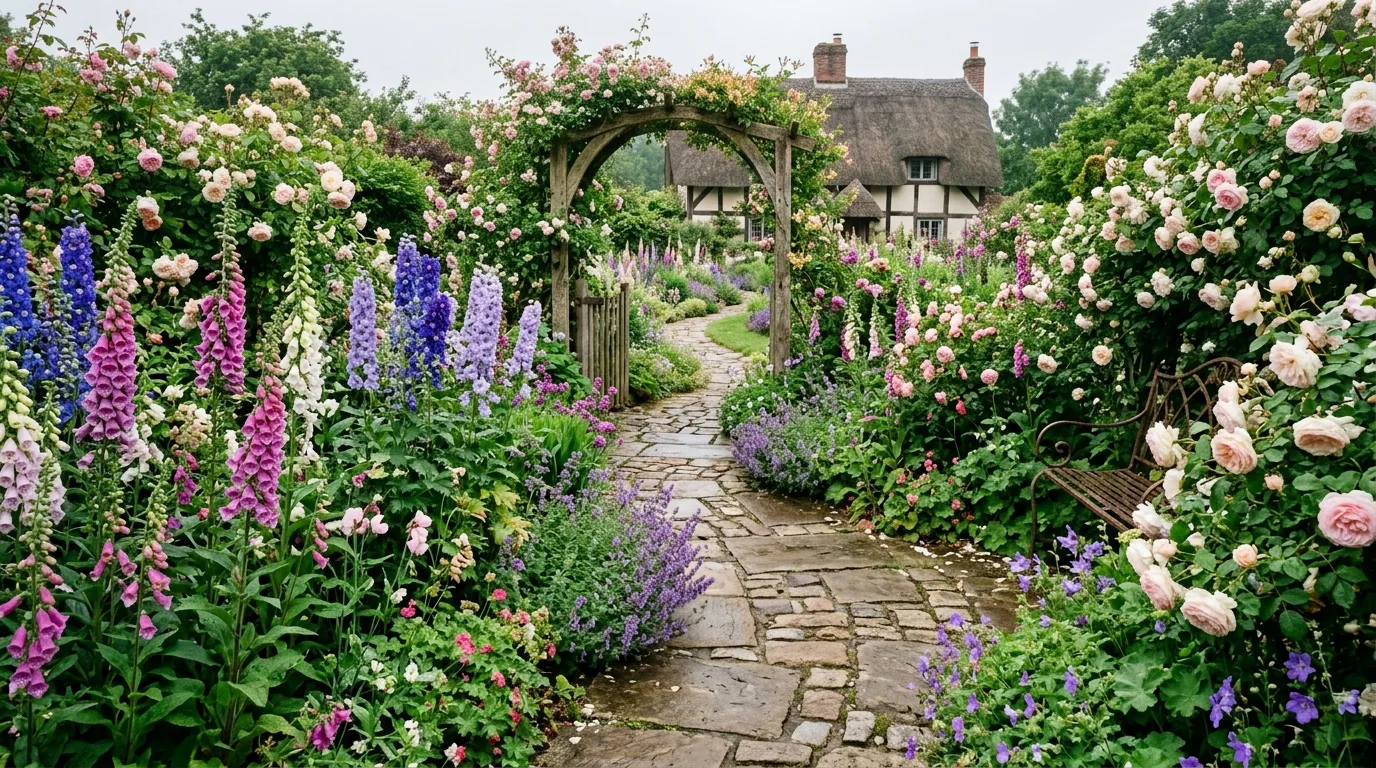
A cottage flower garden looks wild, romantic, and unplanned. It is none of those things. It is a carefully curated mix of plants that appear to have seeded themselves naturally, creating a dense, overflowing tapestry of color and texture that looks like it has been growing for decades.
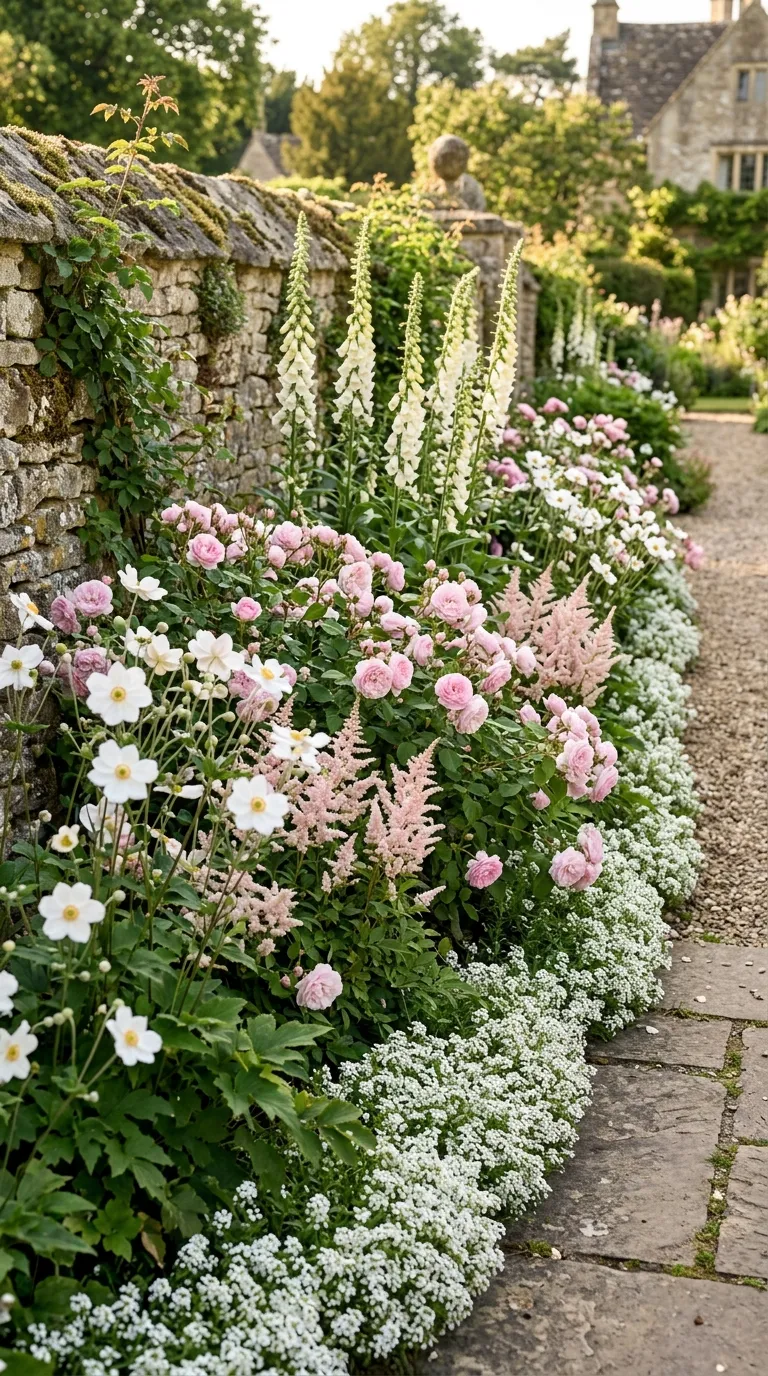
The secret to a cottage garden is plant density. No bare soil. No gaps. Flowers weave into each other, grasses push through gaps, and the entire bed moves as one mass. Start with tall backbone plants: delphiniums, foxgloves, hollyhocks, and verbena bonariensis. Fill the middle with medium growers: roses, peonies, astrantia, and hardy geraniums. Let the front soften with low plants: catmint, lady’s mantle, sweet alyssum, and creeping Jenny.
The cottage garden rewards a relaxed attitude. Let self-seeders find their own spots. Allow plants to mingle at the edges. Pull out what does not work and let the rest fill in. The result is a garden that looks effortless and wild but is actually a carefully balanced ecosystem of complementary plants.

12. Grow a Cutting Patch for Endless Bouquets
There is a pleasure that never gets old: walking into your own garden with garden snips and coming back with an armful of flowers for the kitchen table. A cutting patch makes this possible all season long, and it is one of the most rewarding additions you can make to any flower garden.
The best cut flowers share certain qualities: long stems, strong heads that do not droop in water, and a long vase life. Zinnias are the champions, blooming for months and lasting ten days or more in a vase. Dahlias, cosmos, sunflowers, sweet peas, snapdragons, and lisianthus all perform brilliantly as cut flowers. Grow them in dedicated rows or beds where you can harvest without creating gaps in your ornamental borders.
Plant cut flower varieties more densely than you would in an ornamental bed. Close spacing encourages long, straight stems. Feed them well and cut in the morning when stems are fullest of water. You will have farmhouse-style arrangements that rival anything from a florist, picked from your own backyard for the cost of a packet of seeds.

13. Add Structure With Evergreens and Grasses
A flower garden that is all bloom and no structure looks beautiful for a few weeks and then falls apart. Evergreens and ornamental grasses provide the bones that hold the garden together when the flowers fade.
Evergreen shrubs like boxwood, dwarf conifers, and viburnum create permanent anchors in the border. They give the eye a place to rest between the explosive color of the flowers. They provide winter interest when the perennials have died back and the beds look bare. And they create a framework that makes the seasonal flowers look more intentional by contrast.
Ornamental grasses do the same job with movement and sound. Miscanthus, Pennisetum, and Calamagrostis rustle in the breeze and catch the light in ways that flowers cannot. They add texture that contrasts with the soft petals of perennials, and they look spectacular in autumn when they turn golden and catch the low sun. Plant them at the back of borders or as standalone specimens, and your garden gains a dimension that flowers alone cannot provide.

14. Plant a Pollinator Strip That Buzzes All Summer
A dedicated pollinator strip is one of the most impactful things you can add to a flower garden. It is a section of the border designed specifically to attract bees, butterflies, and beneficial insects, and it brings the garden to life in a way that ornamental-only plantings never do.
Choose flowers with open, accessible centers. Single-petaled roses, echinacea, rudbeckia, cosmos, and scabiosa are all excellent. Plant in drifts of the same species rather than single specimens, because pollinators forage more efficiently when they can move between many flowers of the same type. Include plants from at least three different flower shapes: flat-topped flowers like yarrow for small bees, tubular flowers like salvia for long-tongued bees and hummingbirds, and composite flowers like sunflowers for butterflies.
The pollinator strip does not have to be a separate area. It can be woven through the border. But designating a section specifically for pollinators ensures you include the plants that bring the most life and activity to the garden. The hum of bees, the flutter of butterfly wings, the flash of a hummingbird: these are the things that make a flower garden feel alive.

15. Grow Flowers for Fragrance, Not Just Color
A flower garden that smells as good as it looks creates an experience that lingers long after you leave it. Fragrance transforms a garden from something you see into something you feel, and it is easier to add than most people think.
The key is placement. Fragrant plants belong where you will brush past them or sit near them. Lavender along a path releases scent every time you walk by and your legs brush the foliage. Roses near a seating area fill the air with perfume on warm afternoons. Jasmine or honeysuckle climbing a pergola overhead sends fragrance down to where you sit. Sweet peas on a fence near a window fill the room with their candy-sweet scent on summer evenings.
Choose fragrant plants for the spots you use most: the path to the front door, the edge of the patio, the border beside the bedroom window. A flower garden without fragrance is like a meal without seasoning. It may look beautiful, but something essential is missing.

Part 4: Color and Fragrance
The elements that transform a flower garden from something you see into something you experience.
16. Plan for Three Seasons of Color
The gardens that stop you in your tracks are never the ones that bloom brilliantly for three weeks and spend the rest of the year looking tired. They are the ones that shift and change, offering something new as the months progress. Planning for three-season color means your garden is never the same twice.
Spring brings the first wave: tulips, daffodils, alliums, and bleeding hearts push through the cold soil and announce the year has turned. Early summer builds the momentum: peonies, irises, poppies, and the first roses open. Midsummer explodes: dahlias, zinnias, cosmos, lilies, and phlox fill every bed with peak color. Early fall holds the line: asters, sedums, Japanese anemones, and chrysanthemums carry the garden toward winter. Even the dormant season has its beauty if you plan for it: seed heads left standing, ornamental grasses catching frost, and evergreen structure holding the bones of the garden visible.
Map the bloom times of everything you plant. Fill the gaps. If August is bare, add late-summer performers. If October feels empty, tuck in mums and ornamental kale. The goal is a garden that gives you a reason to step outside every single day from March through November.

17. Add Spring Bulbs for the Earliest Color
Spring bulbs are the most rewarding investment in a flower garden because they come back every year, multiply on their own, and deliver the first color of the season when everything else is still dormant. Plant them once, and they reward you for decades.
Tulips, daffodils, crocuses, alliums, grape hyacinths, and muscari are the essentials. Plant them in fall, before the first hard frost, at a depth of about three times the height of the bulb. Scatter them through your perennial borders so they bloom between and around the emerging perennials. When the perennials grow up and fill in, the bulbs have already done their work and their fading foliage is hidden by the new growth.
The trick to natural-looking bulb plantings is to plant in odd numbers and scatter rather than arrange in rows. Throw a handful of crocus bulbs in the air over a lawn and plant them where they land. Tuck daffodils through a shrub border in groups of five and seven. The effect is a garden that looks like the bulbs have been there forever, naturalized and effortless.

18. Use Annuals for Gap-Filling and Summer Drama
Annuals are the secret weapon of every experienced gardener. They fill the gaps that perennials leave, they provide the most dramatic color of the summer, and they let you reinvent your garden’s palette every single year.
Zinnias are the all-purpose champion: tall, long-blooming, available in every color imaginable, and they last for days in a vase. Cosmos add airy, wildflower charm to any border. Dahlias provide the show-stopping, dinner-plate-sized blooms that stop conversations. Marigolds, sunflowers, celosia, and snapdragons all earn their place in the summer garden.
Plant annuals in blocks and drifts for the most impact. A mass of zinnias in a single color creates a visual punch that a mixed planting cannot match. Use them to fill the front of borders where spring bulbs have finished. Tuck them between perennials that have not yet reached their peak. Let them overflow from containers and window boxes. Annuals are the paint you apply freshly each season to the canvas your perennials have built.

19. Start a Flower Farm in Your Own Backyard
A cutting garden is not just a flower garden. It is a working garden that produces something you use every week. Starting a flower farm in your own backyard means endless bouquets, gifts for friends, and the satisfaction of growing something both beautiful and useful.
Dedicate a section of your garden to production planting. This is not the place for careful color arrangements or artistic compositions. This is the place for rows of zinnias, dahlias, cosmos, sunflowers, and snapdragons planted densely for maximum yield. The focus is on stem length, bloom count, and vase life.
Grow from seed to keep costs low. A single packet of zinnia seeds costs a few dollars and produces hundreds of flowers. Start seeds indoors in early spring, transplant after the last frost, and harvest continuously from midsummer until frost. Feed generously, water consistently, and cut often. The more you cut, the more the plants produce. Within a single season you will have more flowers than you know what to do with.

Part 5: Practical Care and Upkeep
A flower garden rewards the care you give it. These practices keep your blooms performing at their best.
20. Plant Grasses for Movement and Sound
Ornamental grasses add something no flower can: movement. In a garden that can feel static when the air is still, grasses catch every breeze and bring the border to life with rustling, swaying, flowing motion.
Miscanthus sinensis is the classic choice: tall, graceful plumes that catch the light and turn golden in autumn. Pennisetum alopecuroides has soft, bottle-brush seed heads that look like fur in the low sun. Calamagrostis ‘Karl Foerster’ stands upright and architectural, providing vertical structure that contrasts with the rounded forms of most perennials. Hakonechloa, the Japanese forest grass, cascades like a green waterfall and turns brilliant amber in fall.
Plant grasses at the back of borders for height and backdrop, or use them as standalone specimens in places where something structural is needed. They look spectacular when backlit by the morning or evening sun, their seed heads glowing like fiber optics. And in winter, when the perennials have died back, the dried grasses standing in frost are some of the most beautiful things a garden can produce.

21. Create a Moon Garden That Glows After Dark
A moon garden is planted specifically to be beautiful at night. White flowers, silver foliage, and pale blooms that reflect moonlight create a garden that transforms completely when the sun goes down.
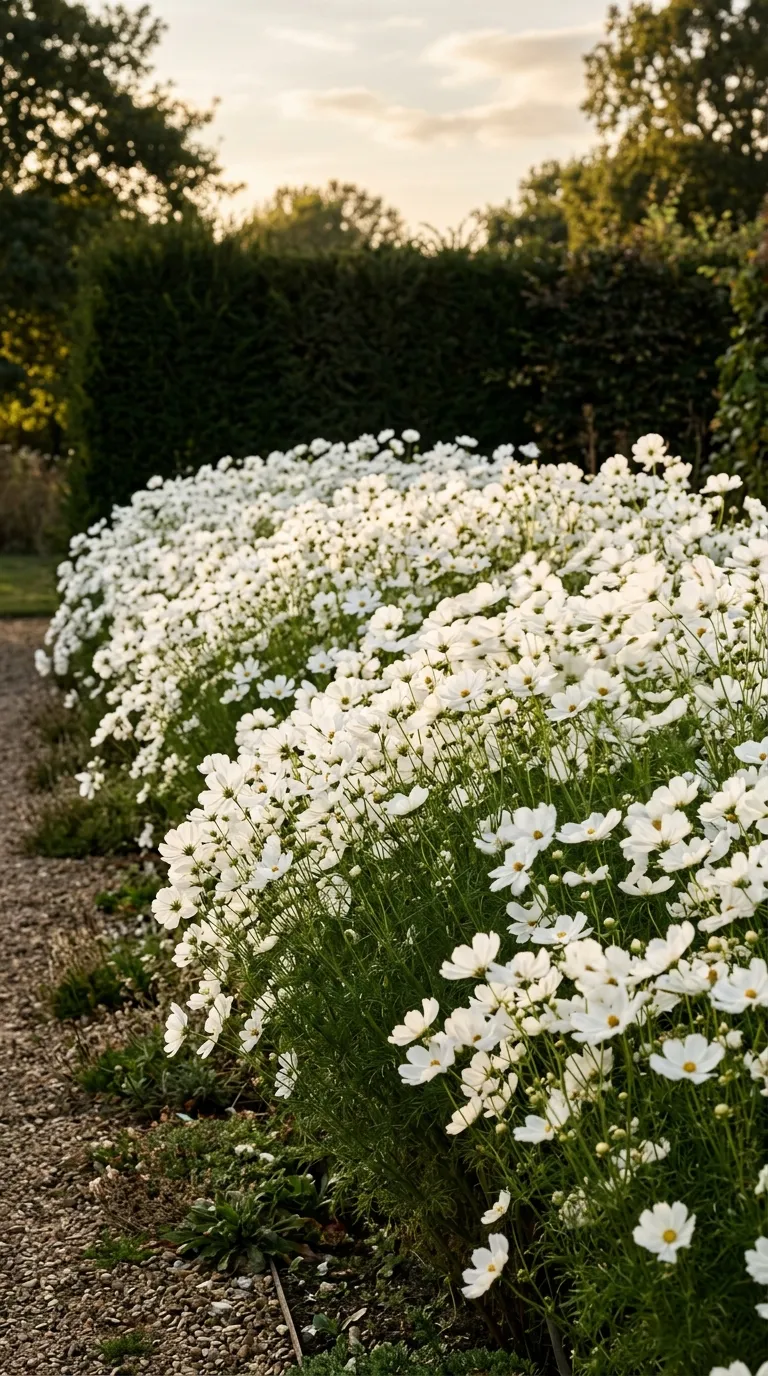
Choose white versions of your favorite flowers: white cosmos, white dahlias, white phlox, white coneflowers, white astilbe. Add silver-foliaged plants like artemisia, dusty miller, and lamb’s ear for texture and contrast. Include evening-primrose and moonflower, which open their blooms specifically at dusk and release fragrance into the night air.
Plant the moon garden where you can see it from a window or a seating area. The experience of stepping outside at twilight and being met with a garden that glows pale and luminous in the fading light is one of the most magical things a flower garden can offer. It is a garden that works two shifts: bright and colorful by day, ethereal and glowing by night.

22. Design With Foliage, Not Just Flowers
The gardens that look beautiful even when nothing is in bloom are the ones that were designed with foliage as a primary element, not an afterthought. Flowers are temporary. Foliage is permanent.
Heuchera provides year-round color in shades of purple, lime, copper, and amber. Hostas offer bold, architectural leaves in every shade of green from chartreuse to blue-gray. Ferns add delicate texture to shady corners. Brunnera ‘Jack Frost’ has silver-spotted leaves that glow in shade. Caladiums bring tropical drama with their patterned, colorful foliage.
Think of foliage as the fabric of your garden and flowers as the embroidery. The fabric holds the garden together through every season. When the dahlias have been cut back and the zinnias have succumbed to frost, the foliage plants remain, providing structure, texture, and color that keeps the garden interesting even in the quiet months.

23. Grow Sunflowers for Instant Height and Drama
Nothing in the flower garden creates drama quite like sunflowers. They are the tallest, boldest, most attention-grabbing annual you can grow, and they are also one of the easiest. Plant a seed in May and by August you have a flower head the size of a dinner plate facing the sun.
Grow them along a back fence for a living screen that provides privacy and beauty. Plant them at the back of a border where their height creates a backdrop for everything in front. Or dedicate a whole section to a sunflower alley: two rows of towering stems with a path between them that makes you feel like you are walking through a cathedral of gold.
Choose varieties based on your needs. ‘Mammoth’ grows to three meters and produces seeds you can roast. ‘Teddy Bear’ stays under a meter with fluffy, double blooms perfect for containers. ‘ProCut’ series are bred for cutting with strong, single stems and no side branching. Whatever you choose, sunflowers bring a joy to the garden that is impossible to replicate with any other flower.

24. Edge Your Beds for a Polished, Finished Look
A flower border that bleeds into the lawn or path around it looks unfinished. A clean, defined edge immediately makes the garden look designed, maintained, and complete. It is one of the simplest upgrades you can make and one of the most transformative.
Classic edging options include steel strips that create a razor-sharp line, brick borders that add warmth and texture, natural stone cobbles for a rustic look, or a simple clipped hedge of boxwood or lavender that provides a living edge. The edge creates a clear boundary between the cultivated bed and the surrounding space, and that boundary frames the flowers like a mat frames a painting.
For a softer approach, plant a low border of creeping thyme, chamomile, or lady’s mantle along the front of the bed. These plants create a living edge that spills gently over the boundary, blurring the line between bed and path in a way that feels romantic rather than unfinished. Whether sharp or soft, the edge is what takes a flower garden from looking like plants stuck in the ground to looking like a designed space.

25. Mulch Every Spring for Healthier, Prettier Beds
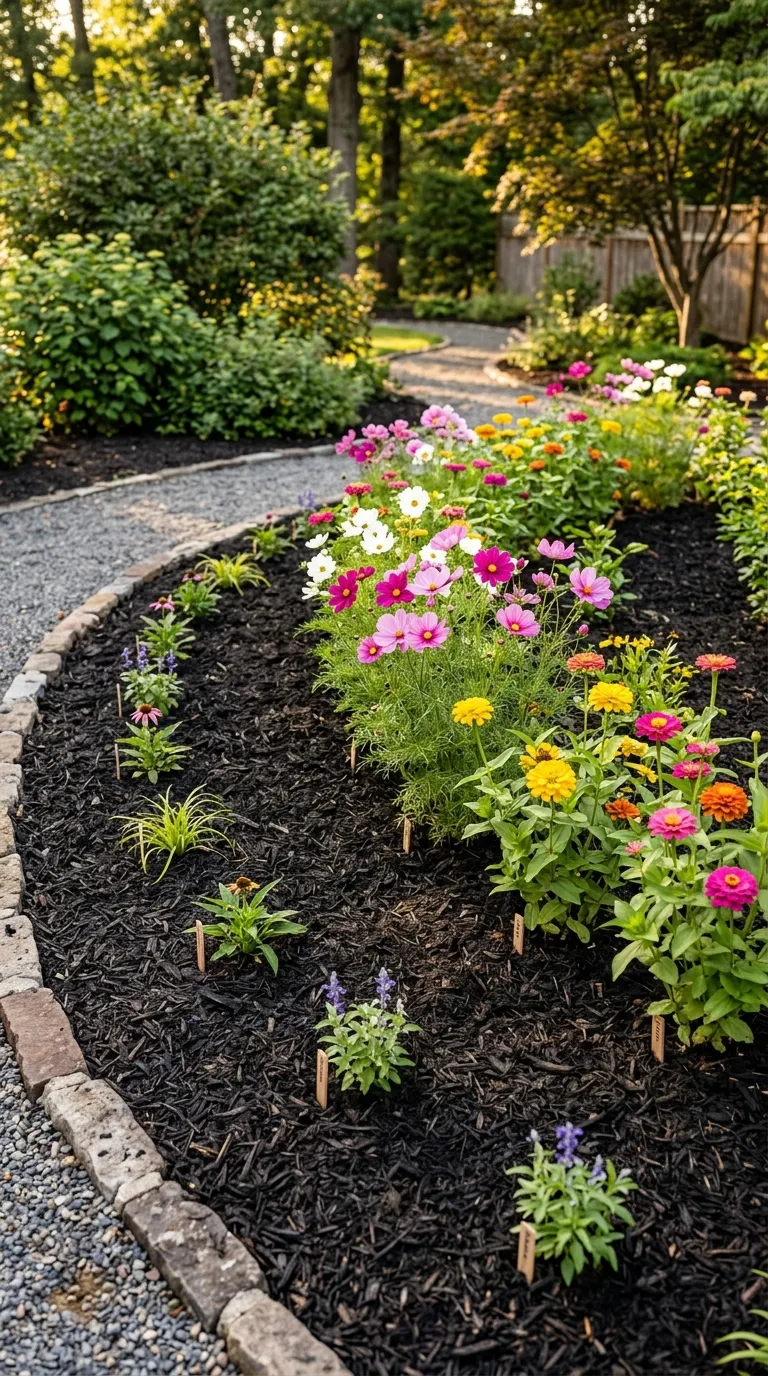
Mulching is the single best thing you can do for your flower garden’s health and appearance. A two-to-three-inch layer of organic mulch applied each spring suppresses weeds, retains moisture, regulates soil temperature, and gives the beds a clean, finished look that makes the flowers stand out.
Apply mulch after the soil has warmed in spring, once the bulbs have emerged and the perennials are starting to grow. Use compost, shredded bark, leaf mold, or straw. Spread it evenly around the base of plants, keeping it an inch or two away from the stems to prevent rot. The mulch breaks down over the season, feeding the soil and improving its structure for next year.
Mulching also prevents the splash of soil onto the lower leaves of your plants during rain, which reduces the spread of soil-borne diseases. And it gives the garden a polished, maintained appearance even before the flowers bloom. A mulched bed with emerging shoots looks like a garden that is cared for. An unmulched bed with bare soil looks neglected, even if the flowers are healthy.

26. Deadhead for More Blooms, All Season Long
Deadheading is the practice of removing spent flowers, and it is the single most impactful maintenance task for a flower garden. It takes five minutes a day and transforms the health and appearance of your entire border.
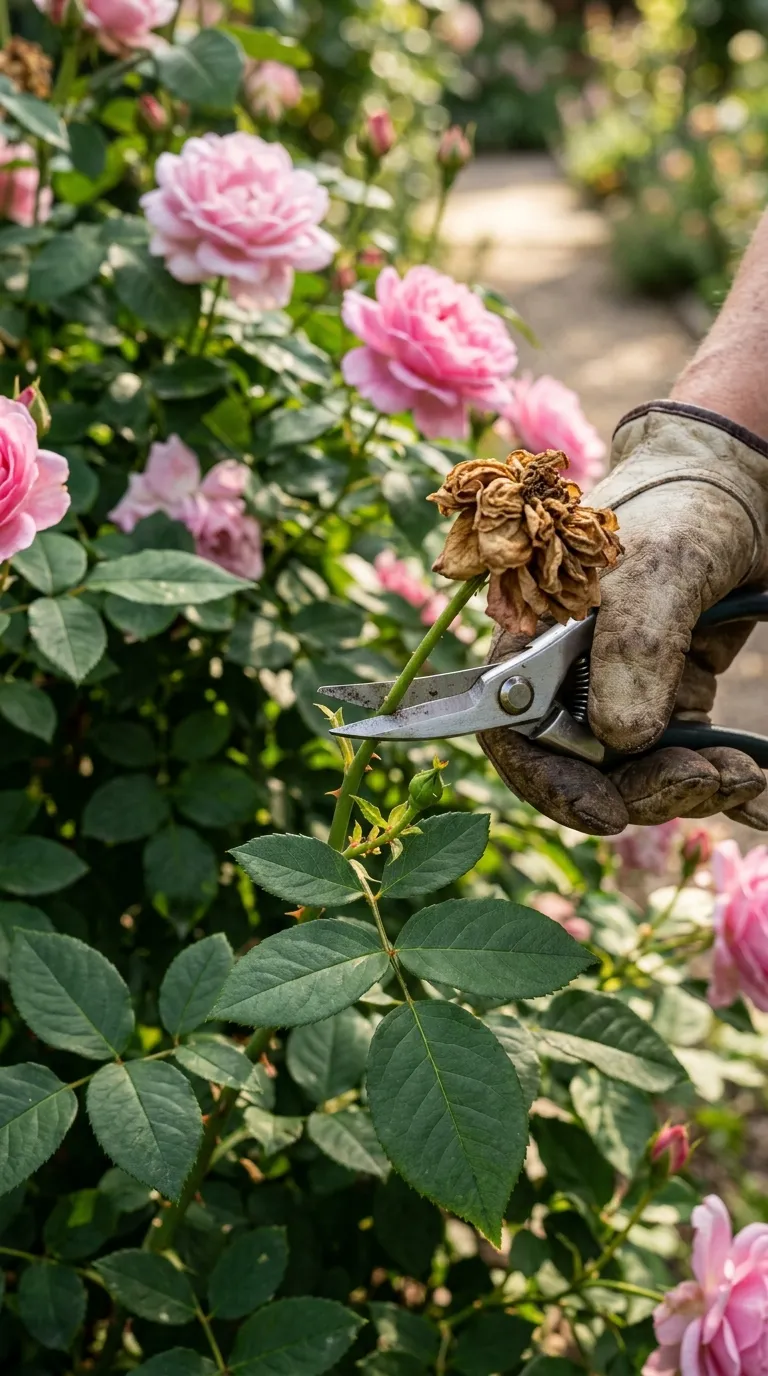
When a flower fades and you remove it, the plant redirects its energy from seed production back into making more flowers. Annuals like zinnias, cosmos, and marigolds will bloom for weeks longer if you deadhead regularly. Perennials like echinacea and rudbeckia will often produce a second flush of blooms if the first round is removed before setting seed. Even roses benefit enormously from deadheading, with many varieties producing repeat blooms through fall if the spent flowers are removed promptly.
Keep a pair of garden snips in your pocket when you walk through the garden. Make it a habit to spend five minutes each morning removing anything that has faded. The cumulative effect over a season is enormous: more flowers, healthier plants, and a garden that always looks fresh rather than tired.

Part 6: Small Spaces and Simple Solutions
You do not need a large yard to have a stunning flower garden.
27. Grow in Rows for Easy Care and Maximum Harvest
Growing flowers in rows is not just for farms. It is one of the smartest layouts for a home flower garden because it makes planting, watering, weeding, and harvesting simple and efficient.
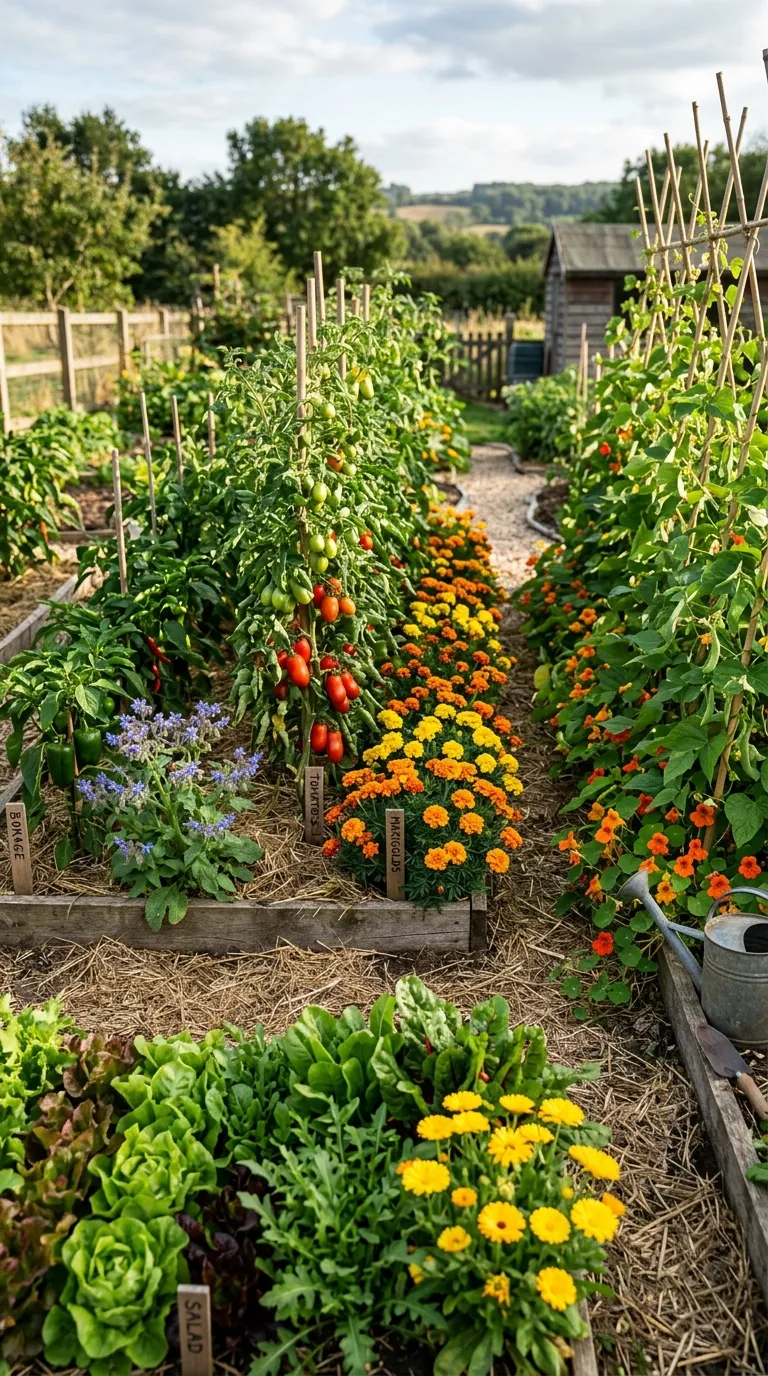
Mark straight rows with string and stakes. Space them eighteen inches to two feet apart, wide enough to walk between for maintenance. Plant each row with a single variety for a clean, organized look that makes the garden easy to manage. The rows create natural paths between the plants, and the uniform spacing ensures each plant gets adequate light and air circulation.
Row planting is especially effective for cutting gardens where you want maximum yield from a small space. A ten-foot row of zinnias produces dozens of stems per week during peak bloom. A row of dahlias provides armloads of flowers from midsummer until frost. The orderliness of rows also has its own aesthetic appeal: the repetition of the same flower stretching down a line creates a visual rhythm that is deeply satisfying.

28. Use an Arch as a Focal Point and Vertical Display
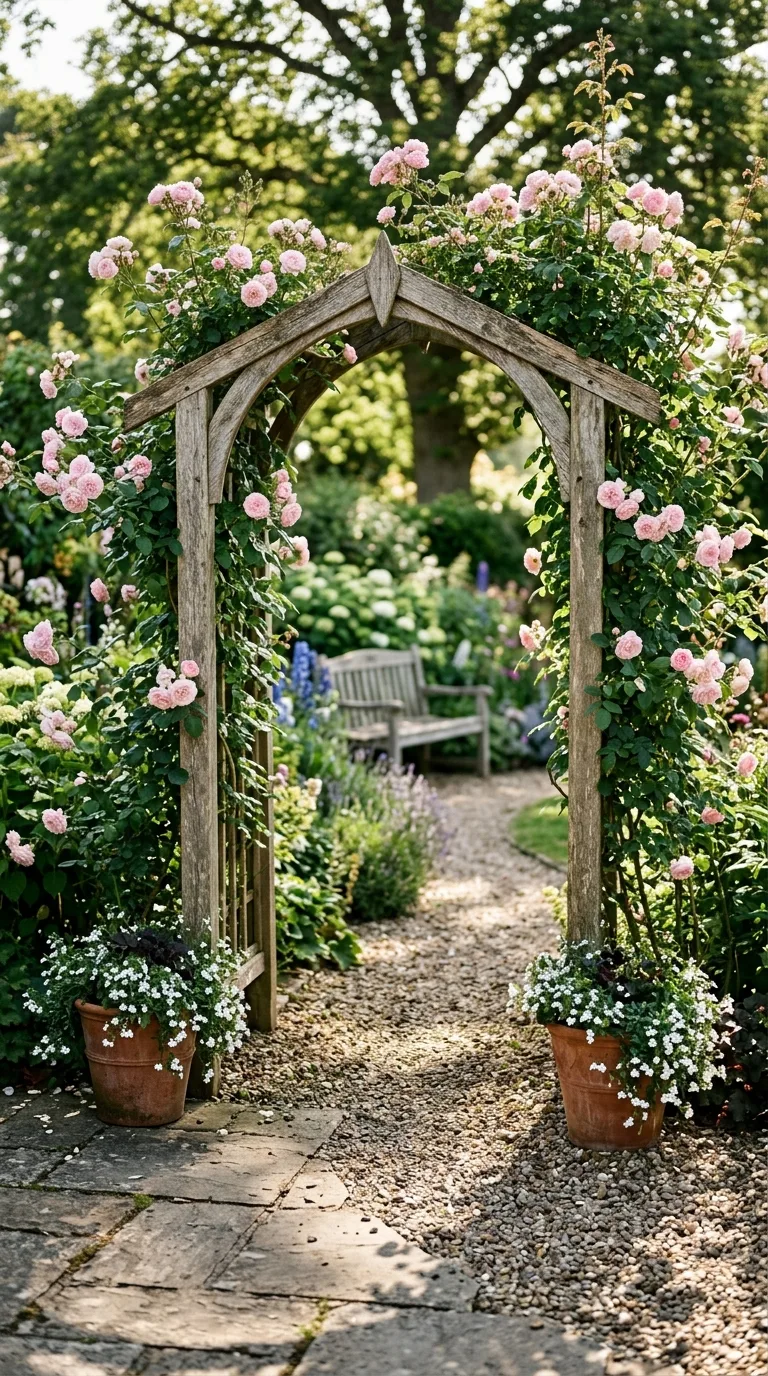
A garden arch is one of the most transformative structures you can add to a flower garden. It creates a vertical element that draws the eye upward, provides a framework for climbing plants, and marks a transition between garden rooms or zones.
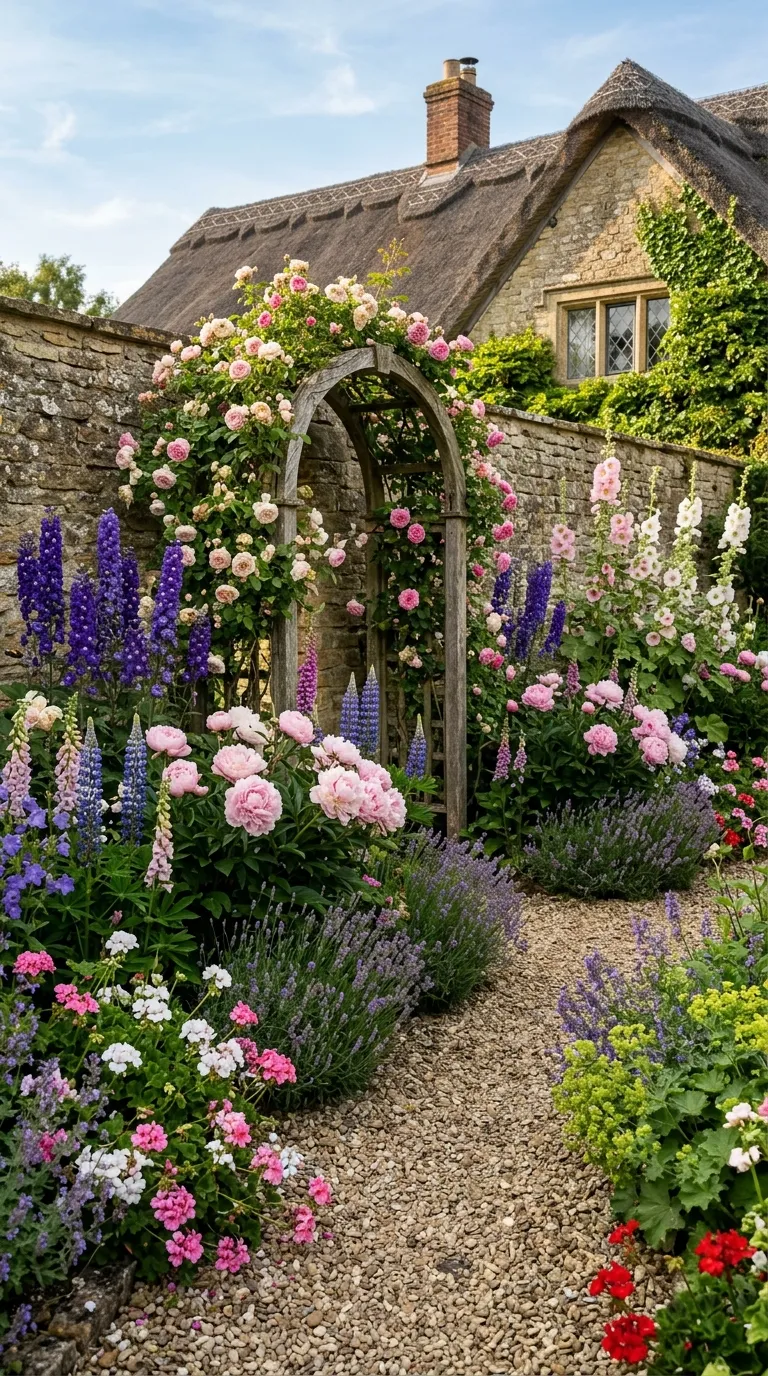
Place an arch at the entrance to a garden path and train climbing roses, clematis, or sweet peas to grow over it. The arch becomes a living doorway: a passage from one part of the garden to another, framed in flowers and fragrance. It creates a moment of anticipation, a sense that something special lies beyond, even if the garden on the other side is no different from the one you are leaving.
Choose a simple metal arch for a clean, modern look, or a wooden arch for a more rustic, cottage-garden feel. Plant climbers at the base on each side, provide a support structure of wire or twine, and tie in new growth regularly. Within two or three seasons, the arch is covered in blooms and has become the most photographed feature in your garden.

29. Train Climbers on Walls for Vertical Color
A bare fence or wall is a missed opportunity for both color and fragrance. Training climbing flowers up a vertical surface transforms an empty backdrop into the most dramatic feature in your garden.
Climbing roses are the classic choice. David Austin varieties produce masses of blooms with strong fragrance from June through September. Clematis climbs through and over other plants, adding star-shaped flowers to established borders. Wisteria produces cascading racemes of purple or white flowers with an unforgettable perfume in late spring. Jasmine and honeysuckle provide evening fragrance that intensifies as the air cools.
Plant climbers at the base of a wall or fence, provide a support structure of wire, trellis, or horizontal cords, and tie in new growth regularly. Within two or three seasons, what was a blank surface becomes a living, fragrant tapestry that anchors the entire garden and provides vertical interest that ground-level plantings cannot match.

30. Match Flowers to Their Natural Conditions
The difference between a garden that thrives and one that struggles is not talent, budget, or effort. It is matching the right plant to the right conditions. Every flower has a preferred environment, and when you give it what it wants, it rewards you with minimal care and maximum beauty.
Sun-loving flowers like roses, dahlias, zinnias, and lavender need six or more hours of direct light. Shade-tolerant plants like hostas, astilbe, bleeding hearts, and foxgloves thrive in three hours or less. Moisture-loving plants like ligularia, astilbe, and Siberian iris prefer consistently damp soil. Drought-tolerant species like sedum, yarrow, and Russian sage thrive in lean, dry conditions.
Before you buy a single plant, observe your garden for a full day. Track which areas get full sun, partial sun, or shade. Note where water pools after rain and where it drains quickly. Map these conditions and match your plants accordingly. A garden planted in the right conditions for each species will always outperform a garden planted with the right idea but the wrong environment.

31. Keep It Simple (Less Variety, More Impact)
The most beautiful flower gardens are not the ones with the most species. They are the ones with fewer plants, planted in greater numbers, arranged with clear intention. Simplicity is the highest form of garden design.
Choose five to seven plants that you truly love. Plant more of each one. Arrange them in drifts and blocks rather than scattering them individually. Repeat them throughout the garden for cohesion. Let the repetition create rhythm, and let the rhythm create beauty. A garden of ten species, each planted in a generous drift, will always be more stunning than a garden of fifty species, each represented by a single specimen.
This principle applies to color as well. Choose a limited palette and commit to it. A garden of pinks, purples, and whites feels serene and sophisticated. A garden of reds, oranges, and yellows feels warm and energetic. A garden of every color simultaneously feels chaotic. The constraint of a limited palette forces you to focus on texture, form, and arrangement, and the result is a garden that feels considered, calm, and unmistakably yours.

Final Thoughts: Your Flower Garden Starts With One Step
A flower garden is not built in a day. It is built over seasons, with each year bringing new lessons, new successes, and new ideas. The most important thing is to start. Choose one of these ideas that speaks to you. Buy the seeds or the plants this week. Prepare the soil. Put something in the ground.
The garden you imagine is not going to look like a magazine photograph in the first year. It is going to look like a garden that is beginning. And that beginning, that first push of green through the soil, that first bud opening, that first bouquet you carry inside, is the most rewarding part of the entire process.
Start small. Start with what you have. Start with one bed, one border, one cluster of pots. Then watch what happens. The garden will teach you everything you need to know, one season at a time.
Explore more on The Nestiora: Garden Ideas Hub, Small Garden Ideas, Container Gardening Ideas, Balcony Garden Ideas, Herb Garden Ideas, Garden Decor Ideas.
If this story was useful, share it with someone you'd like to read it too.