7 Fall Window Painting Ideas for Kids: Paint the Pumpkin, They Add Faces

Add us as a preferred source to see more stories on Google.
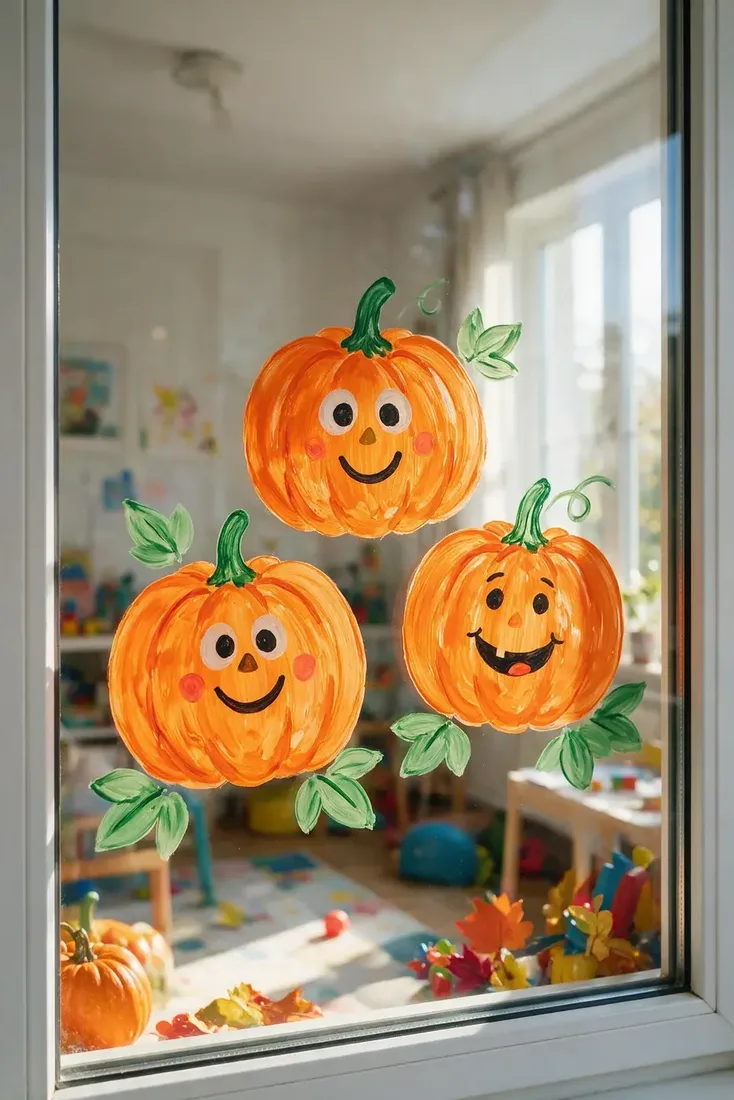
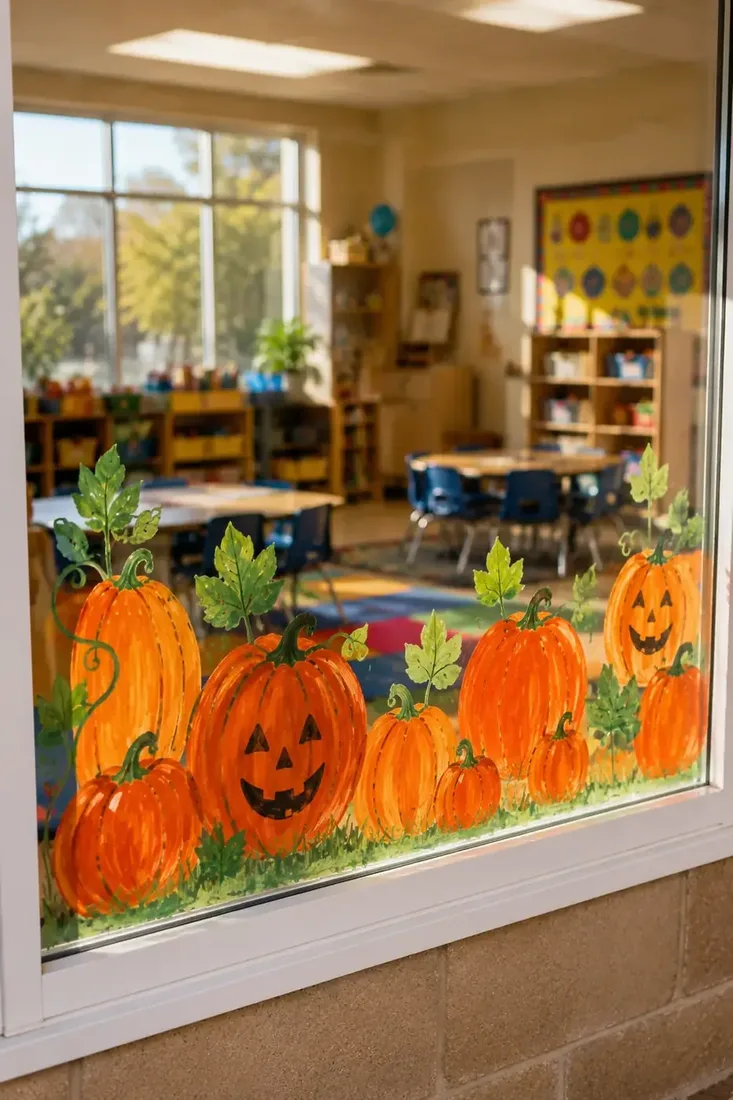
The trick in the window below is not the painting. It is who did which part.
An adult can lay down an orange pumpkin shape in about thirty seconds. A child, left to do the whole thing, will spend that thirty seconds on one eye and then want to do something else.
Split it. You do the shape, they do the face. They get the fun part, the result looks like the picture, and nobody has to be patient for longer than they can manage.
The stroke that makes a pumpkin
Look closely at those three and you can see the brush marks running top to bottom in curves, following the shape.
That is the whole technique. Do not fill the pumpkin in like a colouring book. Load the brush, start at the stalk, and pull each stroke down and slightly outwards, following the curve of the body. Leave the strokes visible.
The gaps between the strokes read as the ribs of the pumpkin, so you get the three-dimensional look for nothing. A flatly filled orange blob needs outlines and shading added afterwards to look like anything.
Same principle for the leaves: one stroke each, pointed at both ends, no outline. The tendrils are a single curly line.
What to give them
Faces are four marks: two white ovals with a black dot in each, a small triangle nose, a curved line for the mouth. The pink cheeks are two circles and they are what makes the whole thing cheerful.
Hand over a small round brush and those four instructions, and let the wonkiness happen. A pumpkin with one eye bigger than the other is the point of doing it with a child.
If they are old enough to want more, give them the spare glass between the pumpkins for falling leaves. Anything they do there cannot go wrong.
The paint trade-off, which is real
This is the part worth deciding before you start rather than halfway through.
| Paint | Comes off clothes | Behaves on glass |
|---|---|---|
| Washable kids paint | Yes, easily | Runs while wet; needs thick application |
| Acrylic craft paint | Not really | Stays put; better colour |
| Window chalk markers | Mostly | Streaky over large areas |
| Poster paint | Yes | Runs badly; not worth it |
Crayola and Little Brian both make washable window paints at around £6 to £10 a set in 2026, and Posca pens at £3 to £4 each in 2026 are excellent for the face work if a brush is too fiddly. For the shape coat, a 20mm flat synthetic brush costs about £3 in 2026 and does the job better than anything in a children’s kit.
Washable paint is the sensible choice with younger children, because something will end up on a sleeve. The cost is that it is thin and runs down vertical glass. Work around it by applying it thickly and letting each pumpkin dry before starting the next.
Acrylic craft paint gives much better results and will not come out of a school jumper. With older children in old clothes it is the better paint; with a four-year-old it is a gamble.
Either way, it comes off the window the same way: warm soapy water, a cloth laid over it for a few minutes, and a plastic scraper.
Height, and other practicalities
Paint at their height, not yours. Pumpkins at the bottom of the pane, leaves above. A child on a chair at a window is a different kind of afternoon.
Work on the inside. Weather cannot touch it, you are indoors, and at night with the lights on it looks wonderful from the street, which is the payoff they will want to go outside and see.
Old clothes, sleeves up, towel on the sill, and a jar of water within reach but not on the windowsill.
When to skip it
Rented flats where you are not certain about the glass, and any window with privacy or solar film on it, because the paint lifts the film when it comes off.
Also worth thinking about which window. A painted window in a playroom or hall is a delight. The same painting on the one you sit and look out of means six weeks of looking at the backs of three pumpkins.
The tree they cannot spoil
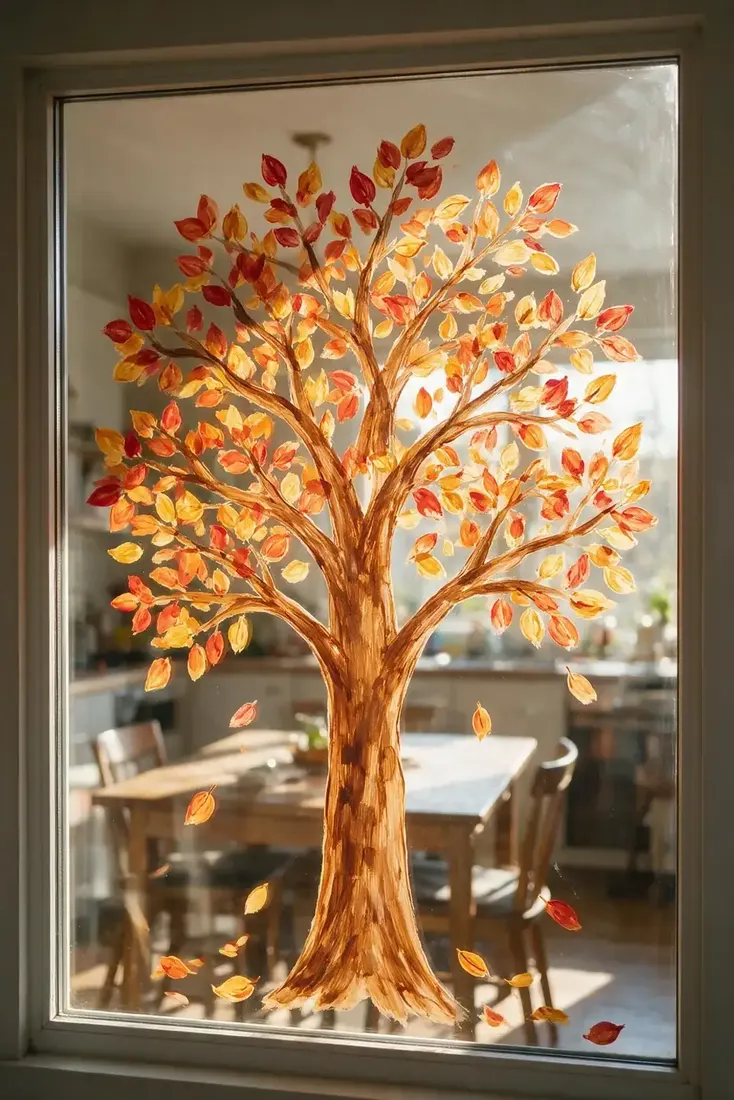
Look at the trunk first. It runs straight up the middle of the glass in brown, with branches reaching out on both sides, and every branch ends in leaves with no bare tips left showing.
I paint trunks like this the night before, while the kitchen is quiet. Brown needs two coats to cover glass, with about 20 minutes between them, and no child under eight will wait for that. A 20mm flat synthetic brush lays the trunk down fast. Crayola Washable Window Paint in brown and orange, around £6 to £10 a set in 2026, covers well enough for this kind of base.
The leaves belong to the children entirely. Fingertip dabs, sponge dabbers, or a small round brush, one dab per leaf in red, yellow, or orange straight from the pot. In this picture the leaves crowd the branch ends and a few drift free near the sill, and that scattered finish is exactly what small hands produce without trying. Sponge dabbers from Hobbycraft run £3 to £5 for a pack in 2026 and save brushes from being scrubbed flat.
Give each child one side of the tree. The finished shape still holds because the trunk is doing the structural work underneath.
Mushrooms along the sill for small hands
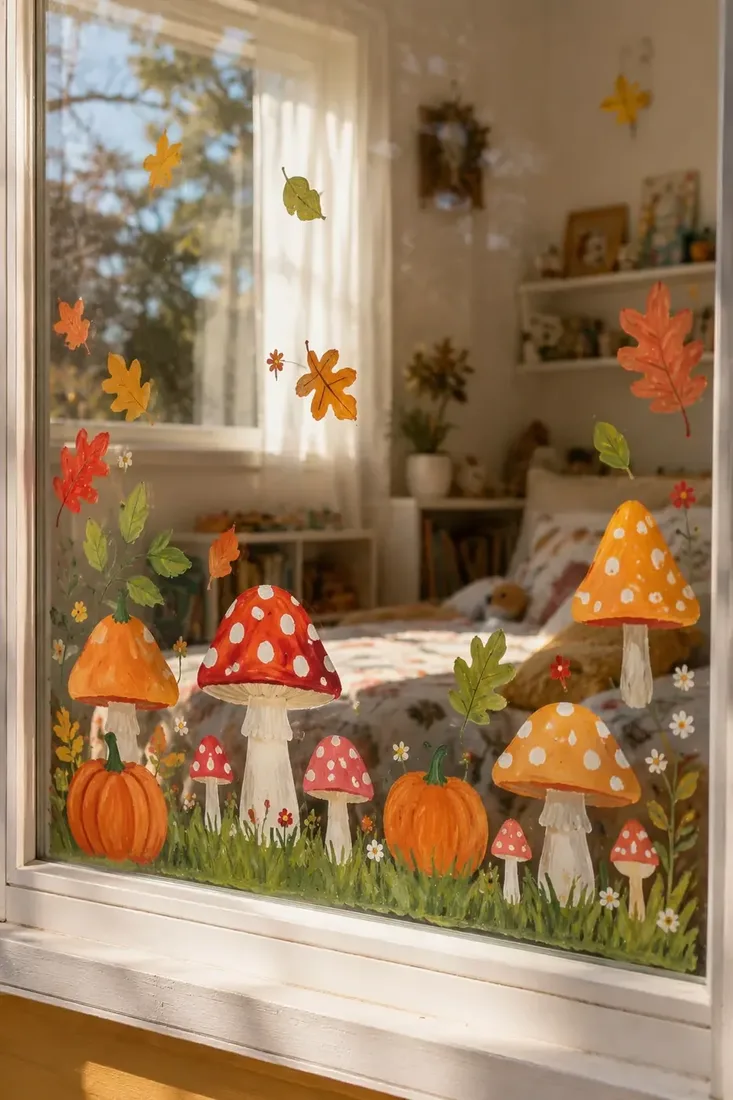
See how low everything sits. The grass runs along the bottom edge, the toadstools stand in it, and the floating leaves drift above where small arms cannot reach by accident.
That low line is the whole trick with toddlers. I paint the grass myself, a wavy green band about a hand high, because it sets the height everything else stands on. Then every mushroom is two shapes: a curved cap and a short stalk. Little Brian Paint Sticks, around £8 to £12 a box in 2026, draw the stalks without water or pots, and the caps take washable red straight from the pot.
The dots are what keeps a four-year-old at the glass longest. White spots on red caps, white daisies in the grass, each one a single press of a cotton bud. Notice how the white spots vary in size across the caps. That wobble is the charm, and it comes free with small hands.
I once painted the grass line too high and spent the afternoon holding a toddler at arm’s length so she could reach her own mushrooms. Never again. Set the line where they stand, and keep the cloth in the hand, not on the sill behind.
One big fox for their bedroom window
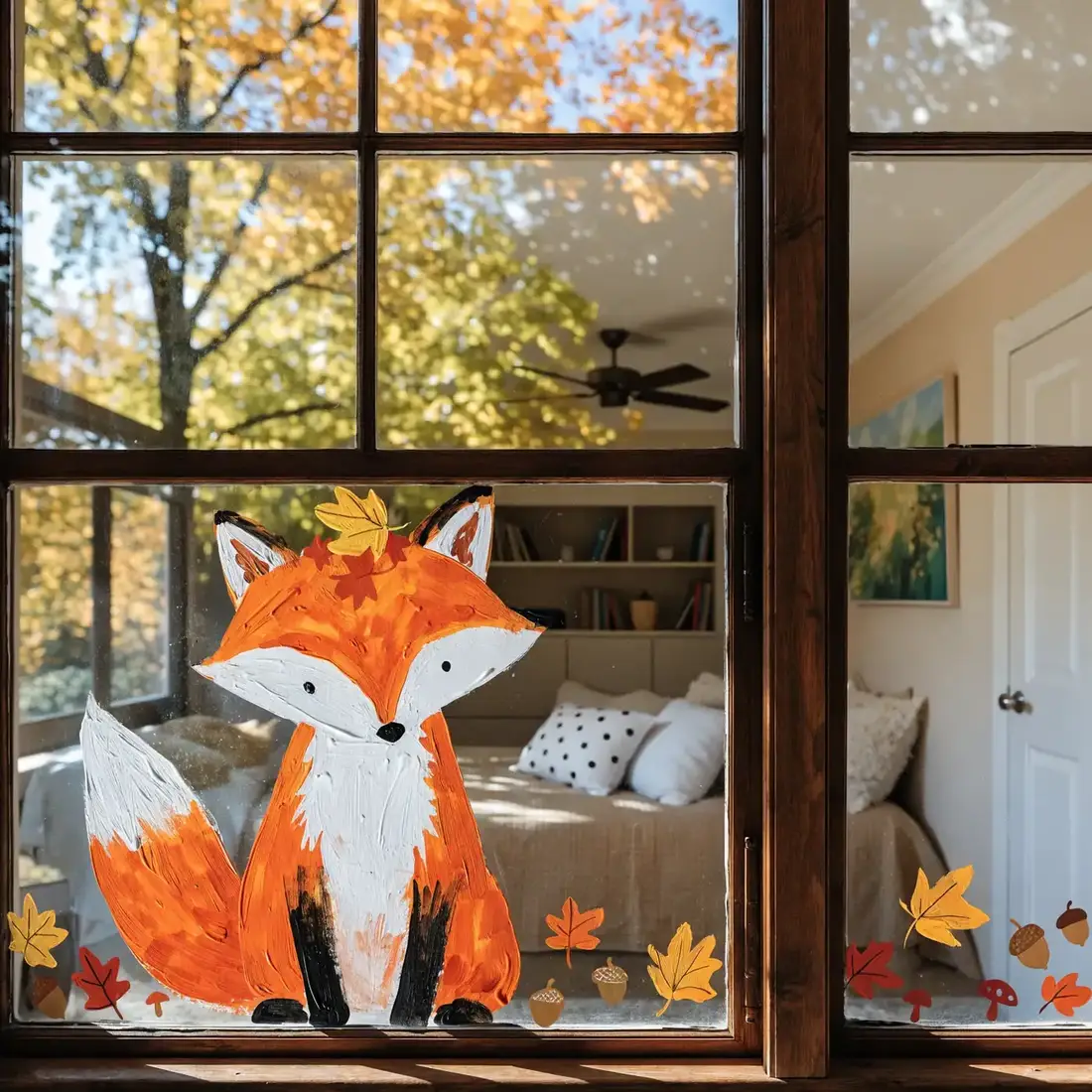
The fox fills the lower pane almost entirely, an orange body with a white chest, black legs and black ear tips, and a single yellow leaf balanced on its head. The leaf on the head is usually the favourite part to paint.
Big simple shapes like this suit a parent’s hand. The body goes down in flat orange, the white chest over it once dry, then black for the legs last because dark over light covers in one pass. A Posca PC-3M pen, £3 to £4 each in 2026, draws the nose and eyes without a brush shaking at the wrong moment. That fox orange sits close to Crayola orange mixed with a touch of red, which gets you the same glow for less money.
The children take everything around the fox. Small leaves, acorns and tiny toadstools along the base, each one a separate job finished in minutes. In this picture the leaves scatter across the bottom of the glass and up the next pane, so two children can work side by side without sharing an edge. The dark glazing bars frame the fox like a picture mount, which is why it photographs so well.
Bedroom glass earns this treatment because the painter decides when it comes down. That control over the end date matters more to children than most adults expect.
A harvest basket that lasts the week
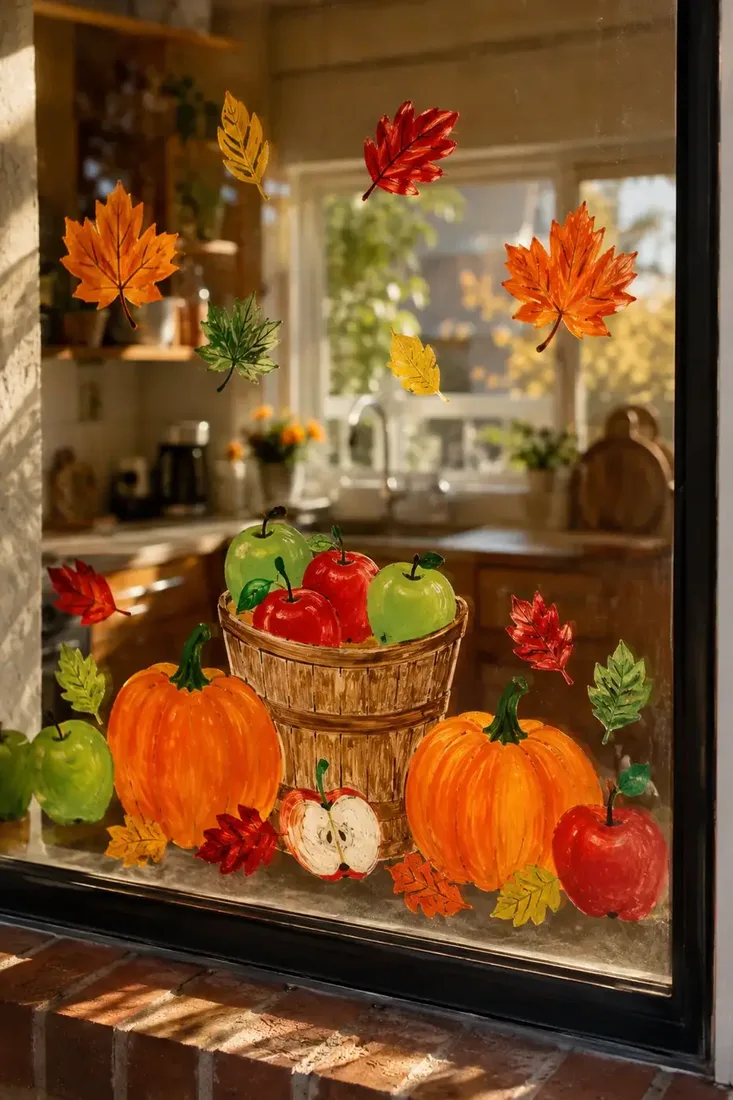
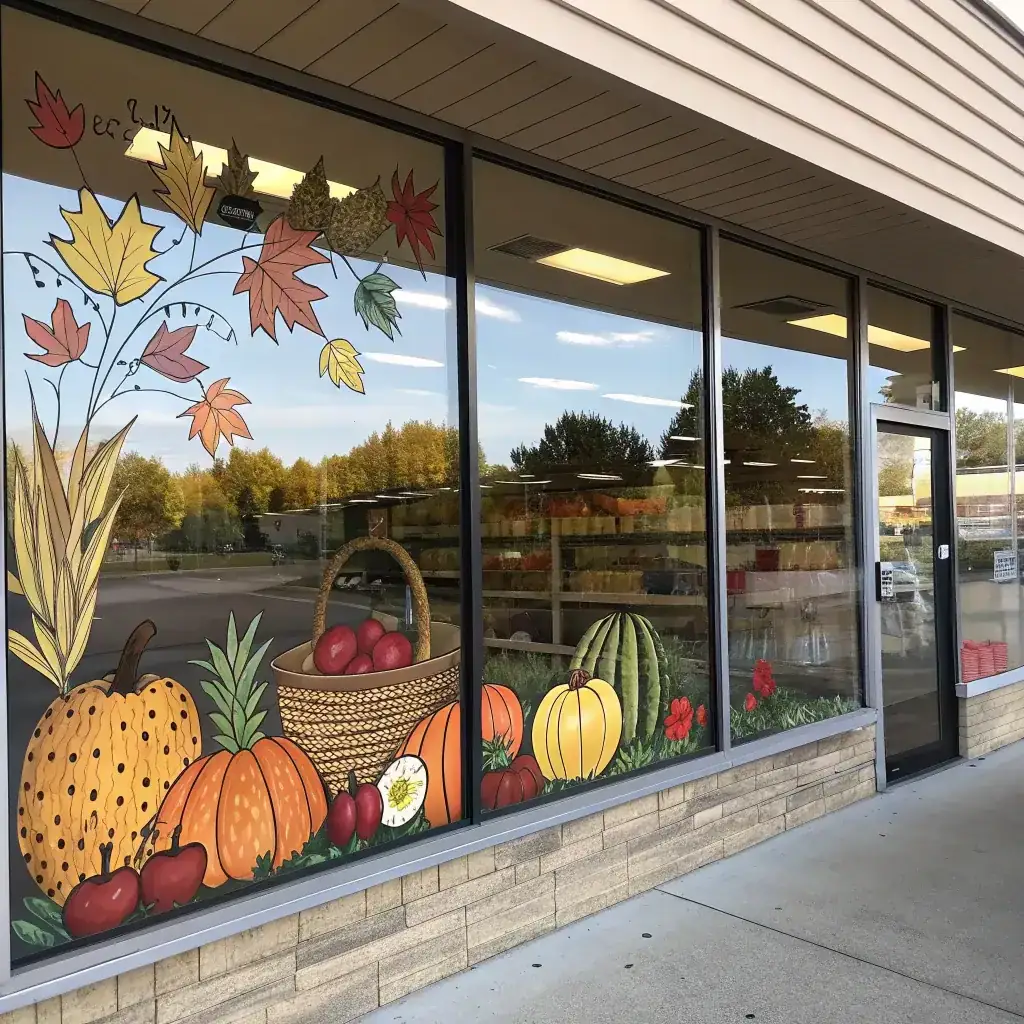
Look at the weave on the basket. Thin brown lines cross each other all the way round, with two darker bands holding the shape, and the fruit heaped above it so the rim does the hard work of lining everything up.
Parents should claim the basket. The weave needs steady lines and a flat brush, and it wants to dry before fruit touches it or the colours bleed. A Hobbycraft flat synthetic set, £7 to £10 in 2026, holds enough paint for long lines without reloading every few centimetres. Once the basket is dry, the rest belongs to whoever is smallest and keenest.
Apples are circles with a stalk. Pumpkins are ovals with ribs. The halved apple at the front is one white oval with brown pips, and children love painting food cut open. I tried to finish a basket like this in one afternoon once and ended with a smeared pumpkin and a tired five-year-old. One fruit a day since then, each sitting about 15 minutes, and the window fills across a school week.
Leaves round the edges fill the gaps last without touching the fruit in the middle.
Let them dress the scarecrow
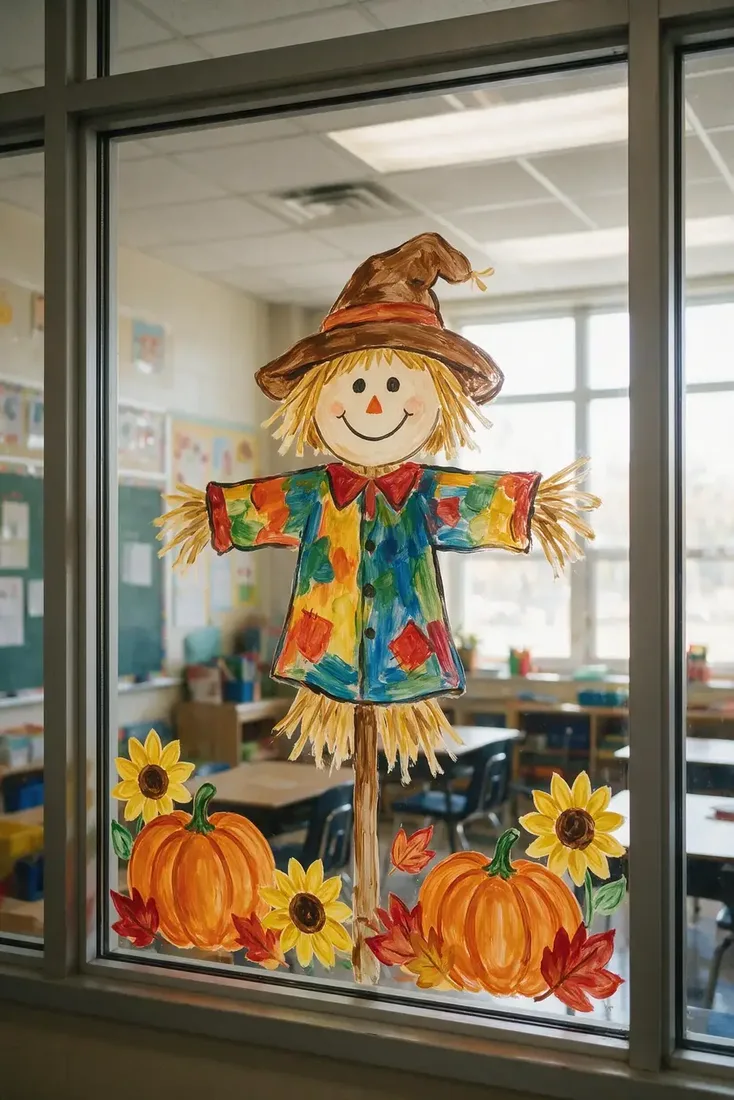
This one stands on a classroom window, with desks and boards behind the glass, and the same split works at home on a patio door or a playroom pane.
The scarecrow needs a grown-up outline. Hat, head, post down the middle, arms out straight. Symmetry matters here because a lopsided scarecrow reads as broken instead of charming, so draw it with a chalk marker first and let the marker dry. A box of window chalk markers runs £10 to £15 in 2026, and The Works carries sets at the lower end of that band.
Then hand the coat over. Patches of blue with green under them, buttons down the front, straw at the neck and cuffs. Messy colouring suits patchwork, which is why children do it better than adults. The pumpkins and sunflowers at the base are spare jobs for anyone who finishes early or fades first. Notice the straw poking from the sleeves. That fringe hides wobbly edges where sleeves meet hands.
Talk while painting. Most parents realise a scarecrow gives names to things, hats and seeds and patches, and naming keeps younger ones at the window past the usual ten minutes.
Grow it bit by bit across the living room glass
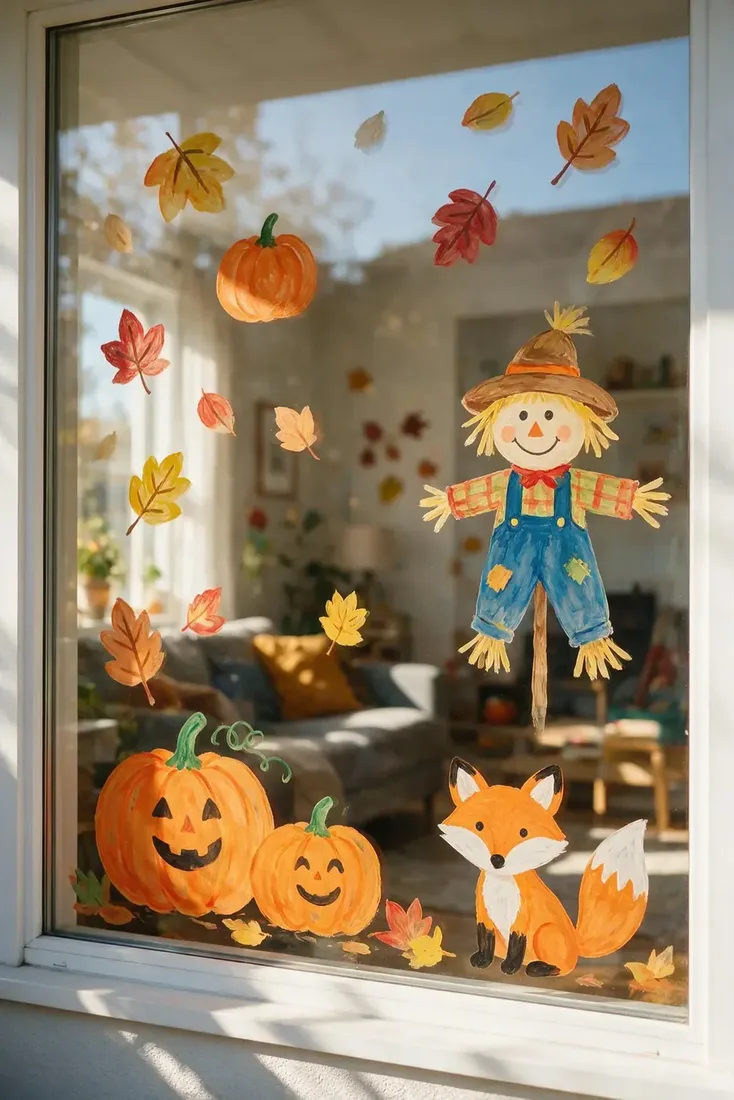
The one detail to steal here is the empty space. Two pumpkins low on the left, a fox low on the right, a small scarecrow floating high, and leaves scattered between them with room to spare.
Start with one motif and stop. A pumpkin on Saturday, the fox on Tuesday, leaves whenever ten spare minutes appear. Children come back to glass that still has gaps in it, which a one-afternoon picture never offers.
A 500ml bottle of washable orange, £4 to £6 in 2026, covers all the pumpkins here with plenty left for touch-ups. Photograph the glass each evening from the same spot in the room. The sequence usually becomes the keepsake, since the paint washes off in January and the pictures stay on the phone.
Half term suits this rhythm. Short sittings, no big reveal, something new each time they pass.
Frequently Asked Questions
At what age can a child join in with window painting?
From about two, with dabbing tasks inside an outline painted by an adult. Fingertip dots and sponge prints suit under-threes. By four or five, most children manage whole mushrooms and pumpkins alone, with a cloth nearby for drips.
Which paint comes off glass and clothes with least trouble?
Washable paint labelled for glass lifts fastest from jumpers and wipes from panes with warm soapy water. It slides on vertical glass while wet, so lay it on thick. Acrylic craft paint covers better yet stains fabric, so save it for older children in worn clothes.
How do we stop children painting over each other's work?
Hand each child a separate area of glass and settle who gets which patch before pots open. Shared scenes invite overpainting and tears. Single motifs per child, foxes or faces or toadstools, keep neighbours apart.
What should a beginner paint first?
A mushroom cap, a leaf dab, or a row of dots. Each needs one movement and has no correct version, so nothing looks wrong. Faces come next, once brush control steadies.
Can one window keep children busy for days?
Yes, when the design grows. Paint a trunk or basket first, then add one leaf or fruit daily across a week. Brief sittings beat a long afternoon, and evening photos track the progress.
How do I protect the sill, clothes and carpet?
Dress painters in old clothes with sleeves rolled, spread a folded towel along the sill, and hold a damp cloth while working. Keep the water jar off the ledge and within reach on a table.
To start
- You do the shape; let them do the face.
- Pull the orange in curved strokes top to bottom and leave the marks showing.
- Use washable paint with small children, acrylic with older ones in old clothes.
- Paint at their height, on the inside of the glass.
- Towel on the sill before anyone opens a pot.
- Give them leaves, dots, and faces; keep trunks, baskets, and outlines yourself.
- Add a little each day and photograph it; unfinished glass brings them back.
This article may contain affiliate links. We may earn a commission at no extra cost to you.