13 Brick House Exterior Ideas: The Repointing Mistake That Ruins Them

Add us as a preferred source to see more stories on Google.
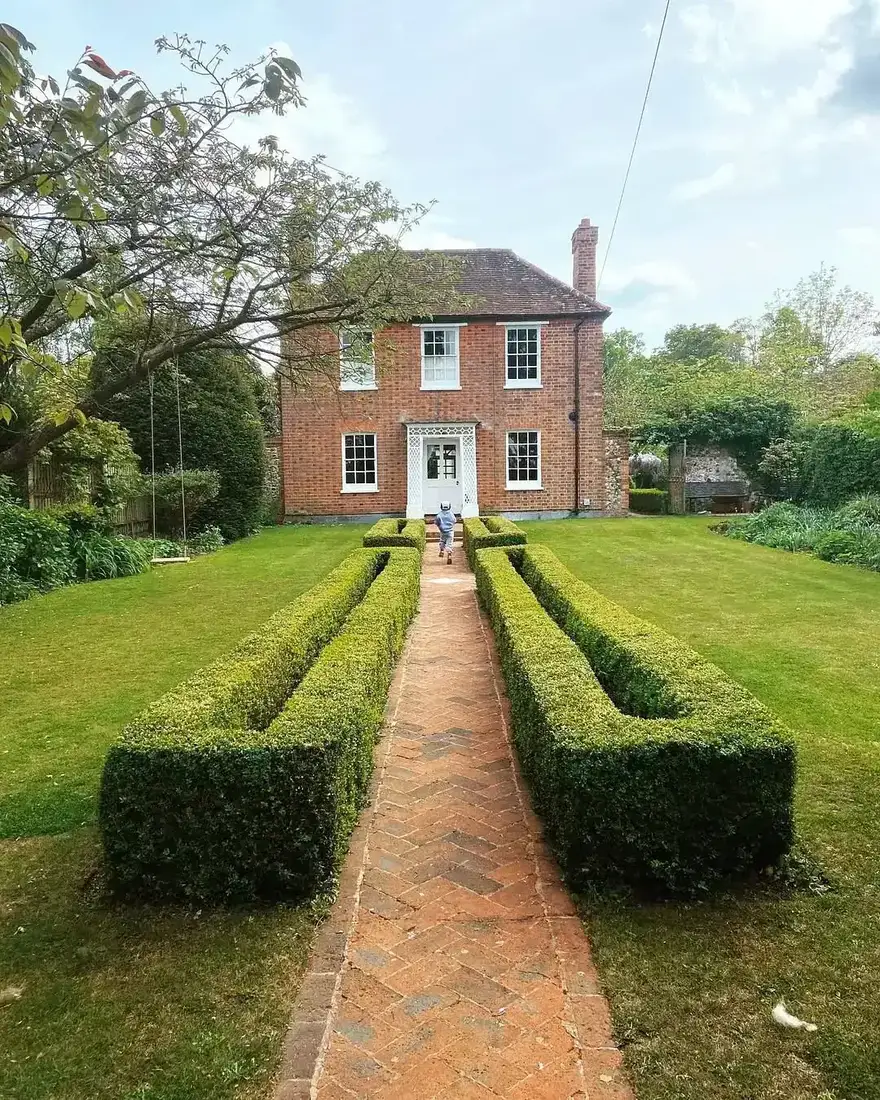
There is a decision in the wall below that costs more to get wrong than every other choice on the house put together, and it is not the colour of anything.
Look at the joints between the bricks. The mortar is a warm off-white and slightly soft-looking, sitting a fraction back from the brick faces. That is lime, and it is why a wall built two hundred years ago still has crisp arrises on every brick.
Point that same wall in modern cement and you start a slow, expensive failure. Worth understanding before anyone quotes you for repointing, because the cheap quote is usually the one that does it.
Why the mortar has to be softer than the brick
A solid brick wall has no cavity and no damp-proof course. It manages water by absorbing it and then letting it evaporate back out, mostly through the mortar joints, which are deliberately the weakest and most porous part of the wall.
Lime is softer than the brick around it. Water takes the easy route out through the joint, and when the wall moves or freezes, the mortar sacrifices itself rather than the brick. Repointing is routine maintenance; bricks are not.
Cement reverses that. It is harder and far less permeable, so trapped moisture leaves through the only route left, which is the face of the brick. In frost, the water behind that face expands and takes the face off with it. You get spalling: a wall of bricks with their outer skin missing, showing soft pink interior. Nothing puts that back.
The damage takes ten to twenty years to become obvious, which is why the person who did the pointing is long gone by the time anyone connects the two.
What to ask for
Specify a lime mortar, and expect the contractor to talk about NHL grades, usually NHL 2 or NHL 3.5 for general walling, or a lime putty mix on very soft historic brick. St Astier, Singleton Birch and Lime Green are the names that come up most often, at roughly £12 to £20 a 25kg bag. If a contractor shrugs at the term, get someone else.
Ask them to rake out by hand or with a quirk saw rather than an angle grinder. Grinders widen joints and chew brick edges, and on a wall with thin joints the result is permanent and visible from the road.
Match the joint profile to what is there. On the house above it is a simple flush or very slightly recessed joint. A weather-struck or, worse, a proud strap pointing on a Georgian wall looks wrong immediately and holds water besides.
Colour comes from the sand, not from pigment. A good contractor will make sample panels and let them dry before committing, because wet lime and dry lime are different colours.
Do not repoint the whole house because some of it needs doing. Sound lime pointing can be two centuries old and have decades left.
Choosing everything else around the brick
The brick colour is fixed. Every other decision has to suit it, which narrows things usefully.
| Brick | Works with | Avoid |
|---|---|---|
| Warm orange-red | Off-white, cream, soft black, sage, deep green | Bright white, grey-blue |
| Dark red or purple-blue | Cream, stone, black, dark green | Warm beige, orange-toned timber |
| Yellow or buff stock | Soft white, grey-green, black, deep blue | Cream, which disappears into it |
| Brown or multi | Cream, dark brown, olive | Cool greys, pink-toned whites |
The white on that house is an off-white with warmth in it, not a brilliant white. Brilliant white against warm brick looks harsh and, oddly, makes the brick look dirty by comparison.
The most common modern mistake is white uPVC against warm old brick. It is not only the colour; it is the thickness of the frames and the absence of fine glazing bars. The windows above have slim timber sections and small panes, and that fineness is doing as much work as the paint colour.
The path is the same brick
Look at the path running to the door. It is brick, laid in herringbone, from the same family as the house.
That repetition is the cheapest way to make a brick house look considered. Reclaimed brick pavers, or clay pavers chosen to sit in the same colour range, tie the ground to the building. Concrete block paving in a grey or buff that does not relate to the wall does the opposite, and it is the most common thing people spend real money getting wrong.
Two practical notes: use a paver rather than a facing brick underfoot, since facing bricks are not frost-rated for ground contact and will break up. And lay to a fall away from the house, always.
When not to do any of this
If the house is post-war cavity construction with cement mortar from new, nothing above applies. Cement is correct there, the wall has a cavity and a damp course, and repointing in lime would be the wrong call.
The rough dividing line is around the 1920s, but it varies by region and by builder. If you are unsure, the coin test in the pro tip settles it in ten seconds.
Red brick left bare under a slate roof
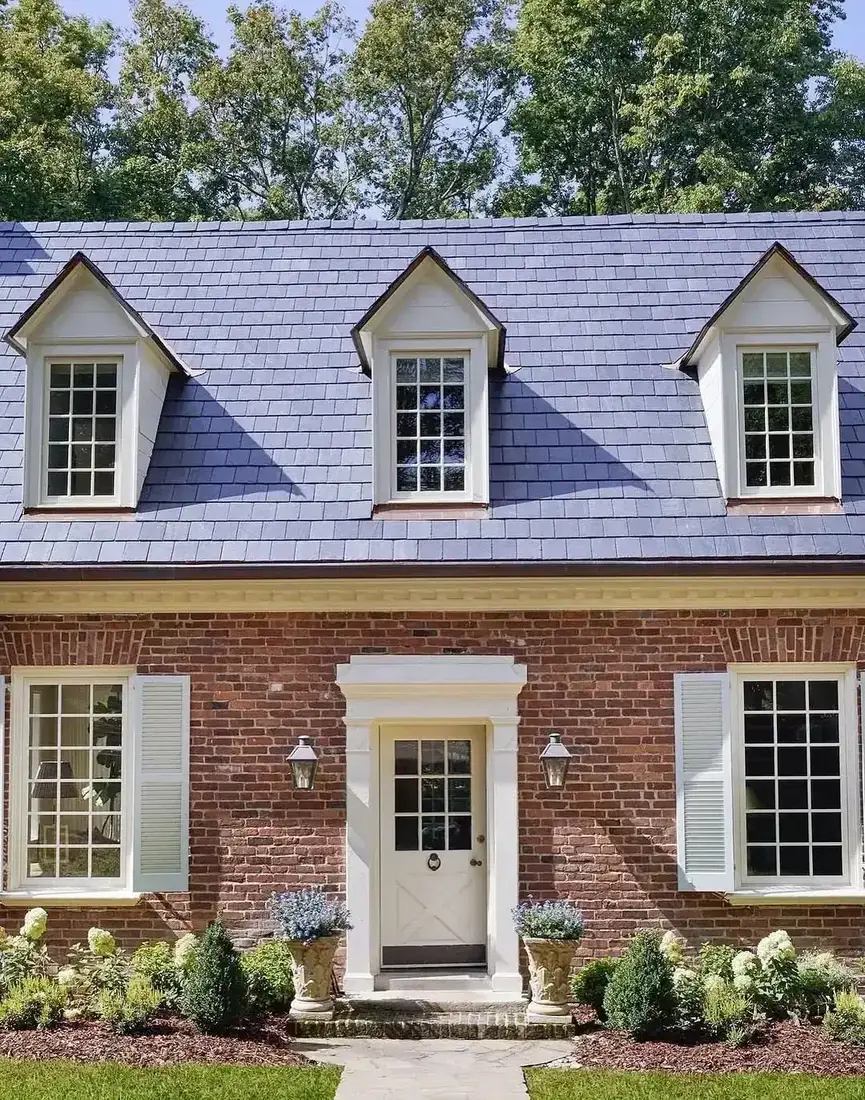
The wall in this photo has never been coated. The bricks show their full range, from deep red to almost purple where the kiln ran hot, and the pale lime joints sit slightly back. That texture is doing the work. Paint would flatten it in one coat.
First check the order. Repoint soundly, repair the gutters, then think about colour. A wall that cannot dry will not hold paint anyway. The slate above tells the same story. Cupa R12 or a reclaimed Welsh slate lasts a century because water runs off it. Brick lasts because water moves through it. Seal either one and trouble starts.
The joinery here is the model. Off-white timber shutters, a panelled door in the same paint, slim glazing bars. Repainting shutters, door and surround on a front like this costs £900 to £1,800 in 2026 for preparation and two coats in Dulux Weathershield or Sandtex Masonry paint on the masonry plinth only. The brick itself costs nothing. Leave it.
Ivy that softens the wall without sealing it
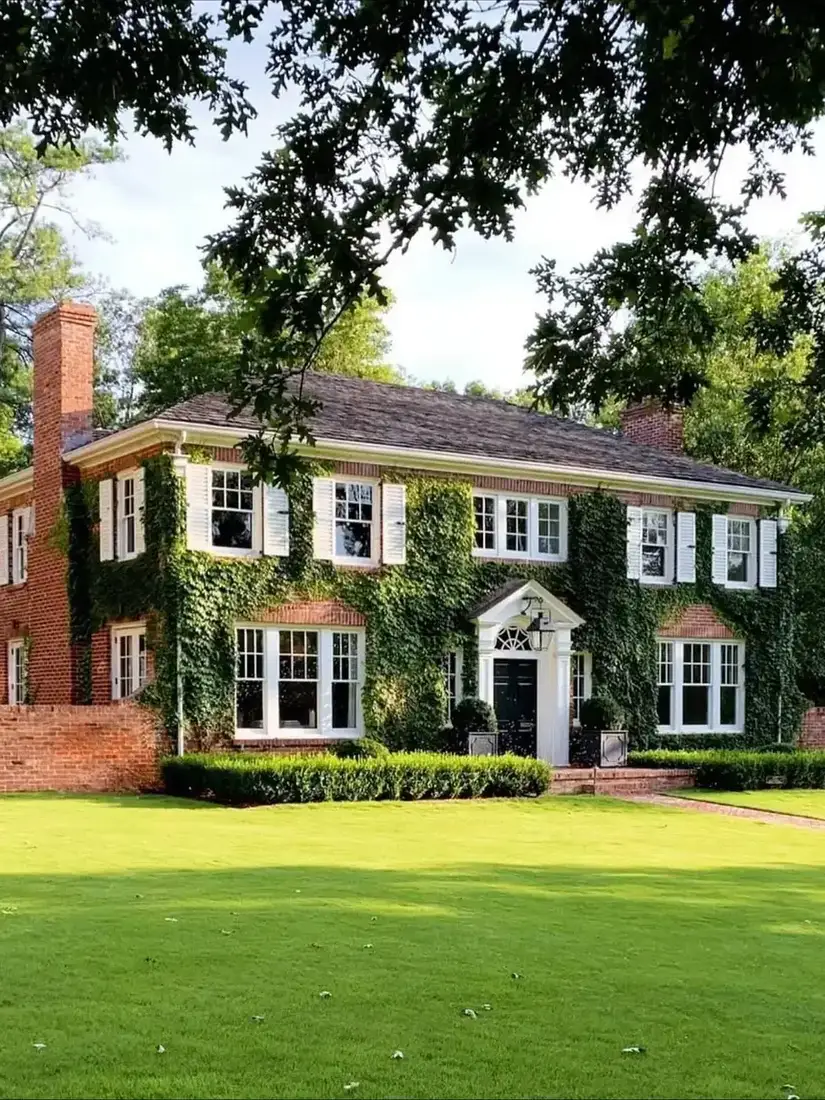
That green cover reads soft from the lawn, and the wall behind it is still bare brick. In this image the growth is spread thin across the centre and thicker at the edges, with white shutters and a black door holding the symmetry. It works because the planting can be cut back. Paint cannot.
Planting order matters. Identify the plant before it goes near the wall. Boston ivy and Virginia creeper grip with pads and usually leave sound joints alone. English ivy sends roots into joints and opens them, especially on lime mortar. A contractor clearing established English ivy and repointing the damage charges £400 to £900 in 2026 for a single elevation, plus the repointing on top at £60 to £120 per square metre in 2026.
Keep growth off gutters, sills and the roof edge. Cut a clear margin round every opening. Then the wall dries between showers. Neglect that margin and the wall stays damp through winter.
Buff brick that needs no coating
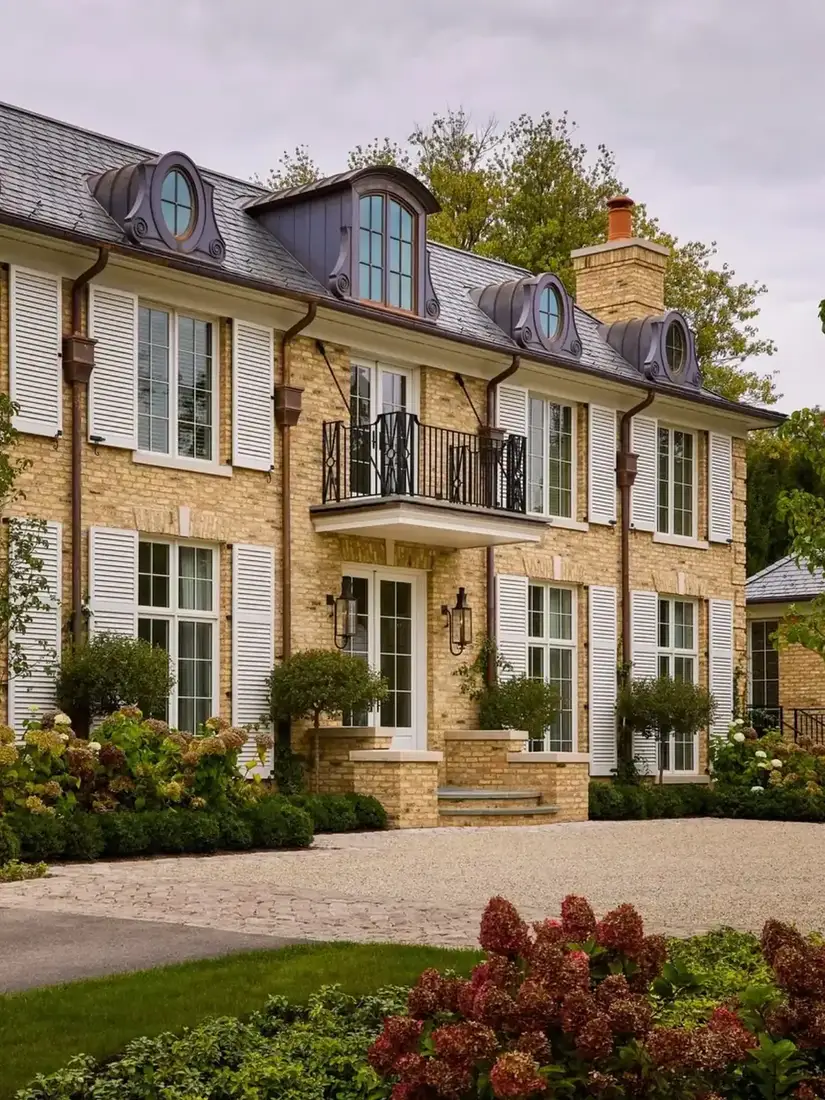
Pictured is a pale buff wall with white shutters, dark copper dormers and an iron balcony. The brick is the quiet background. The metal and the joinery carry the front. That is the right way round for a wall like this.
Buff stock marks easily. Once it is painted, every scuff shows and every repair needs a full recoat to blend. Left bare, a scuff weathers in. Repointing buff brick in lime with a matching sand costs £70 to £130 per square metre in 2026, using St Astier NHL 2 and a washed sharp sand. A full paint job on the same elevation costs £2,500 to £6,000 in 2026 with access, and then asks for the same again every eight years or so.
The gravel in front helps. It throws less splashback onto the first courses than hard paving. Keep that first 300mm of brickwork clear and ventilated. It dries faster after rain.
Dark brick with white timber work
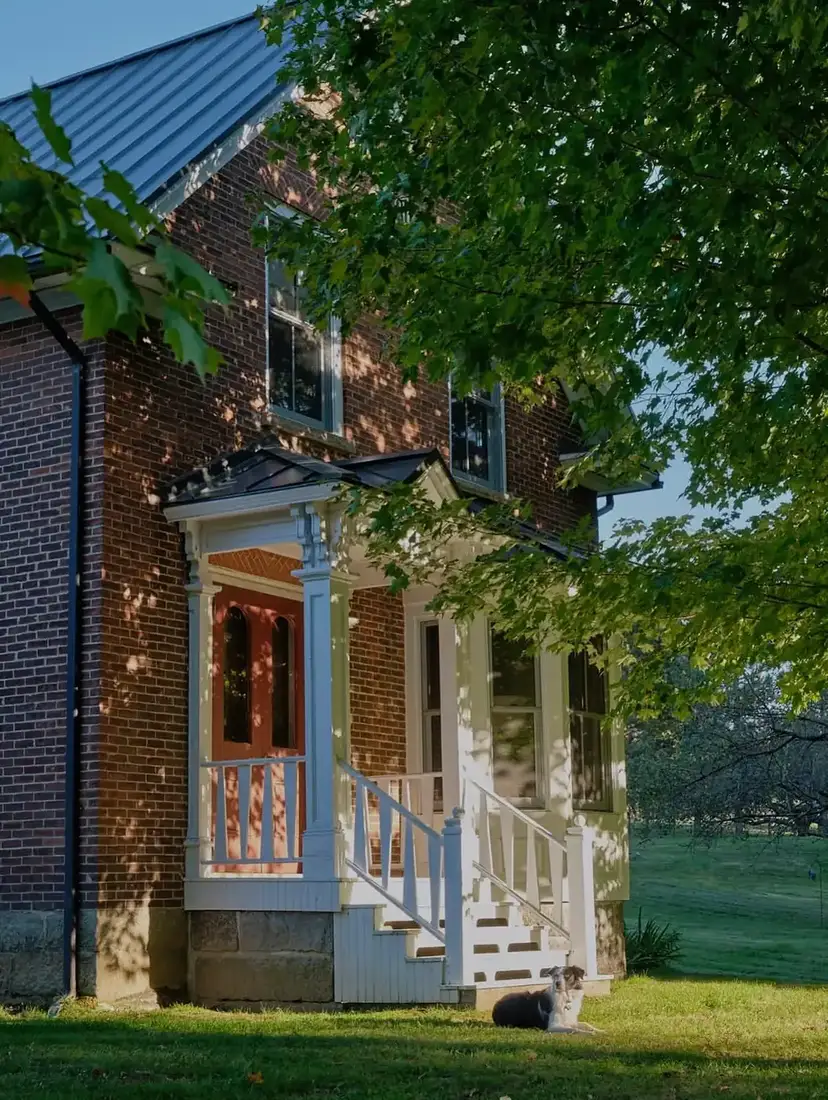
From this angle the wall is a dark red brown, almost purple in shade, with a small white porch and steps fixed to it. The contrast lifts the brick. The wall itself is untouched, and that is why the white reads clean.
Fix the timber before considering the brick. Scrape back, repair rot with two-part filler or spliced Accoya, then two coats of Sadolin Superdec or Dulux Weathershield exterior satin. Rebuilding a small porch stair and balustrade in softwood costs £1,200 to £2,800 in 2026, and most of that is labour. Painting the brick would cost a similar sum and would hide the very colour the white needs.
Check the shade line. A wall under trees stays damp longer. That suits lime. It does not suit acrylic. If the joints need work, specify lime and leave a flush joint that sheds water.
Limewash that still shows the brick
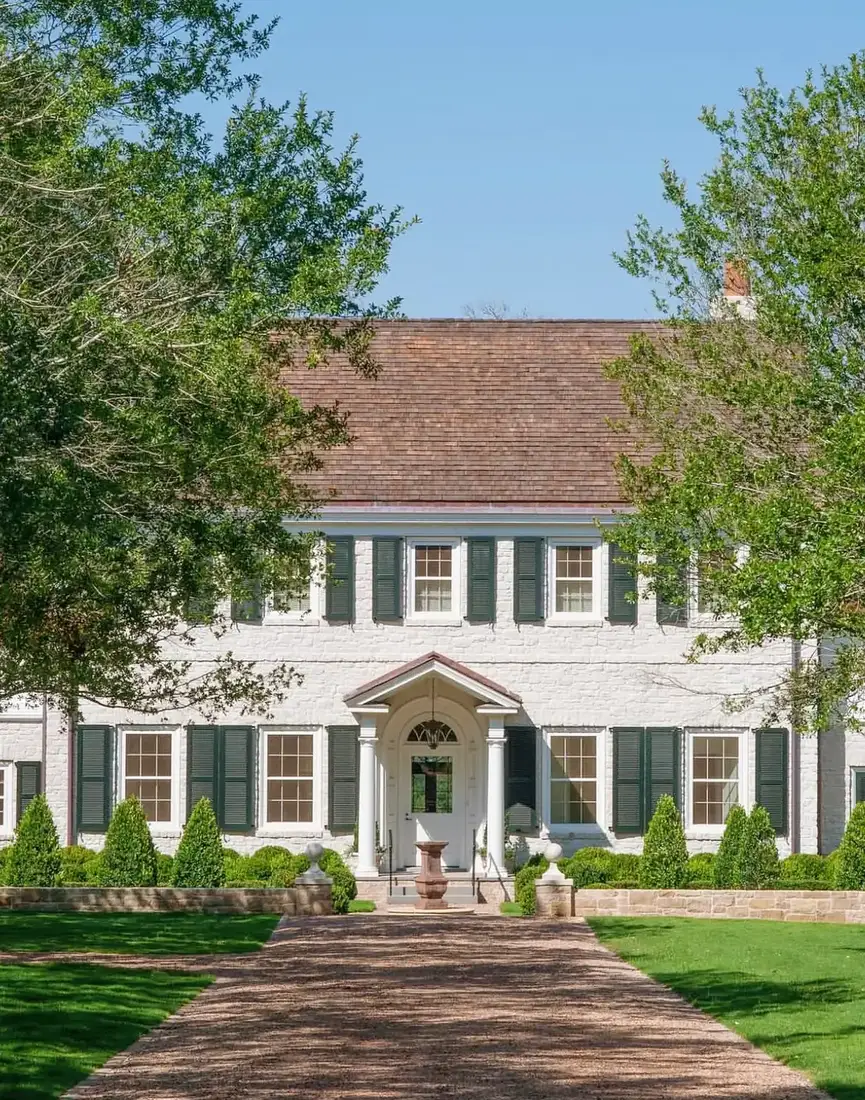
This front is not paint. The coating is thin, the brick courses ghost through, and the joints read as slightly deeper lines. That is limewash doing what paint cannot. It colours the wall and still lets water pass.
The method is simple and unforgiving. Damp the wall first. Brush on Bauwerk limewash or Kalklitir lime paint in thin coats. Work a whole elevation in one go to avoid tide marks. Materials for an average front run £45 to £85 for 10 litres in 2026, and a contractor charges £2,000 to £4,500 in 2026 to wash, mask and apply two coats on a two storey front.
It fades. Expect five to seven years before a recoat. That is not failure. A limewashed wall wears by thinning, while acrylic fails by peeling. One can be brushed over. The other needs stripping.
Bare brick below, render above
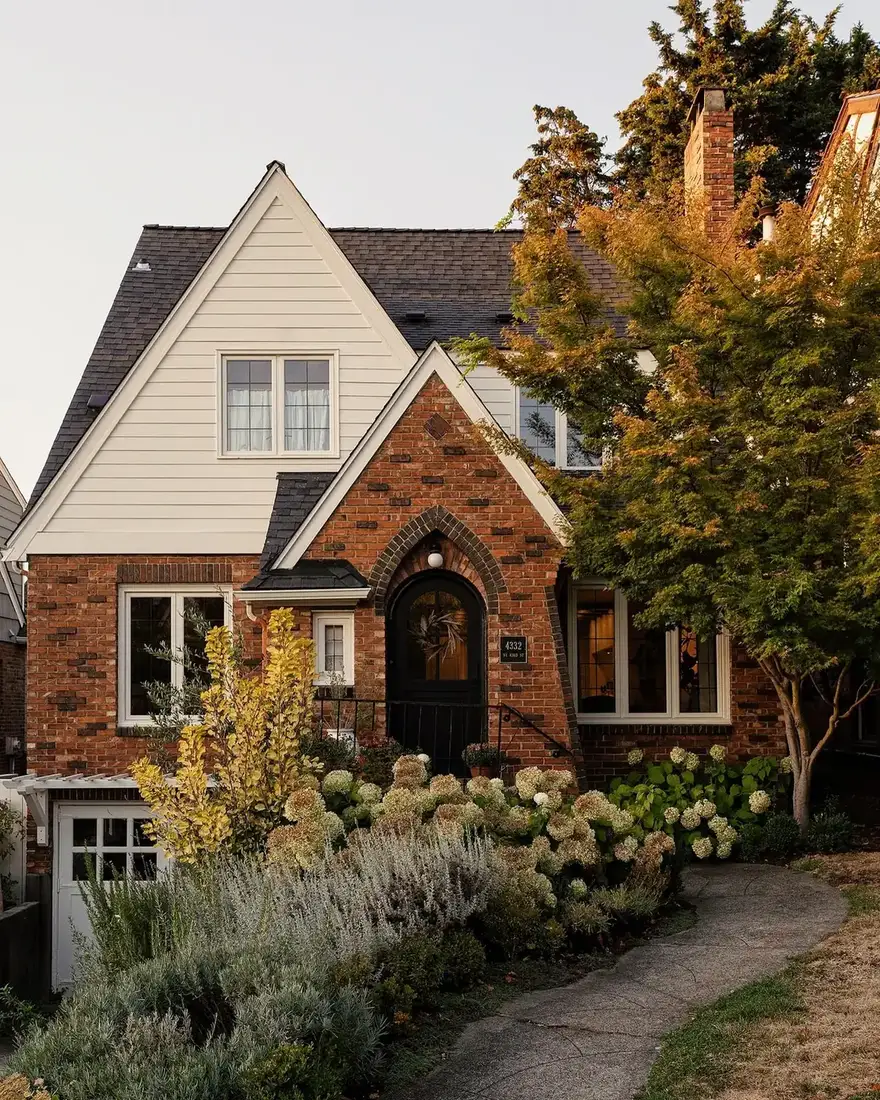
The ground floor here is bare red brick with dark burnt headers scattered through it. Above, the gable is pale render. The change of material is the design. Cover the brick and the house loses its base.
Read the junction. Brick below sheds splashback. Render above stays drier. Each suits its position. A single coat of paint across both would move water to the wrong place and would peel first where the ground splashes. Leave the change visible.
Repoint the brick in lime where joints have hollowed, and repair the render separately with a lime render mix. A mason repointing a cottage front and patching render charges £1,800 to £4,000 in 2026 depending on access and the amount of raking out. Get the wall dry before either. Clear soil from the plinth and cut back the planting by a hand width so air moves.
White paint on a garden wall and chimney
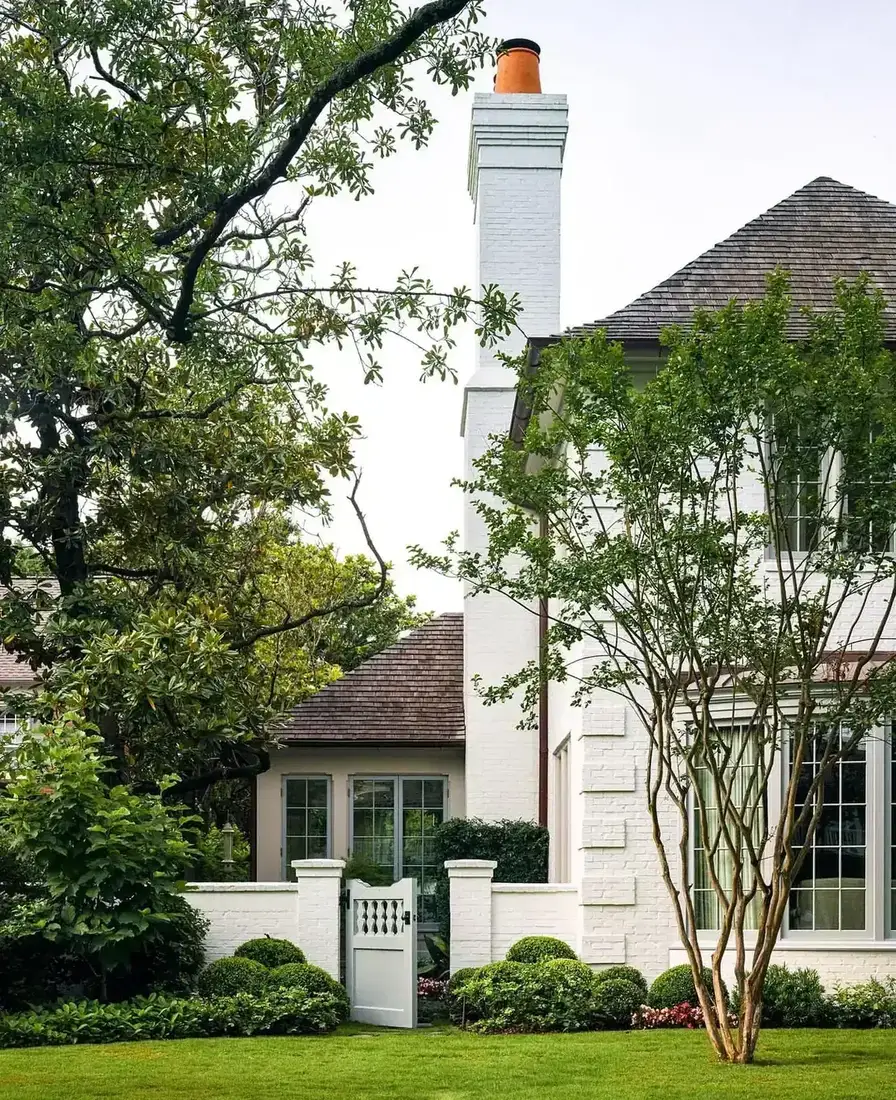
In this photo the brick is already painted. The chimney stack, the side wall and the gate piers are all in the same white, with a terracotta pot on top of the stack. The paint is holding because the wall is garden scale and open to wind on both sides. It dries fast.
Once brick is painted, the job changes. Do not strip it. Stripping blasts the faces and ruins the arrises. Maintain the film instead. Wash down, spot prime bare patches, then two coats of Dulux Weathershield Smooth Masonry or Sandtex Microseal in white. Materials run £55 to £95 for 10 litres in 2026, and a decorator charges £1,500 to £3,500 in 2026 to wash and recoat walls and a stack of this size.
The one detail to copy is restraint. One white, one green lawn, clipped hedging. Nothing else fights it.
White mineral coating with joints still visible
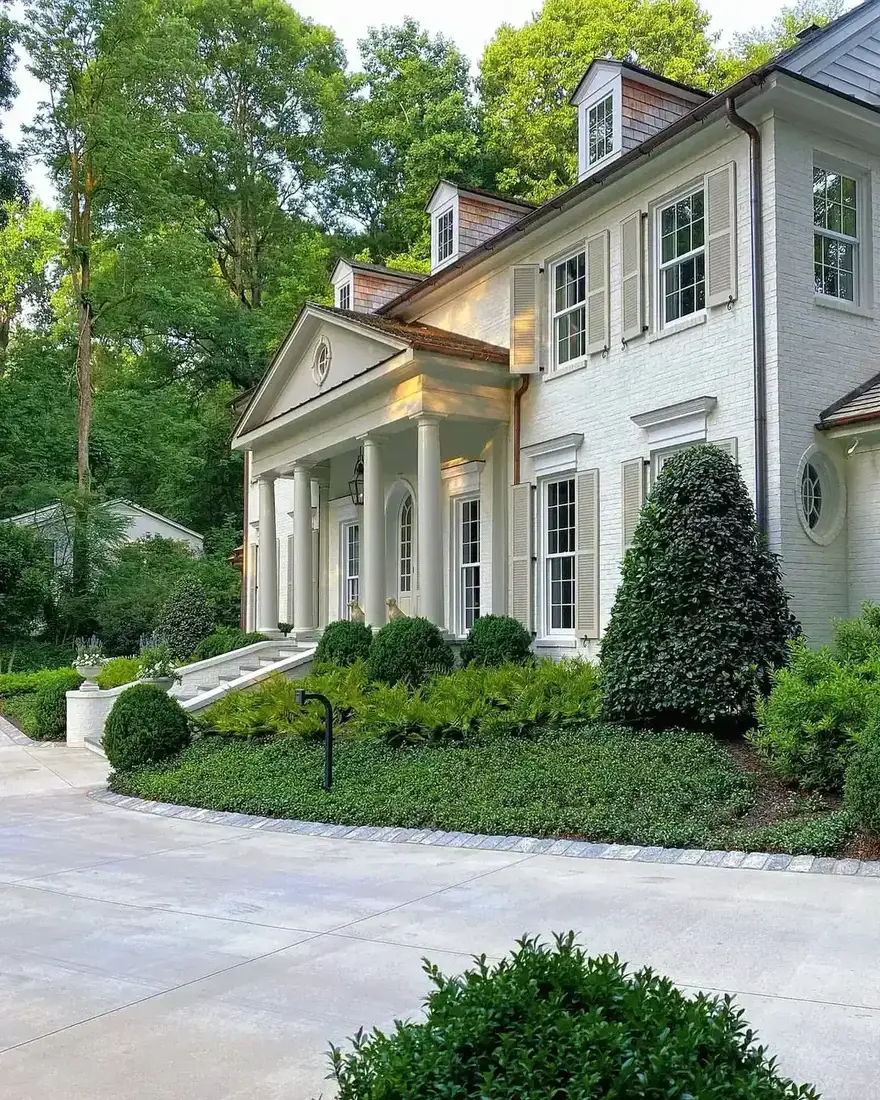
The wall above is painted white, but the brick bonds and the joints still show as shallow relief. That texture is the giveaway that this is a mineral coating instead of thick acrylic. Keim Royalan or Beeck Beecksosil soaks into the surface and leaves the face open. Water vapour still passes, which is why the joints read clearly after years in weather.
If the wall is already painted in plastic, test before switching. A mineral coat will not grip acrylic. The existing film has to come off or stay as the base. A contractor to steam clean with a Doff system and prepare a front of this scale charges £500 to £1,200 in 2026, and mineral paint itself runs £80 to £130 for 12.5 litres in 2026.
Columns and shutters in the same white keep the front calm. The planting does the rest. Boxwood balls and a clean drive cost less than paint and change the house more.
Painted brick with arches and a bare terrace
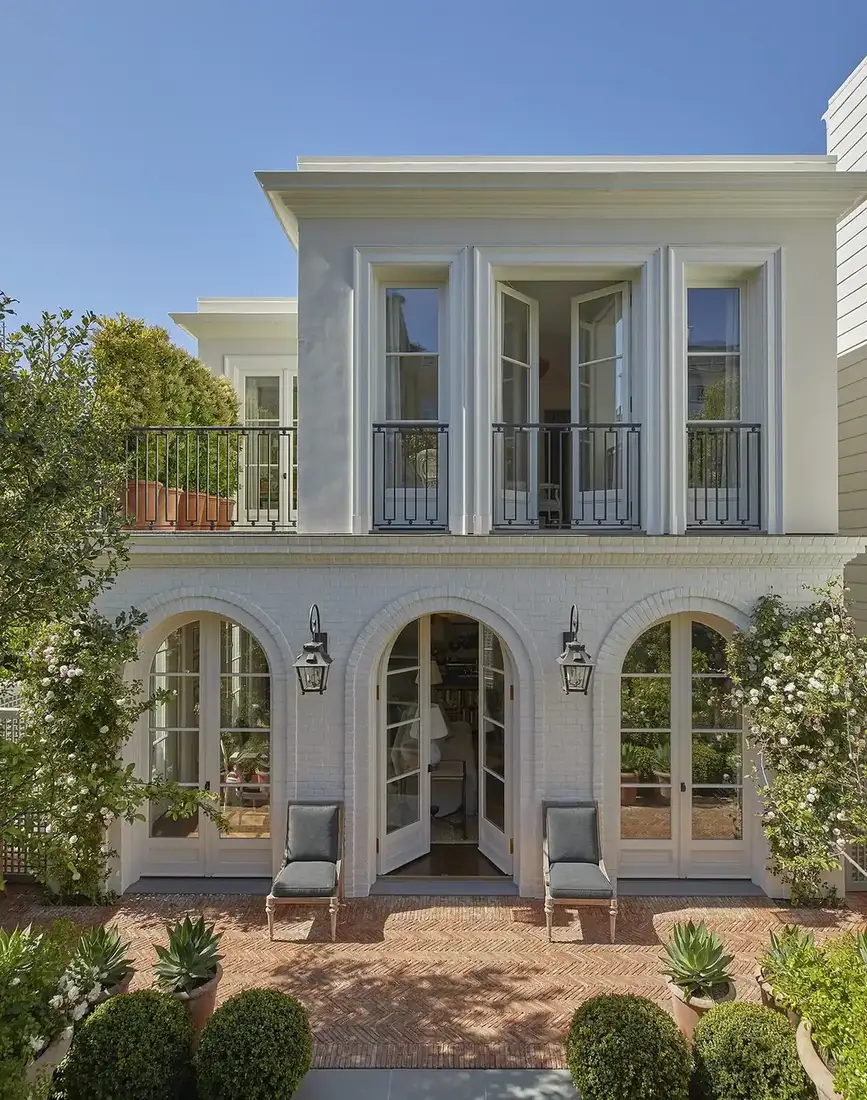
Here the walls are painted white and the ground is bare brick. The three arches at ground level sit on brick piers, and the terrace is herringbone clay pavers left unsealed. That split is correct. Walls can be coated with a breathable system. Ground cannot. It needs a paver that drains and dries.
Look at the lanterns flanking the centre arch. Black steel, simple form, fixed to the piers where they light faces and steps. A pair of solid lanterns from Jim Lawrence or Garden Trading costs £160 to £380 in 2026, wired on a separate circuit by an electrician. Leave that to a professional. Mains work outside is not a first project.
The terrace shows the sibling rule. Clay pavers at £55 to £95 per square metre in 2026, laid on a compacted sub-base with a fall away from the house, outlast facing bricks laid flat. Keep the wall coating off them. Mask the paving before any repaint.
Red brick that relies on scale
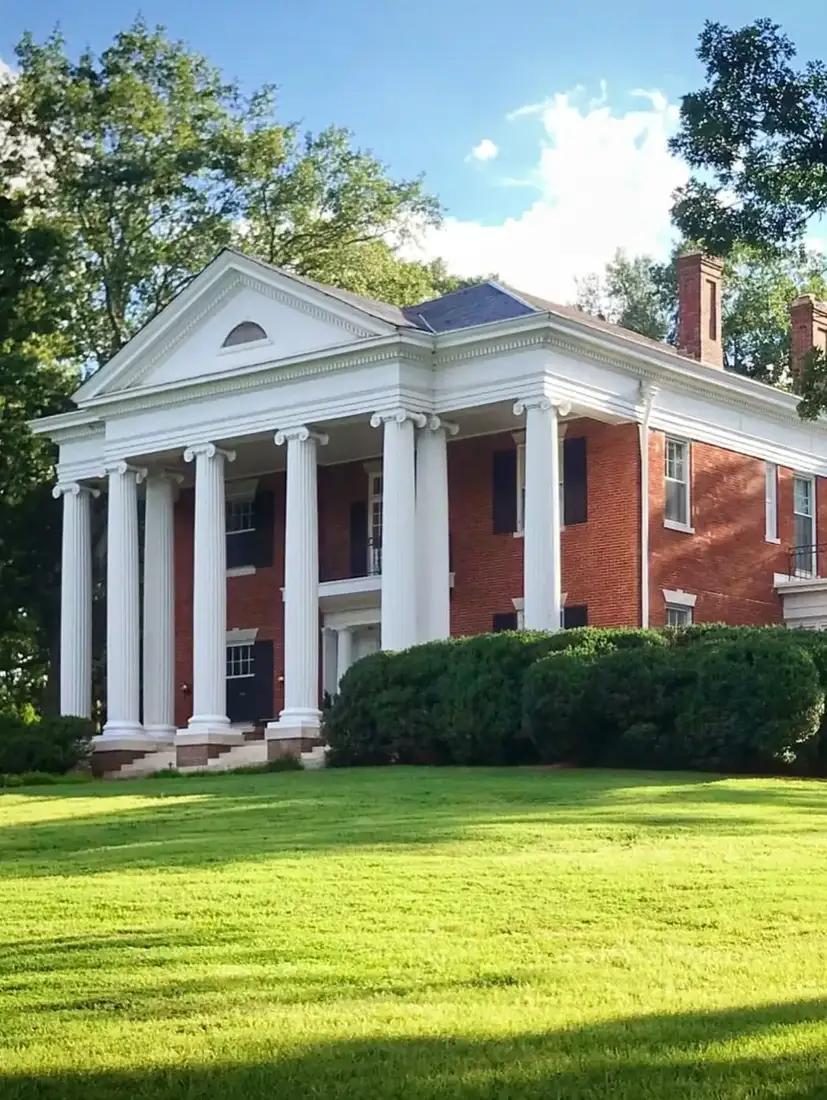
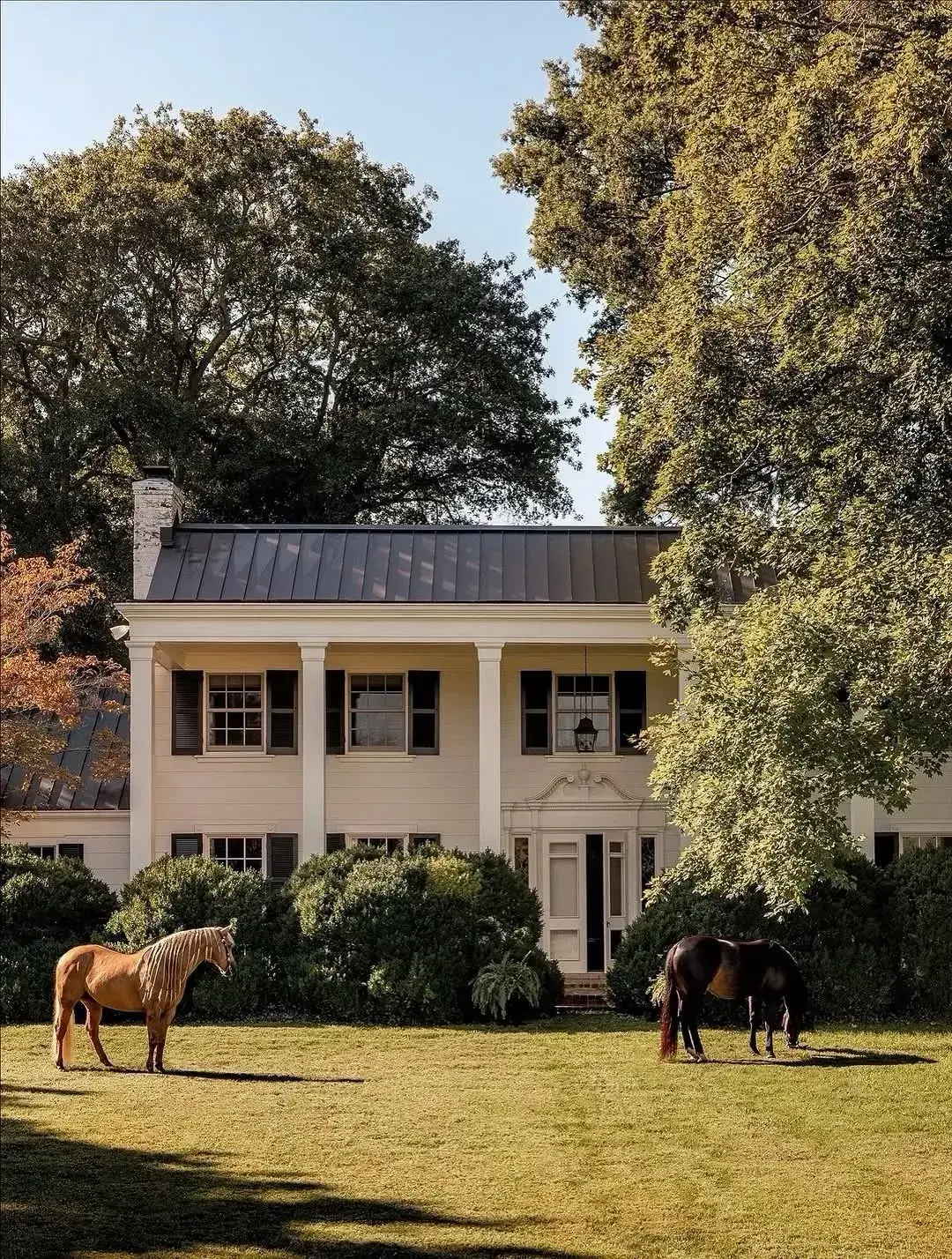
The brick in this shot is a flat red, laid tight with pale joints, and the front is all proportion. Tall white columns, a deep cornice, black shutters. No coating would improve it. Paint would only remove the contrast between brick and timber.
Sequence is everything on a front like this. Roof and gutters first. Then repointing where needed in lime or cement to match the existing construction. Then joinery paint. Repainting columns, cornice and shutters on a house of this size costs £2,500 to £6,000 in 2026 with tower access, using two coats of Little Greene Intelligent Exterior or Farrow & Ball Exterior Masonry on the masonry elements only.
Black shutters against red need a true black with no blue in it. Little Greene Jack Black 119 or Farrow & Ball Railings No.31 hold their tone in sun. Thin louvres in softwood rot first at the bottom rail. Check there with a screwdriver before painting.
Unpainted brick with one green door
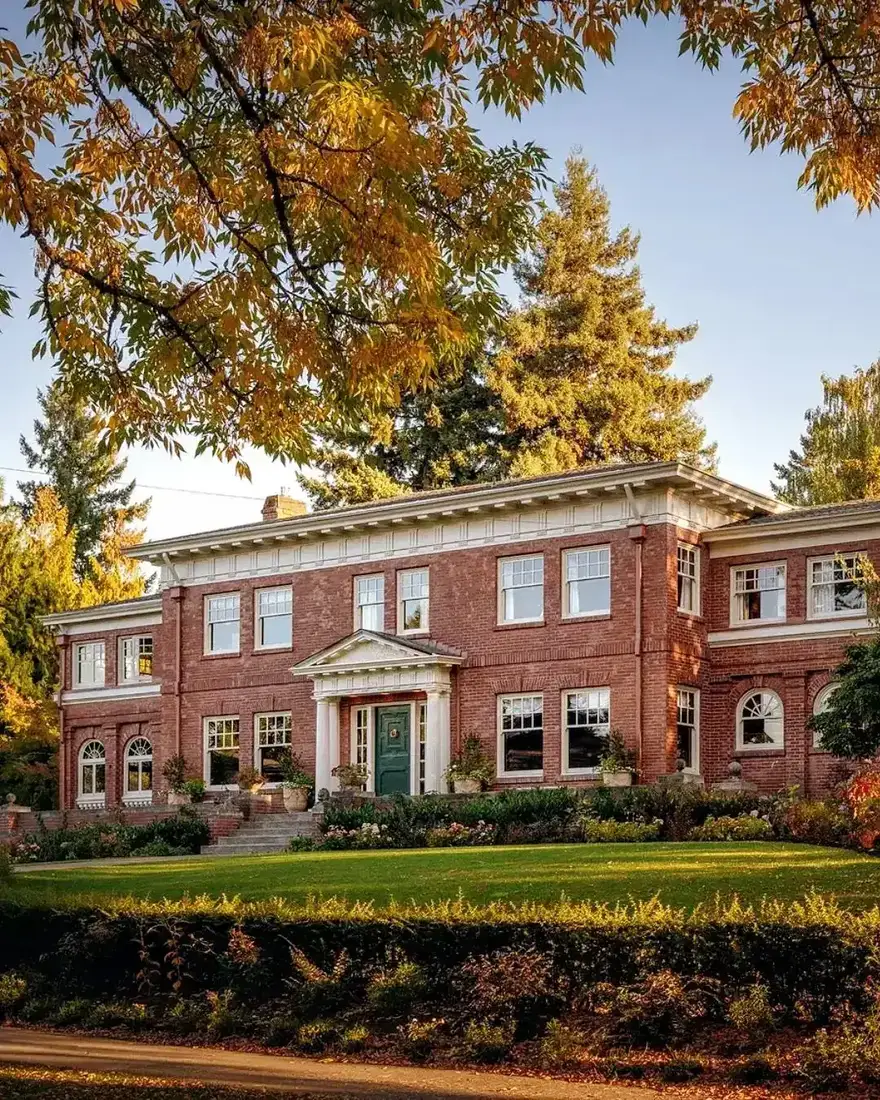
That wall is bare red brick with pale joints and a stone door case. The door is a deep green, almost black in shade. The combination works because the brick is doing nothing clever and the door is doing one thing well.
Doors take abuse. Strip back to sound timber, repair with Accoya splices where the bottom rail has softened, then prime and two coats. A joiner made six panel door in Accoya costs £1,800 to £3,500 in 2026 before painting, and repainting an existing door and surround costs £400 to £800 in 2026. Colours that sit well on red brick include Farrow & Ball Studio Green No.93 and Little Greene Stable Green 274, both deep enough to read as neutral from the road.
Keep the rest quiet. White sashes, pale joints, a clean lawn. The brick is the pattern. It does not need another one beside it.
Thin white over mixed brick
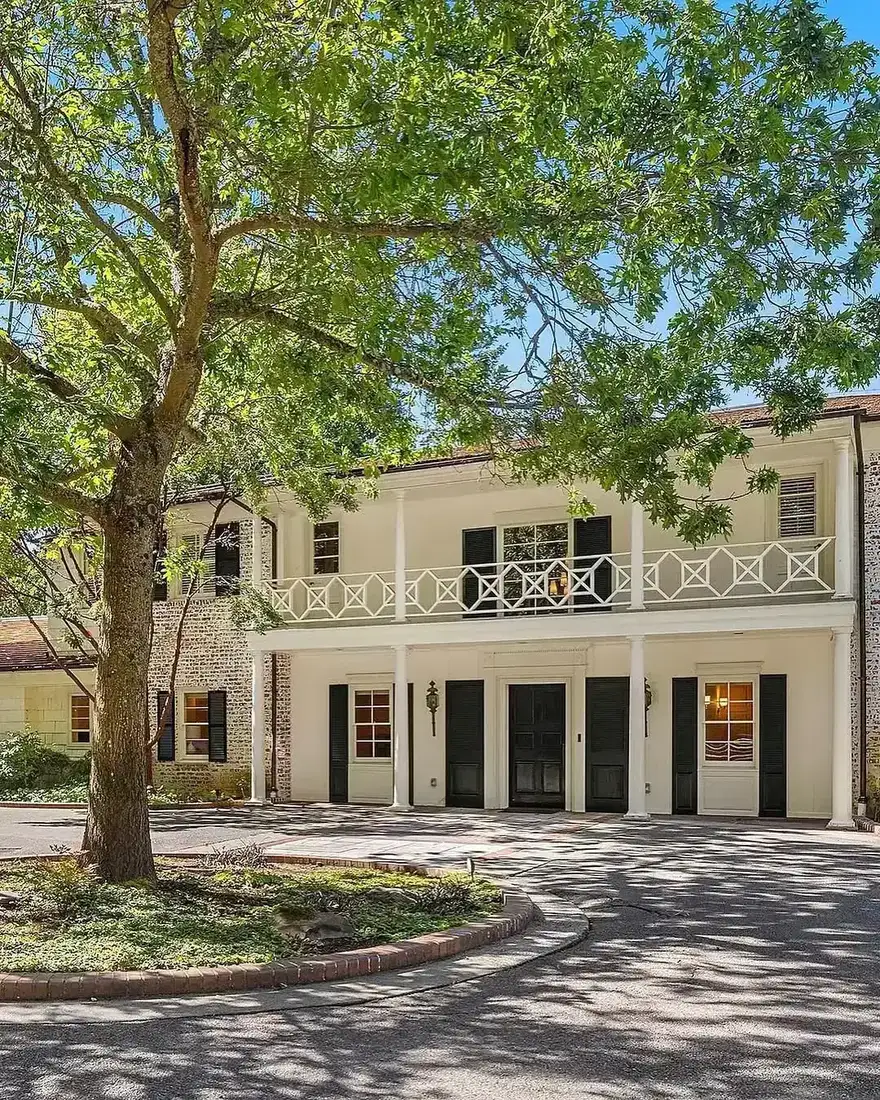
The last wall is a mix. Cream and pale red bricks with darker burnt ends, now veiled in a thin white that evens the tone without hiding the variation. From the drive the front reads pale. Close up, every header still shows. That is the best case for coating: a wall that was patchy rather than beautiful bare.
A wash like this is usually limewash or a diluted mineral coat, not full strength masonry paint. It needs recoating sooner and fails more gracefully. Budget £2,000 to £4,800 in 2026 for a contractor to clean and apply two thin coats on a front of this size, or £50 to £90 for 10 litres of materials in 2026 for brushing it on yourself over a weekend, plus masking, brushes and dust sheets.
The black shutters and doors anchor it. Without them the pale wall would float. With them the contrast does the work that a stronger colour would overdo.
Which wash or paint to use
| Treatment | Can it be undone | Lets vapour through | Recoat | Best use |
|---|---|---|---|---|
| Bare brick, new joinery | Yes | Yes | Joinery only, seven to ten years | Any sound wall |
| Limewash | Yes, in the first days with water | Yes | Five to seven years | Most houses, the safe pick |
| Mineral silicate paint | No | Yes | Ten to fifteen years | Already painted walls in good order |
| Standard acrylic masonry paint | No | No | Five to eight years, then peeling | Avoid on solid walls |
If the wall is pre-1920s solid brick, keep to the first three rows. On a post-war cavity wall with cement joints, standard masonry paint behaves better because the wall has a cavity and a damp course behind it. The construction decides, not the colour card.
Frequently Asked Questions
Can painted brick be taken back to bare brick?
In practice, no. Removal needs blasting or chemical softening, and both chew the outer skin and open the surface to frost. The faces then dust and spall. Treat coating as a one way step and test a reversible wash first.
How does limewash differ from masonry paint?
Limewash is slaked lime thinned with water. It soaks in, stays vapour open and thins away over several seasons. Standard masonry coatings form a plastic film that locks vapour in the wall. Mineral silicate coatings sit between them, bonding to the surface while staying open.
What should be used to repoint an older wall?
A lime mix matched to the existing joints, often NHL 2 or NHL 3.5, with sand giving the tone. Hard cement on soft units forces damp out through the faces, and frost then lifts the surface. Ask for hand raking, a flush joint and a dried sample panel.
Will climbers harm the brickwork?
Pad climbers on sound joints are usually harmless if kept trimmed. Rooting ivy works into mortar and widens cracks year by year, chiefly on lime jointed walls. Keep growth clear of gutters and sills, and pull it off before stems turn woody.
Which joinery tones work with red brickwork?
Warm off-white, cream and near black sit calmly against orange red clay. Mid beige and warm grey sit too close in depth and turn muddy. Deep green or navy can work for a single door, kept as the only strong tone on the front.
How often does a coated front need redoing?
A limewashed elevation wants a fresh wash after five to seven years. Mineral systems hold for a decade or more. Plastic masonry films often lift after five to eight winters on solid walls, and repair then means stripping rather than brushing over.
In order
- Test the existing mortar before anyone quotes for repointing.
- On soft old brick, specify lime, raked by hand, with a dried sample panel.
- Repoint only what has failed, not the whole elevation.
- Choose joinery colour to suit the brick, and favour slim sections over white plastic.
- Use clay pavers related to the wall for paths, laid to a fall away from the house.
This article may contain affiliate links. We may earn a commission at no extra cost to you.