Cedar Shake vs Shingle Guide: You Are Comparing the Wrong Thing

Add us as a preferred source to see more stories on Google.
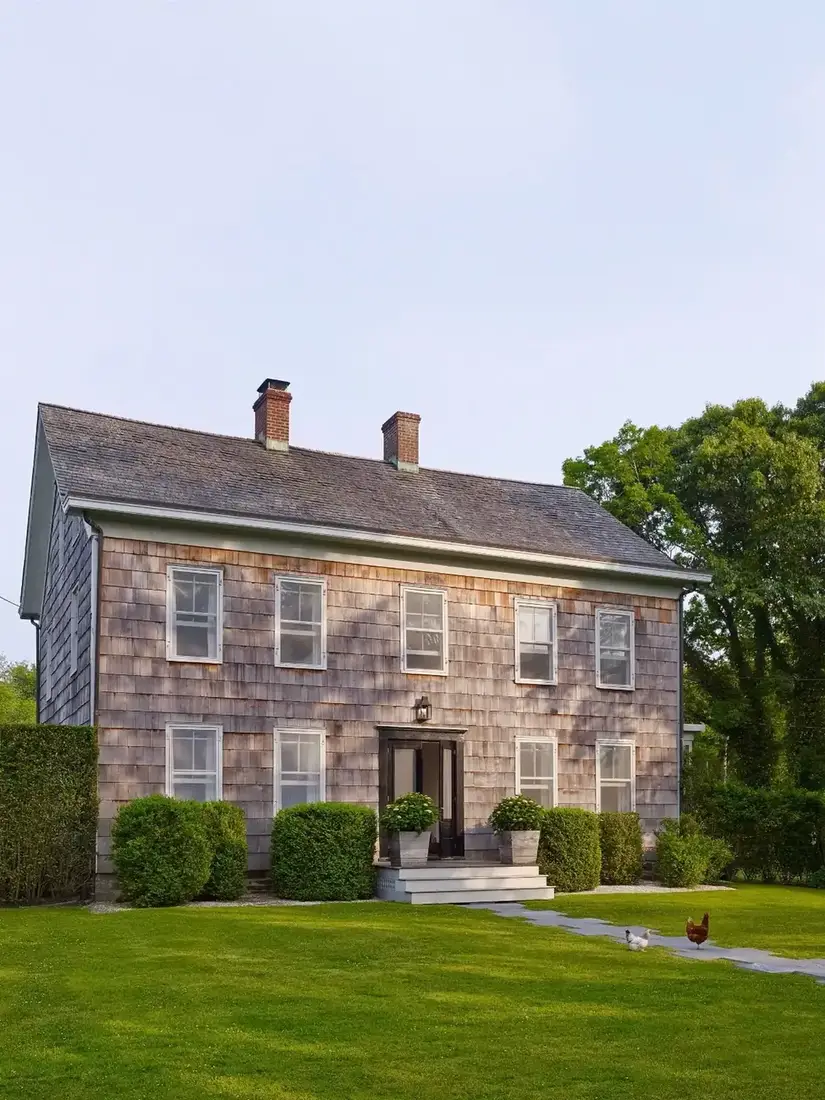
Shakes are split. Shingles are sawn. That is the whole material difference, and it is the part everyone researches.
It is also the part that matters least. Shakes are thicker and irregular, so they throw a deeper shadow line and read rustic from across the street. Shingles are flat and uniform and read tidy. Both are western red cedar, both go on the same way, both last about as long.
The decision that costs money comes later, and most people make it by accident: what goes on top of the cedar, or whether anything does.
Weathering is not the even silver you have been shown
The wall above shows what bare cedar does. Study it for a minute before deciding you want it.
The silver is not uniform. Tan and orange still sit under the eaves where rain never reaches, a band of darker grey runs along the bottom courses where splash comes off the ground, and a patch to the right is clearly newer than everything around it. That house is not badly maintained. That patchiness is normal for bare cedar, and it takes three to five years to settle anywhere near even.
Weathering follows ultraviolet light and water, so it follows exposure. South and west walls silver first. North walls stay brown for years and often grow a green film. Anything sheltered by a porch roof or a 300mm eave holds its original colour more or less indefinitely, which means the parts of the house people stand closest to are the parts that will not match.
Here is the part that catches people. Bare weathering is not reversible in any practical sense. Pressure washing takes the surface fibres off with the grey, leaving a fuzzy wall that greys again within a year and looks worse each time. Stripping and staining over weathered cedar is possible, but the colour sits differently on wood that has already opened up, and that job signs you up for recoating every five to eight years from then on.
If you want the silver, there is one honest shortcut: bleaching oil. Cabot make the best known version. It carries a small amount of grey pigment and a chemical that speeds up the greying, so the wall reaches an even silver in a season or two instead of five patchy years. It is not a coating you maintain. It is a way of steering a process that is going to happen anyway.
Where the eave keeps cedar brown
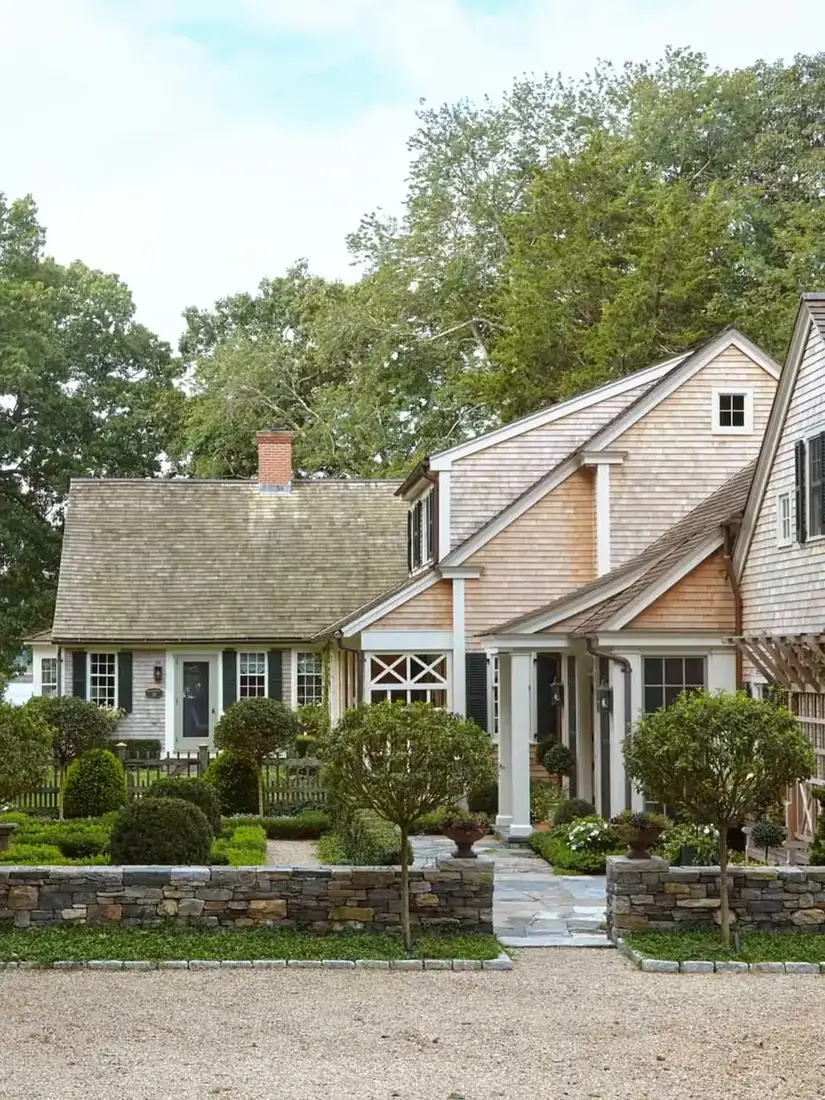
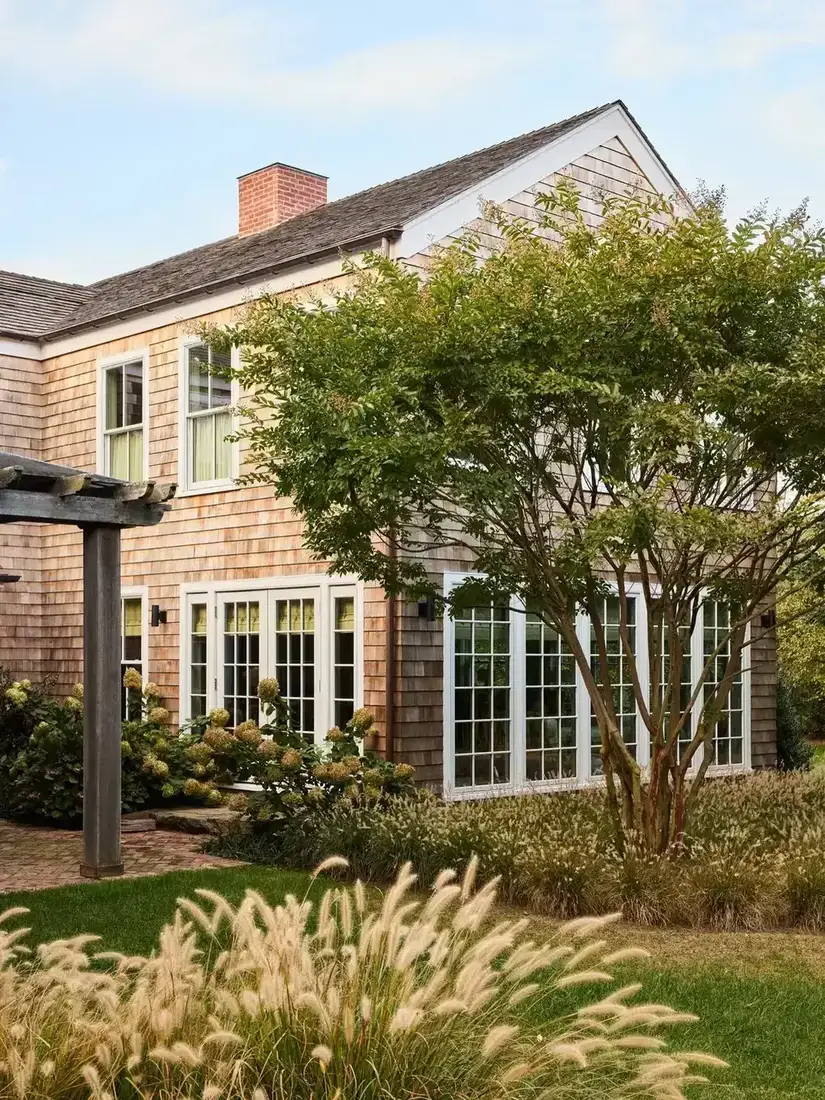
The Cape in this photo tells the eave story in one elevation. Courses out in the weather have gone pale silver. Courses tucked under the deep eave above the windows still hold their tea brown colour. The line between the two follows the roof exactly, which tells you the finish did not fail. The sun simply never reached the sheltered boards.
That sheltered band matters more than most quotes allow for. Tannins break down under ultraviolet light, so shaded cedar keeps its extractives for years while exposed cedar sheds them in the first 12 months. In this photo the stone garden wall adds a second mechanism at the base. Stone throws splash back at the bottom two courses every time it rains, so the base stays darker and wetter than the middle of the wall.
Give both zones somewhere to go. Keep topiary and shrubs 300mm clear of the cladding so air moves behind the leaves. Hold the bottom course 150mm above soil or stone, and lay a 300mm gravel margin along the plinth to break up splash. If the two tone wall bothers you, that is useful information. It means you want stain, decided now, not after three years of patchy silver. A 5 litre tin of semi-transparent stain covers about 20 square metres, so price the recoat before you rule it out.
What shade and trees do to silvering
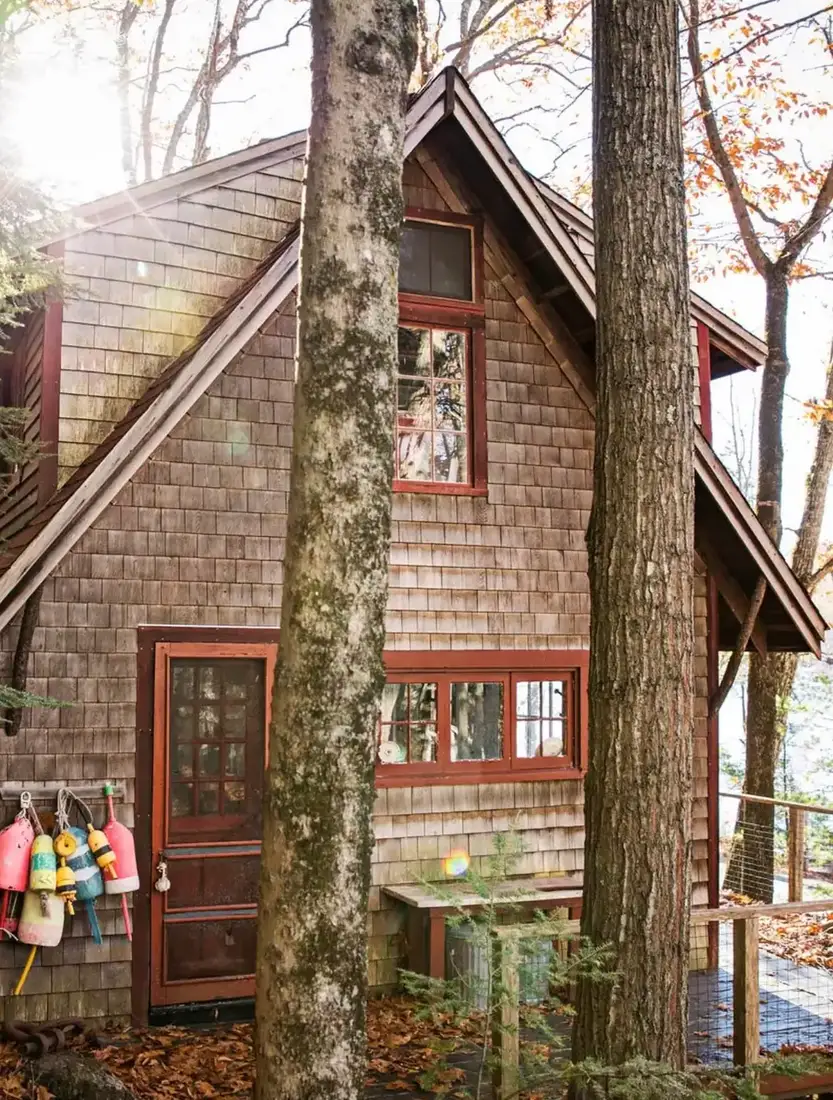
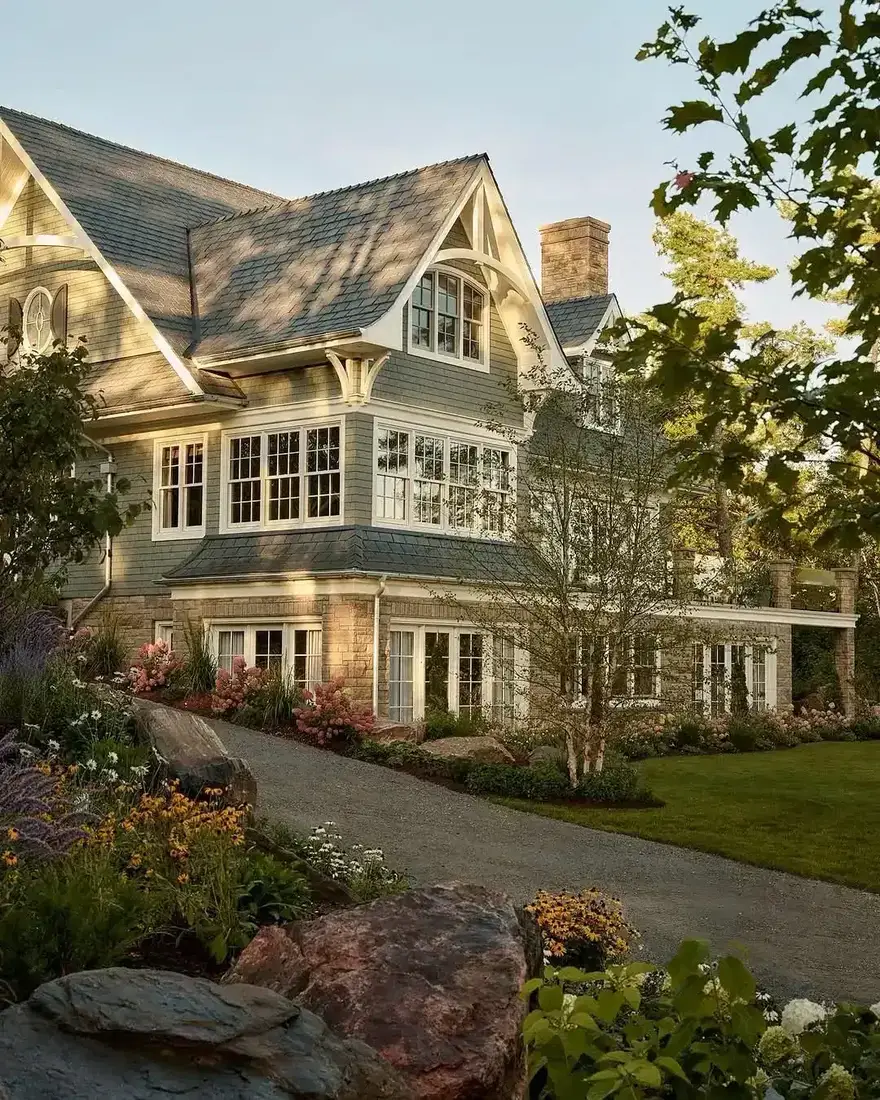
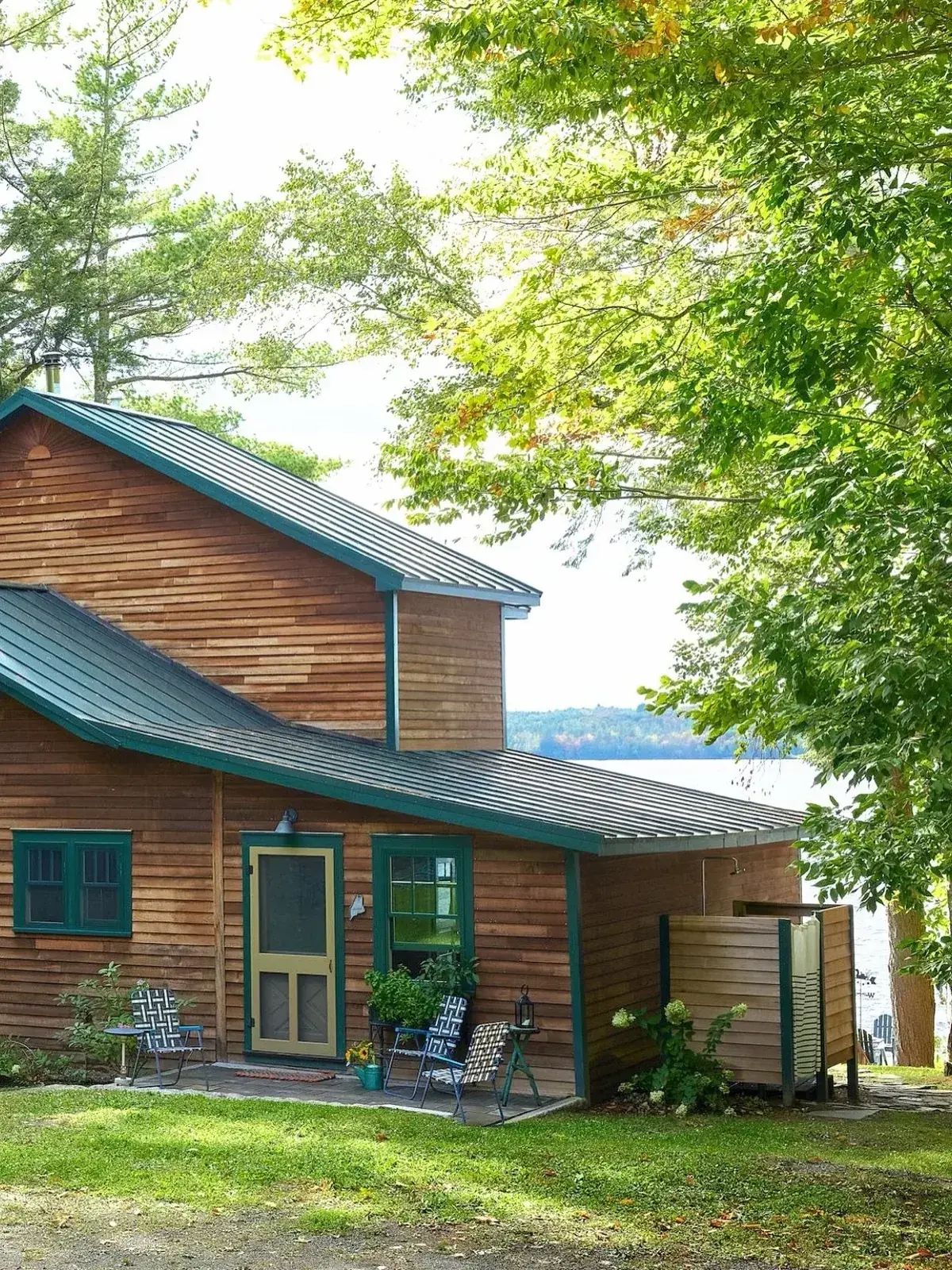
The lake cottage above sits inside trees, and the trees are running the finish schedule. The gable that catches afternoon sun has silvered evenly. The elevations under the canopy stay brown longer and carry the faint green cast that says algae, not patina. Same cedar, same wall build, two different colours separated by about six metres of shade.
Woodland air stays damp past noon. Cedar under canopy takes 24 to 48 hours longer to dry after rain than cedar in open sun, and that drying gap is where surface growth gets established. No coating makes shaded and sunny elevations match, because the problem is moisture dwell, not pigment. The shaded side will always run darker and greener unless it gets washed.
Plan the wash, not the strip. A shaded elevation wants a gentle clean every 12 to 24 months with a garden sprayer and a soft brush, working from the top down at low pressure. Keep planting 500mm off the wall so you can actually reach the bottom courses with the brush. Never hire the pressure washer for this job. It cuts the soft earlywood out from between the grain lines, the wall goes furry, and the grey returns within a year on wood that now holds water for longer.
The ground is where cedar fails first
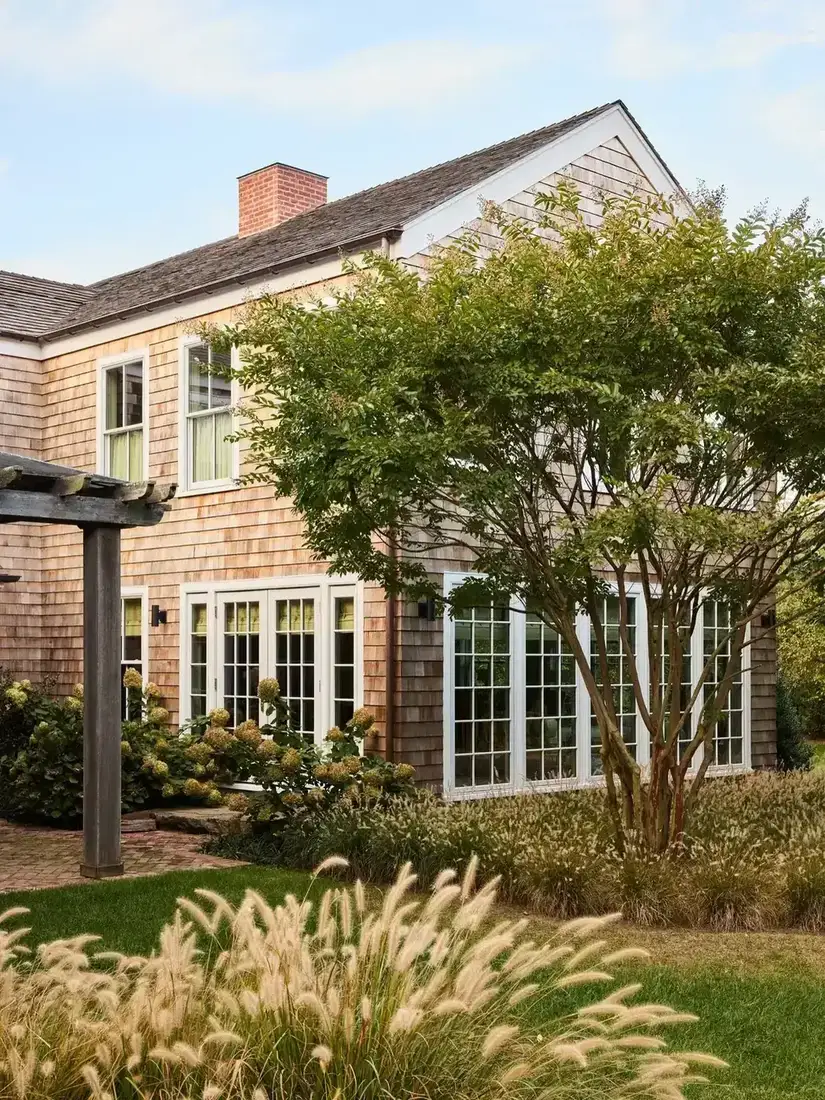
In this photo the planting does the talking. The borders run hard against the base of the wall, and the bottom two courses read darker than everything above them. The white window trim higher up is crisp and dry. The base is not. Water does not need a defect to get in down there. It needs soil, mulch and leaves held against end grain for a few wet winters.
End grain wicks. A shingle butt sitting 25mm above wet mulch will pull moisture 100mm up the back face through capillary action, and the back face is the one that never sees sun. That trapped strip is where rot starts, usually around year three to five, and it starts behind the finish where no inspection finds it until a course goes soft under the thumb. The fix is clearance, not chemistry.
Pull the beds back 300mm from the face and hold the lowest course 150mm above finished ground level, measured with a tape, not by eye. A 150mm gravel band along the base drains splash and gives the mower somewhere to run without scarring the butts. For the trim colour in this photo, a warm white gets you there: Farrow and Ball Pointing No.2003 or Benjamin Moore White Dove OC-17, both widely stocked at £35 to £55 per 2.5 litres. Brilliant blue white fights silvered cedar and loses within two summers.
Cream trim survives silver; bright white does not
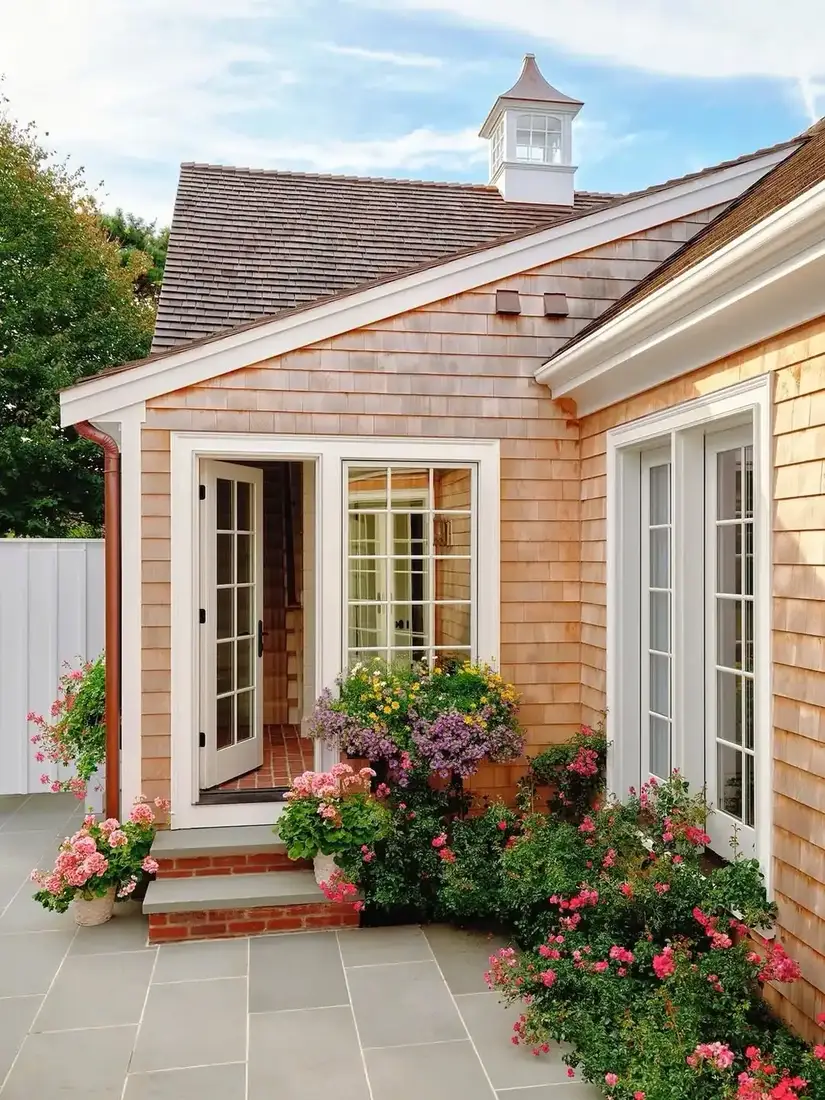
That cupola carries the whole trim lesson. The cottage wall has gone cool silver grey. The cupola boards, the corner boards and the window architraves hold their ground because there is cream in the white. Put a brilliant blue white next to weathered cedar and the trim looks clinical by the second winter. The cream version still reads white from the lane, and it sits quiet against the grey.
Silvered cedar runs cool. Its weathered surface reflects a blue grey light, roughly the tone that paint cards call Purbeck Stone or Plummett. A trim with a yellow base corrects that cast instead of competing with it. The rose beds in the foreground show the other half of the detail done right. They are generous planting, held off the wall on a low edging, so the bottom courses stay visible and dry.
Copy this by sampling outside. Hold a 200mm painted board against a piece of cedar that has already greyed, not against fresh orange stock, and look at it at noon and again at dusk. Little Greene Slaked Lime 105 and the two whites named above all pass that test on most plots. Two coats of acrylic exterior grade over a proper primer, cut in with a 75mm brush, lasts eight to 10 years on sheltered trim and about six on a south facing cill.
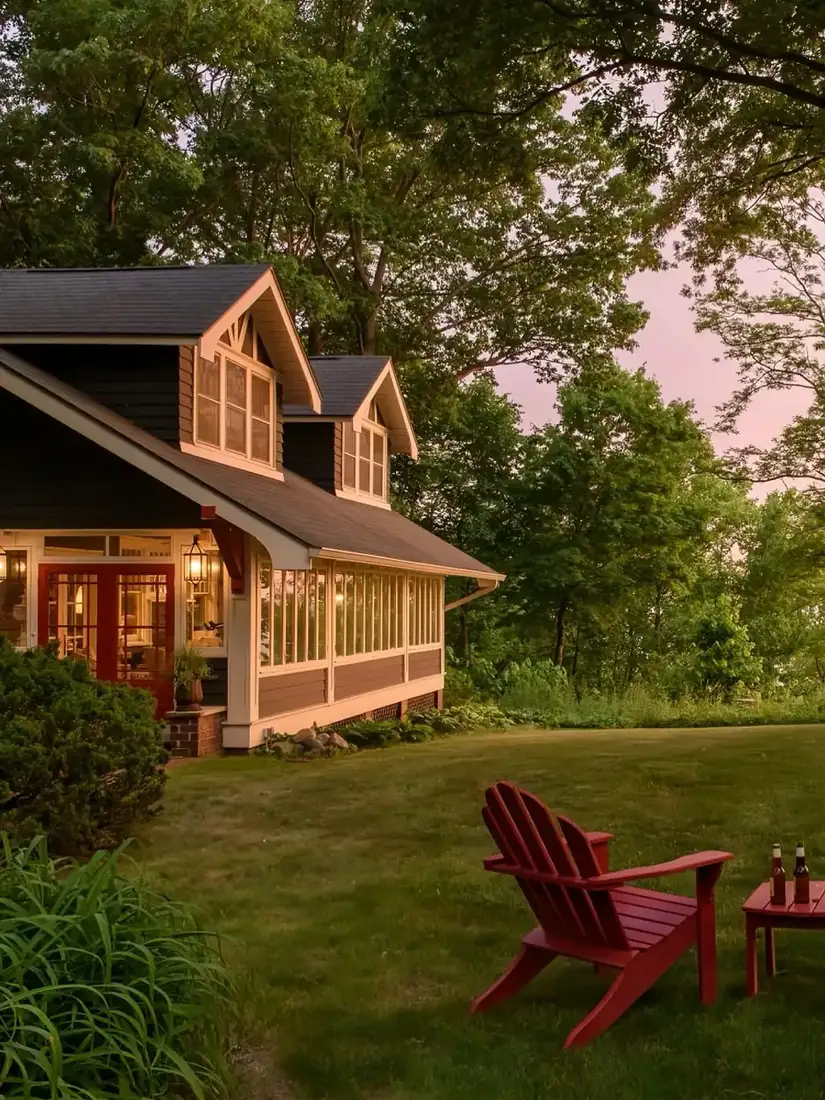
What stain buys you, and what it costs
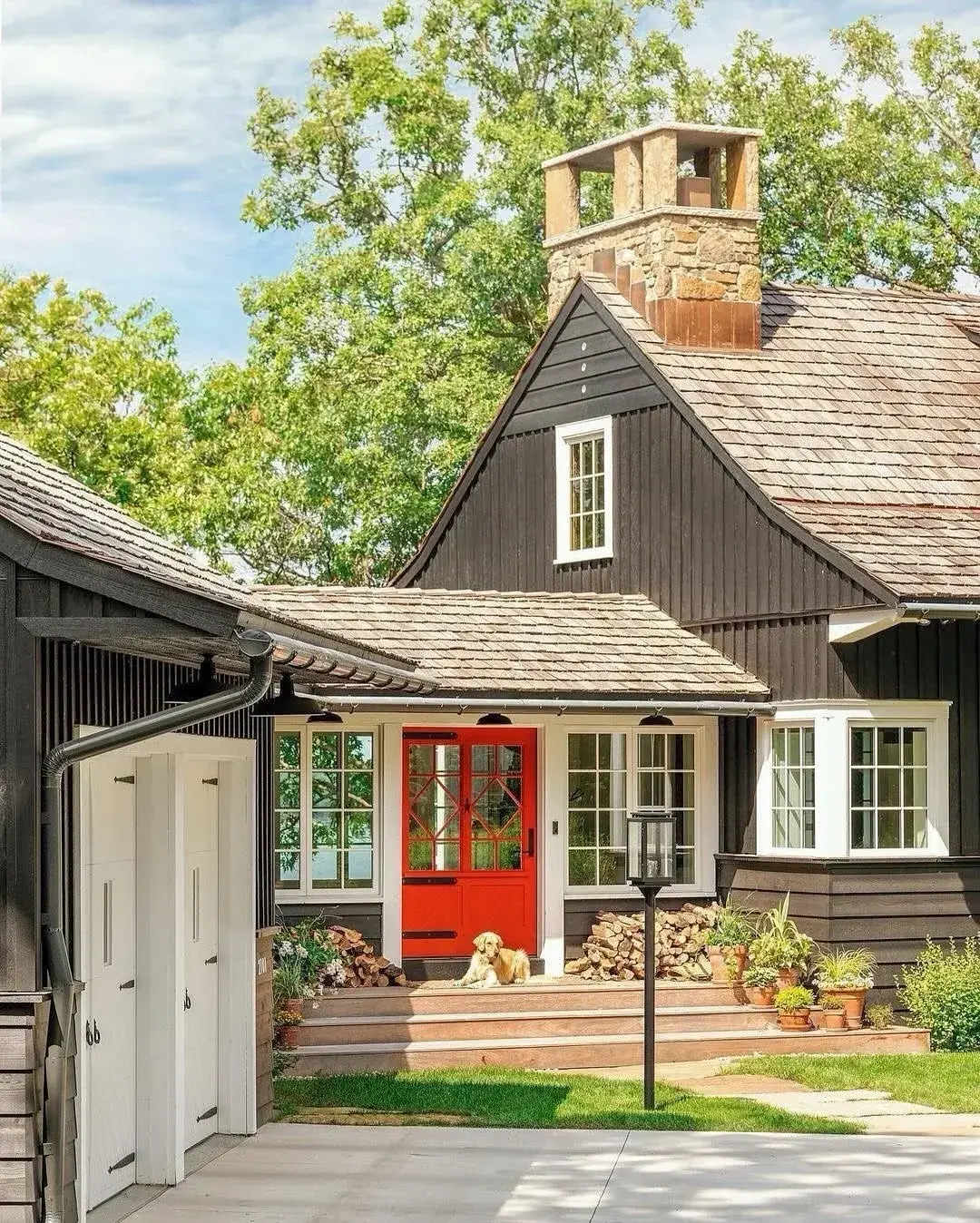
The house above made the other choice. Those shingles are stained a deep brown, close to black in this light, and set against cream trim and a red door.
Stain gives you three things bare cedar cannot: an even colour on day one, a colour you actually chose, and real UV protection, which slows the surface breakdown underneath. On a house with mixed exposures, or one where half the wall sits under a porch, it is usually the more sensible call.
The cost is that you now own a maintenance cycle, with recoats every five to eight years and scaffold to budget for.
| Finish | Even colour | Recoat interval | Notes |
|---|---|---|---|
| Bare, left to weather | No | Never | Patchy for years; cannot be undone |
| Bleaching oil | Mostly | Optional top-up | Speeds and evens the silvering |
| Semi-transparent stain | Yes | 5 to 8 years | Grain still visible; fades rather than peels |
| Solid stain | Yes | 7 to 10 years | Looks close to paint; can peel at edges |
| Paint | Yes | 7 to 12 years | Traps moisture in cedar; generally a bad idea |
Start with semi-transparent. It fades instead of flaking, so the recoat is a wash and a fresh coat, not a scrape. Solid stain and paint both build a film, and a film on a board that moves with the seasons eventually lifts at the edges. Cedar needs air on both faces, which is why 19mm battens sit behind every course.
Products to price before you commit: PPG ProLuxe, formerly Sikkens, is the long-standing benchmark and priced accordingly. Benjamin Moore Arborcoat and Sherwin-Williams WoodScapes sit a step below on cost and are widely stocked. Cabot make both the bleaching oil and a semi-transparent range, and a 5 litre tin covers about 20 square metres in one coat.
Brown stain forgives patches and hides repairs
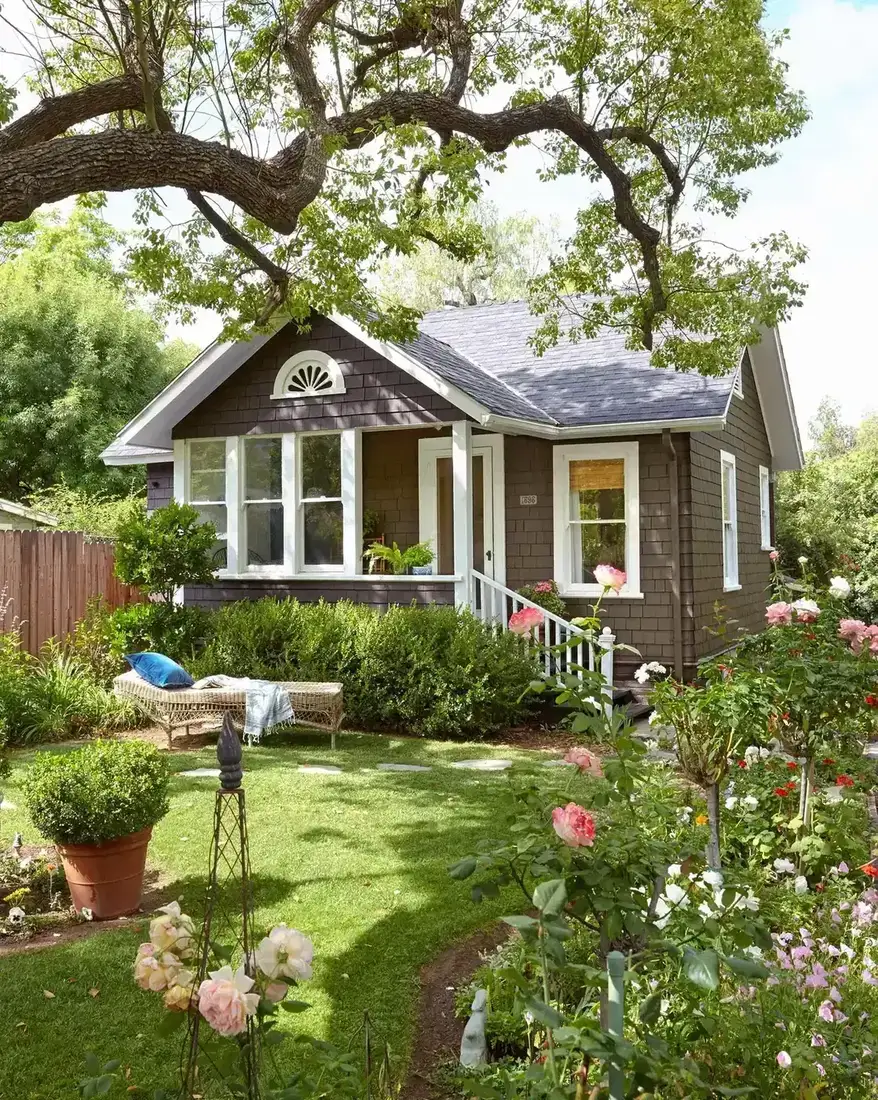
The bungalow in this photo wears its stain well. The courses read as one even mid brown from the ridge to the base, despite a front path, mature roses and mixed sun across the day. That evenness is the product, not the timber. Bare cedar on this aspect would show every sheltered band and every replaced board. Semi-transparent brown pulls the whole elevation together and keeps it together.
That forgiveness is practical. Cedar walls need small repairs. A split butt, a cracked corner piece, a section lifted to chase a leak. On a weathering wall each patch stays visibly newer for two to three years. On a stained wall a patch disappears once it takes the same two coats, provided the stain comes from the same batch. Note the roses here sit along the path with air between the stems and the wall. Good. Roses want pruning anyway, and open stems dry in hours. A solid evergreen hedge in the same spot would hold moisture against the butts all winter.
Price the cycle honestly. A 5 litre tin of Arborcoat or WoodScapes runs £48 to £65 and covers 40 to 60 square metres over two coats on sawn shingles, less on rough shakes. Most three bedroom elevations need 15 to 25 litres per full recoat plus a day of washing first. Keep the batch number from the first order and keep one spare bundle from the same cedar run, stored flat and dry.
Gravel and lawn tell you about splashback
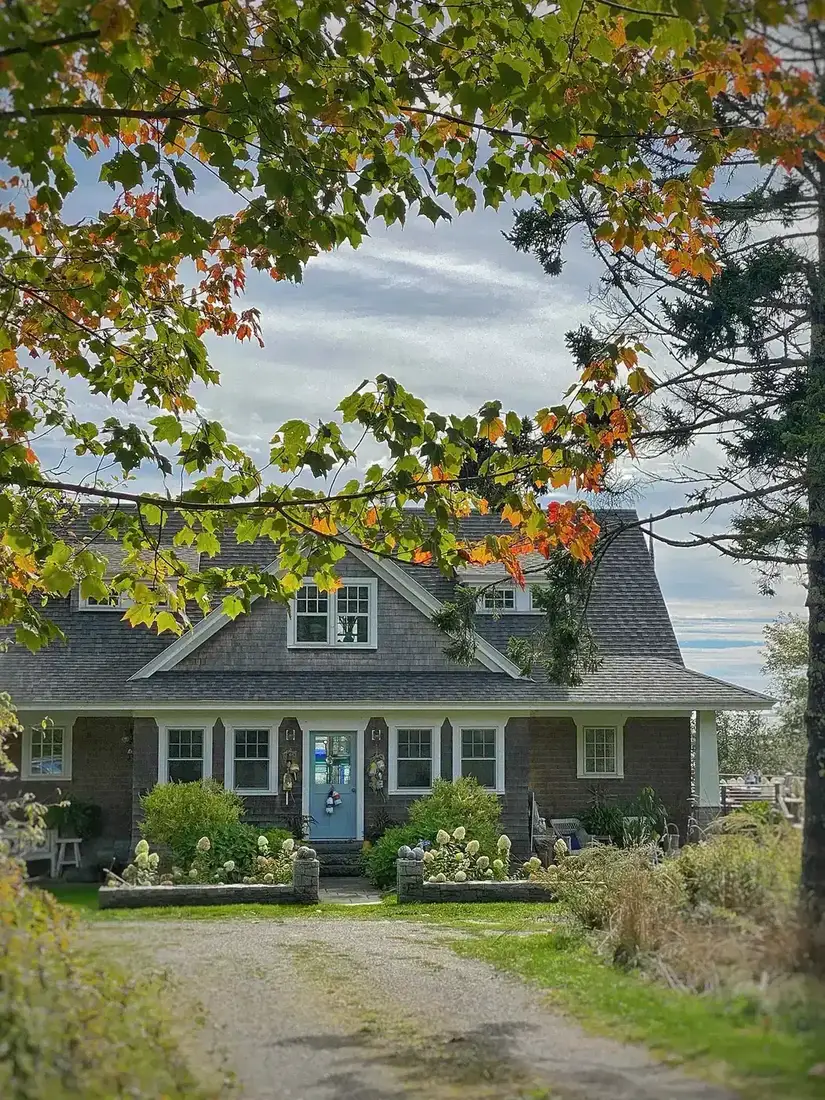
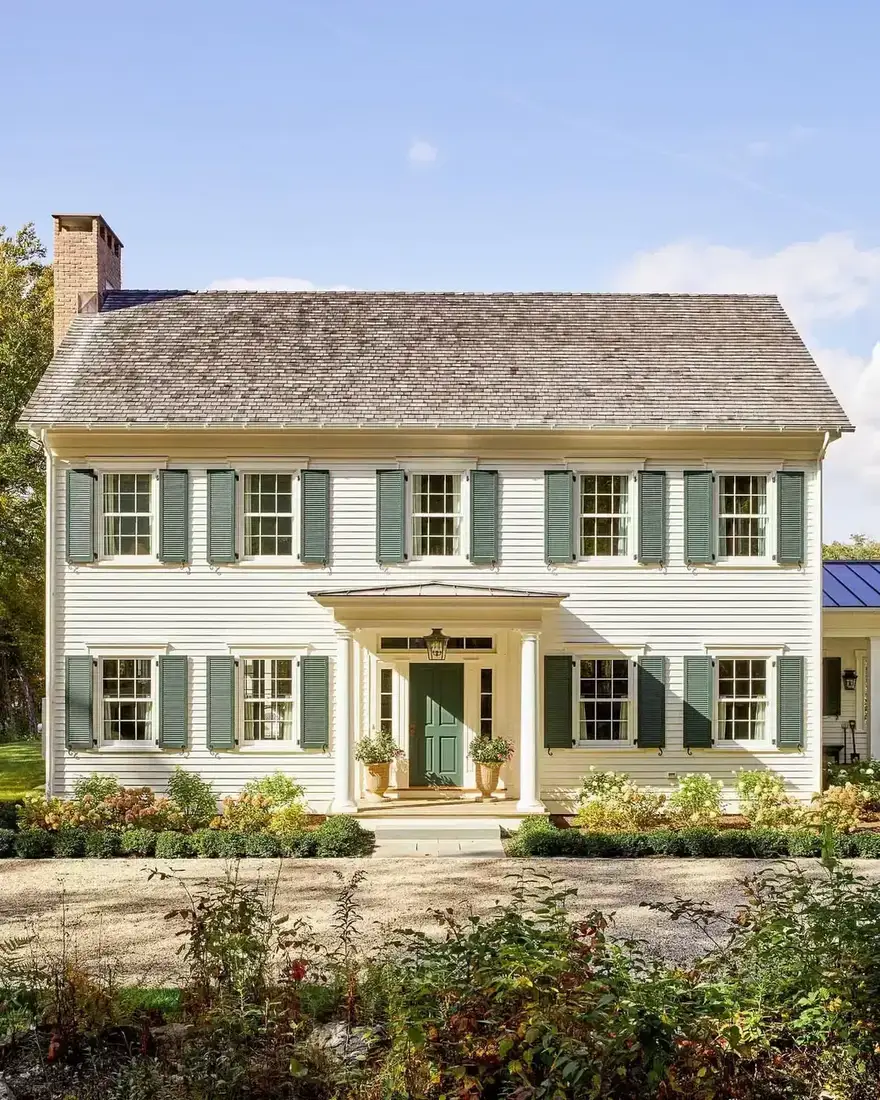
The Dutch colonial above gets its ground detail right. Gravel runs up to a clean plinth line, the lawn beyond is clipped short, and the brown courses start a full hand above the stones. Splash from a hard drive can wet the bottom 200mm of a wall in every storm. Here the gravel breaks the droplets up and drains in seconds. The wall base stays the same colour as the field above it, which is the tell that the detail works.
Gravel also makes inspection possible. Kneel at the plinth once a year and press the bottom butts with a thumb. Sound cedar resists. Early rot gives a soft spot that still paints over fine, which is why visual checks miss it. Catch it at year two or three and the repair is three boards and an hour. Miss it to year six and the batten behind goes too, and the repair becomes half a day with the corner woven back in.
Tie this to the order paperwork. Confirm the shingle exposure in writing, usually 125mm to 140mm for standard 400mm shingles, plus Certigrade No.1 Blue Label grade and 38mm stainless ring shank nails. A cheap quote often stretches exposure to 150mm or more, which uses fewer courses and sheds less water at each lap. Two quotes with different exposures are different walls. Ask Simpson Strong-Tie or your merchant for 316 grade within five miles of the coast, where salt shortens 304 fixings to about 10 years.
A big lawn exposes a lazy exposure
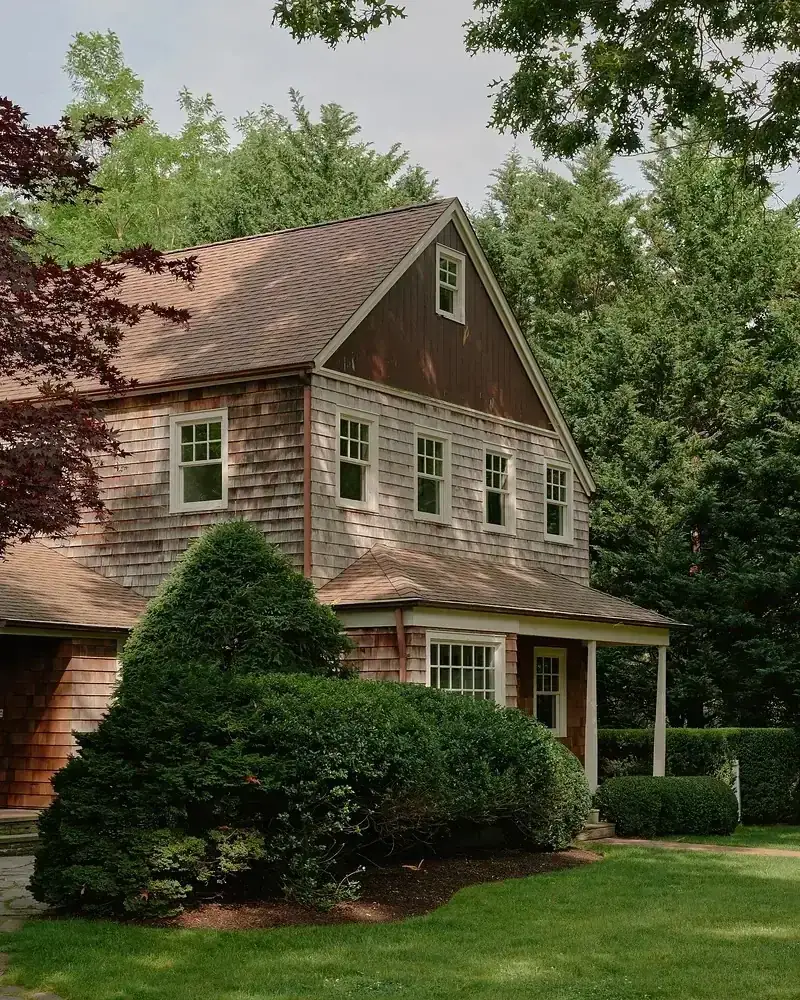
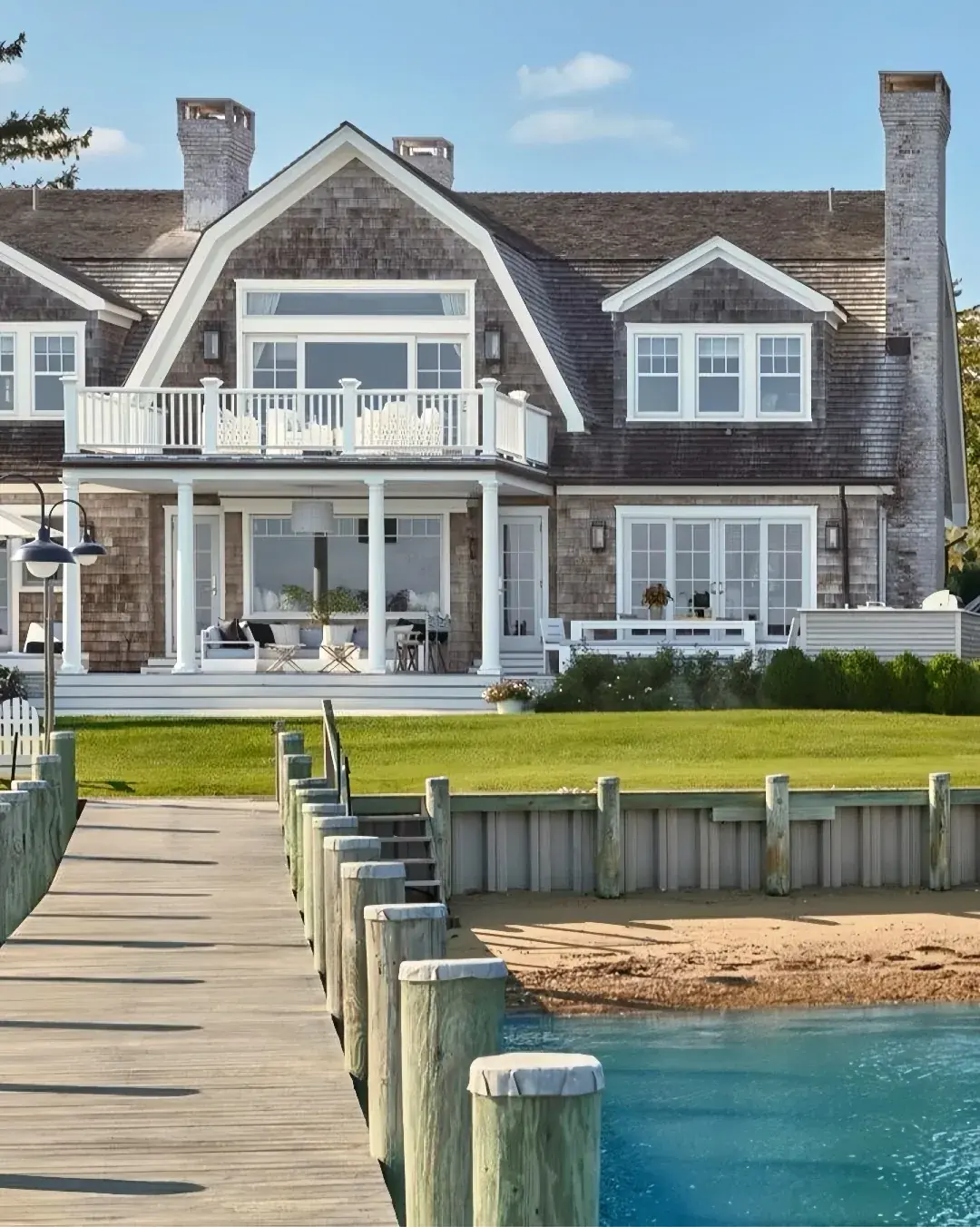
That wide lawn is unforgiving. The gambrel wall stands 20 metres from the viewer with nothing in front of it, so every wobble in the coursing shows. The courses in this photo run straight and evenly spaced, which means the fixer set out each line with a story pole or a chalk line and did not let the exposure drift. From that distance the eye reads spacing before colour. Drift 10mm a course over 20 courses and the wall looks tired even in fresh stain.
Big plain walls also expose moisture trouble early. Cupping, where board edges lift and middles stay down, usually means one face dries faster than the other because air has stopped moving behind the cladding. Check the base vent and the top outlet first, plus any spot where soil or planting has closed the 19mm cavity. Do not sand cupped boards flat. The boards are reporting a blocked airway. Clear the airway and most cups settle back within one dry season.
Insist on the gap detail on the drawing. Cedar needs 19mm by 38mm vertical battens holding it clear of the membrane, with stainless insect mesh top and bottom and a clear outlet at the ridge or eave. No drawing, no gap. That single detail decides whether stained cedar reaches 25 years or starts lifting at year eight, and it costs a fraction of the stain budget.
Blue grey is paint behaviour, not cedar behaviour
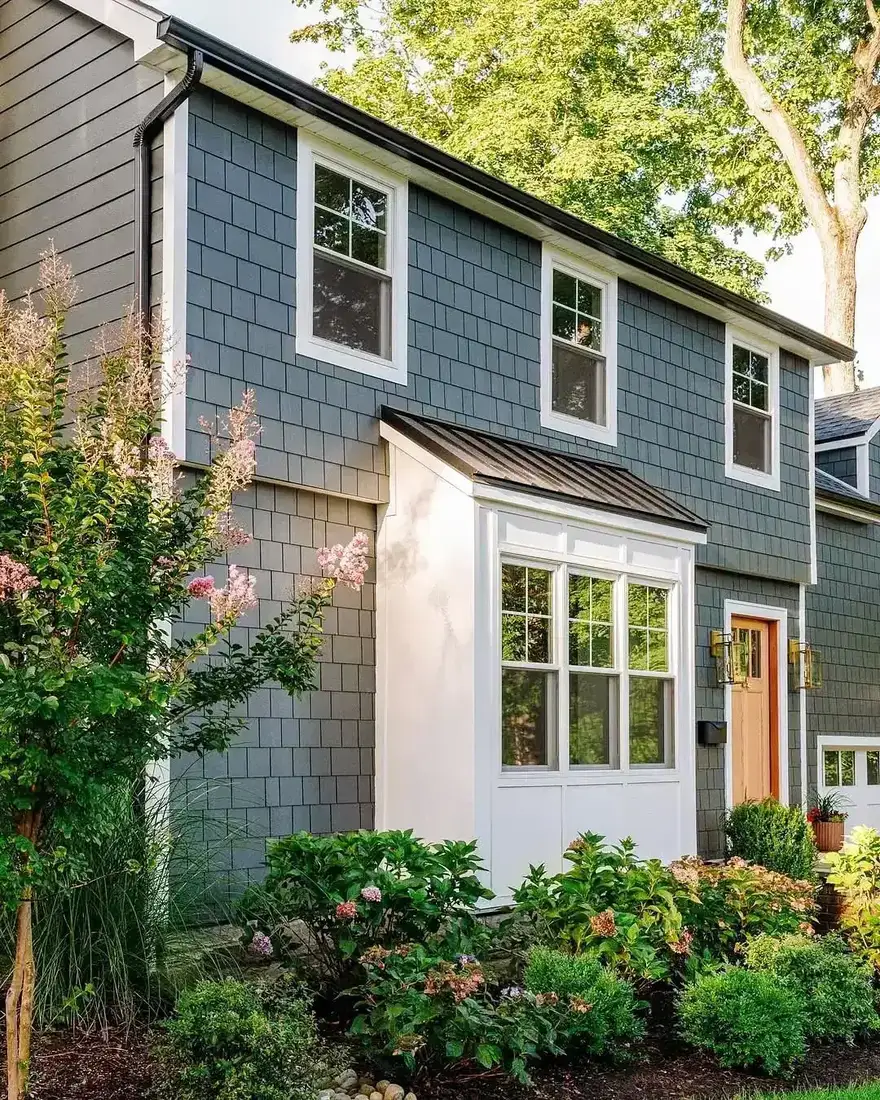
The blue house with the copper bay does not weather. It performs. That even slate blue grey across every course, sun and shade alike, comes from a coating with real pigment in it: solid stain or paint. Cedar left alone never does this. It silvers in patches and keeps brown under the eaves. When the whole house reads one flat colour, someone recoats it on schedule.
Read the bay while you are there. The copper cap over the window has already gone brown and will move toward verdigris over 10 to 15 years. Copper and cedar get along. Copper and galvanised steel do not, and neither do copper runoff and bare zinc. The fixings on this wall want to be 316 stainless throughout, with the copper tray isolated on its own underlay and no cut steel edges left in the runoff path. Get that wrong and dark streaks run from every fixing within two winters, and no wash removes them.
To get this colour honestly, sample solid stains, not oils. Farrow and Ball De Nimes No.299, Little Greene Dock Blue 252 and Benjamin Moore Hale Navy HC-154 all land near the tone in this photo, though no photograph names the tin. I cannot name it either. Order three 1 litre testers, brush out full 400mm boards, fix them to the wall for a fortnight and judge at noon and dusk. Solid stain wants seven to 10 years between recoats on cedar, and it wants the boards dipped on all four faces before fixing.
Lantern light shows stain going thin
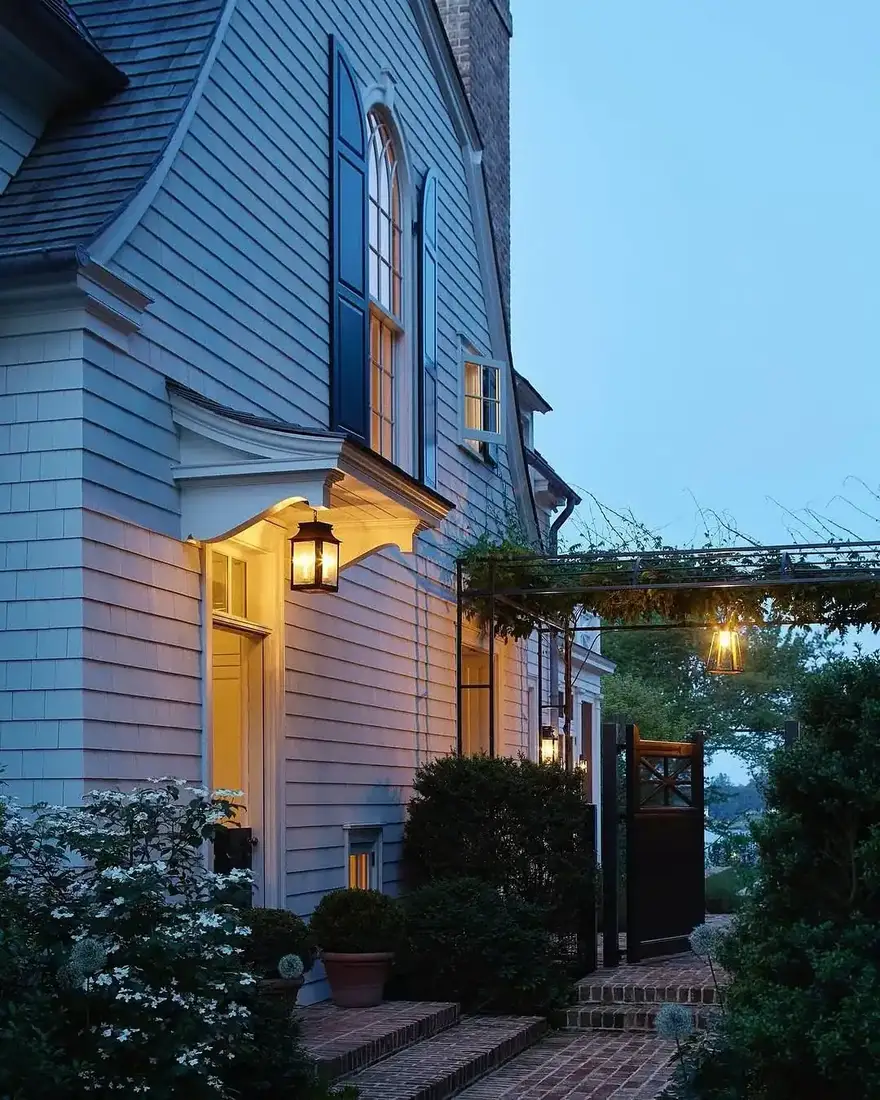
Dusk above that porch is an inspection lamp. The warm lantern rakes sideways across the blue courses and every thin spot, lap mark and holiday shows as a lighter band. Daylight flatters a fresh coat. Raking evening light does not. Painters who check their work under a handheld torch at dusk find the misses while the scaffold still stands. Painters who pack up at four find them the next spring from the pavement.
Copy the trick on your own recoat. Wash the wall, let it dry 48 hours, brush on the test panel and view it under a 2700K bulb at night before committing to 20 litres. Blue grey turns chalky under 4000K cool white and sits calm under 2700K warm white, so the bulb temperature changes the colour more than a second coat does. Two wall lanterns at 800 to 1200 lumens each, IP44 rated, mounted about 2.1m above the porch floor, light a standard door bay without glare. Budget £60 to £140 per lantern plus an electrician half day if no spur exists.
The maintenance moral is simple. Solid blue needs a full elevation recoat when the sunniest wall chalks, not local touch ups. Touch ups in a different batch flash at dusk even when they match at noon. Keep the product name, the colour code and the batch number taped inside the meter cupboard door. Future you, on a ladder in five years, will be glad of it.
Charcoal looks superb and bills you every four years
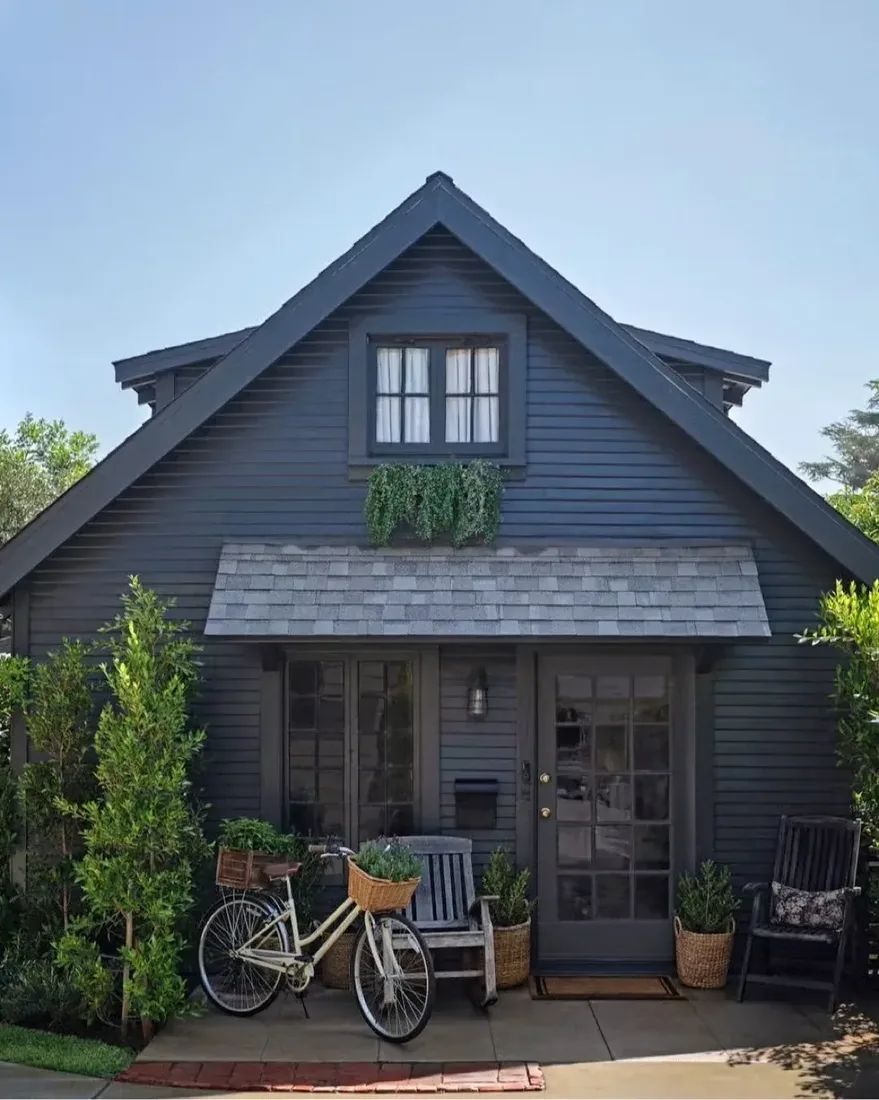
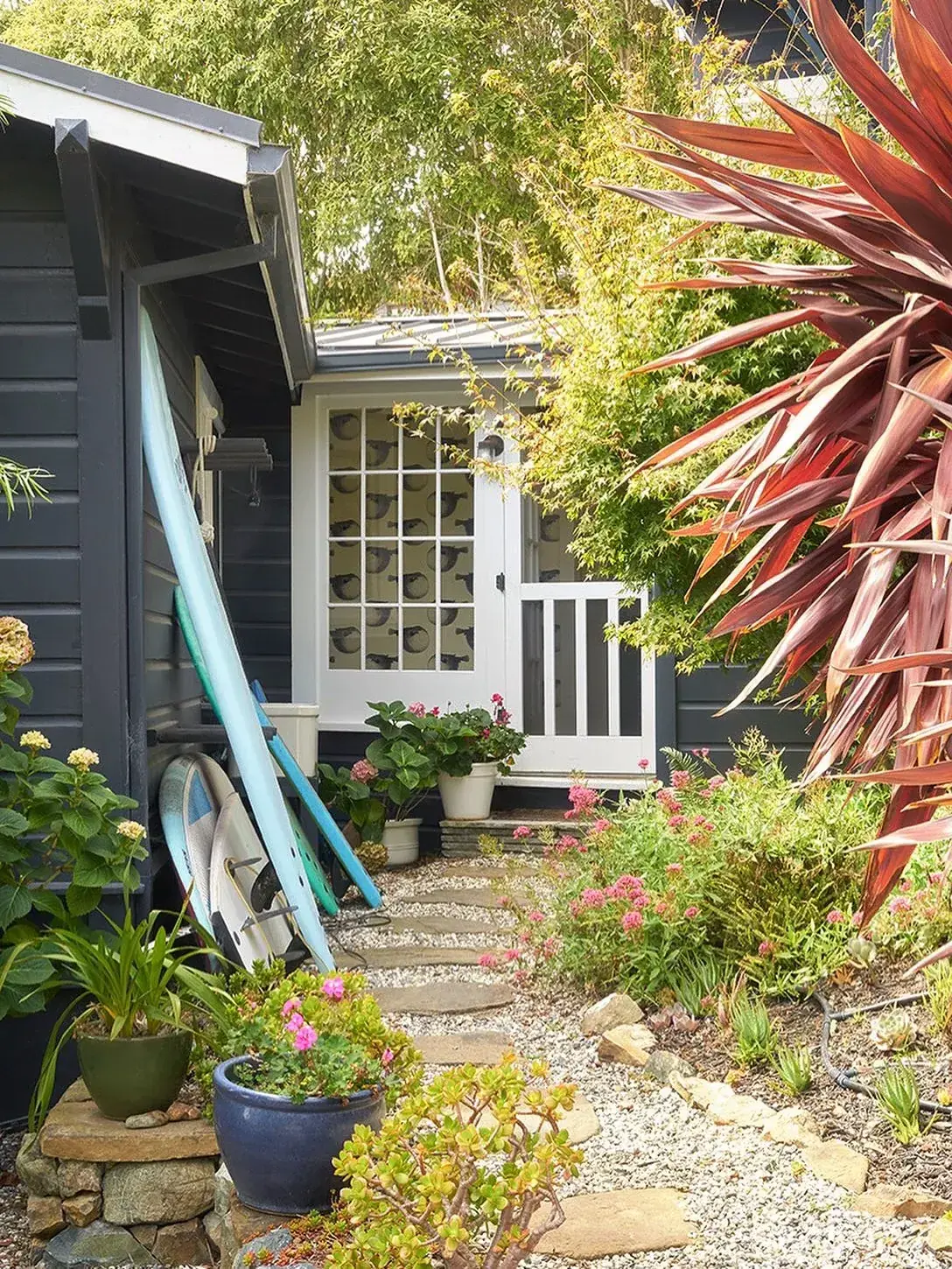
The charcoal cottage with the striped awning is the strongest argument for dark stain and the clearest warning about it. Near black courses make the white window frames punch and shrink the cottage into something crisp and deliberate. The bicycle by the path gives the scale away. This is a small building, and dark colours usually weigh small buildings down. Here the awning canvas breaks the mass in half, so the charcoal reads as a choice, not a shadow.
Dark stain absorbs heat and ultraviolet light, so it moves more and chalks faster than any mid tone. The south and west elevations will go patchy first, typically around year four or five, while the north wall still looks fresh at year seven. The only cure is another full coat. There is no reviver that puts pigment back evenly, and spot coating shows as hard edged rectangles within one summer. Before choosing charcoal, decide whether ladders feature in your five year plans.
If the answer is yes, set the job up to succeed. Dip boards on all faces before fixing, fix with stainless, keep 5 litres from the original batch for the first maintenance pass, and recoat whole elevations at once after a soft wash. A small cottage like this one takes two long weekends for a careful recoat including masking the awning brackets and the path. Skip the dark stain if that sentence made your shoulders drop. Bare cedar asks nothing after year five except an annual look at the base.
Buy the cedar before you buy the look
Two things decide how a cedar wall ages, and neither of them is the cut.
Grade. Ask your supplier for No.1 Blue Label, the top Certigrade classification. It is 100% heartwood, 100% edge grain and clear of knots. Lower grades carry sapwood, which is the part that rots, and flat grain, which cups and curls as it dries. The price difference is real and it is the wrong place to save.
Exposure, meaning how much of each course you leave showing. Less exposure means more courses, more cedar and more labour, and it also means more overlap and better shedding. A supplier quoting an unusually cheap job has often stretched the exposure. Ask what it is before you compare two quotes, or you are comparing different walls and you will not know it.
Pre-dipping. If you are staining, have the shingles dipped before they go up. Coating a finished wall only ever treats the exposed third, while dipping seals all four faces including the laps that stay permanently hidden. The hidden two thirds is where moisture does its work, so dipped boards hold stain twice as long at the laps.
Where to stop and call someone
Corners, and anything involving flashing.
Fields of shingle are slow but forgiving, and if you are patient you can do a gable end perfectly well. Woven corners are a different skill, and if you get them wrong they are visible from the road for the life of the house. Flashing around window and door openings, plus the roof edge, is not a cosmetic job; it is the thing standing between the wall and the sheathing behind it. Get either wrong and the failure shows up two or three years later, inside.
Frequently Asked Questions
Does the split or sawn cut change how long the wall lasts?
Thickness helps less than airflow. A sawn wall with a drained 19mm cavity and stainless fixings normally outlives a thicker split wall fixed flat to sheathing. Pick the texture for its appearance, then spend on battens, mesh and nails.
Can bare cedar ever age to one even silver?
Rarely on a real house. Sun, shade, eaves and splash keep different zones on different schedules for years. A grey bleaching oil pulls those zones closer together within a season. Without it, expect three to five years of patchwork first.
How often does coated cedar need painting again?
Translucent coatings fade fastest, so plan a wash and fresh coat around year five to eight. Opaque solid stains hold seven to 10 years. Sunny gables chalk first, so judge the worst wall, then coat the full elevation at once.
Why do fixings matter so much on cedar walls?
The timber is acidic and marks easily. Plain steel bleeds dark streaks below each head within two winters. Hot dipped galvanised lasts longer but still fails where the coating nicks. Stainless ring shank, grade 316 near the sea, stops the problem at source.
How much gap belongs between soil and the first course?
Leave 150mm from finished ground to the lowest butt, with beds pulled 300mm back and gravel along the plinth. That band breaks splash, lets air in and leaves room to check the timber each autumn with a thumb press.
Is near black stain a mistake on a small cottage?
It suits small buildings when trim stays warm white and something pale breaks the mass, like an awning. Budget for the sunny side every four to five years, keep stain from the same batch, and recoat whole walls so patches never show.
The order to decide in
- Decide the finish first: bare, bleached, or stained.
- Choose cut second. Shakes read rustic, shingles read tidy, both last.
- Specify No.1 Blue Label grade and confirm the exposure in writing.
- If staining, dip before fixing. Coating afterwards misses the hidden laps.
- Keep spare bundles from the same run, somewhere dry.
- Hand the corners and the flashing to someone who does it weekly.
This article may contain affiliate links. We may earn a commission at no extra cost to you.