11 Dark Shingle House Ideas: A Light Roof or It Vanishes

Add us as a preferred source to see more stories on Google.
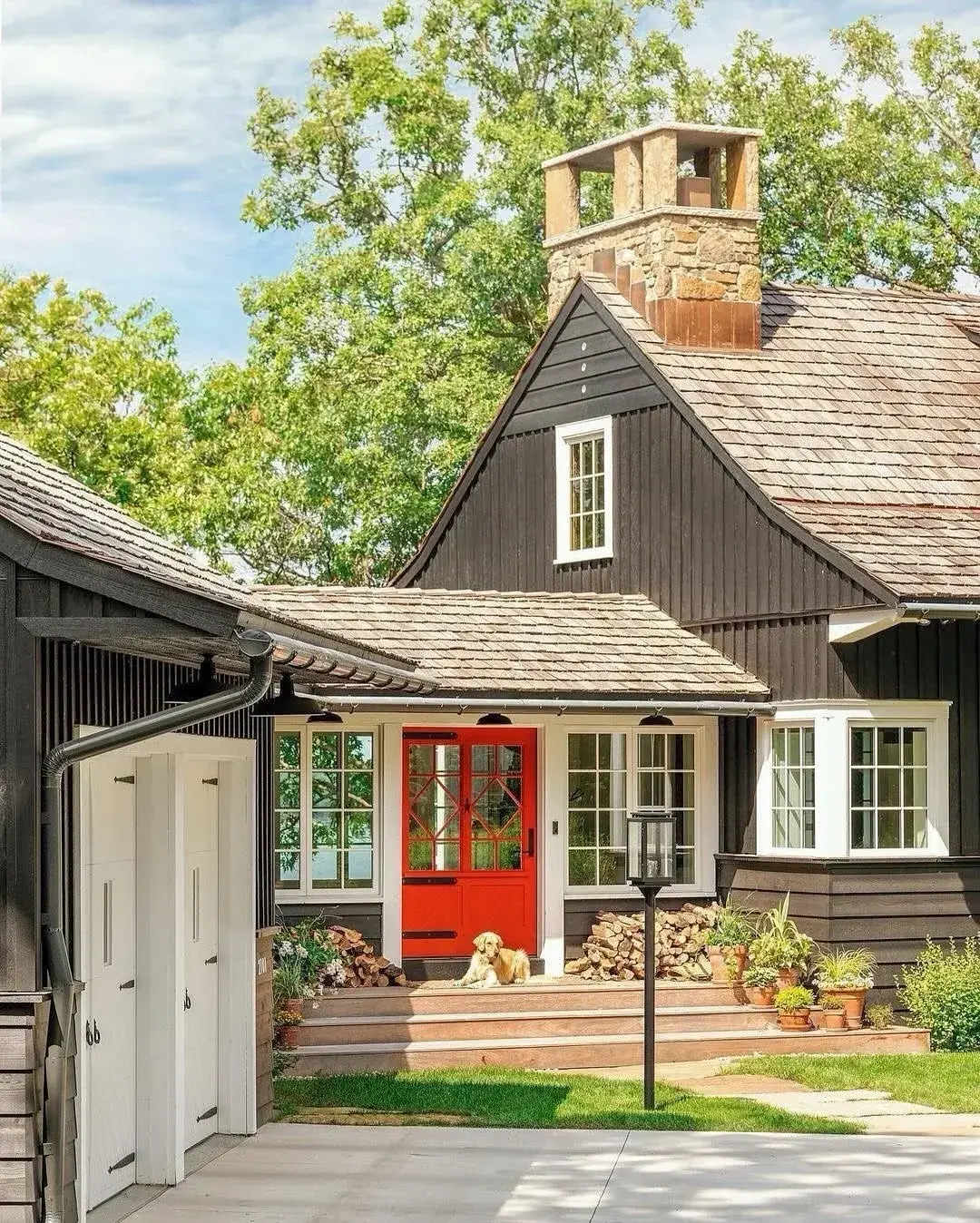
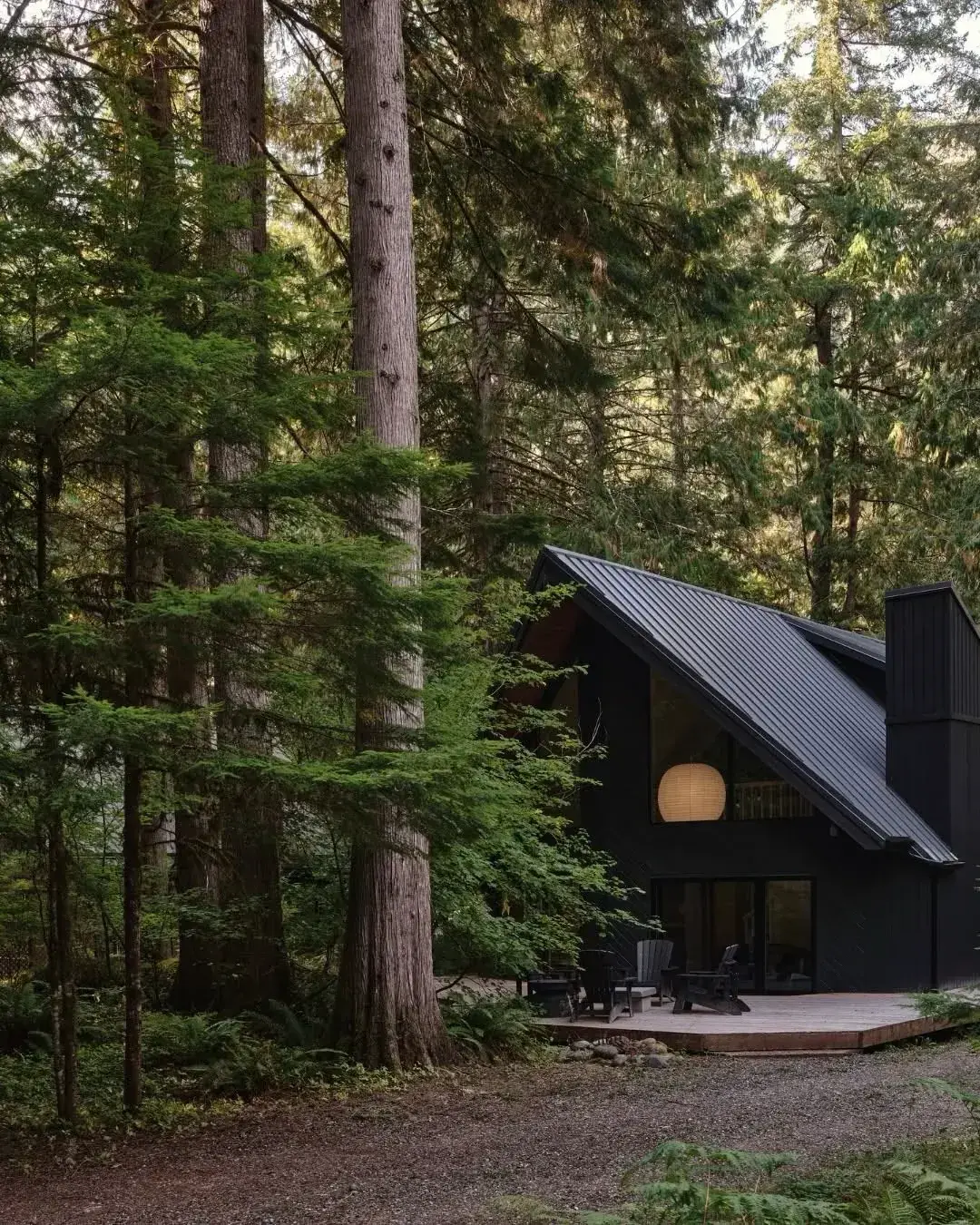
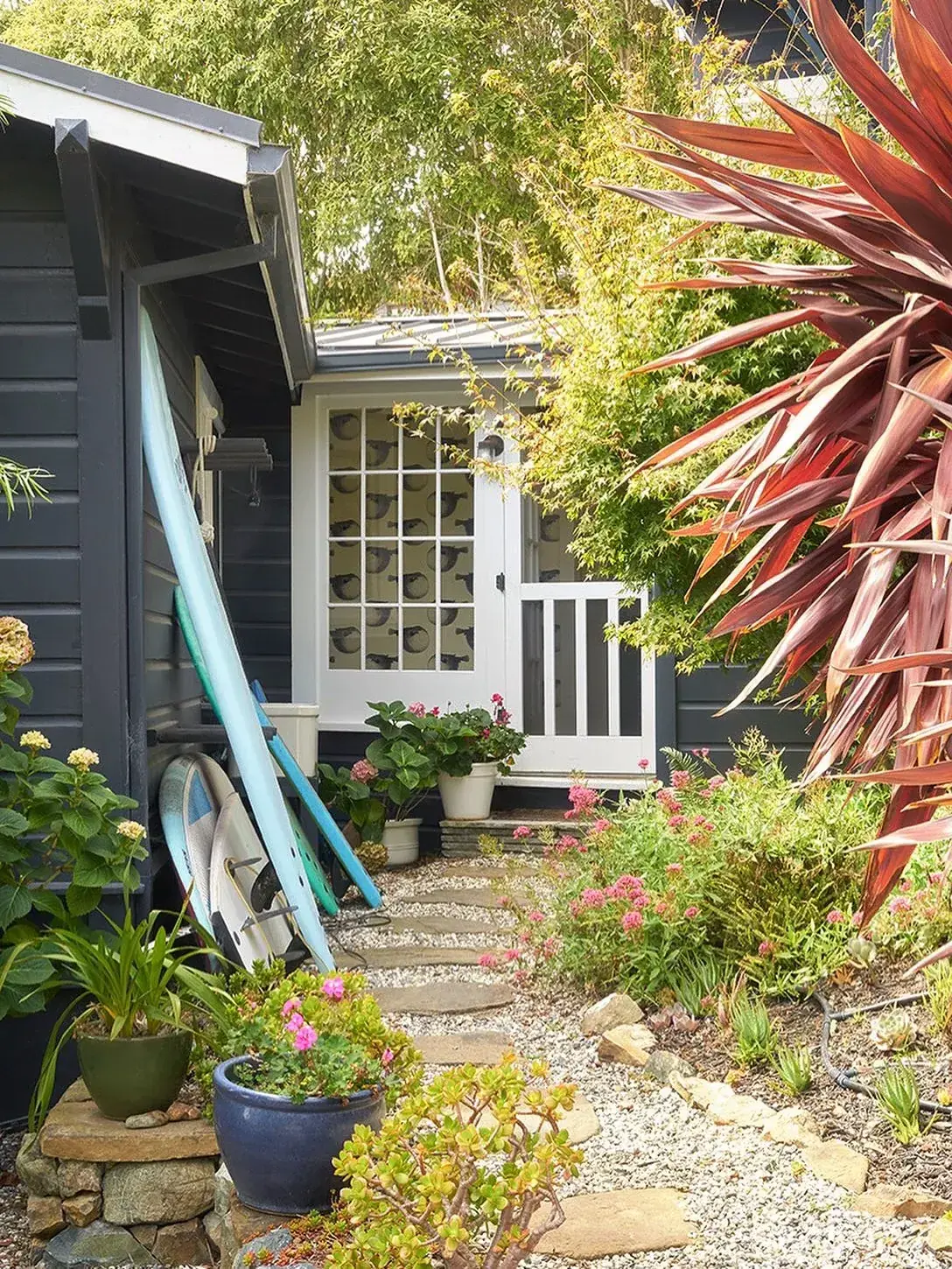
The walls on the cottage below are almost black. The roof is natural cedar, weathering to silver-tan, and the two together are the entire composition.
That pale roof is doing the work. It separates the gable from the wing, it gives every eaves line a bright edge, and it stops a dark building from collapsing into one shape.
Put a dark roof on the same house and it becomes a silhouette. The volumes stop reading, the eaves disappear, and from the road you have a black mass with some white windows in it.
What the light roof is doing
A building reads as a set of volumes, and the eye works out where one stops and the next begins from the lines between them.
On a dark house, all of those lines are in shadow or in the same tone. The junction between the gable and the wing, the line of the eaves, the pitch of the roof: none of it registers from any distance.
A light roof puts a bright plane on top of every volume. Suddenly the gable is a triangle, the wing is a lower rectangle, and the porch roof is a third shape stepping down. You can read the building.
Natural weathering cedar is the traditional answer and the best one, because it goes silver on its own. Look at the roof in that photograph and you can see it mid-process: still tan on the sheltered slopes, already silvering where the weather hits.
Slate in a mid grey does the same job. What fails is dark asphalt shingle, which is also the cheapest and therefore the default on most new builds, and it is the single decision that turns a striking dark house into a shadow.
Stain, not paint
Shingle moves.
Every course is a row of individual pieces of timber, each one expanding and contracting on its own with the weather, and every butt joint between them opens and closes through the year. A wall of shingle is not one surface; it is several thousand small ones, all moving slightly differently, and any coating has to cope with that.
A film-forming paint sits on the surface as a continuous skin. That skin cracks at every joint, water gets behind it, and within a few years you are scraping rather than recoating.
A penetrating stain soaks in and fades rather than flaking. When it is due, the job is a wash and another coat, not a strip. That difference compounds: a house recoated four times over forty years has had four weekends of work, where a painted one has had four full strip-and-repaint jobs, each of which costs several times as much and takes the shingle surface with it.
| Product | Type | Note |
|---|---|---|
| Cabot Solid Color Stain | Opaque penetrating | Widely available; good colour range |
| Benjamin Moore Arborcoat solid | Opaque penetrating | Reliable; mid price |
| Sikkens / PPG ProLuxe | Penetrating | The benchmark, priced accordingly |
| Osmo Country Colour | Opaque microporous | Excellent on timber; UK availability |
| Any exterior masonry paint | Film-forming | Wrong product; will crack |
Dip the shingles before fixing where you can. A dipped shingle has stain on all faces including the part that hides under the next course; a brushed one is coated only on the third you can see, and the unstained butt edges show as pale lines as soon as the shingles shrink.
Heat, and what it costs you
Dark surfaces in sun get considerably hotter than pale ones. On timber that means more movement, more stress on the coating, and a shorter interval before the next recoat.
Expect the south and west elevations to need attention before the north and east, and plan to do them separately rather than waiting for the whole house. A recoat on two elevations every six or seven years is more manageable than a full-house job every ten.
It also means checking the substrate ventilation. Dark cladding on a wall with no drained cavity behind it gets hot, drives moisture inwards, and fails faster than the same detail in a pale colour.
The one bright thing
That red door is the only saturated colour on the building, and on a dark house you get exactly one.
Notice how hard that red reads against the near-black wall. A dark elevation is a superb background, so any colour on it arrives at full strength. One front door, or one set of shutters, is a gesture. Two or three competing colours on a dark house looks busy in a way it would not on a pale one.
Trim should stay light and crisp. White or off-white window frames against dark cladding give the openings their edges, in exactly the same way trim does on natural shingle.
Where dark is the wrong call
Small houses in shaded positions.
A dark cottage under mature trees on a north-facing plot reads gloomy for most of the year, and no amount of white trim recovers it.
And terraced or closely spaced houses, where a dark elevation can look heavy against its lighter neighbours. A dark house works best with space around it and sky behind it.
The silver you get for nothing
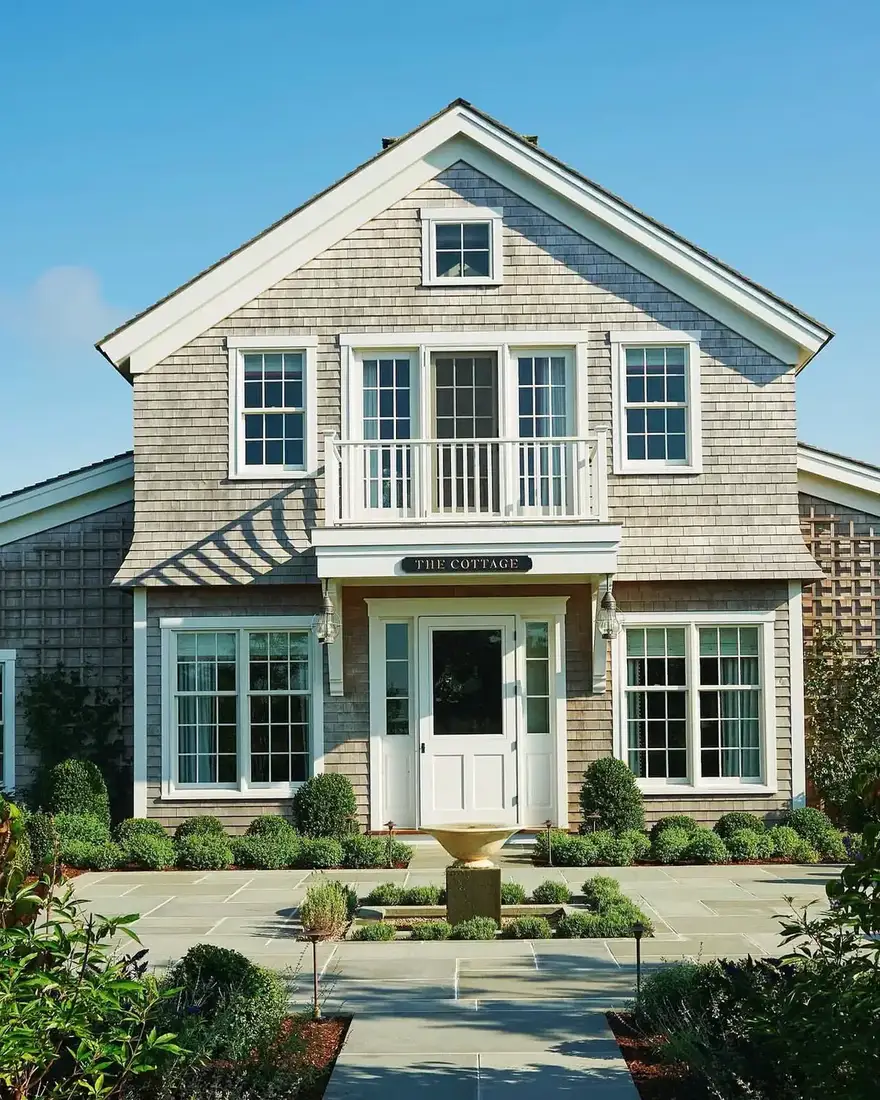
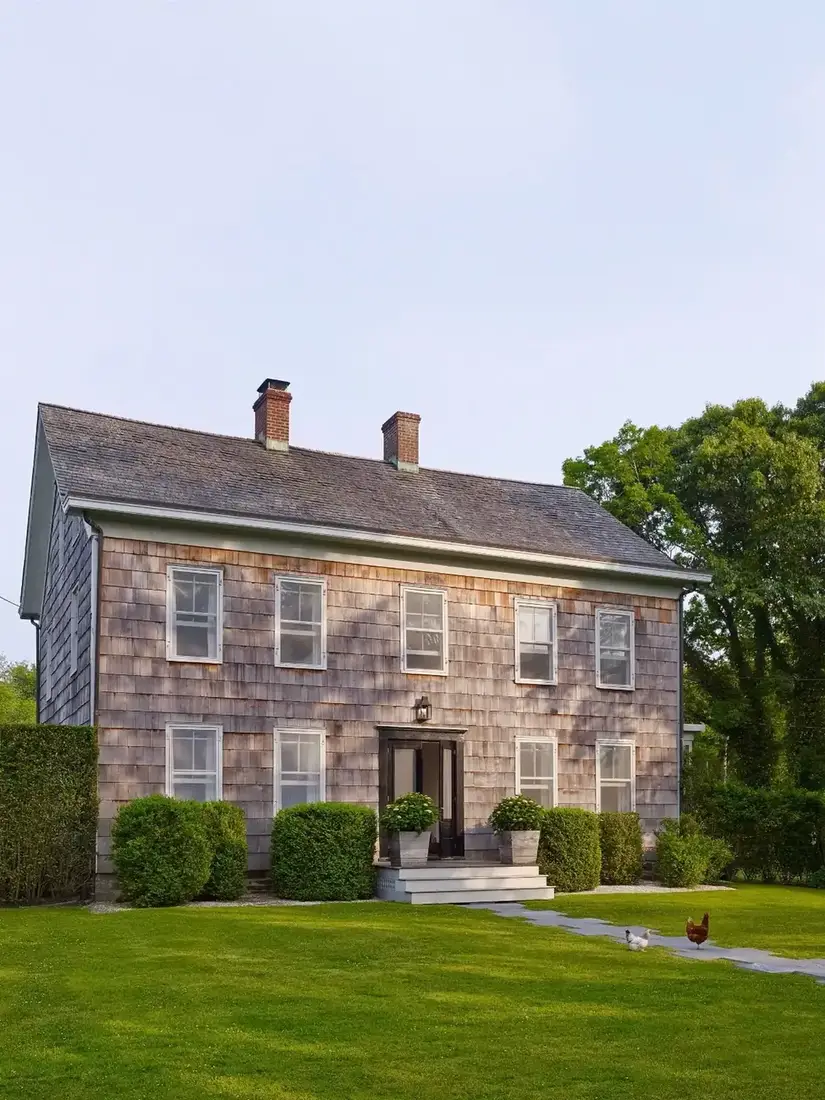
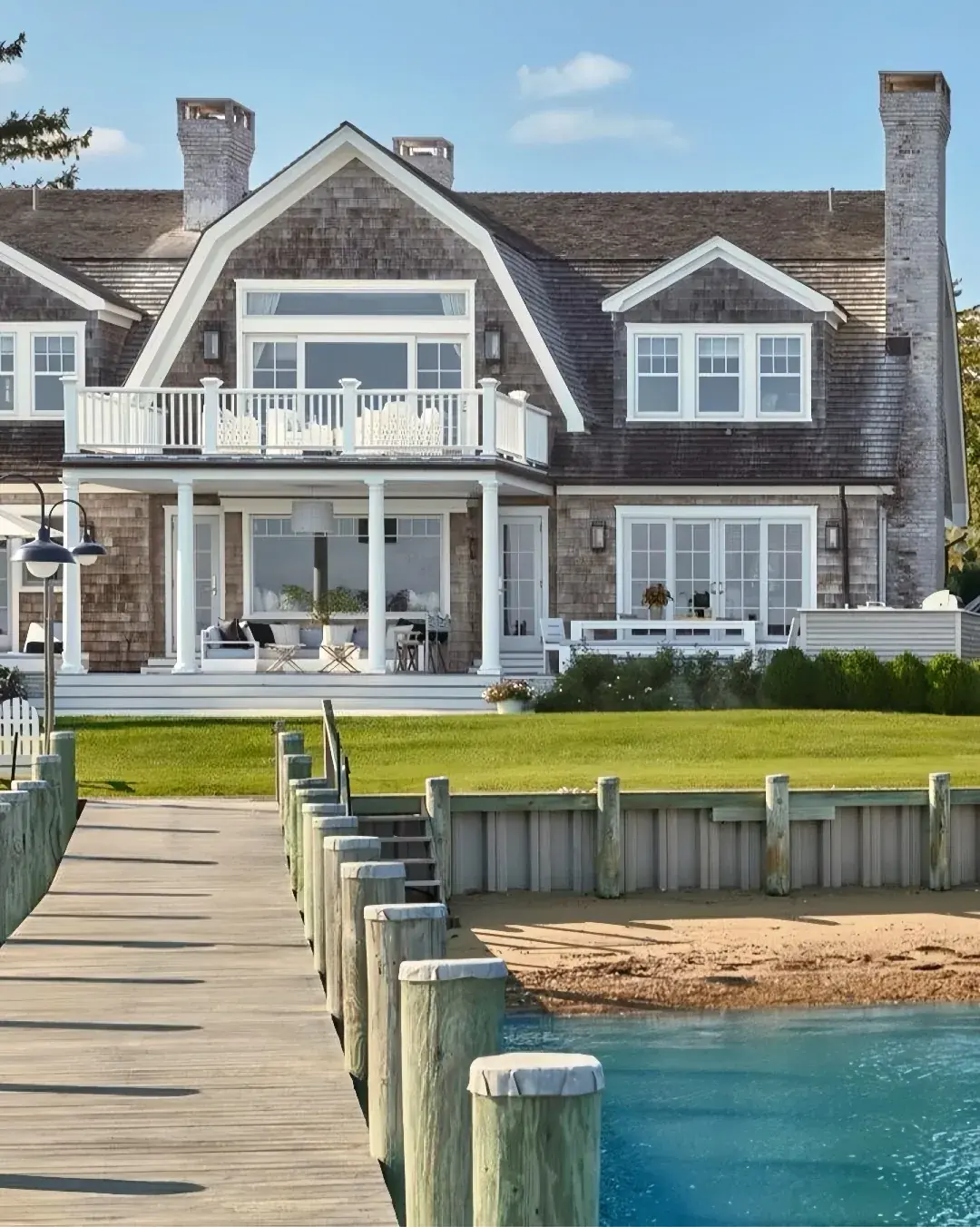
Look at the cottage above and name what was paid for. Two storeys of bare shingle left to weather, white joinery, a stone slab terrace with an urn at its centre, and clipped hedging in front. The silver on those walls cost nothing beyond patience, and it is the finish every dark stain is competing with.
Bare cedar starts honey orange and moves to silver grey over roughly two to five years. Sun and salt hurry the change along, shade holds it back, and the sunny wall turns a full season before the shaded one. There is no recoat cycle at any point, because there is no film to maintain.
So the order of operations is fixed. Live with the bare wall through one full year before buying any stain, and spend that year choosing the trim white instead. Farrow and Ball Pointing and Benjamin Moore White Dove OC-17 both sit well against silvering cedar, and a 2.5 litre tin of exterior trim paint runs about £40 to £70 in 2026. That tin is cheap. The stain decision it precedes is not, because once dark is on, the silver in this photograph is gone for good.
A bright open plot argues for silver
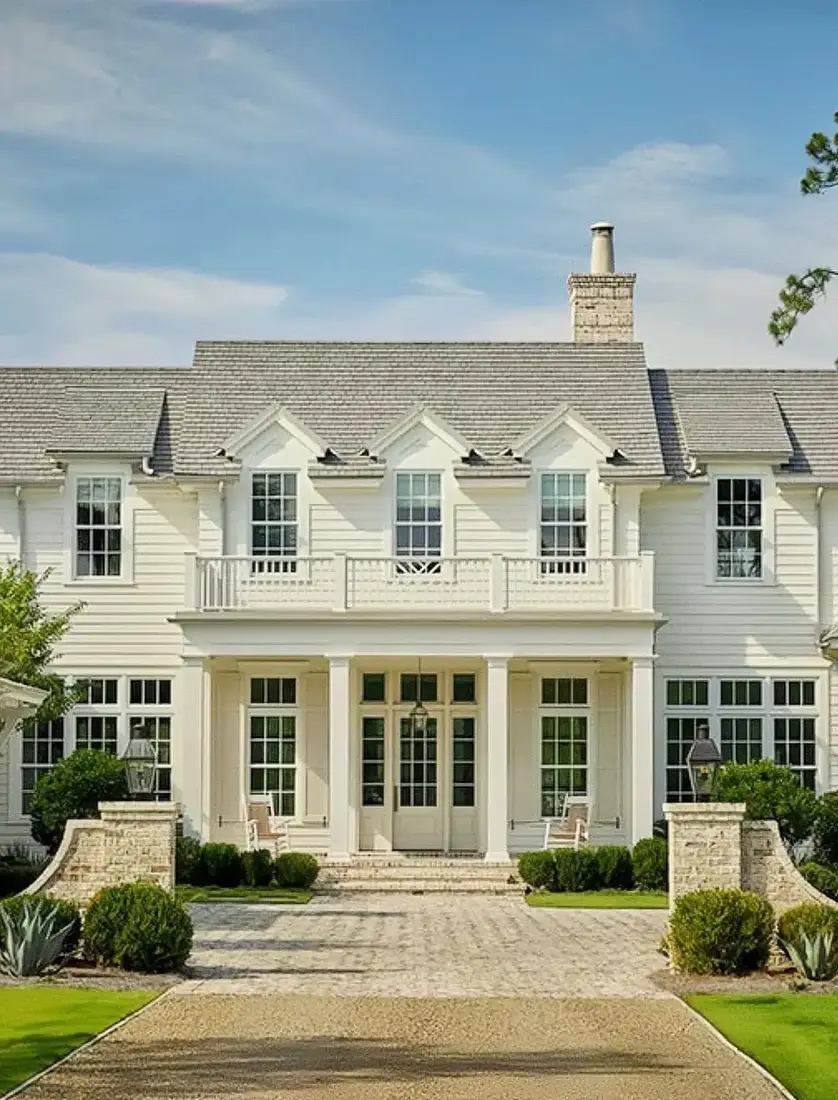
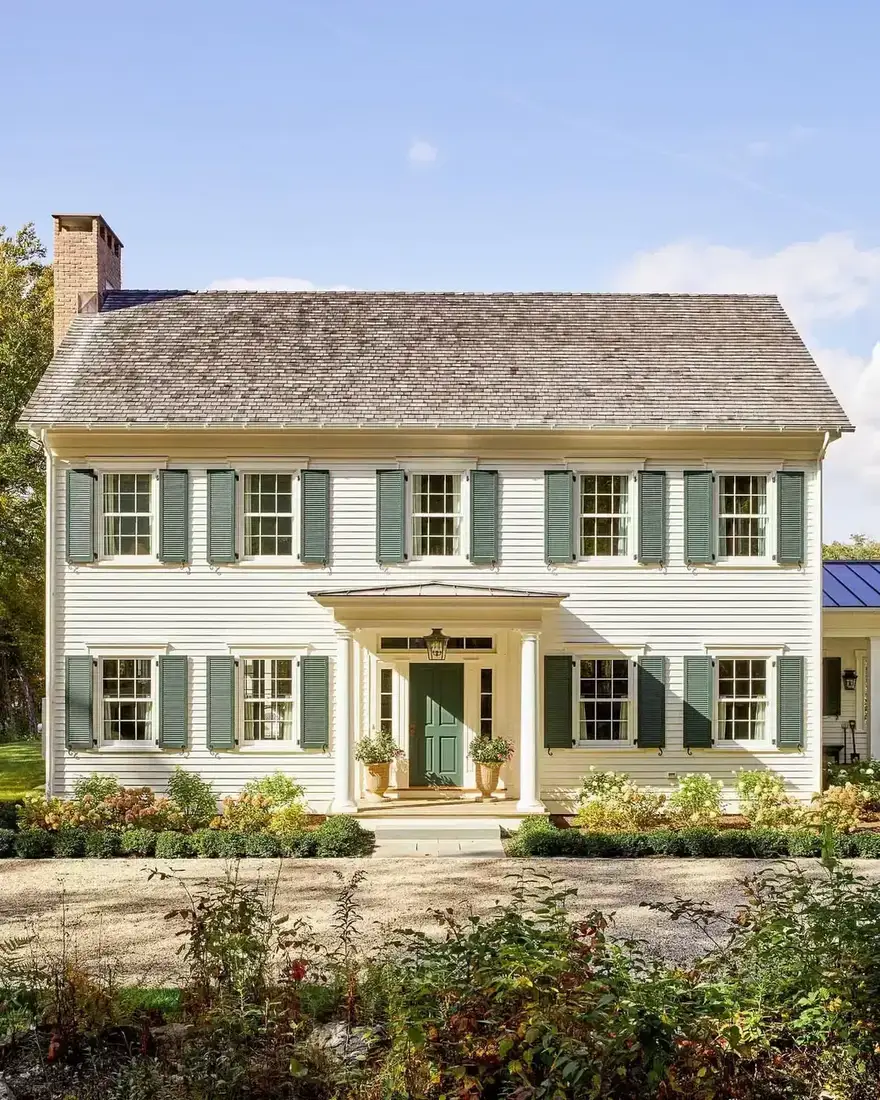
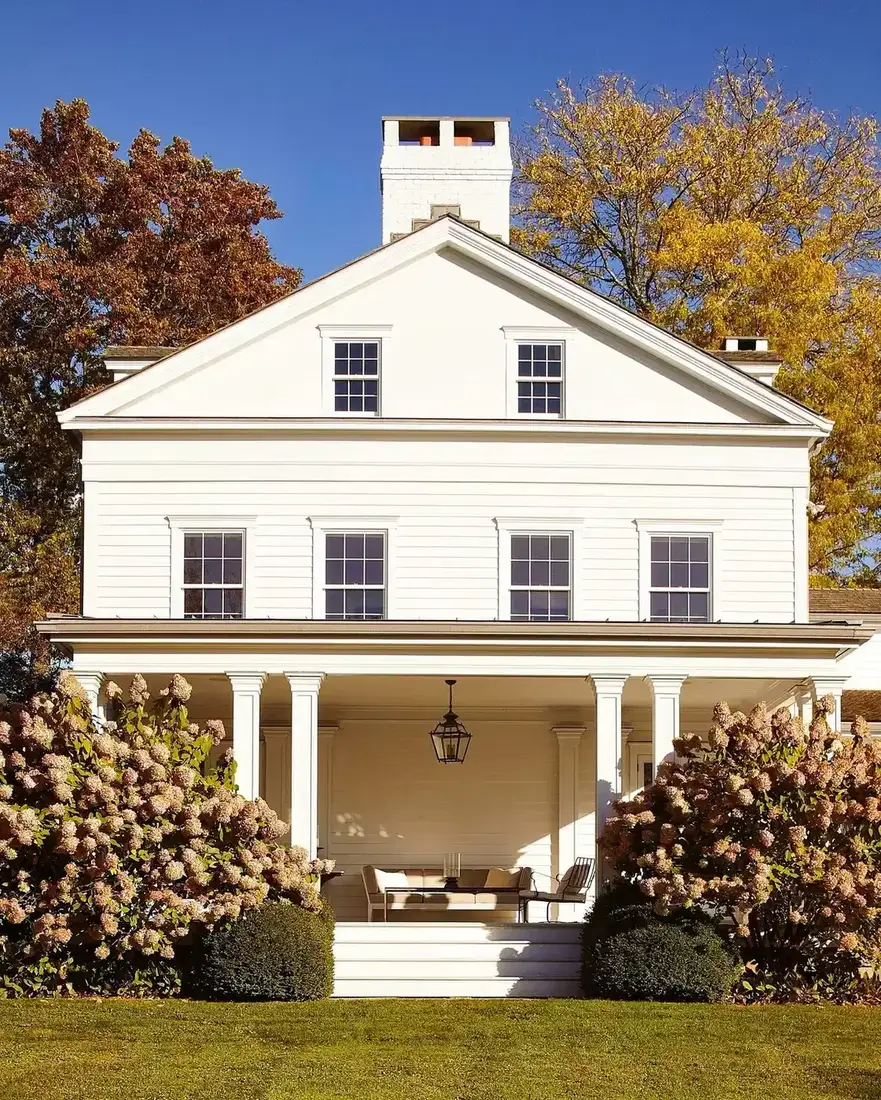
This front is all light: white painted walls, a grey shingle roof, a columned porch, stone piers with lanterns, and a gravel drive running between clipped hedging. Stand on that drive at midday and everything bounces. A dark stain dropped onto this plot would sit like a thundercloud in a pale field.
That is the test. Dark cedar needs ground that can absorb its weight, meaning trees, stone, or a darker roof nearby. On a bright open plot with pale lawn and big sky, silver or white sits calmer and the house keeps its manners. Photograph the plot at midday and again at dusk before choosing, and believe the duller of the two.
If the photographs say dark after all, sample it properly. Paint large boards in two or three near-blacks, such as Farrow and Ball Railings No.31 and Down Pipe No.26, and stand them against the wall morning and evening. A board that still looks like velvet at dusk is a colour; one that goes flat is a warning.
Dark stain that still shows the grain
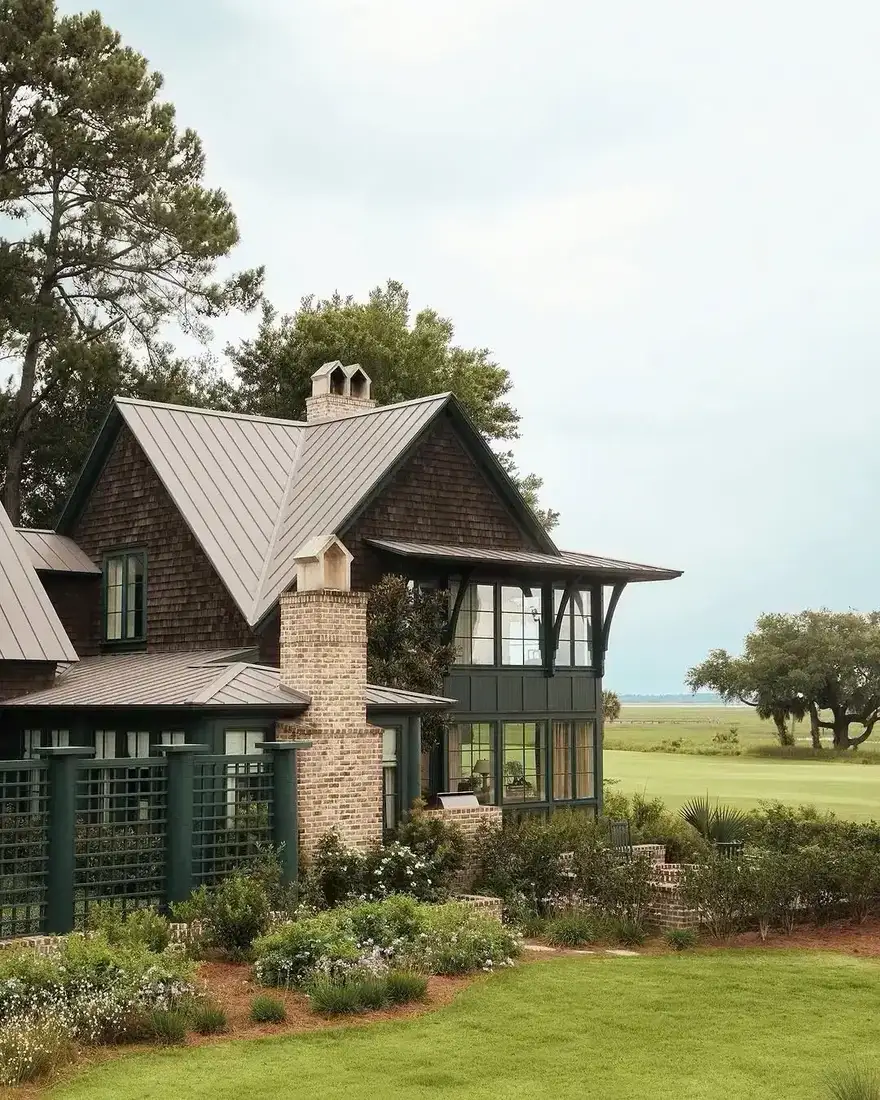
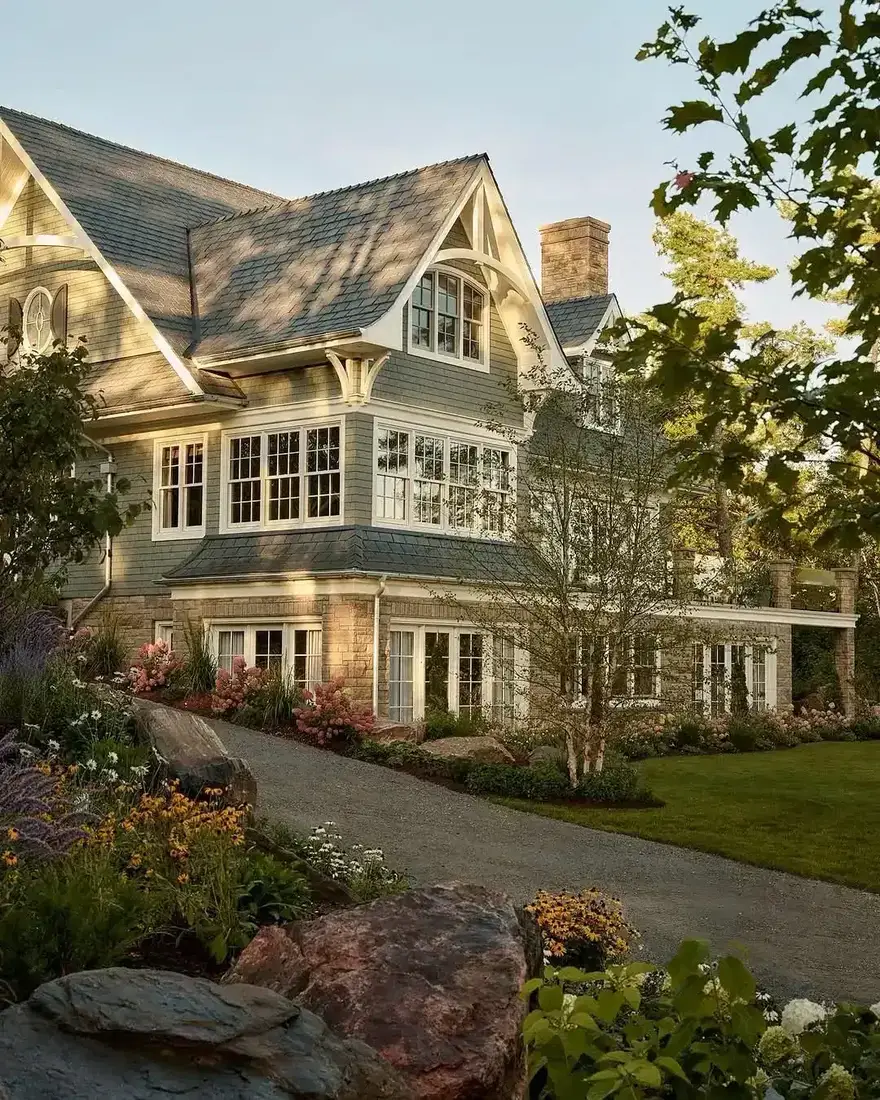
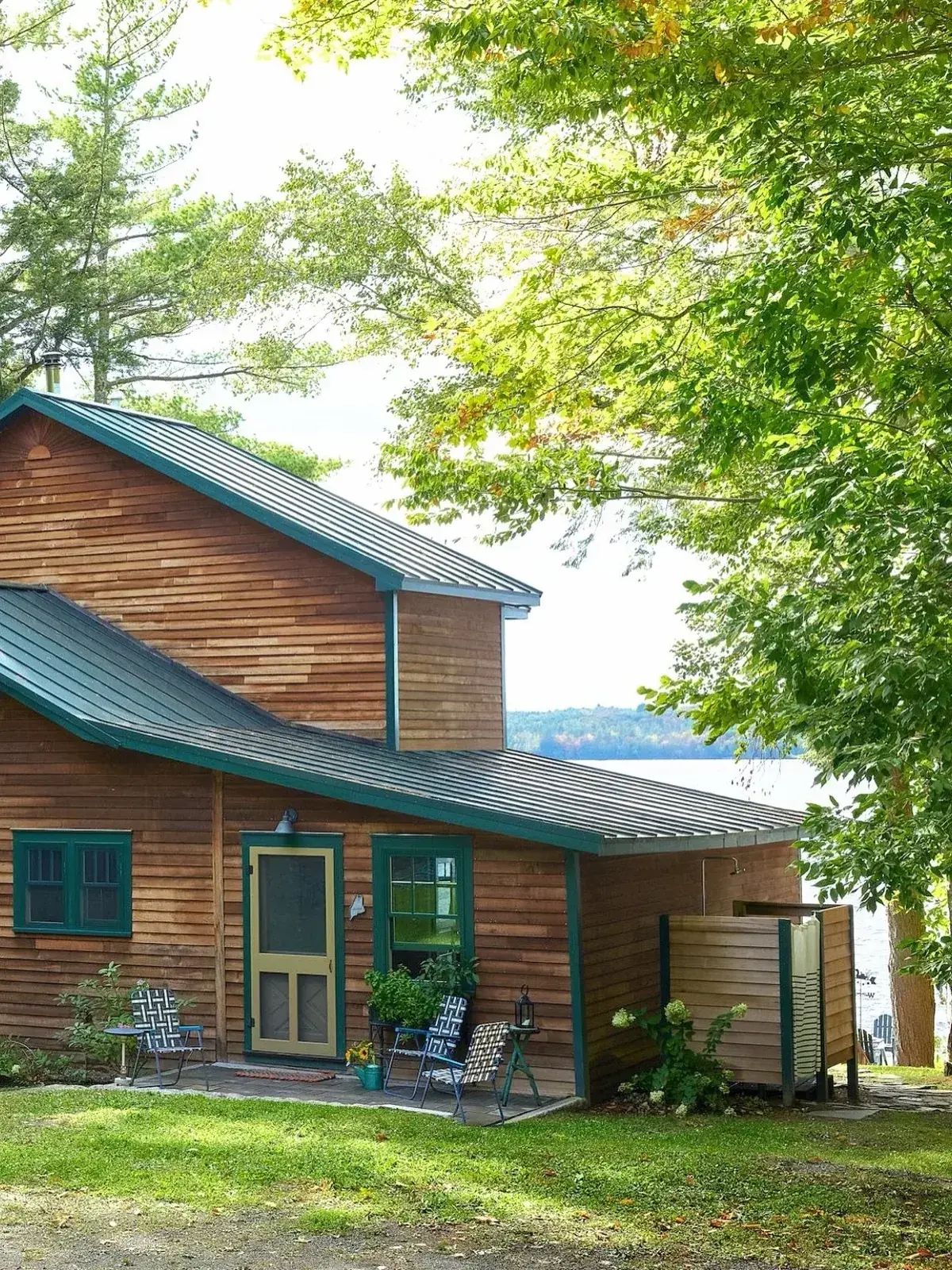
See how the grain reads through the colour on this gable. The shingle is dark brown, yet every course keeps its texture, and the pale standing seam roof above it does exactly the job the opening of this piece describes. That combination, dark walls with the timber still visible under a light roof, is the best version of this decision.
The reason it works is the coating. A stain that soaks into the fibre fades evenly and takes another coat when washed; a paint that skins across the surface bridges every butt joint, then splits at each one as the courses move. Coating all faces before the courses go on seals the laps that a brush never reaches, which is where water starts its work.
Budget the material before the romance. A 5 litre tin of solid exterior stain runs about £45 to £85 in 2026, with the premium ranges above that, and the sunny elevations will drink more than the shaded ones. Price the recoat at the same time as the first coat, because the second one is already promised.
Fixings you will never see again
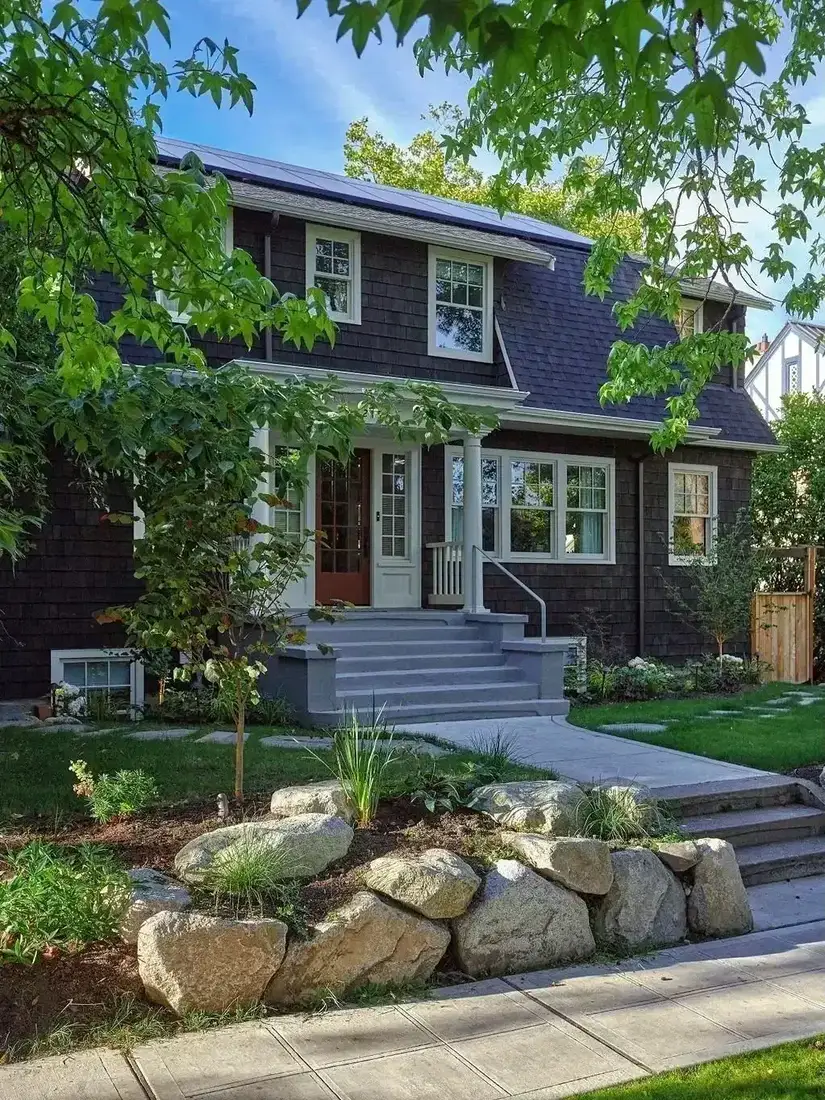
Count the courses near the ground in this photograph and try to find a fixing. The dark wall runs clean from the boulders to the eaves, the planting is held back from the bottom course, and there is not a rust tear anywhere. That cleanness is specified, not lucky.
Cedar tannins eat plain steel, and even galvanised fixings eventually bleed brown streaks down the wall. On a pale wall the streaks weather in; on dark stain they draw the eye from the road. Stainless steel is the only fixing to buy, and the box wants checking before the first course goes on, not after the tenth. ForgeFix stainless ring-shank nails are one honest option, and a 5kg box runs roughly £25 to £45 in 2026 through merchants such as Screwfix or Travis Perkins.
The boulders are doing their own quiet job. They hold the bank without holding damp against the timber, and the gap between soil and first course lets air dry the wall after rain. Fixings decide whether the wall stains; drainage decides whether it rots.
One pale wing lifts the whole mass
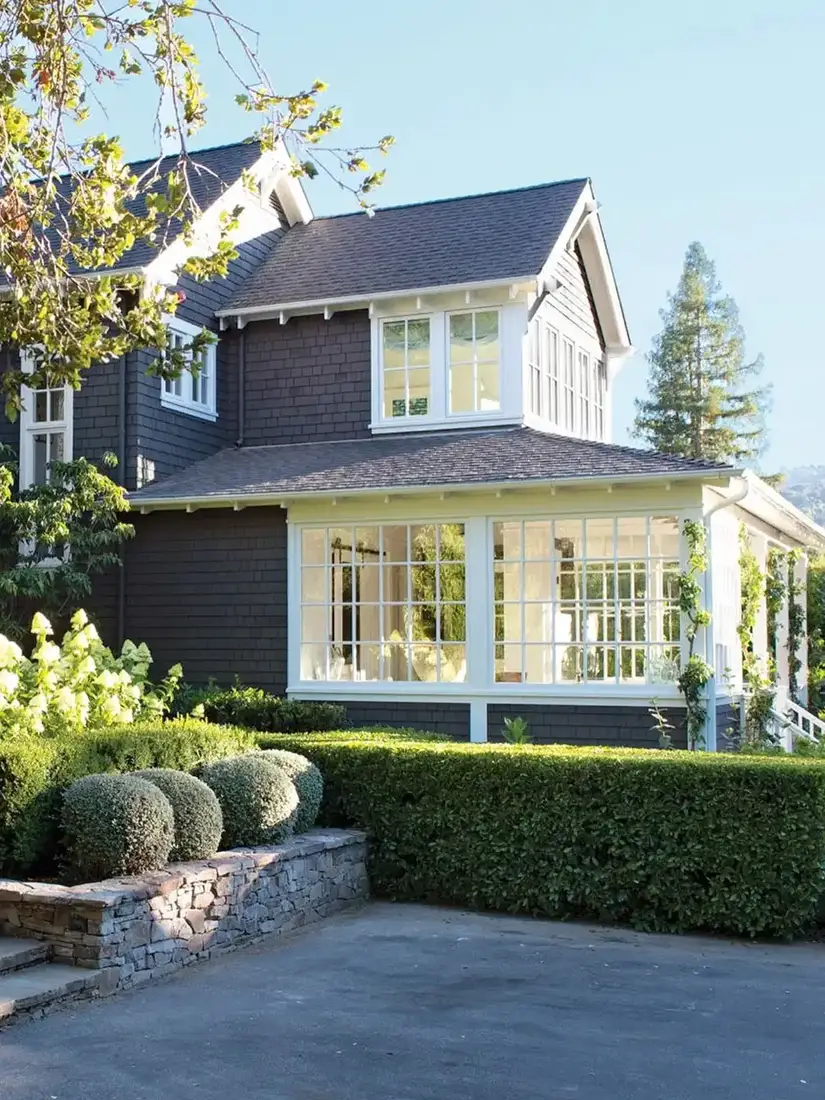
The charcoal block above would read as a hole in the landscape on its own. What saves it is the white sunroom wing bolted to its side, a full storey of glazing bars that catches the sun and hands the dark field something to lean against. From the drive the eye lands on the glass first and the dark second, which is the correct order.
Dark walls need that pale anchor every time: white trim, a pale door, or pale stone at the base. Without one, charcoal sits heavy and the windows vanish into shadow. With one, the same stain looks deliberate, and the house glows at dusk instead of sinking.
Heat is the second half of this detail. Dark surfaces run hotter in sun, so the gap behind the cladding has to move air and let both faces of the shingle dry, open at top and bottom. Check the quote names the battens and the cavity as included work. A dark wall with no air behind it waves within a few summers, and straightening courses costs more than ventilating them did.
Stone at the foot, in one temperature
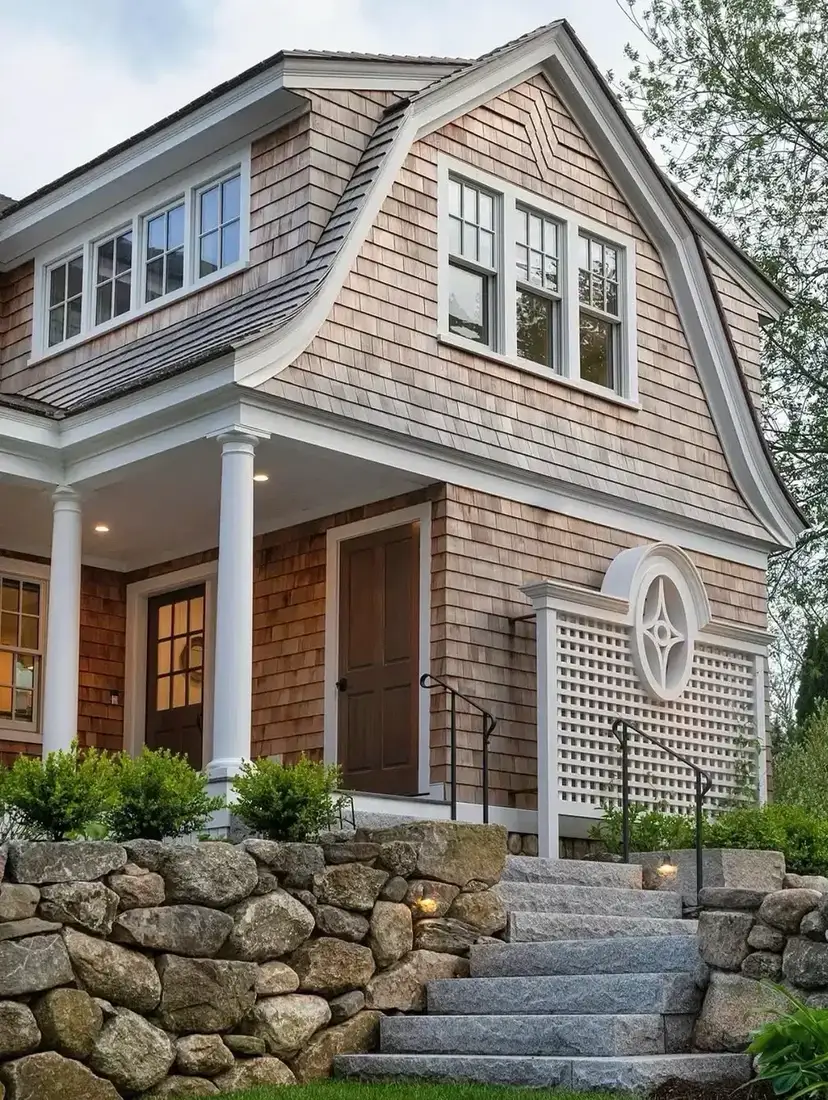
Study the foot of this gambrel. A fieldstone wall with granite steps carries the whole house, the white columns land on it, and the natural shingle starts above a clean shadow gap. The pale base is what lets the darker tones above stand, and the same detail rescues a dark stain: stone, a light terrace, or even a gravel band that reads pale from the road.
There is one rule for that base. Lay the stone sample, the trim chip, and the door swatch together outdoors and keep them in one temperature family. Warm stone with warm white, cool stone with cool white. A blue-grey stone under a creamy trim fights all day, and dark walls show the fight first.
The lattice trellis beside the steps shows the same discipline. One white, repeated in the columns and the window frames, so the pale elements read as a set. When the light pieces agree, the dark pieces are allowed to be dark.
A gate that says the dark is deliberate
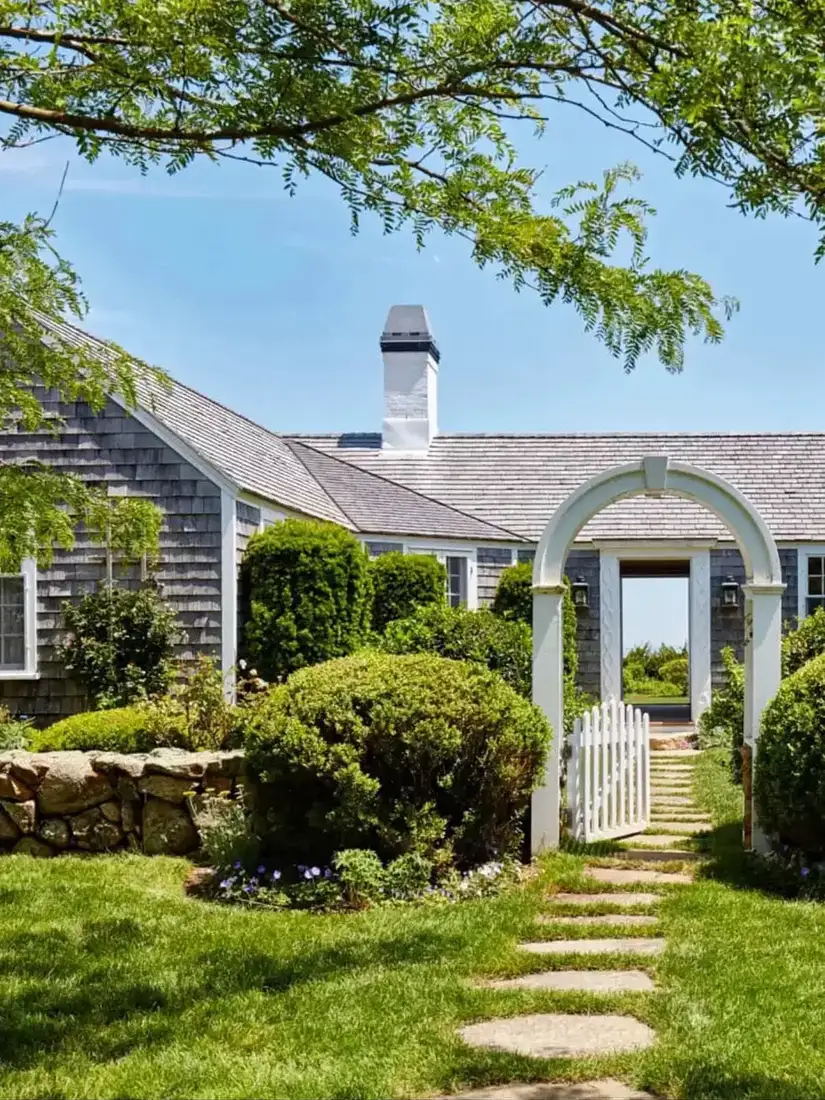
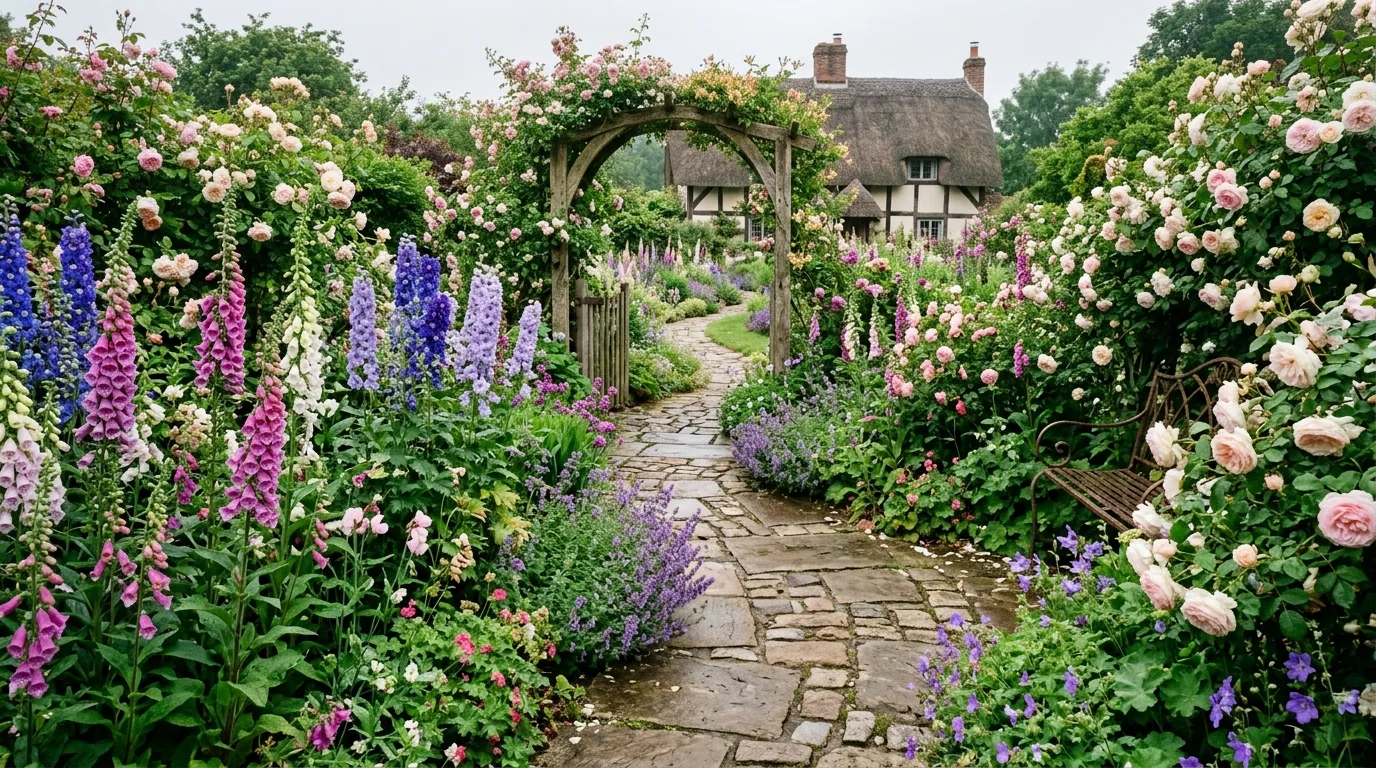
Notice that the gate in this photograph is not part of the house, yet it changes the house. A white arbor with a picket gate stands in front of silver-grey shingle, flanked by boxwood domes and a fieldstone wall, and the whole view reads as intentional because something pale frames the entry.
A dark cottage wants exactly that companion: a porch, an arbor, or a sunroom in pale trim, placed where visitors arrive. Nobody needs to lighten the main walls. One pale structure says the darkness was chosen, and the walk from light into dark and back out makes the cedar feel like a room rather than a wall.
This cottage also shows what waiting buys. The grey here is even, soft, and free, with no film to feed and no scaffold to book. Solid and semi-solid dark stains coat the surface and call for recoating every few years, so the honest comparison is never stain against nothing. It is stain against this, and the gate, and the wall, all ageing quietly on their own.
The porch that tests your trio
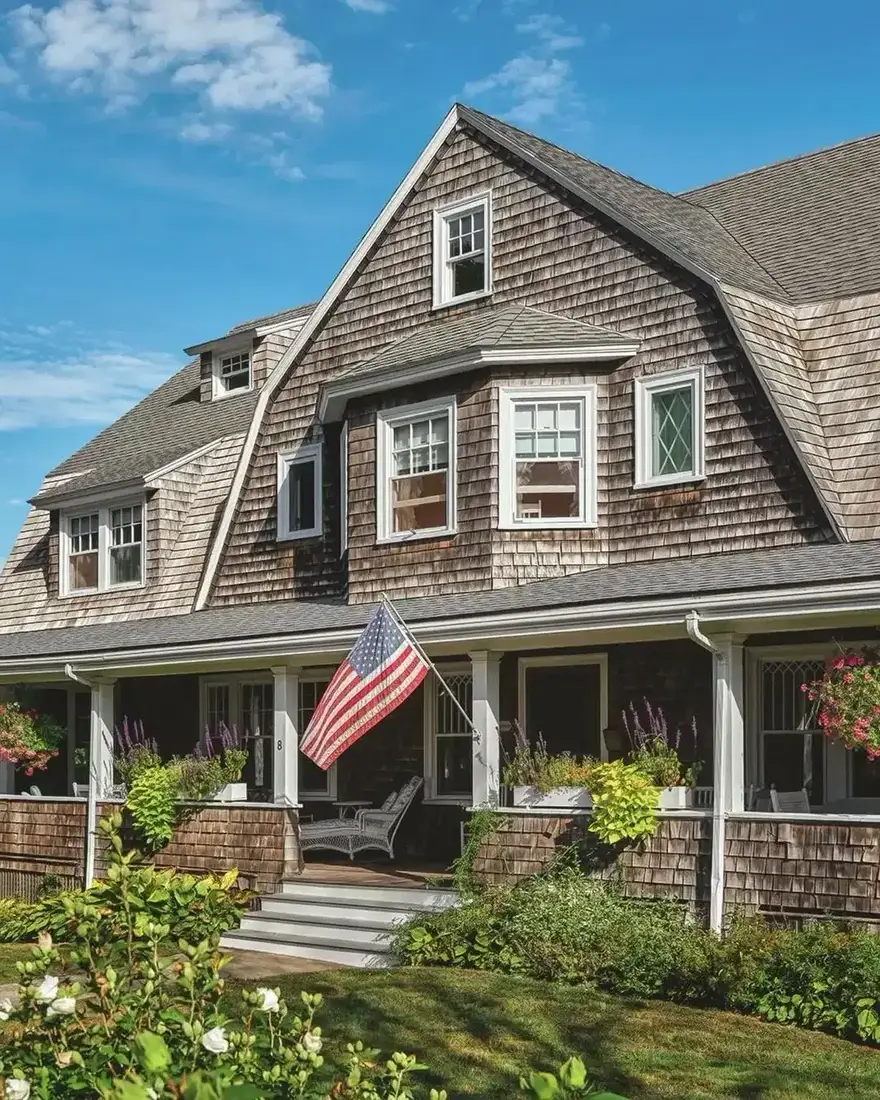
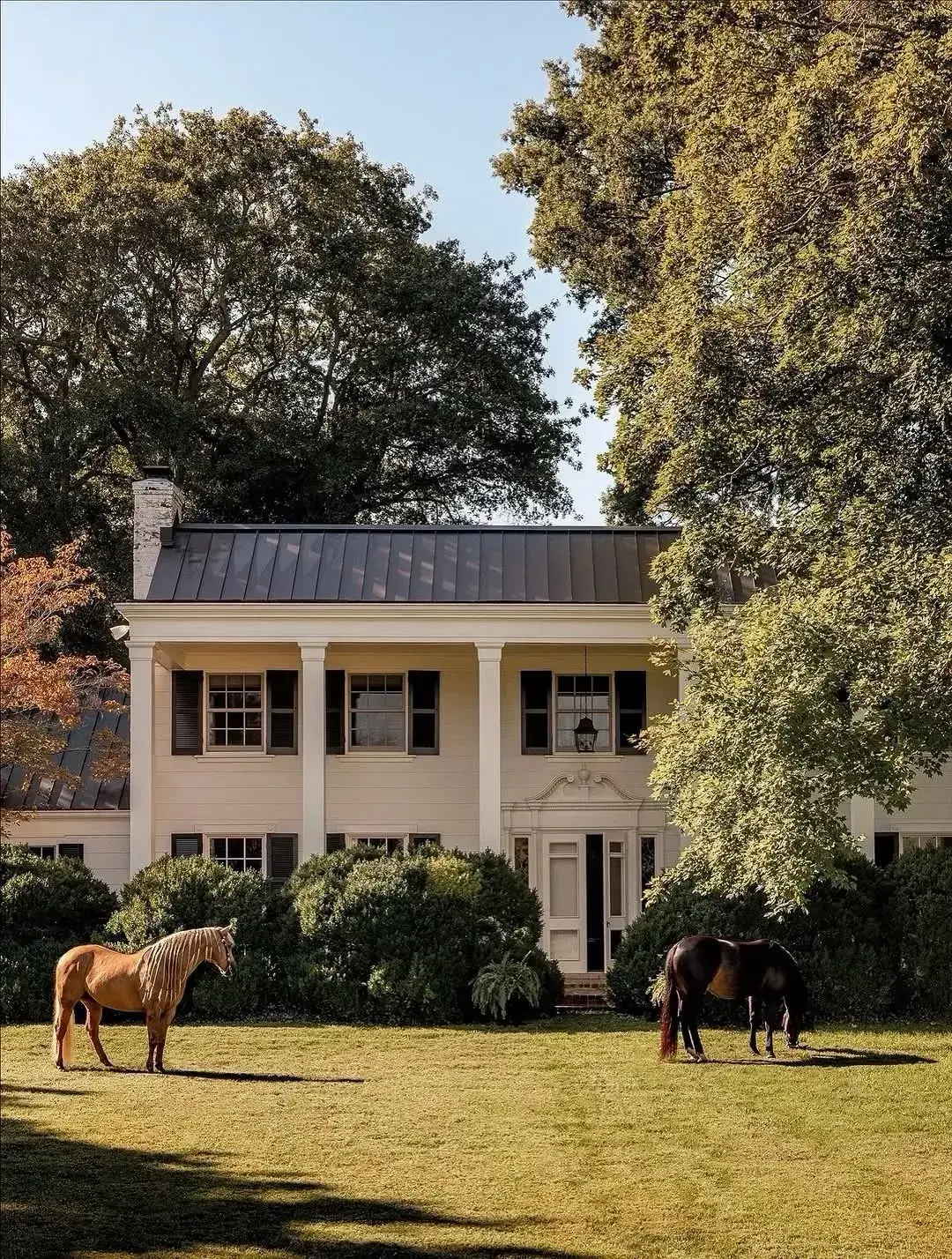
In this photograph the deepest dark on the house is not stain at all. It is the porch shadow under the gambrel, with white columns holding it up and a flag breaking it. Stand across the road and that shaded band is the colour your dark sample has to live beside, which makes this front a useful trial ground.
Hold the three samples where this porch would hold them: trim white against the shingle, stone against the base, planting behind. Viewed together in daylight, the trio either sits as one family or it argues. Dark stain forgives nothing here, because every pale element gets louder against it, and a mismatch that looked trivial on the merchant’s counter shows from the kerb.
Then price the promise. Solid and semi-solid stains sit on the surface and need reapplying, so a contractor recoat of the sunny elevations falls around £1,800 to £3,500 in 2026, with scaffold tower hire near £250 to £450 a week in 2026 where access is tight. If that cycle sounds like someone else’s hobby, the silver in the earlier photographs is still available, and it bills nothing.
Dusk and January decide as much as June
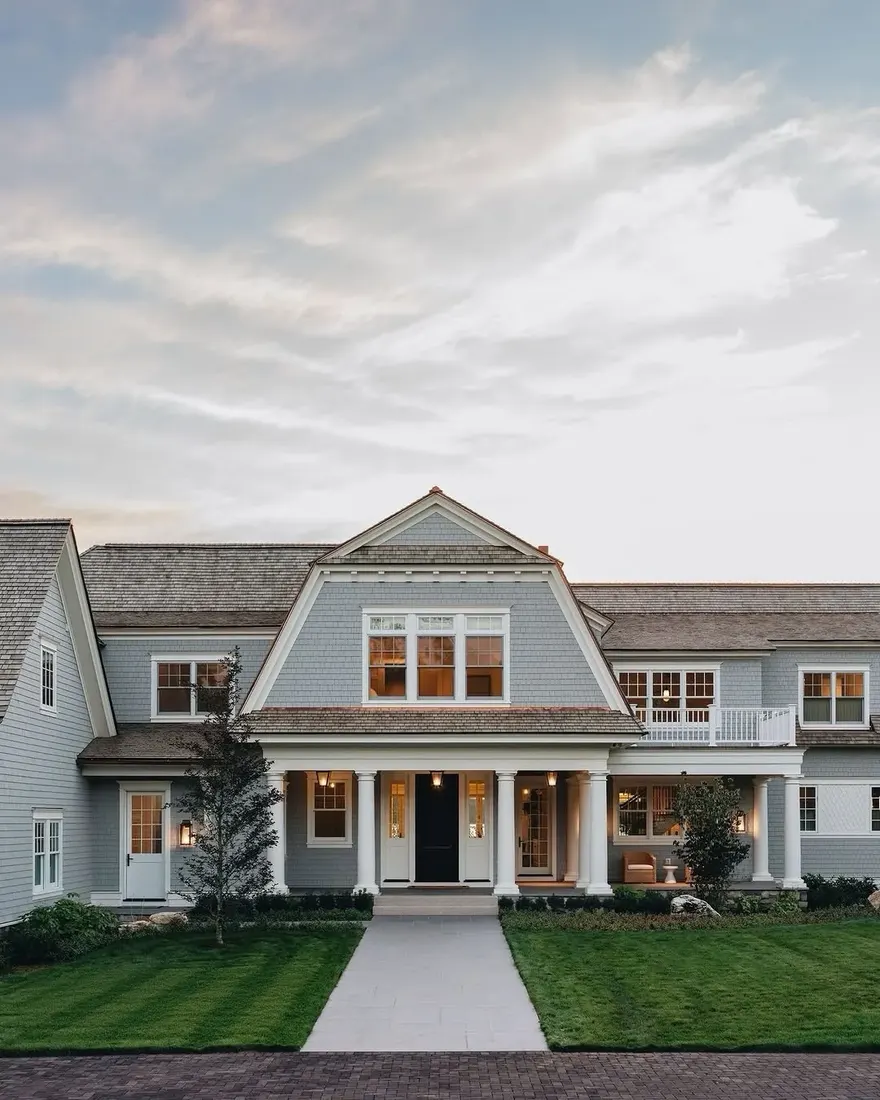
This gambrel is photographed in the kind light, with the windows lit and the lawn striped, and the pale grey shingle looks effortless. Dark stain deserves the same scrutiny in the opposite conditions, because a colour that only works in July sunshine will feel heavy for the five months the garden stands bare.
Low sun rakes across shingle courses and warms a dark stain; flat overcast cools it and shows every uneven patch. Tape a large sample board to the wall and leave it through a week that includes a grey day, then judge it on the dull afternoon rather than the bright morning. The sample that still pleases when the sky gives nothing is the one to buy.
Warm pale trim and a light stone or gravel base carry the house through those months. They hold a little brightness against the dark field when the garden cannot, and they are the reason the lit windows above read as glow rather than holes punched in a black wall.
Choose silver or choose stain, then stop
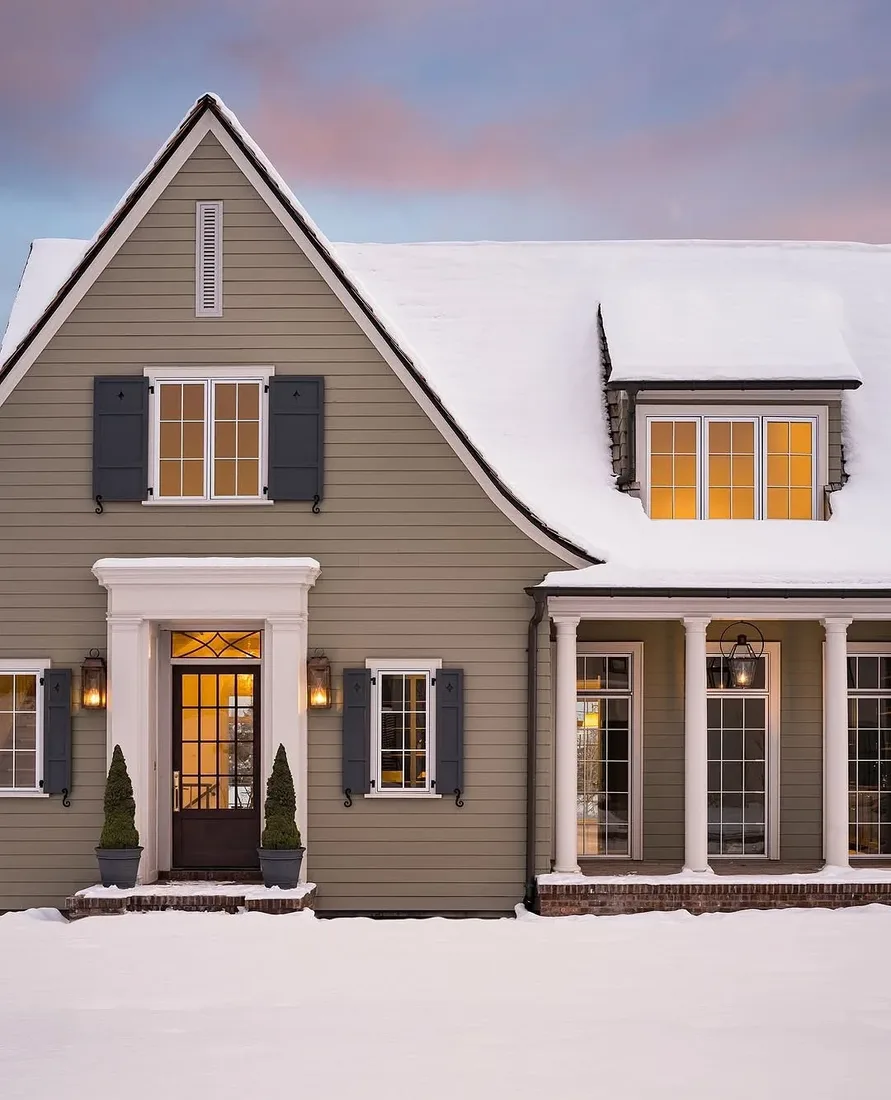
Snow is the hardest light a dark house will meet, and this front survives it on structure: white trim, dark shutters, glowing windows, and a pale blanket doing the work of a stone base. The lesson carries straight across to shingle. Pale anchors hold a dark field in any season, and no stain colour survives without them.
So make the choice with both futures in view. Bare cedar silvers on its own over roughly two to five years, with sun and salt hurrying it, and it asks nothing afterwards. Dark stain gives an even colour from day one and signs the house up for recoating every few years, because the film sits on the surface and cannot be washed back to bare timber.
If dark wins, arrange the three non-negotiables before the first tin is opened: stainless fixings throughout, one pale anchor that reads from the road, and a ventilated gap behind every clad wall. Make the choice once, with a sample board, a box of stainless fixings, and a merchant quote that names the ventilation gap.
Frequently Asked Questions
How long before bare cedar turns silver?
Around two to five years for an even grey, with sunny and coastal walls changing quickest and shaded north walls lagging well behind. The patchy first year is normal. Judge the colour only after a full cycle of seasons.
Can dark stain be stripped back to bare wood?
In practice, no. Opaque and semi-opaque coatings bond to the surface and sanding them off every course costs more than the cladding is worth. Treat the first coat as permanent and pick the colour on that basis.
Why does my dark house look like a shadow from the road?
It is missing a pale counterweight. Crisp white joinery, a light door, a pale roof plane, or stonework at the foot gives the eye something to read against. Without one, the whole mass merges into a single dark shape.
Which fixings suit cedar cladding?
Stainless throughout. The timber’s chemistry attacks plain steel and stains the wall beneath each nail head, while plated fixings eventually weep brown down dark coatings. Confirm the boxes on site before work starts.
Does dark cladding need an air gap?
Yes, and more so than pale cladding. Heat builds faster behind a dark face, so battens should hold the courses off the wall with clear airflow top and bottom. The detail belongs in the written quote, not as an extra later.
When should I sample a dark colour?
On the wall, at large size, across a full week with at least one grey day in it. View the board at midday and at dusk beside the trim and stone samples. A shade that pleases on the dull day will carry the house through winter.
In order
- Keep the roof lighter than the walls; natural cedar or mid slate.
- Use a penetrating stain, never a film-forming paint, on shingle.
- Dip the shingles before fixing so the butt edges are covered.
- Allow one saturated colour, usually the door, and keep trim light.
- Plan to recoat sunny elevations separately and sooner.
- Specify stainless fixings before the first course goes on.
- Leave a ventilated gap behind the cladding, and give dark a pale anchor.
This article may contain affiliate links. We may earn a commission at no extra cost to you.