13 Porch Rocking Chair Ideas With Swing Clearance and Safe Fixings

Add us as a preferred source to see more stories on Google.
Fix the positions first. Then buy chairs to fit the marks on your boards. The porch decides the layout before you spend a pound.
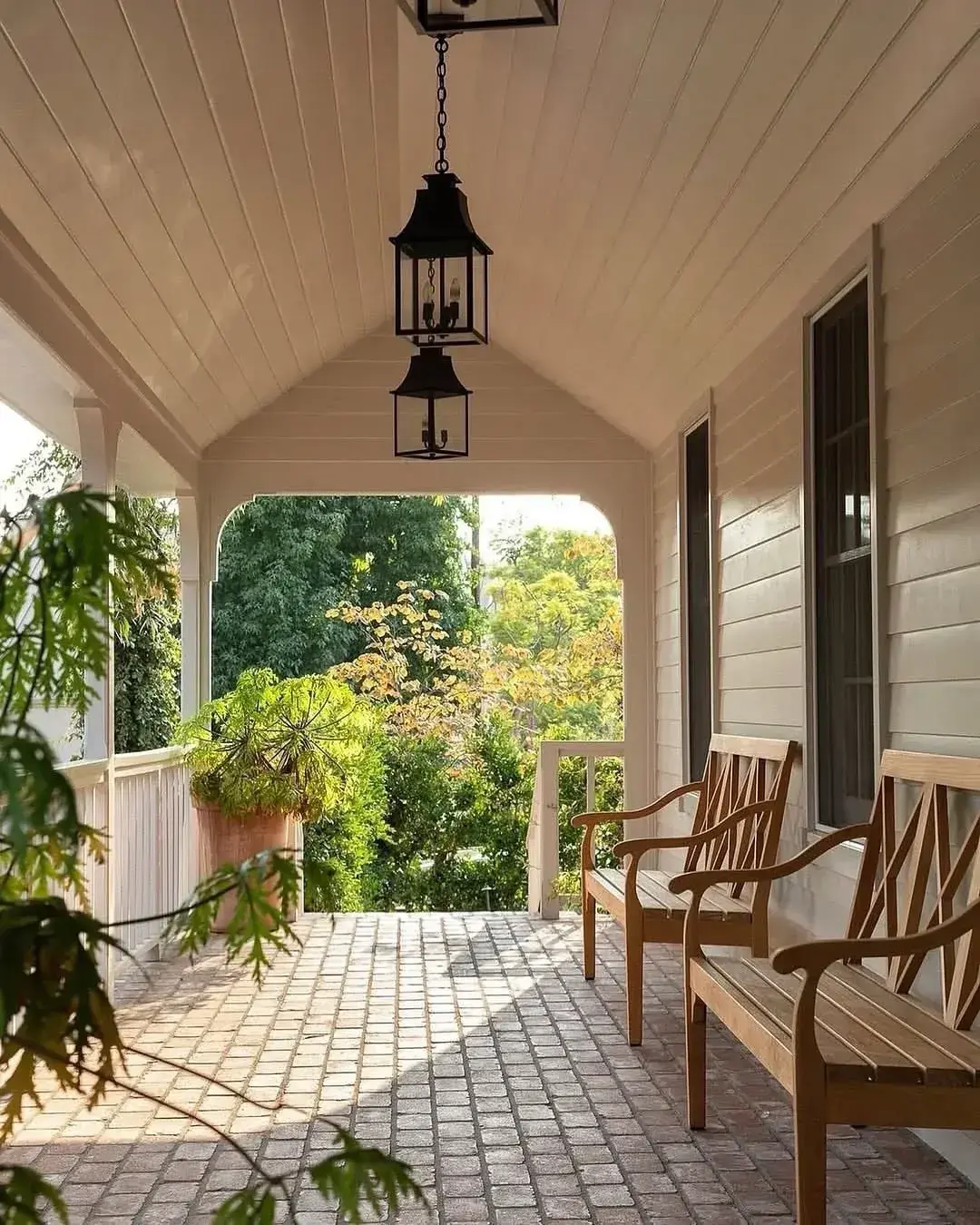
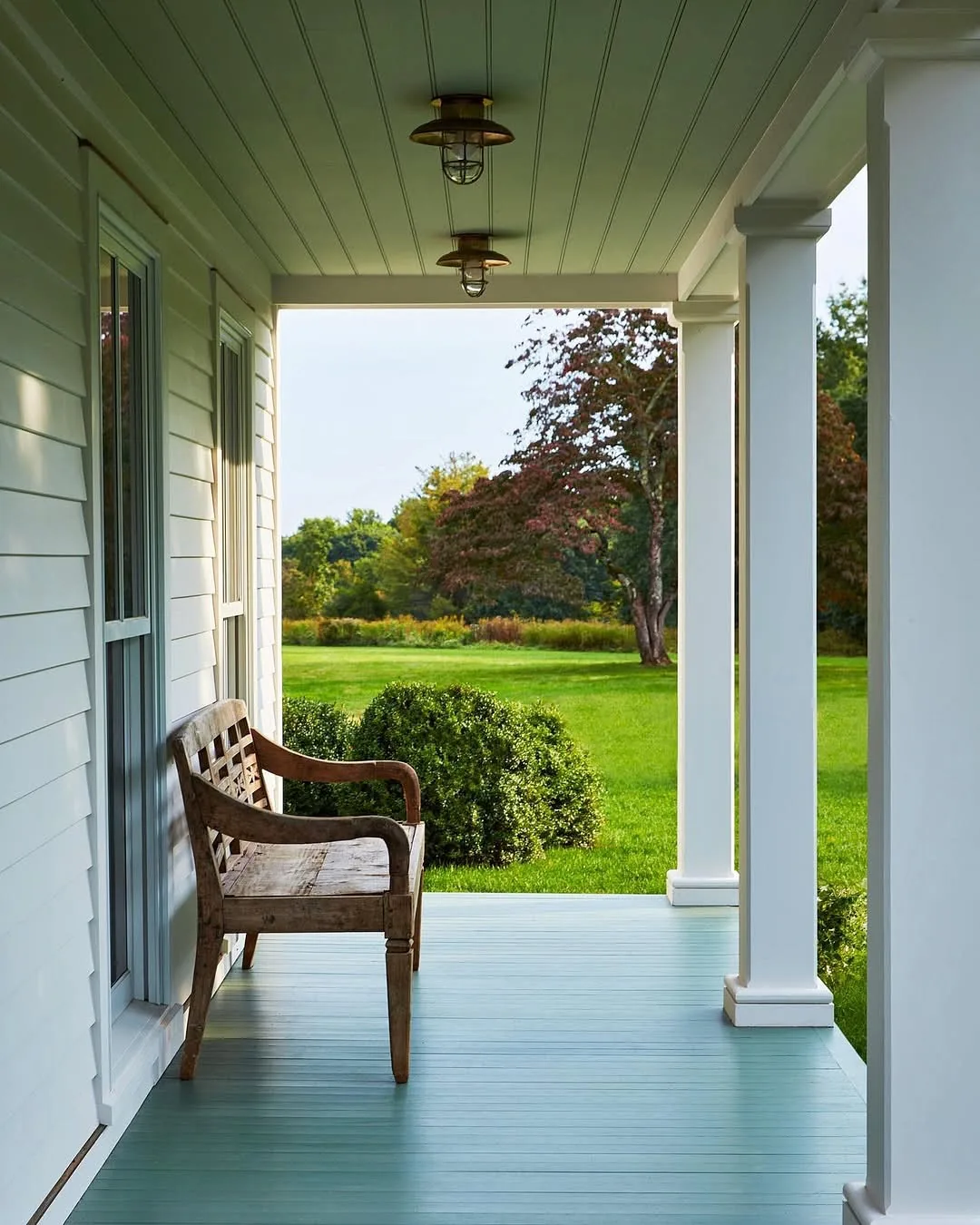
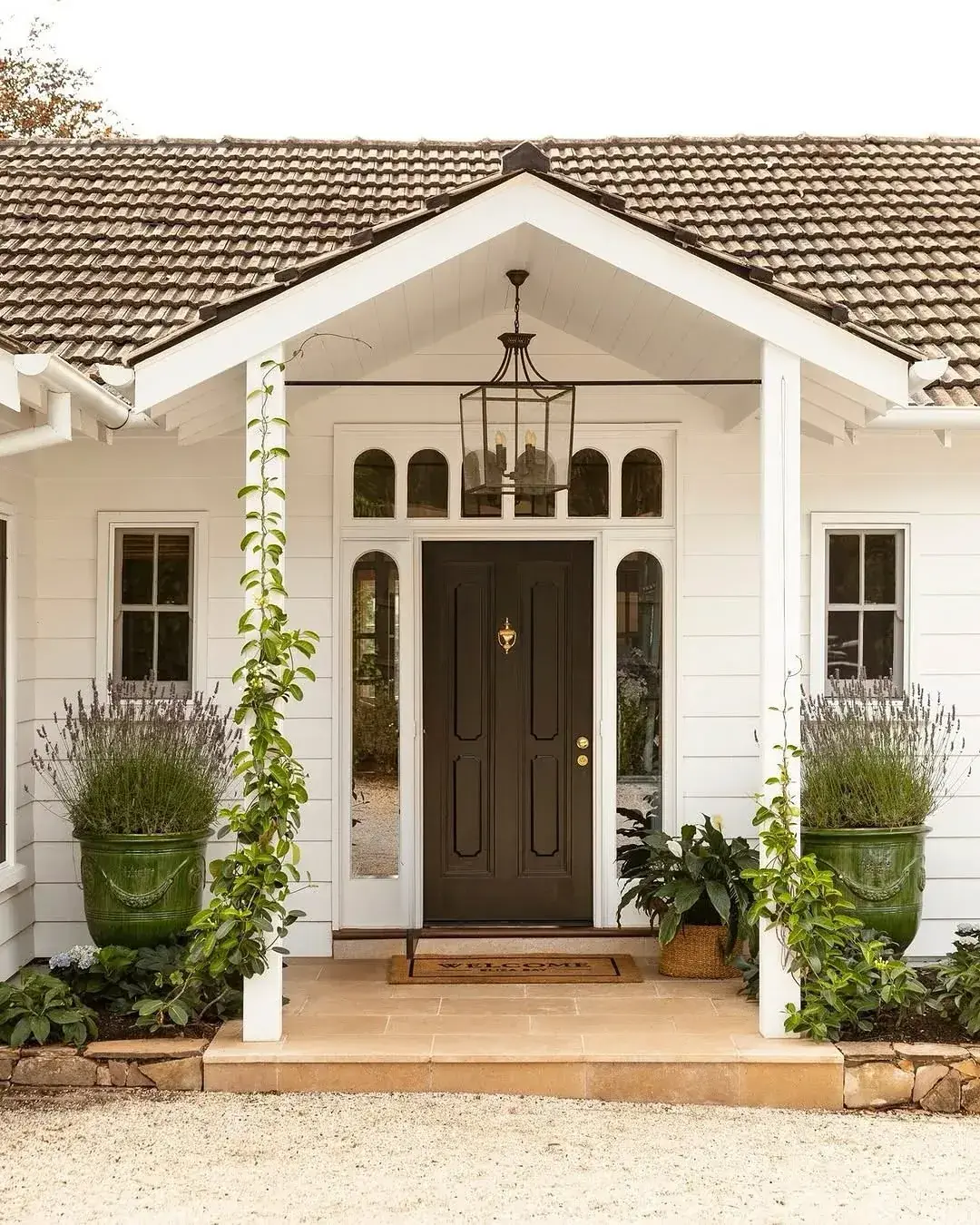
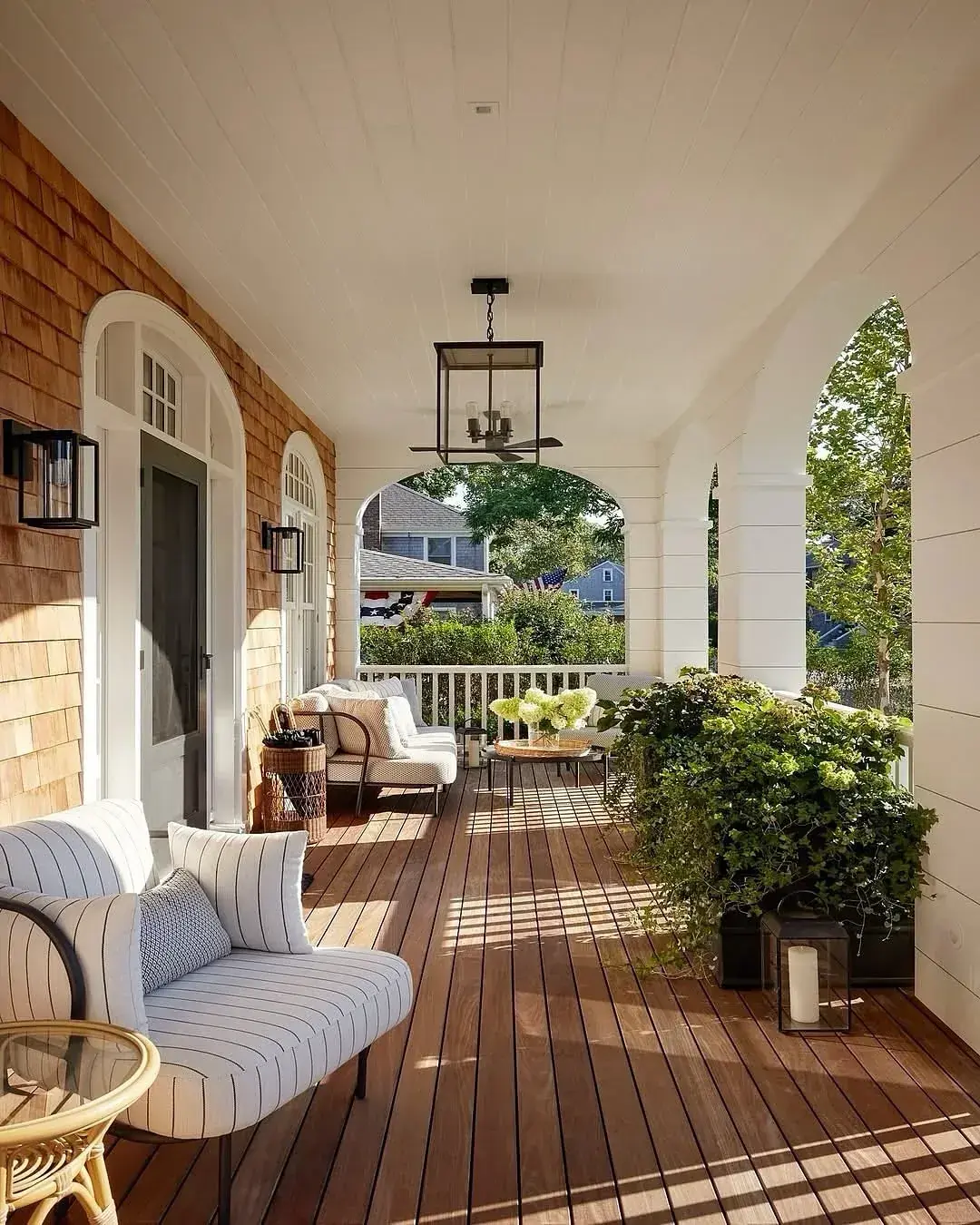
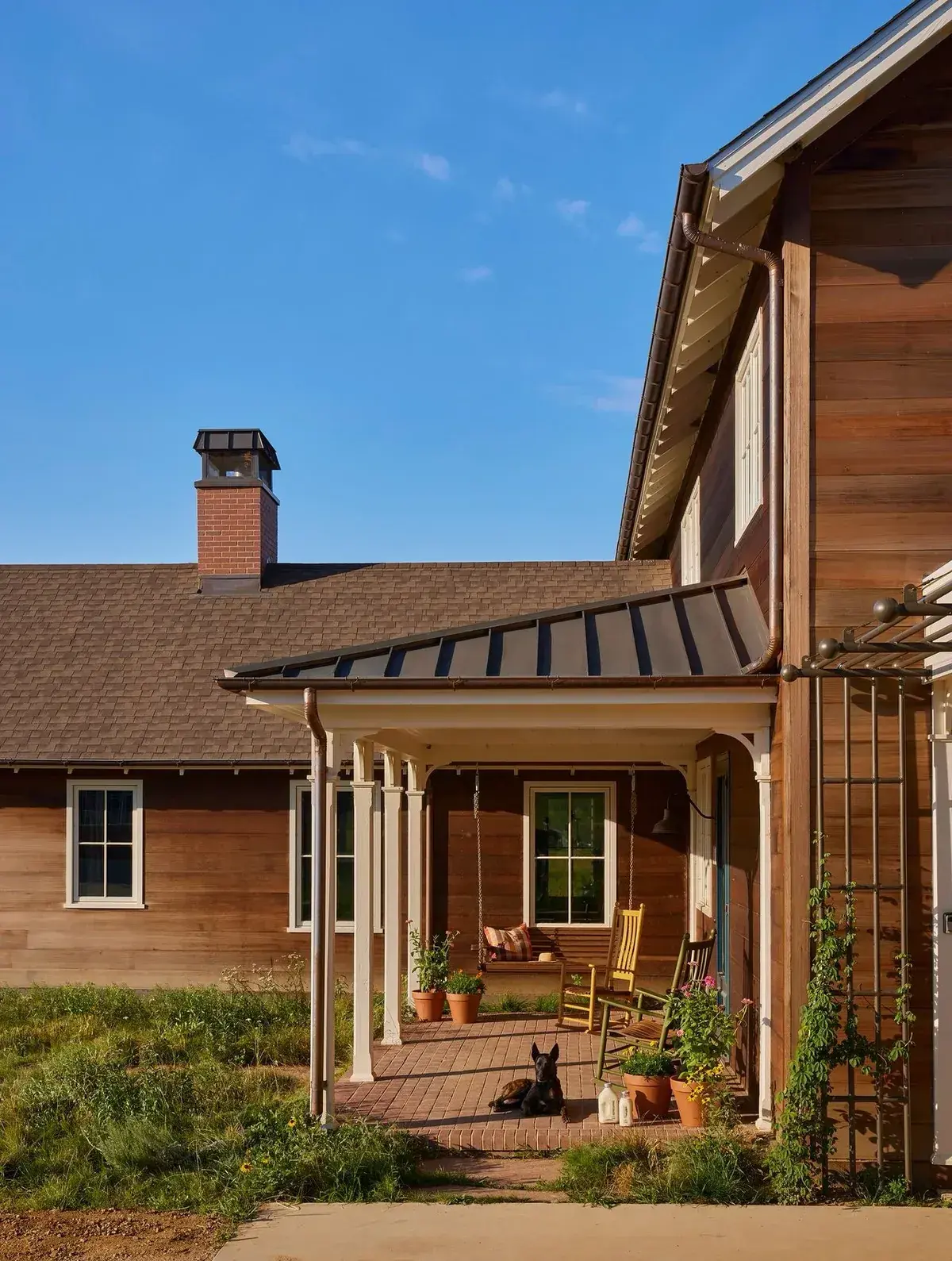
See how the two rockers above sit with daylight behind each one and a clear walk to the door. The cedar boards run straight, the rails sit well back from the chair backs, and nothing crowds your threshold. That gap behind the chairs is the whole job, and you tape it before anything gets ordered.
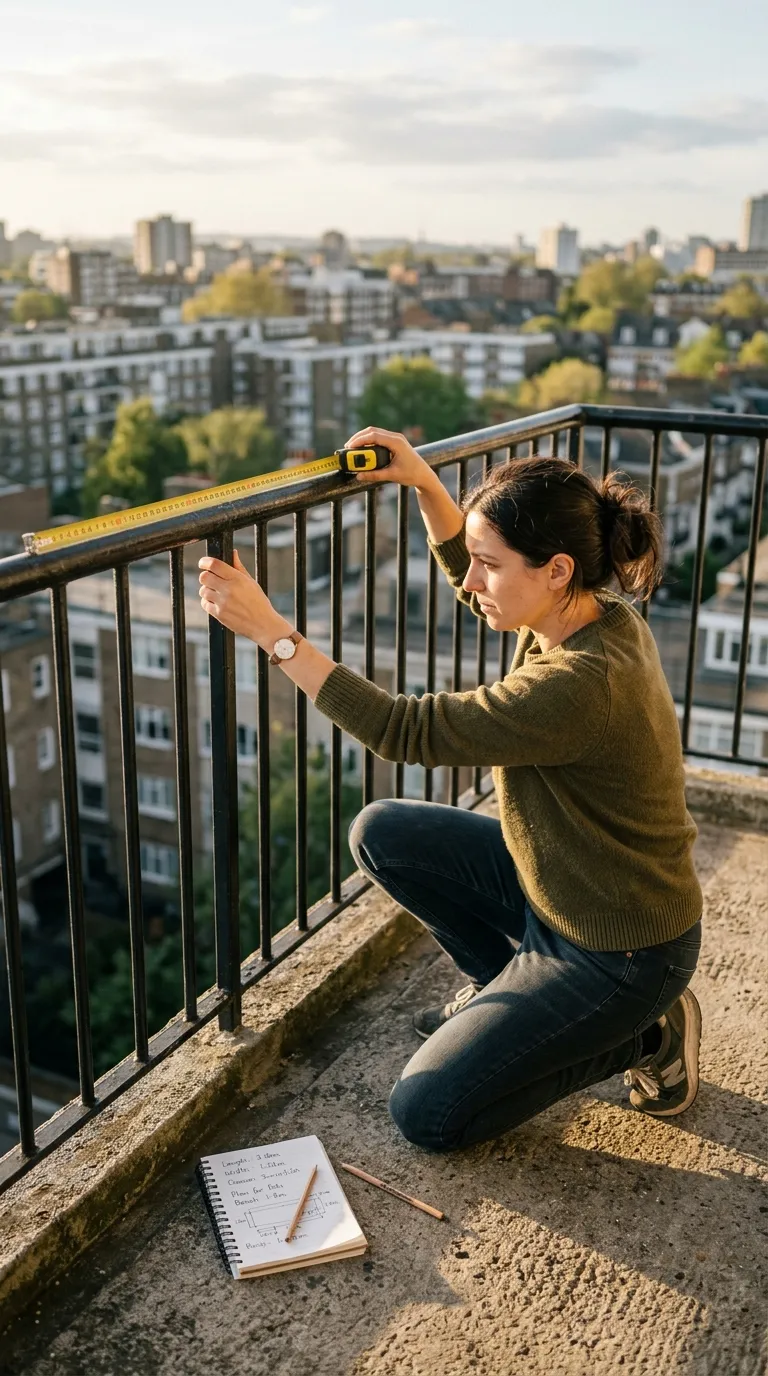
Tape the travel before spending
| Chair type | Mark on the boards | Why |
|---|---|---|
| Rocker | Footprint plus 900mm behind | The rails take the hit otherwise, usually within a week |
| Glider | Footprint plus 600mm behind | The base stays put while the seat moves, so less travel |
| Swing seat | 600mm clear front and back of the arc | Feet and frames sweep further than expected, especially with two aboard |
| Adirondack | 1100mm deep by 800mm wide per chair | The sprawl eats small porches fast, so count it honestly |
Chairs return to the shop. Holes do not. That is the order of operations for your whole porch, and you start it with masking tape on dry boards.
First mark your door walk. Run tape from the threshold to the steps at 900mm wide and forbid all furniture inside those lines. Then mark each chair footprint with its travel zone behind, using the table above as your starting point. Rock each taped outline hard with your arms out, because a polite test rock tells you nothing about a cold evening sprawl.
The irreversible decision lands early here. Bolt holes through your decking, screws into rails, and notches for swing chains cannot be untaped once you drill them. Tape lets you make the mistake in low tack adhesive, which peels off for about £6 a roll from Screwfix, instead of in timber that costs you £40 to £90 per square metre to lift and relay.
Wicker rockers under a shingle eave
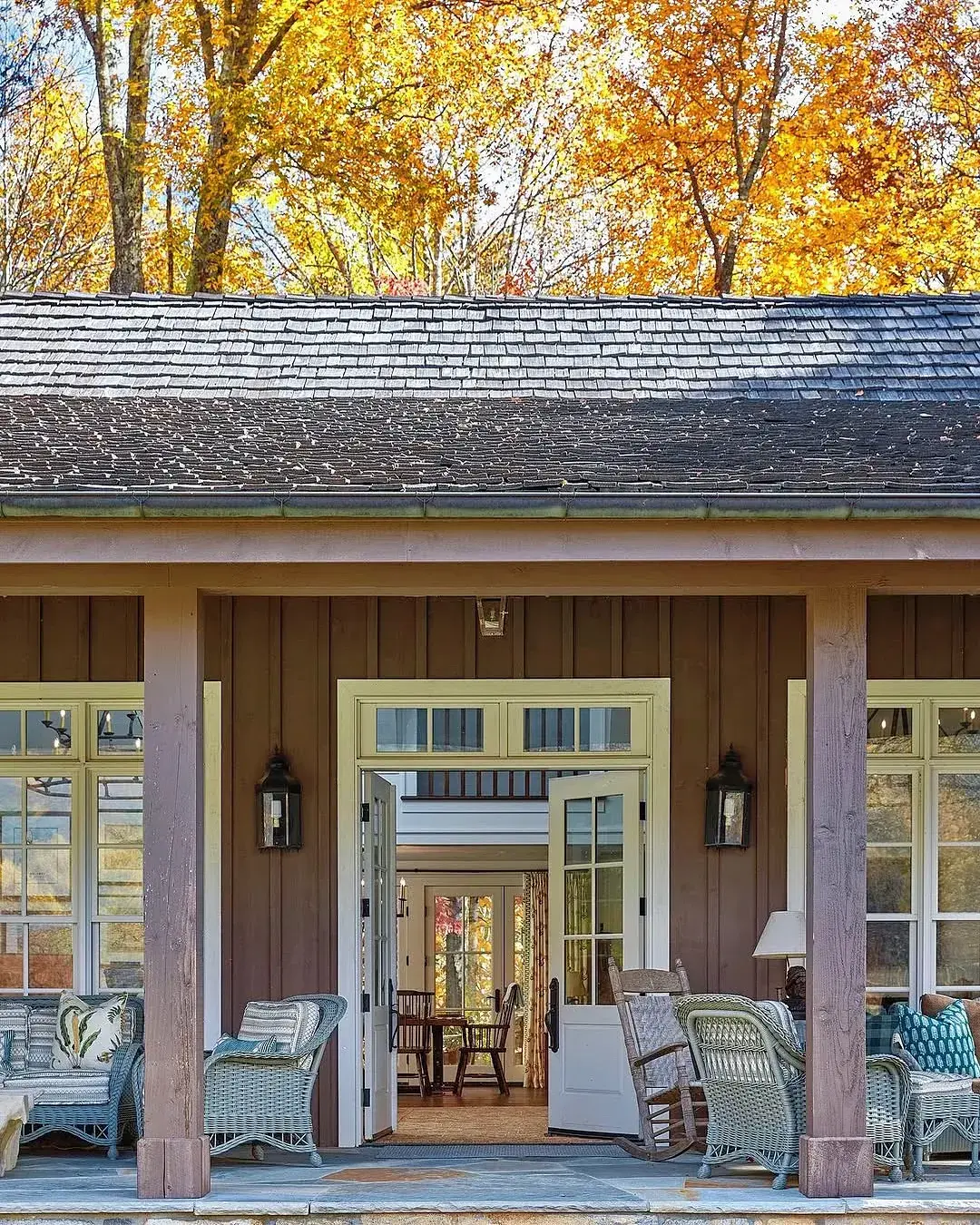
In this image two woven rockers sit angled toward each other in front of cedar shingles, with pumpkins and mums stacked at the edge of the frame. The chairs sit well forward of the wall, and the planters hold the corners instead of the walk. That layout reads as autumn dressing, but the spacing underneath is what lets it work through winter.
Look at the weave. It reads as pale resin over a metal frame, which is the correct call under an open eave where wind drives rain sideways for about 800mm inside the edge. Natural rattan swells and loosens in that band within two damp seasons on your porch, while resin wicker of that sort runs £180 to £420 per chair in 2026 through Dunelm, Wayfair and garden centres, and it hoses clean for you in five minutes.
Set the pair at roughly 1.5m apart, angled in by about 20 degrees, with a 450mm side table between. That gap keeps conversation easy without shouting for you, and the table lands inside a 600mm reach from each arm. Planters of that size, around 400mm diameter, cost £25 to £60 each in 2026, with saucers fitted below, because soil water stains your softwood decking dark within one season.
White armchairs that face each other
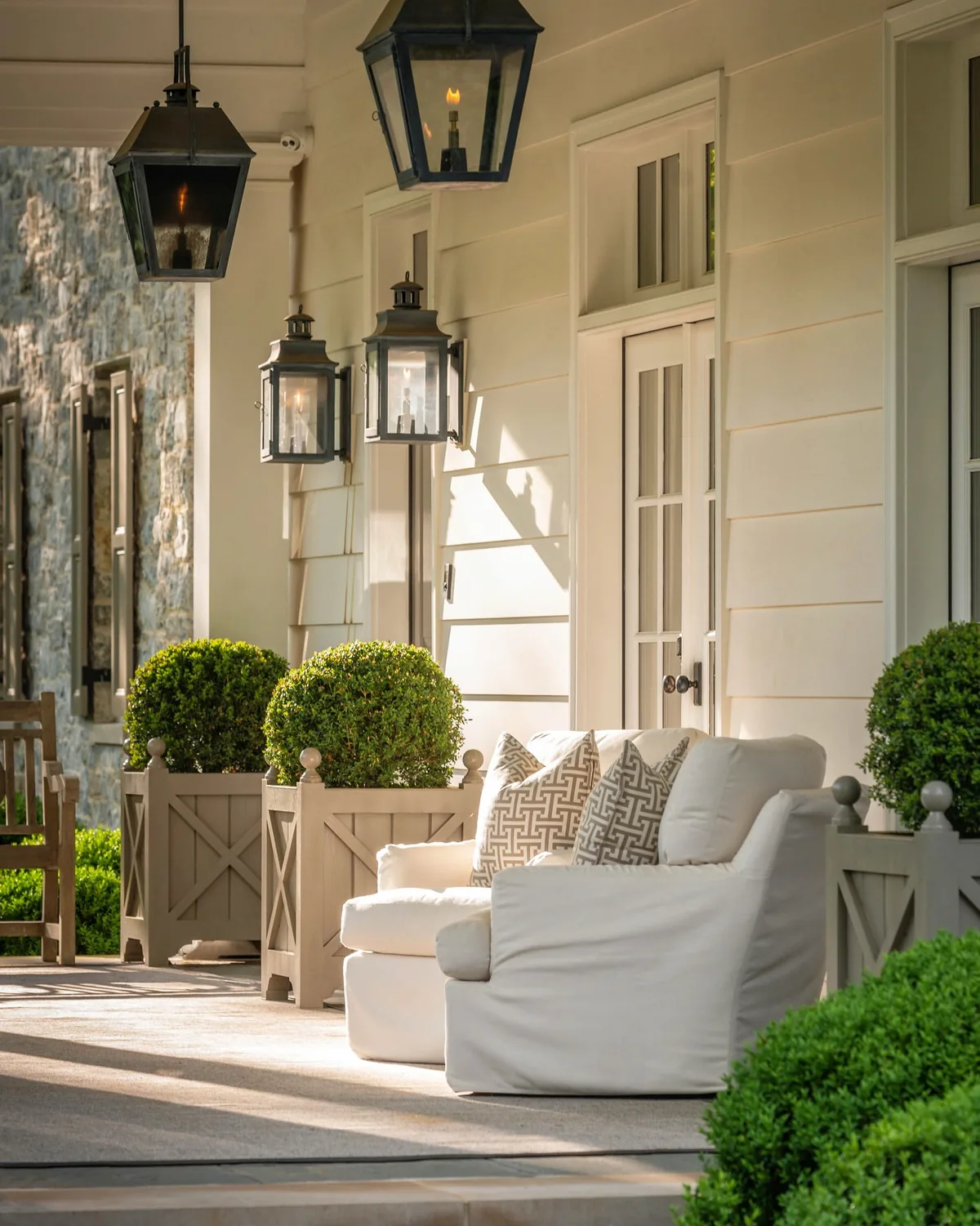
Pictured is a deep covered porch with two white armchairs squared up across a low table, lanterns hung at head height, and clipped cones guarding the posts. The ceiling sits high, the rug pins the group, and the door stays fully clear behind the camera. This is a room without walls, set out like one.
Notice how the chairs face each other instead of lining the wall. That turn is what makes the group sit used instead of staged for you, because talk across 1.2m to 1.8m feels easy while talk across 3m feels like a meeting. The rug, about 1.6m by 2.3m in outdoor polypropylene at £70 to £160 in 2026, stops chairs walking on smooth boards under your feet.
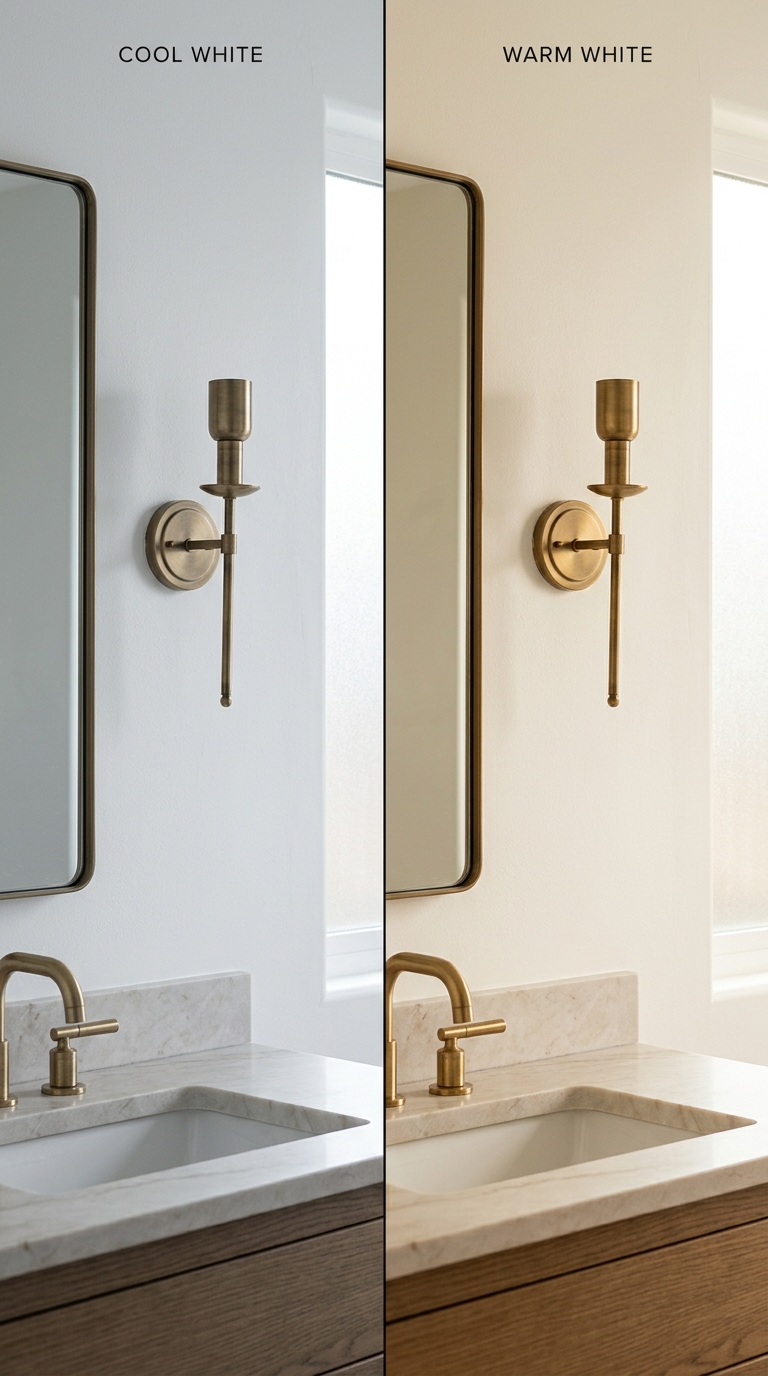
Fix electrics before furniture. Each lantern wants its cable run through the joists with the switch inside the hall, because surface trunking added later always shows on your wall. Lanterns of that pattern run £60 to £180 each in 2026 from Jim Lawrence or Garden Trading, and 2700K lamps keep your white paint soft after dark, while 4000K turns the same porch chalky and cold.
Cream chairs beside one lantern
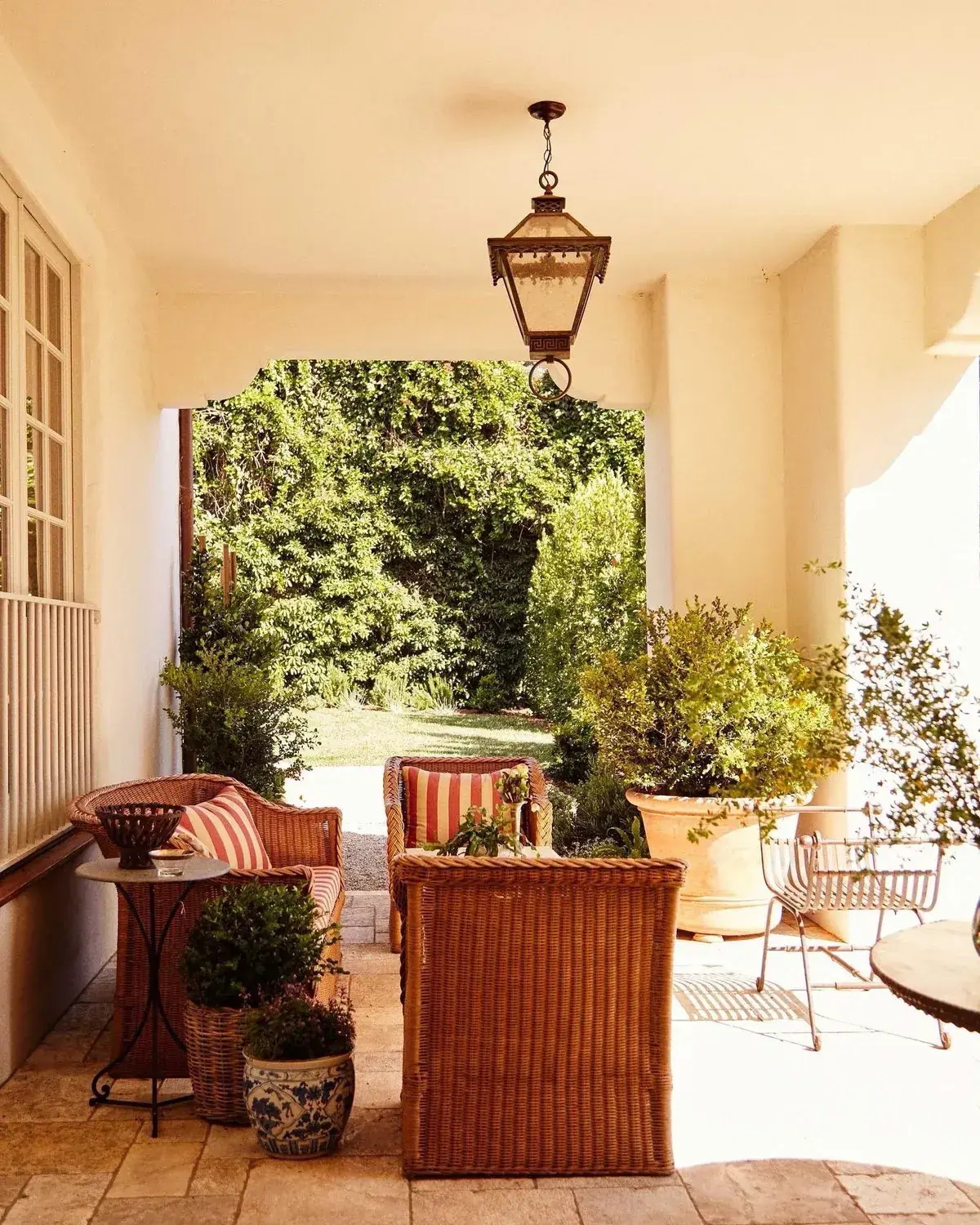
That corner holds two cream woven chairs tight to the rails with a single lit lantern between, and the glow does most of the evening work. The chairs sit low, the backs stay below the rail cap, and the street still reads the dark band above them. Low profiles keep the facade deep, while tall backs fill the opening like storage.
See the clearance at the rail. Each rocker wants 900mm behind it on your deck, measured from the rearmost travel point, not the legs at rest. A chair 700mm deep therefore needs about 1.6m of deck from rail to walk edge, which is why narrow porches under 1.8m deep cannot take rockers facing out. Count the depth first, because catalogues never print travel for you.
The paint here sits close to Farrow & Ball Pointing or Benjamin Moore White Dove OC-17, both soft whites with yellow in them that forgive your porch dust. Exterior eggshell in those lines runs £38 to £65 per 2.5 litres in 2026, and cream wicker needs washing each spring for you, since pollen grinds into the weave and then holds damp against the fibres through summer.
A rope swing bed under the beams
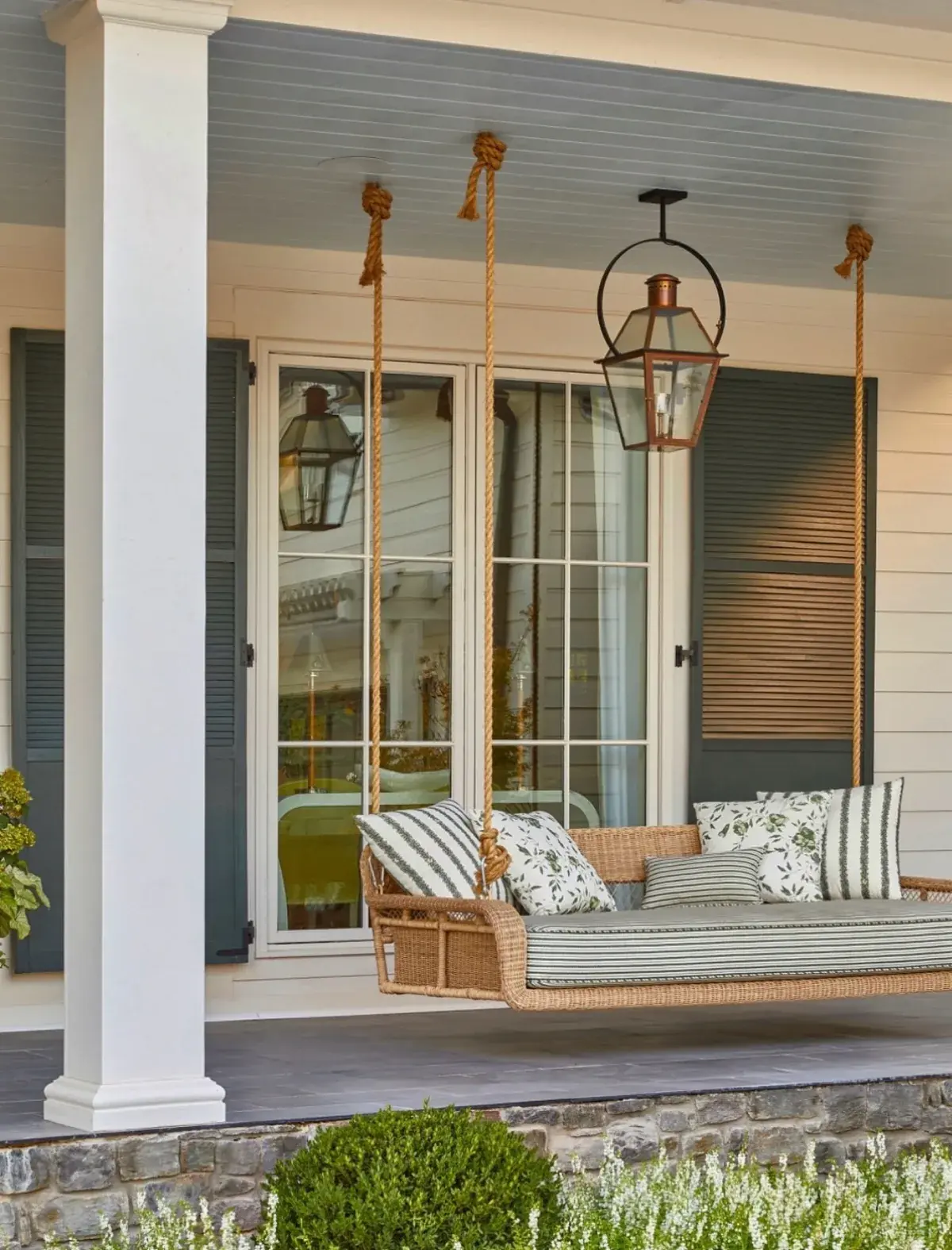
From this photo a rope hung daybed swings from exposed beams, with thick cushions strapped to a timber base and four ropes running to the joists above. The bed hangs level, the ropes share the load visibly, and the boards below stay clear for your feet. It looks relaxed, which means the fixings above are doing serious work for you.
Do the maths before the naps. A daybed at 40kg plus two adults at 170kg plus bounce puts dynamic load past 300kg on four points for you, so each point must hold well over 100kg with margin. That rules out screws into 20mm ceiling boards, which pull out suddenly and all at once, usually at night. Through bolts of M10 or M12 grade through 150mm joists or a 100mm by 150mm beam, with large washers above, are the minimum that holds your weight.
Rope of that diameter, around 20mm braided polyester at £3 to £6 per metre in 2026, stretches less than manila and sheds water instead of holding it. Hardware from a rigging supplier, with rated eye bolts and shackles at £12 to £28 per point from Screwfix, costs you less than one ceiling repair, which runs £200 to £500 once boards and paint are counted.
Log walls with wicker that stays dry
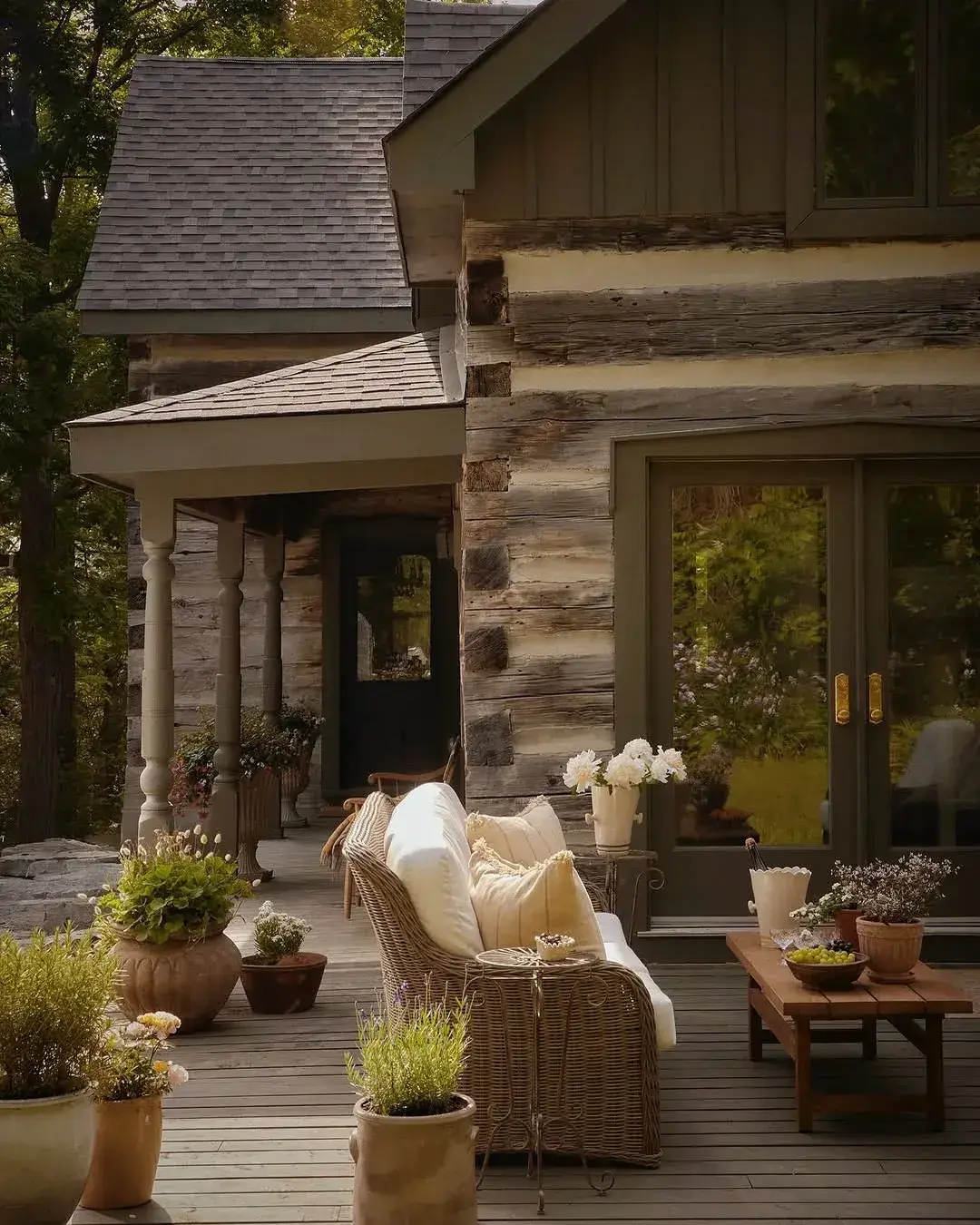
In that room the log walls run deep and dark, so the pale wicker set reads bright by contrast, with planters softening the corners and cushions kept thin. The roof overhang runs generous, and the chairs sit inside your dry line. Dark walls forgive scuffs, while pale seats show every mark, which sets your cleaning order.
Check where the dry line falls. On a cabin porch the first 600mm inside the drip edge still takes mist in a crosswind, so push all weave 800mm back from the edge and keep planters forward as the splash guard for you. Terracotta pots around 350mm across run £20 to £55 each in 2026, with feet fitted below, because pots sat flat trap water rings into timber within weeks.
Stain the logs before the chairs arrive. A microporous stain such as Sadolin Superdec or Cuprinol Ultimate, £45 to £80 per 5 litres in 2026, needs two coats on bare ends and one maintenance coat on weather faces every three to four years. Oil the wicker frames at the same visit for you, tighten every bolt, and replace glides at £5 a set, since a wobbling chair saws its own legs shorter across your season.
Adirondacks lined up on red barn boards
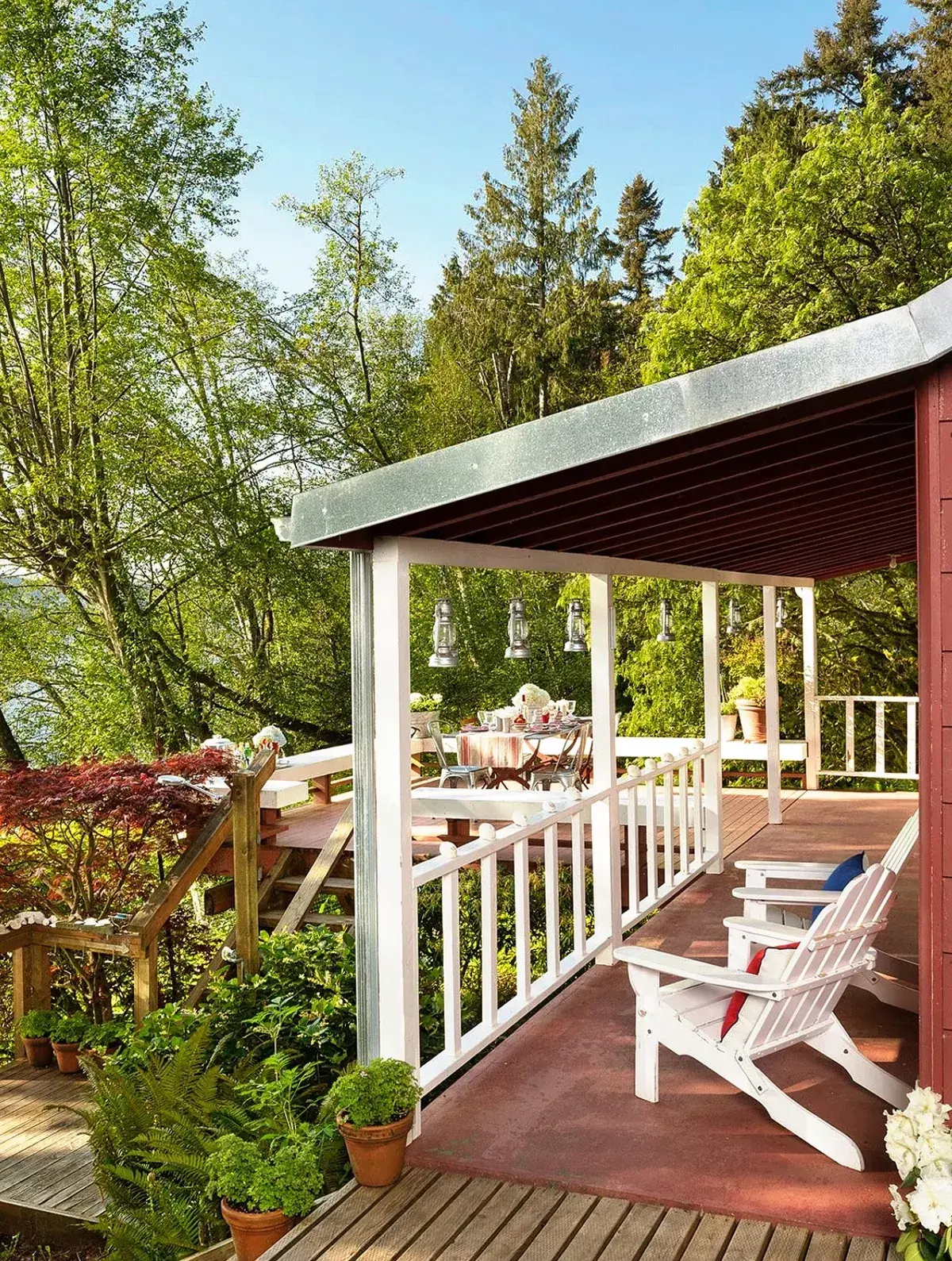
Three white Adirondacks face the view off a red barn porch, spaced evenly with their wide arms almost touching. The boards run long, the rail sits low, and the whole row aims outward. It photographs well, and it seats three strangers instead of one conversation, which tells you plenty.
That sprawl is the catch. Each Adirondack needs about 800mm width and 1100mm depth once the sitter stretches out, so three in a row eat 2.4m of your frontage before side tables. Poly lumber versions of that shape run £220 to £480 per chair in 2026, while softwood sets start at £90 to £180 and then check and loosen within three damp winters. The cheap set costs more by year five, once you add paint and screws.
Site them for views, not talk. Adirondacks recline low and wide, which suits a lake or field front where everyone looks one way. For talk, pull two upright rockers into a 1.5m pair instead for you, because low loungers set 2m apart force raised voices. The red paint here sits close to Little Greene Baked Cherry 14 or Farrow & Ball Incarnadine No.248, at £40 to £68 per 2.5 litres in 2026.
A bench that holds the door wall
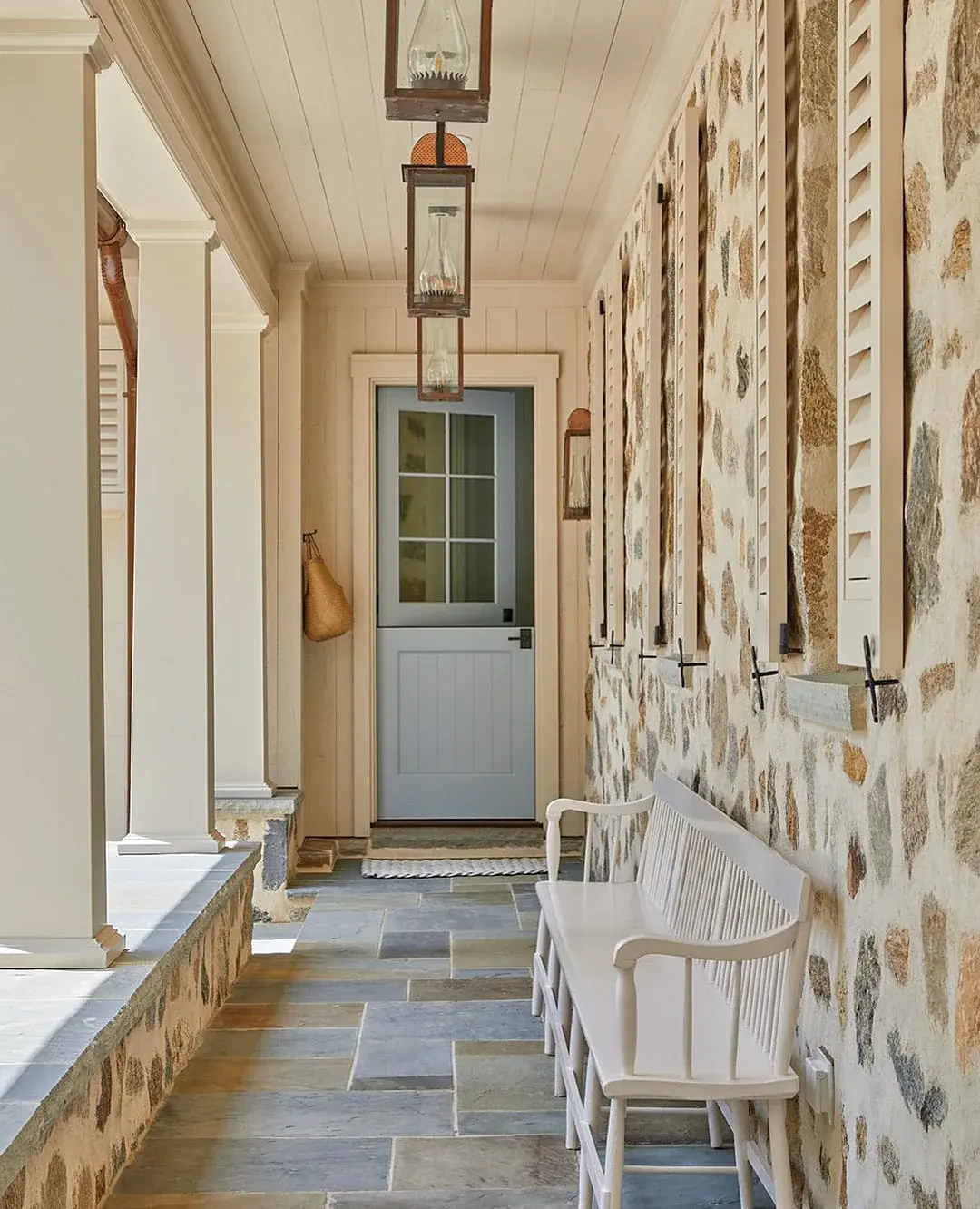
That wall beside the door is too shallow for rockers, so a slim white bench takes the slot, with cushions stacked and boots tucked below. The stonework stays visible above, the door swings clear, and the bench reads as joinery instead of furniture. Backless matters here, because a back would steal the 150mm the wall barely offers for you.
Size it to the wall, not the shop. A bench 1200mm long by 350mm deep seats two of you in a pinch and still leaves a 900mm walk in front on a 1.8m porch. A hinged lid turns the base into cushion storage for about six of your seat pads, which solves your nightly carry. Softwood bench stock, primed and painted, runs £120 to £280 in materials in 2026, plus a full day of your time to build square.
Fix it like architecture. Paint the bench the trim colour, in exterior eggshell close to Farrow & Ball Wimborne White or Dulux Weathershield in a matching white at £32 to £58 per 2.5 litres in 2026, and bolt the back rail to studs or masonry with 80mm screws and plugs. A freestanding bench walks across boards under daily use for you, and then blocks the door it was meant to serve.
Stone entry with chairs clear of the path
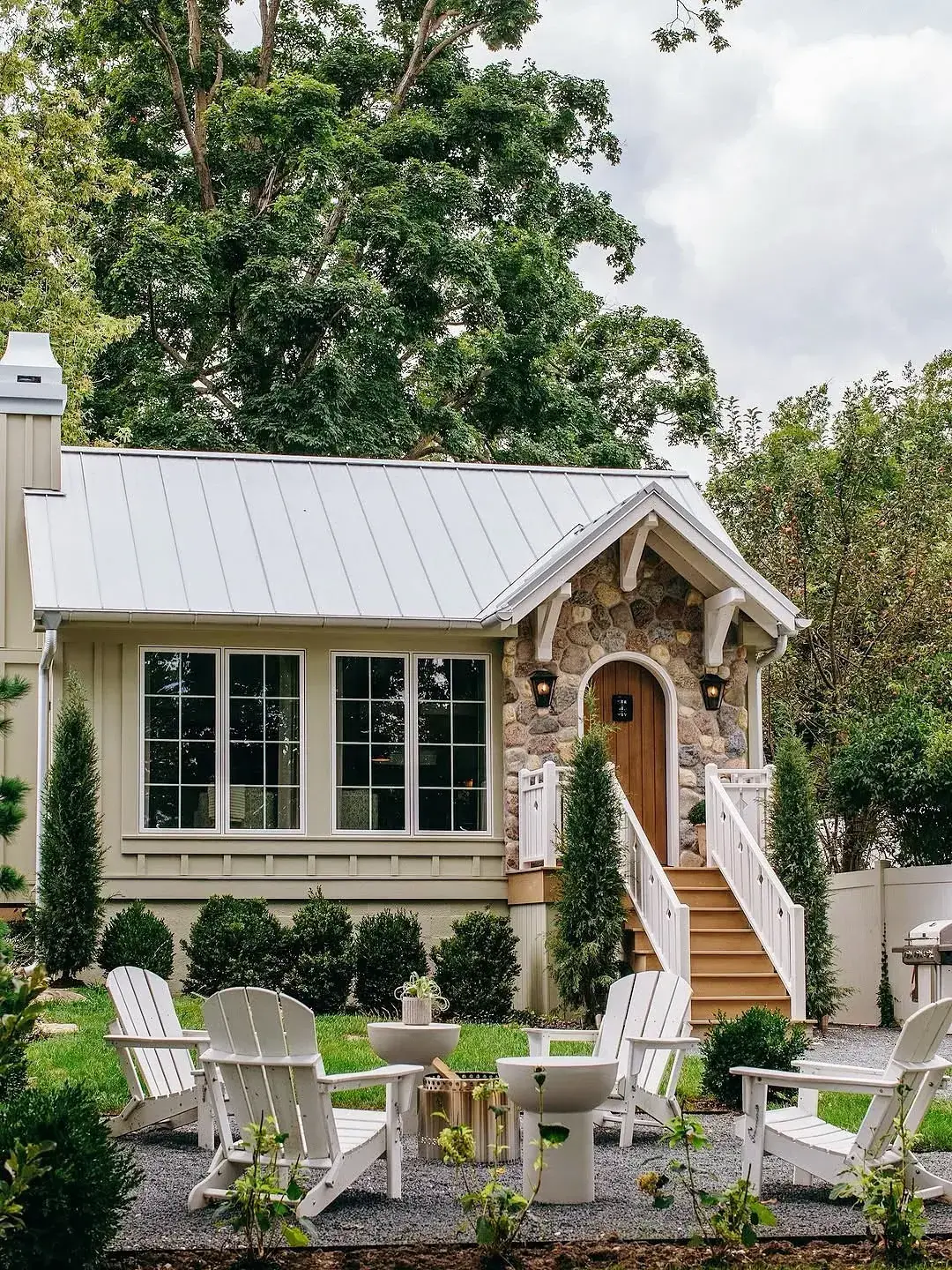
The stone gable runs full height above a metal roof, with two Adirondacks set well back from the walk and a small table between. The path runs straight to the steps, the chairs sit outside its edges, and the entry reads calm from the drive. That discipline is what keeps a heavy stone front from feeling crowded for you.
Hold the walk at 900mm minimum, 1200mm where your parcels and pushchairs pass, and never let a chair leg cross your tape. Stone flags of that sort cost £45 to £110 per square metre laid in 2026, and a metal roof in standing seam runs £120 to £220 per square metre fitted, so moving a path after laying wastes your money. Tape your walk for a week of normal coming and going before you fix seat positions.
Lighting wants planning at the same stage. One bulkhead each side of your door at 1.7m height, wired back to one switch, stops your porch going dark at the step edge for you. Galvanised or powder coated fittings run £50 to £130 per pair in 2026, and 2700K lamps keep your stone warm, while cooler lamps turn your masonry flat and grey.
A hanging rattan chair on one hook
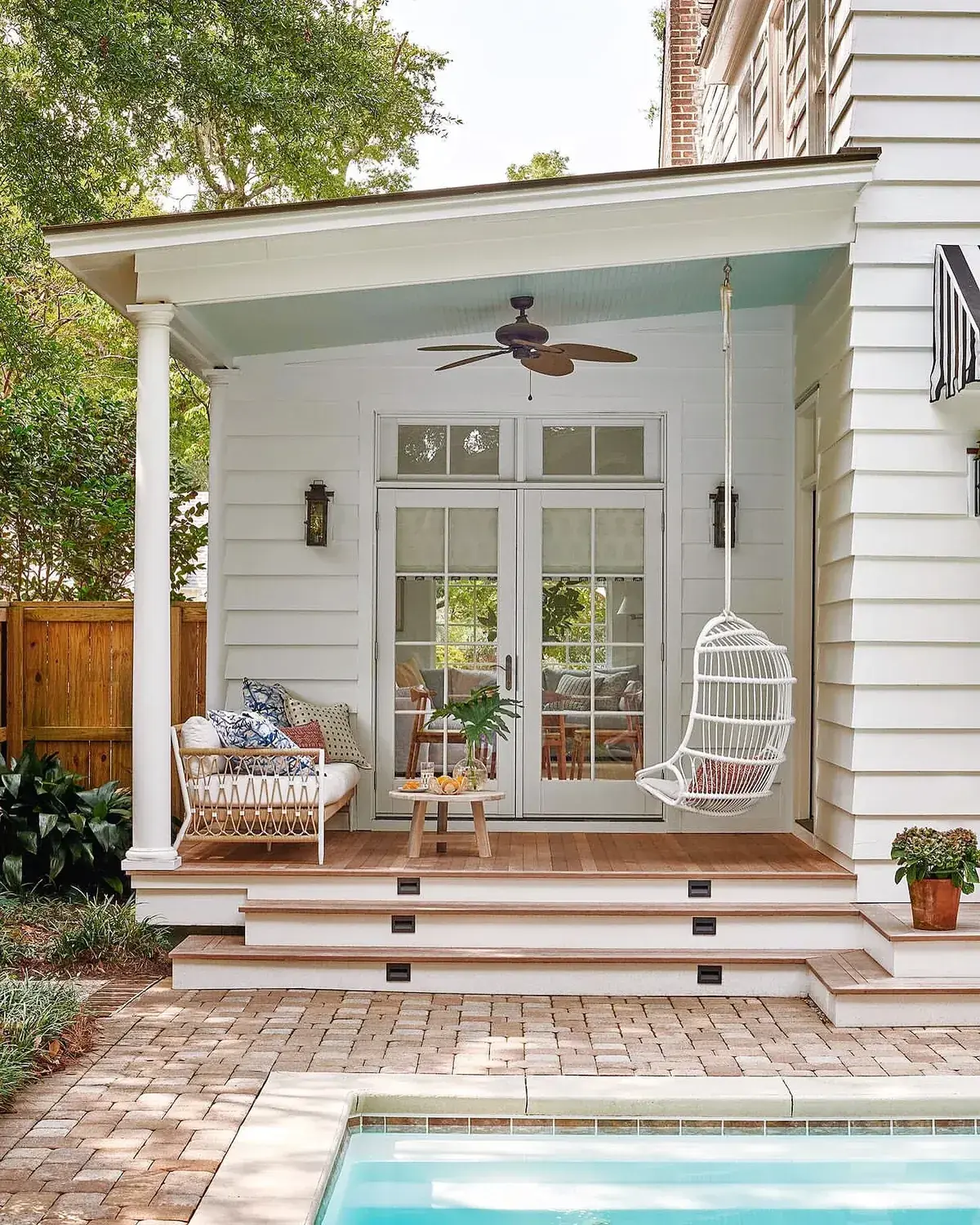
One egg chair hangs from a single point on a white clapboard porch, with the weave tight and the cushion thick for you. The chair floats clear of your boards and rails, and your whole load hangs on a fixing nobody can see. Single point hangings fail cleaner and faster than four point beds, which is why your check matters more.
Find structure first. Your hook must land in a 150mm joist or a 100mm bearer, confirmed by lifting a board or opening a 100mm inspection patch, never by tapping and hoping. A 120kg dynamic load on one M10 rated eye bolt with a 50mm washer holds you; the same bolt in 12mm plasterboard pulls through under body weight. Rated eye bolts run £8 to £18 each in 2026, and a joist finder that actually helps costs you £30 to £60.
Give the arc room. An egg chair 900mm across sweeps about 600mm in every direction once you climb in and push off, so allow 700mm clear to your rails, walls and tables. The rattan here reads as resin, which suits your single point hanging, because natural cane stretches unevenly and then spins you. Similar hanging chairs run £150 to £380 in 2026, plus £20 to £40 for a rated swivel if you like to turn.
A swing seat beside hydrangeas
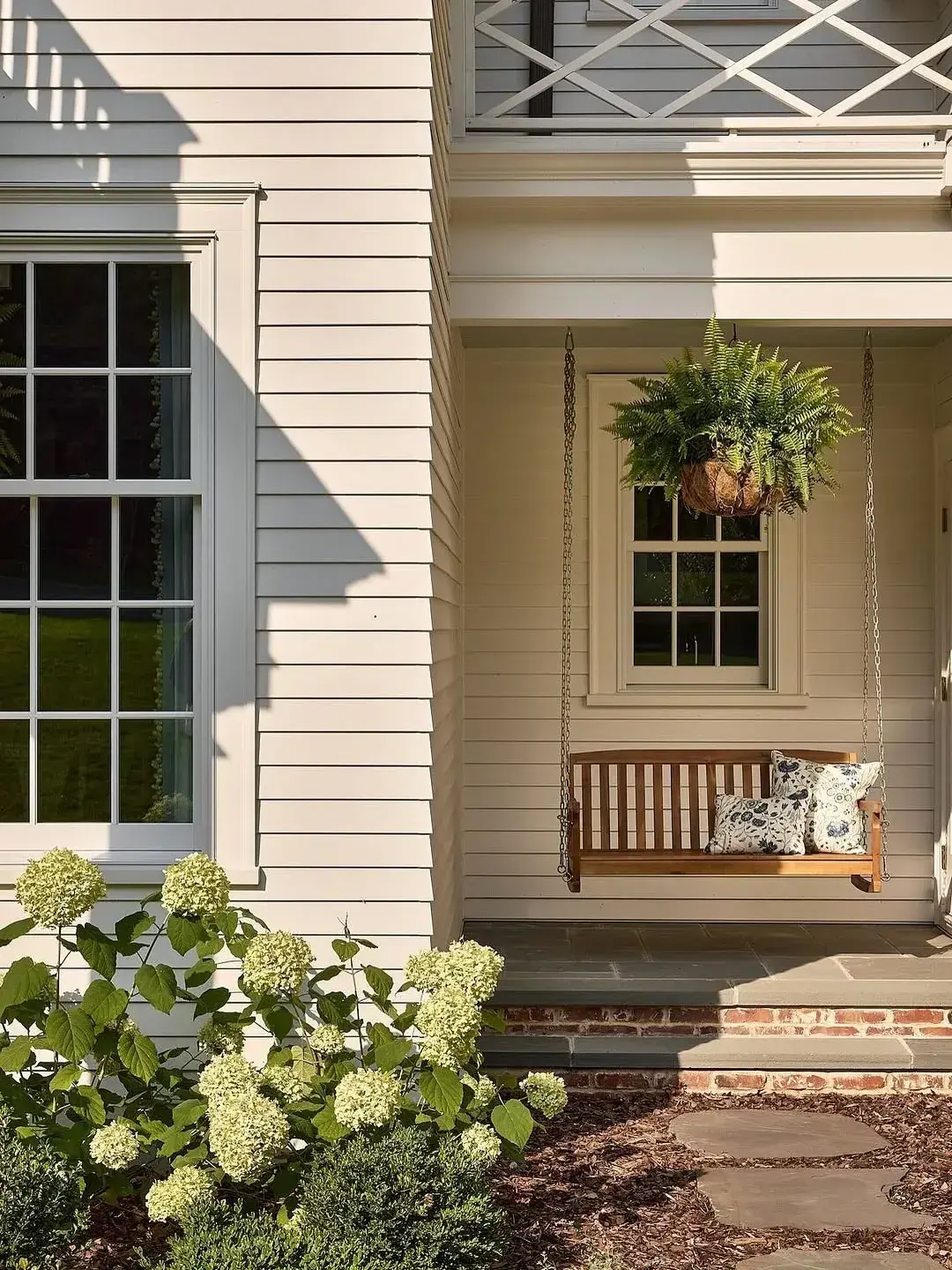
That swing hangs by chains from your porch beam with hydrangeas crowding the edge, and the seat sits level with the chains plumb for you. The planting softens your posts, the cushions stay thin, and the swing runs parallel to your house. Parallel matters, because it keeps feet off your weatherboard.
Set your chains plumb and equal. Chains hung out of plumb twist your seat within days, and then you slide to one end permanently. Chain of 5mm galvanised short link at £4 to £8 per metre in 2026, with rated quick links at £6 to £12 each, holds your two person swing at 250kg working load when both ends land in your joists. Through bolt hangers through your beam with M12 bolts and 50mm washers, never coach screws into end grain, which creep out under your cyclic load.
Mind your planting. Hydrangeas of that size in 10 litre pots run £25 to £55 each in 2026, with 500mm kept clear of your swing arc, because branches snag your chains and leaves hold damp against your seat ends. Cut your bed back each autumn, wash your chains yearly, and oil your seat with Osmo Decking Oil at £35 to £60 per 2.5 litres in 2026, since greyed softwood splinters your bare legs by August.
Rockers by a lantern and picket fence
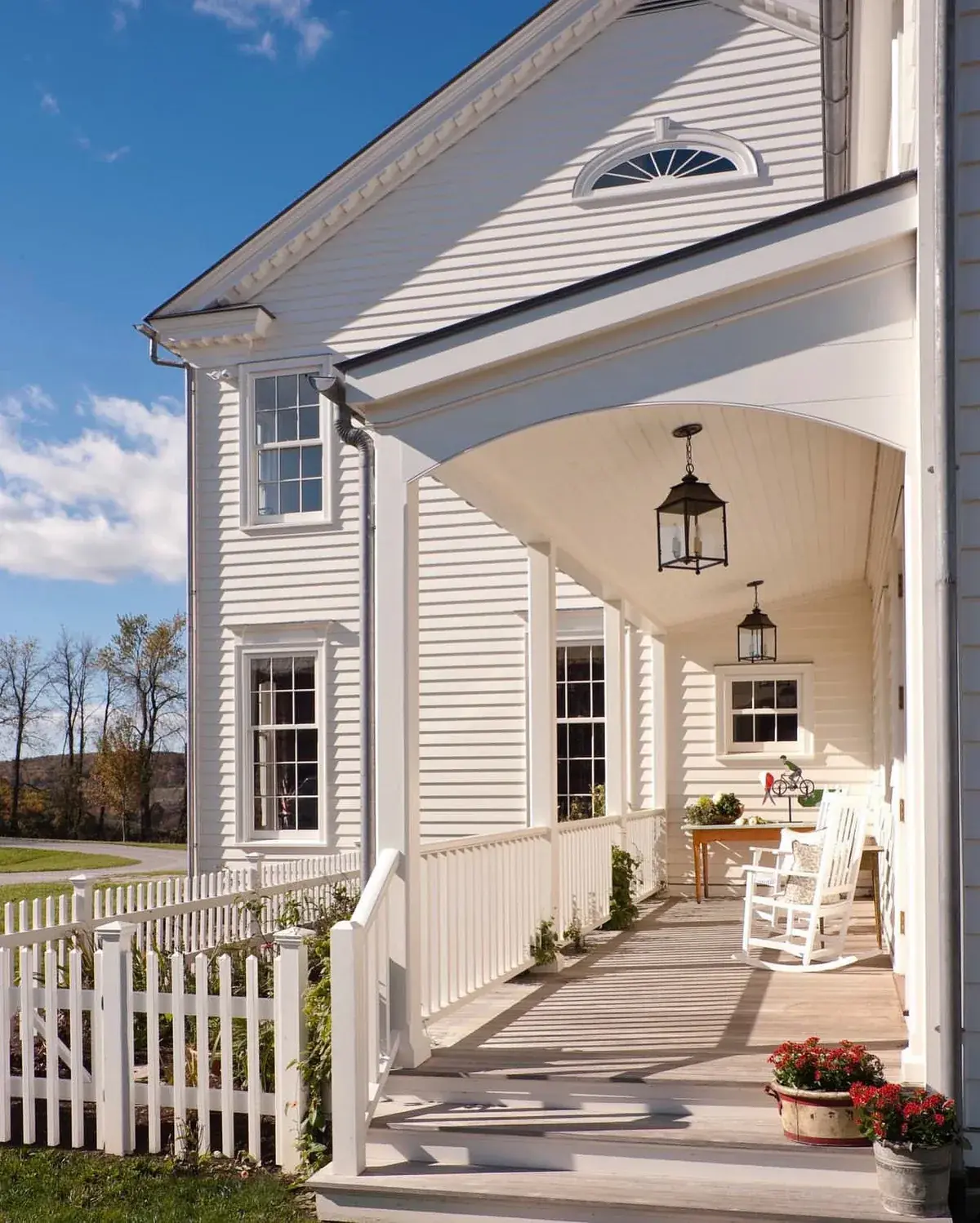
Two rockers face the fence at dusk with a lit lantern between, and the pickets run low enough for you to see over from a seated position. Your light sits at hand height, your chairs sit low, and your porch opening keeps its dark slot above seated heads. That slot is what gives your facade depth from the street.
Keep your backs below the rail line where the street reads your porch. A rocker back at 1050mm above the deck usually clears a 900mm rail while keeping heads below the beam, which preserves the shadow band. Tall mission backs at 1200mm fill the opening and flatten the front into furniture storage. Measure back height against the opening from the drive before you order, because catalogues shoot chairs against white seamless.
Light it in layers. One overhead at your beam plus one lantern at 800mm to 1000mm height plus spill from your hall gives faces shape, while a single 4000K bulkhead flattens everyone for you. Battery lanterns of that size run £30 to £80 in 2026, mains wired ones £70 to £160, and 2700K lamps throughout keep your white pickets creamy instead of blue. Picket sections in softwood run £45 to £90 per 1.8m bay in 2026 through Wickes or Jewson.
Wicker under a timber pergola
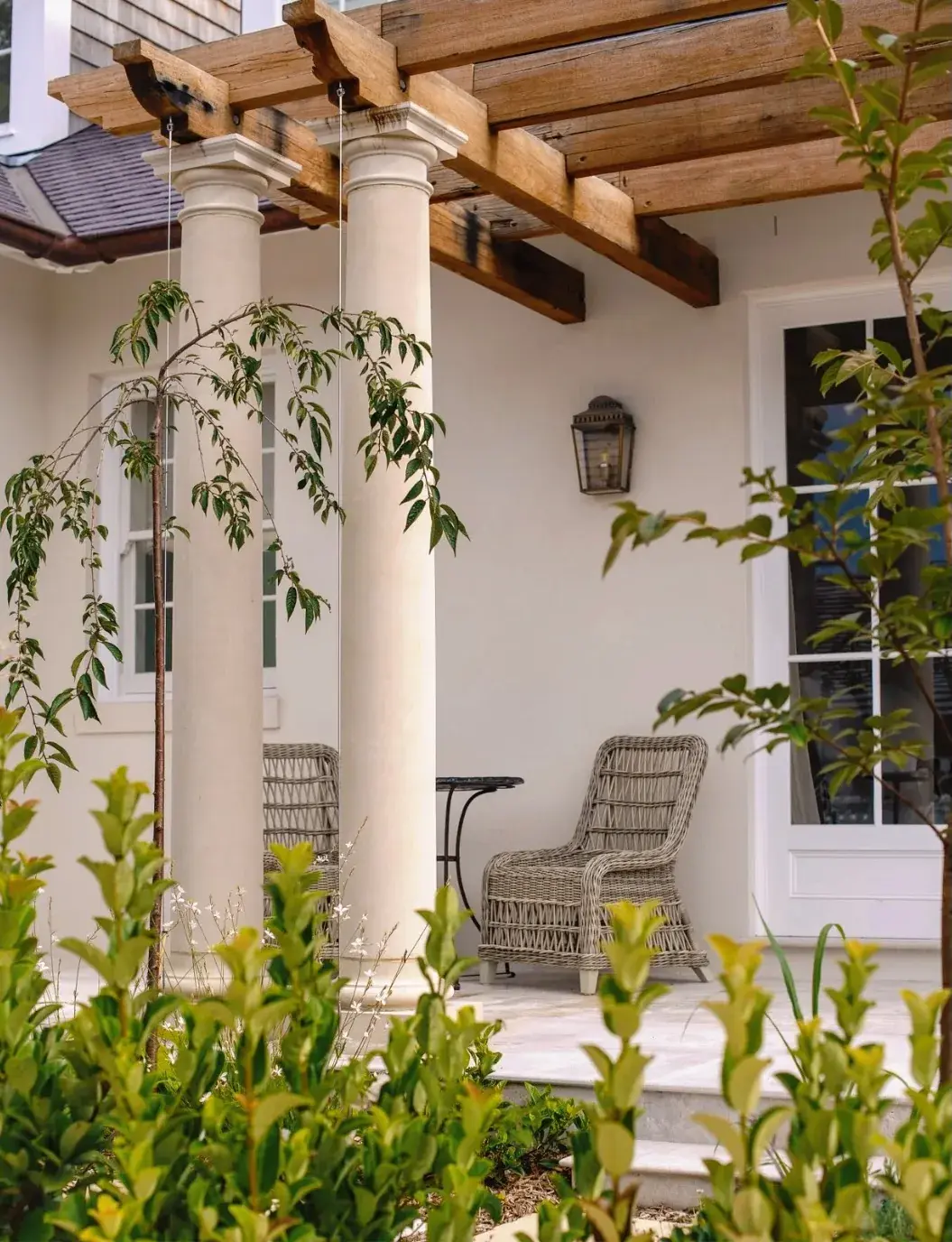
The last frame tucks wicker seats under a stained timber pergola against white stucco for you, with the beams casting stripes across the cushions. The posts land outside the seating group, the roof stays open, and the shade moves through the day. Open slats cool the air without darkening the wall, which suits a sun struck front.
Space your group for feet first. Each seat wants a 450mm table inside 600mm reach, and the whole group wants 900mm behind for pull out. Outdoor tables of that size in acacia or aluminium run £60 to £150 in 2026, and solution dyed acrylic cushions at £40 to £90 per pad forgive showers that ruin cotton covers. Store the lot in a 400 litre deck box at £90 to £200 in 2026, parked within three steps, because storage in the garage never gets used on a Tuesday.
Treat your timber on schedule. Pergola beams in softwood want preservative plus two coats of microporous stain, with materials at £50 to £110 for a frame that size in 2026, and Simpson Strong-Tie post bases at £12 to £28 each keep end grain 50mm clear of wet paving. Skip the bases and the posts rot from the foot up within five years, quietly, until the frame leans after one wet winter.
Swing loads and fixing choices
| Hanging | Verified fixing | Working load to allow |
|---|---|---|
| Two person swing | M12 through bolts into 150mm joists, 50mm washers | 250kg plus bounce |
| Daybed | Four M12 points into beams, rated shackles | 300kg plus bounce |
| Egg chair | Single M10 eye bolt into joist, 50mm washer | 120kg dynamic |
| Lantern or plant | Joist hook, never board alone | 5kg to 15kg |
Boards hold paint. They do not hold people. That distinction decides every hanging on your porch, and the table above keeps the numbers in one place for your builder.
Confirm your framing with eyes, not taps. Lift your board, open a small patch, photograph your joist sizes and centres, then close it up for £20 in materials. A builder charges you £150 to £350 to verify and fit two swing points in 2026, which reads as money until you set it against a ceiling rebuild at £400 to £800 plus your fall.
Frequently Asked Questions
What gap should sit behind a rocker?
Start with about 900mm from the rearmost sweep to any rail or wall, then test it by rocking hard. Narrow decks under 1.8m deep suit gliders or a bench instead, since cramped rockers end up turned sideways.
Can wicker stay out through rain?
Resin weave over metal frames copes with showers and hoses clean, while natural cane loosens and spots. Keep all weave back from the drip edge and bring cushions inside to a box by the door.
What holds a swing seat safely?
Solid joists or beams, seen and measured, with through bolts and rated links. Boards, trims and plaster linings carry paint only. A short visit from a builder to confirm timbers costs far less than a ceiling repair.
Which timber lasts longest outside?
Teak silvers and holds joints for decades with little care, while poly lumber needs almost nothing at all. Inexpensive softwood sets ask for paint, tightening and new screws within a few seasons.
How do seats fit a tight deck?
Protect the door walk first, then pick one angled pair or a slim wall bench. Upright chairs and benches pack talk into fewer square metres than deep loungers aimed at the view.
How are cushions kept usable daily?
Put a lidded box within three steps of the chairs and choose covers that shrug off showers. Distance decides the habit, so garage storage means bare boards most evenings.
In order
- Tape the 900mm door walk and forbid furniture inside it.
- Mark each chair plus its travel zone, then rock the tape hard.
- Confirm joists or beams by sight before any swing hook goes in.
- Buy resin, teak or poly lumber to suit the exposure.
- Set pairs 1.2m to 1.8m apart with a table in reach.
- Layer one overhead with sitting height light at 2700K.
- Park cushion storage within three steps of the seats.
This article may contain affiliate links. We may earn a commission at no extra cost to you.