10 Green Front Door Ideas: The Grey Greens Work Outdoors

Add us as a preferred source to see more stories on Google.
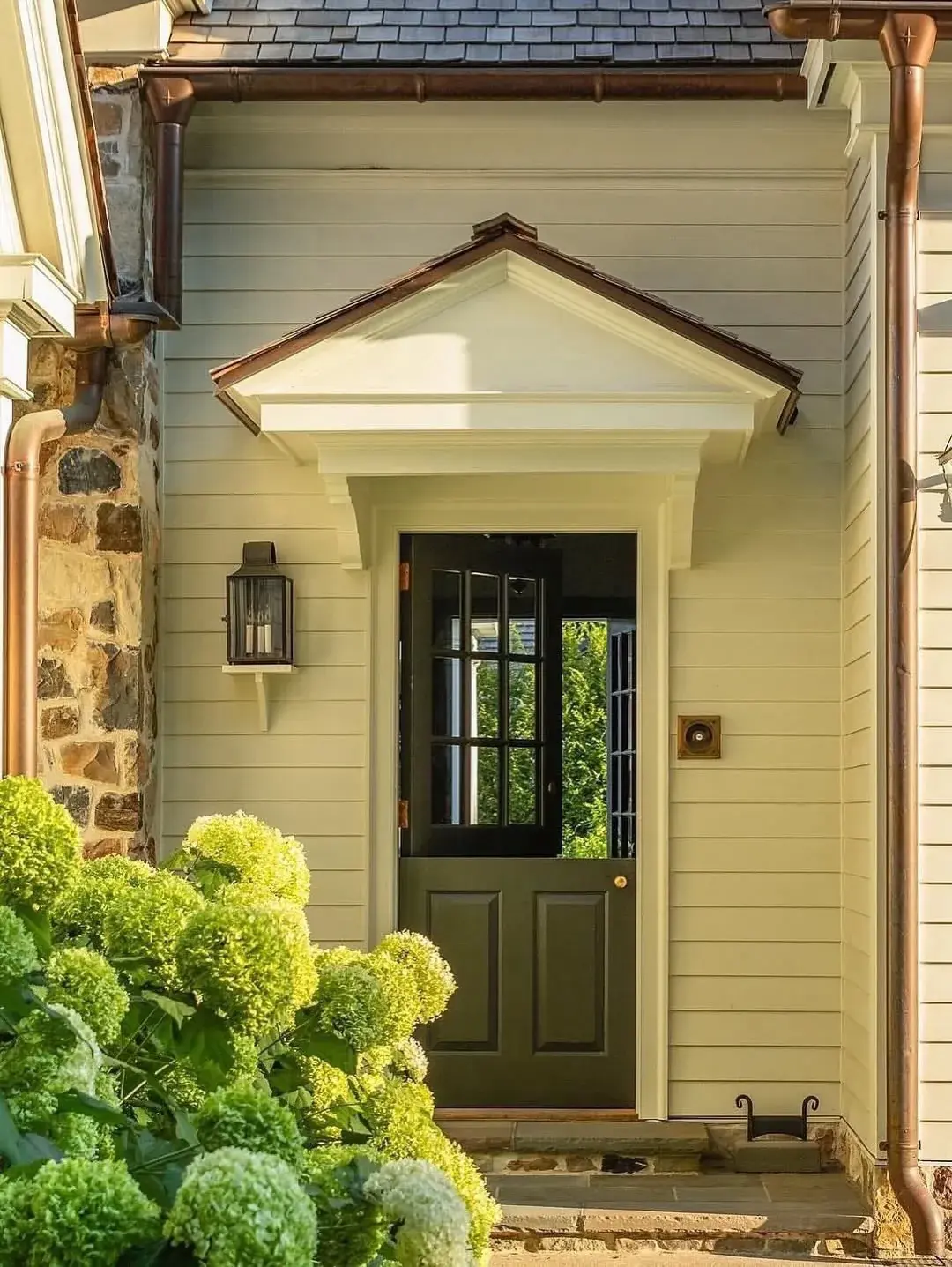
The door below is green and it is nowhere near the green of the hydrangeas in front of it. That distance is deliberate.
It is a deep olive, heavily greyed, almost brown in shade. Against cream clapboard it reads as considered and slightly serious.
Paint the same door in a clean mid-green and it becomes a garden gate. Paint it in a bright green and it becomes a front door that somebody chose from a chart without going outside.
Which green
The useful distinction is how much grey or black is mixed into it. More grey means it reads as architecture; less means it reads as a plant.
| Budget | Colour | Reads as |
|---|---|---|
| Premium | Farrow & Ball Studio Green No.93 | Near-black green, very deep |
| Premium | Farrow & Ball Bancha No.298 | Olive, close to the door above |
| Premium | Little Greene Sage Green 80 | Softer, greyer, quieter |
| Mid | Benjamin Moore Kennebunkport Green HC-123 | Classic deep sage |
| Mid | Benjamin Moore Hunter Green 2041-10 | Bottle green, traditional |
| Trade | Dulux Weathershield Satin, tinted | Hard-wearing, widely stocked |
On cream and pale yellow houses, olive and bronze-green. On white clapboard, a deeper bottle green or near-black green. On red brick, black-green works and mid greens fight the orange. On grey stone, sage and grey-green both sit well.
The copper, which is the interesting part here
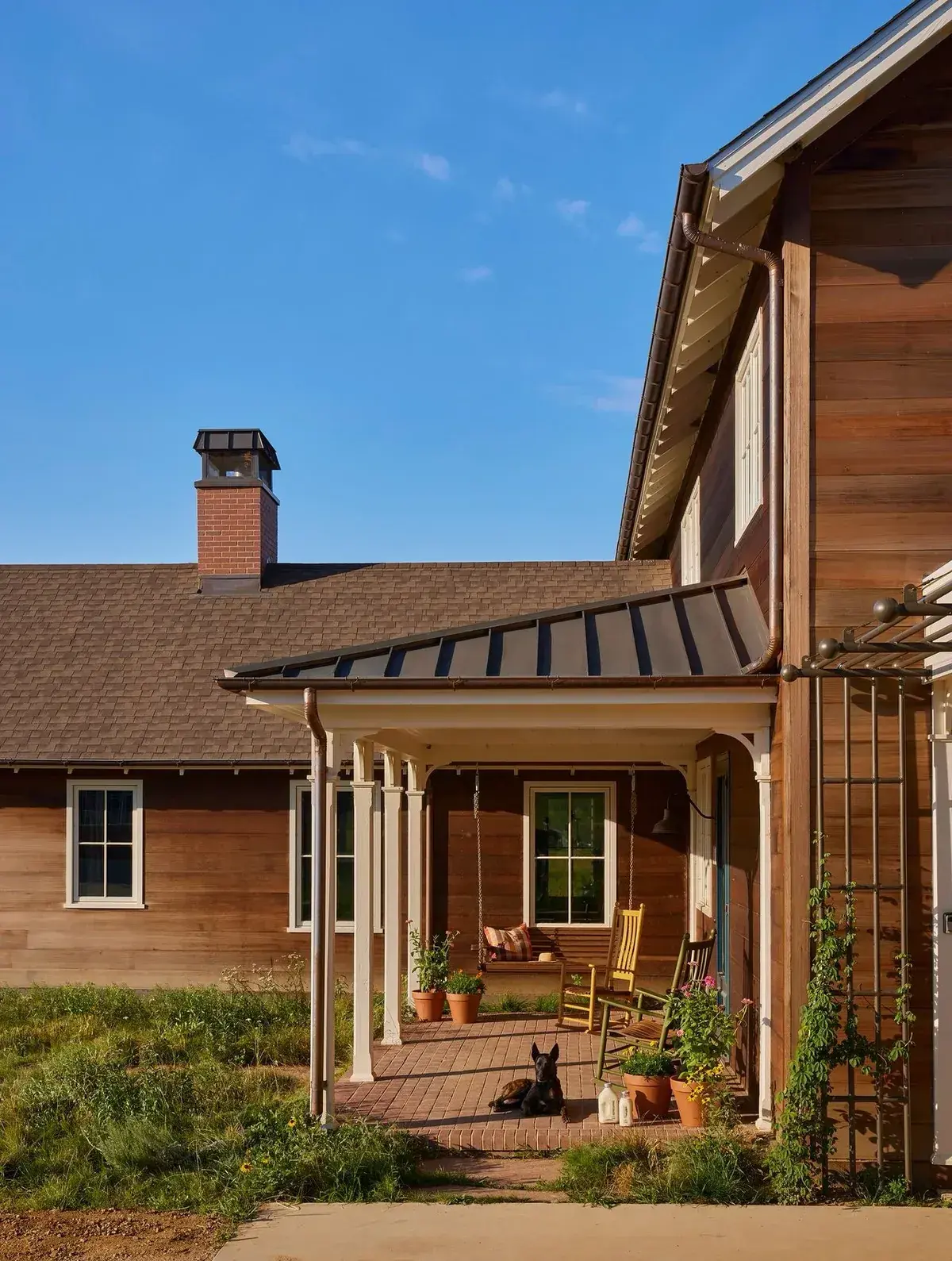
Look at the gutters and downpipes on that house. They are copper, currently a warm brown, and they are on their way to green.
Copper oxidises through brown to a dark chocolate, then over decades to the pale blue-green verdigris everyone pictures. In a damp climate that process is faster; in a dry one it can take a very long time and may never fully arrive.
That matters for a green door in two ways.
While the copper is brown, an olive door relates to it beautifully. Both are warm and both are dark. As the copper greens, the relationship changes: a blue-leaning verdigris against a warm olive can start to look like two different decisions.
If the copper is new and will visibly patina, a black-green or bronze-green is the safer choice, because both sit with brown and with verdigris. If the copper is already green, a greyer sage relates to it directly.
This is a slow problem rather than an urgent one, and it is the sort of thing nobody mentions until the house has been repainted twice.
Preparation, which decides how long the green lasts
Green pigments vary enormously in lightfastness. The earth-based greens, which is most of the greyed ones, hold up well. The brighter synthetic greens fade faster, and on a south-facing door the drift is visible within a few years.
Beyond pigment, the usual rules. Sand back to a sound surface, take off any failing coating rather than painting over it, and prime bare timber including the end grain at top and bottom. Two thin coats of exterior satin rather than one thick one.
Take the door off and lay it flat if you can. Every run on a front door happens to a door painted while hanging.
The Dutch door, since that is what this is
The door is split horizontally, so the top half opens on its own. It is practical in a house with children or a dog, and it is the traditional farmhouse arrangement.
Two things to know. It needs a proper weather bar at the split and a rebated meeting rail, or rain tracks straight in. And it costs roughly half again as much as a single door, because it is two doors with four sets of hardware.
Splitting an existing door is possible and rarely worth it; the stiles were not built for it.
Where green is the wrong call
Houses already carrying green somewhere significant: green shutters, a green metal roof, or a heavily planted frontage that will be green nine months a year.
A green door surrounded by green stops being an accent and becomes camouflage, and the entrance is the one place on a facade that should announce itself.
Pale sage on stone, with the shutters to match
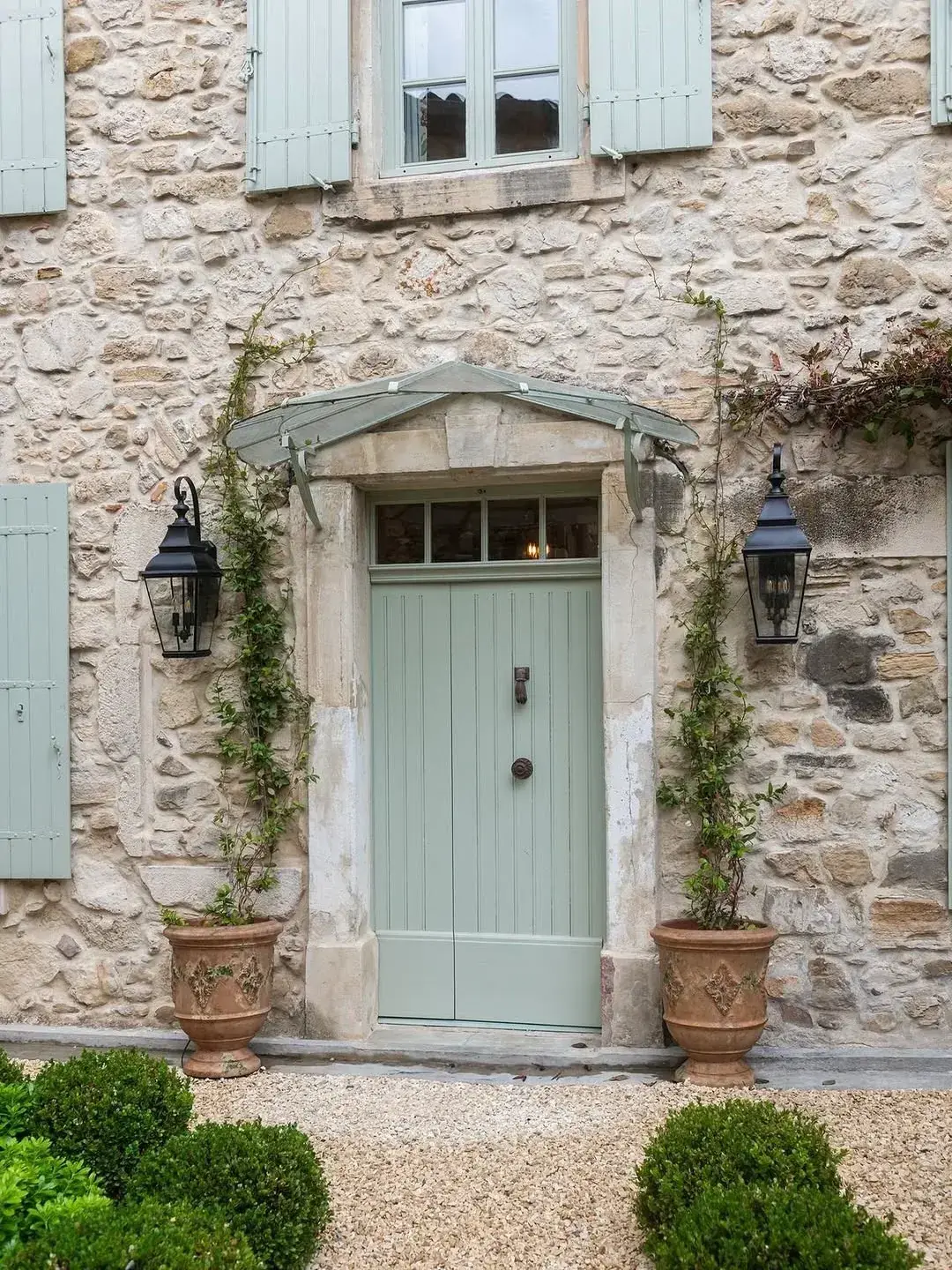
In this picture the wall is rubble limestone and the joinery is a very pale sage. Double doors with vertical boarding sit under a stone lintel with a glazed canopy over them. The shutters on the windows above are painted to match. Two black lanterns hang each side. Terracotta pots hold young climbers tied to the stonework.
That match between doors and shutters is the whole decision. On stone, a pale green on the door alone can look like a mis-tint. Repeated on the shutters, it reads as the house colour. The glass canopy does practical work too. It throws rain clear of the doors and the stone surround, which keeps the paint film alive longer than an exposed leaf.
Farrow and Ball Mizzle No.266 lands closest in exterior eggshell. Little Greene Sage Green 80 runs a touch softer for the same stone. Tester pots list at £6 to £9 per 100ml in 2026, and two pots allow a proper test on the door and one shutter in daylight. Pale greens chalk first on the sun side, so wash yearly with mild soap and keep a labelled jar for touch ups.
Olive on brick, with white doing the separation
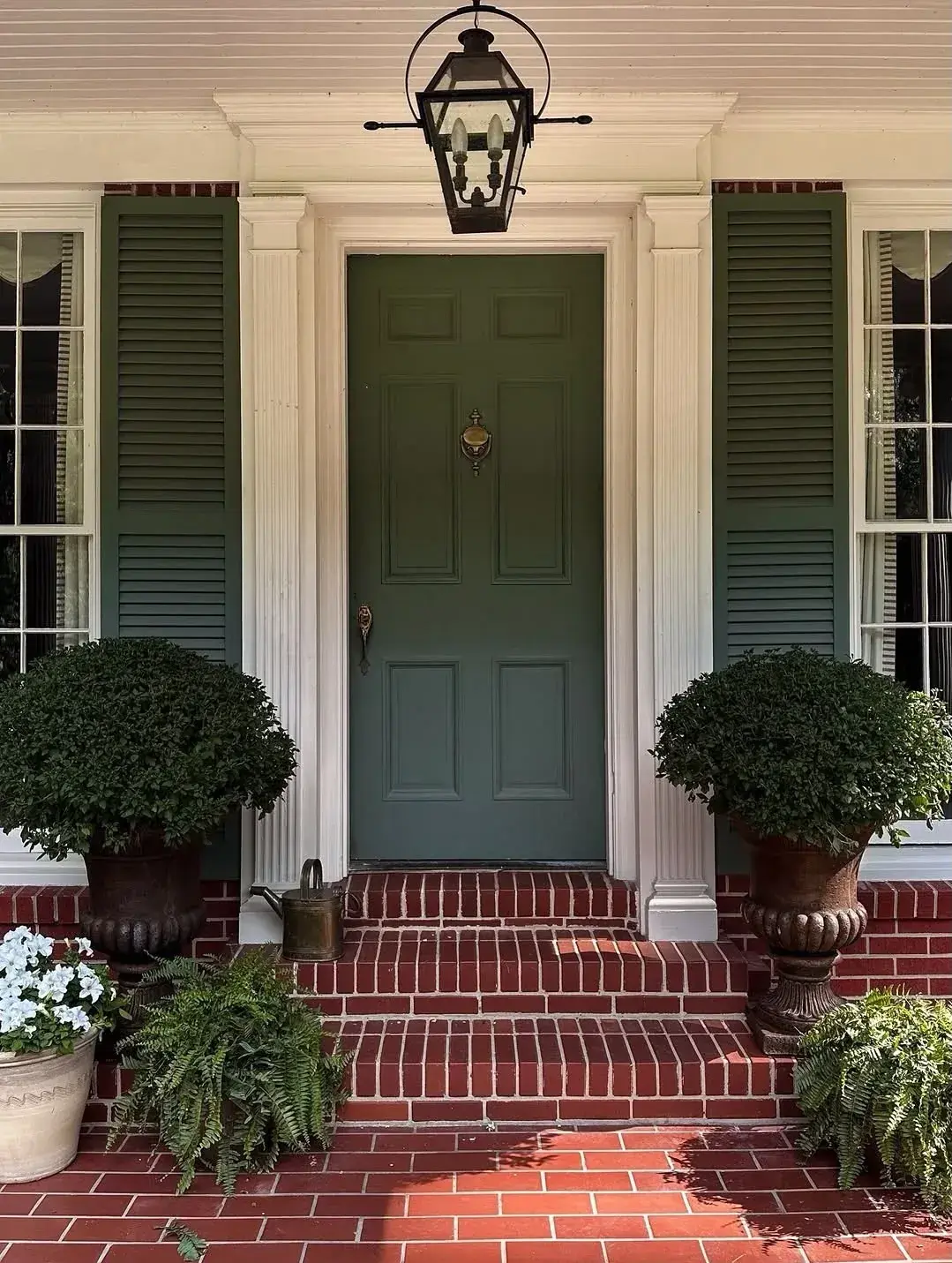
In this picture the door is a muted olive with grey in it, set between matching louvred shutters on red brick. White pilasters frame the opening. A black lantern hangs over the step. The ironmongery is brass, knocker and lever both darkened with use. Box balls in rusted urns sit each side with ferns below them.
The mortar lines and the white casing do the separating work. Red brick against green turns festive unless something divides them, and here the white trim plus the pale joints hold the two apart. The shutters repeat the door so the green owns both sides of the opening instead of floating in the middle.
Copy the metal before the paint. Aged brass and copper sit with olive because both are warm and dark. Chrome and polished nickel sit apart and make the door look isolated. Corston and From the Anvil list solid brass knob sets at £40 to £90 in 2026, with matching knockers at £35 to £75 in 2026. Buy the set in one finish and carry it through to the lantern.
Olive double doors under a living canopy
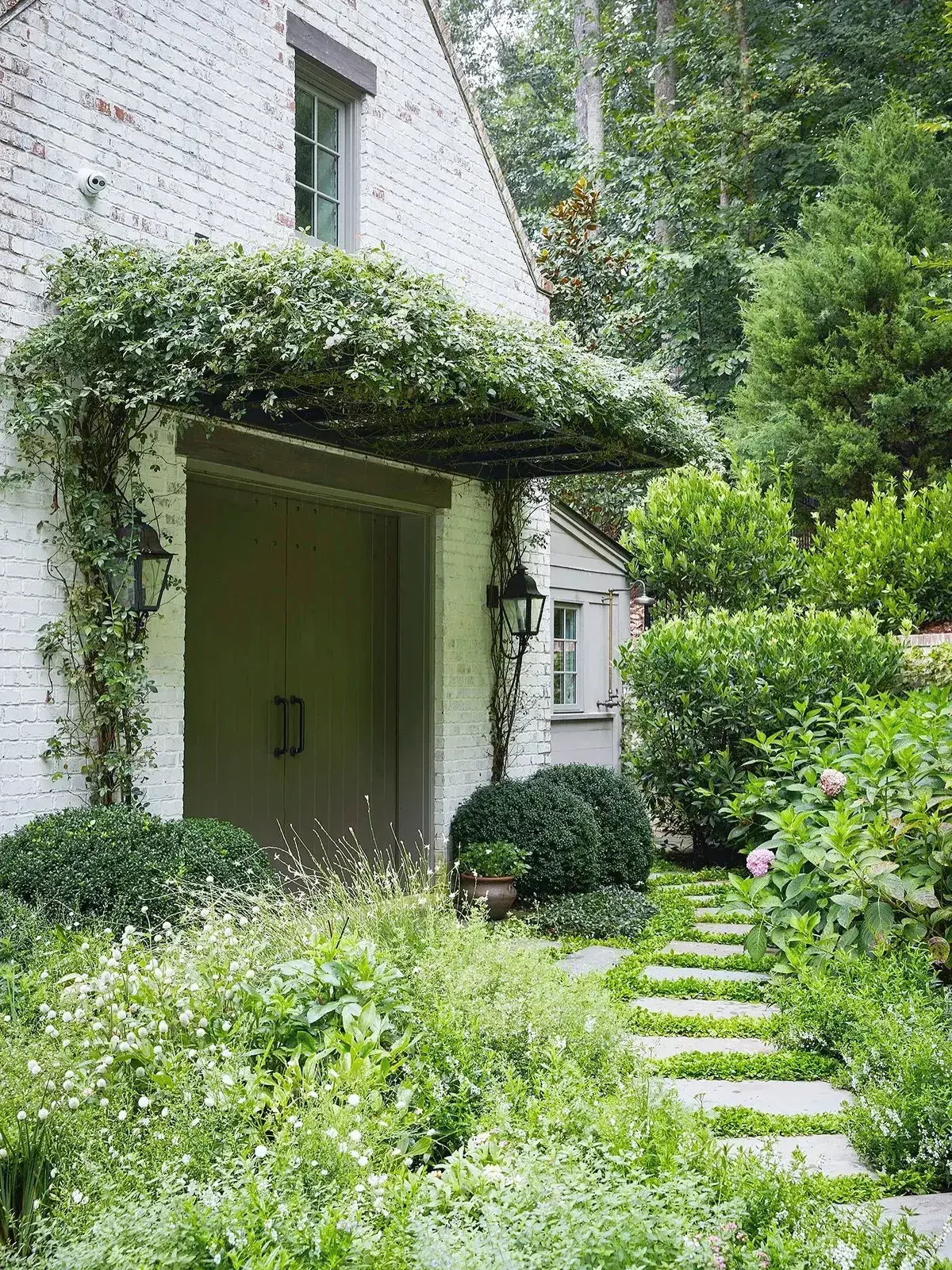
The doors are tall, boarded, olive drab with black pull handles. They sit in whitewashed brick. Above the doors a metal frame carries vines that have taken over the whole canopy. Black lanterns hang each side but the foliage half hides them. The path is stone flags with grass growing through the joints.
This is camouflage done on purpose. The door is almost the same depth as the leaves around it, so the entry does not announce itself from the path. That suits a garden house where the planting is the point. On a street facade the same trick would hide the front door entirely, which is the one place that should read clearly.
Little Greene Hopper No.306 matches this olive when mixed for exterior joinery. Farrow and Ball Studio Green No.93 sits a step darker for the same wall. Exterior lanterns in this size list at £80 to £180 each in 2026 from Garden Trading and similar suppliers. Cut the vine back from the lanterns and the door faces each autumn, because constant damp and shade shorten any paint film within two seasons.
Sage with a copper roof and black shutters
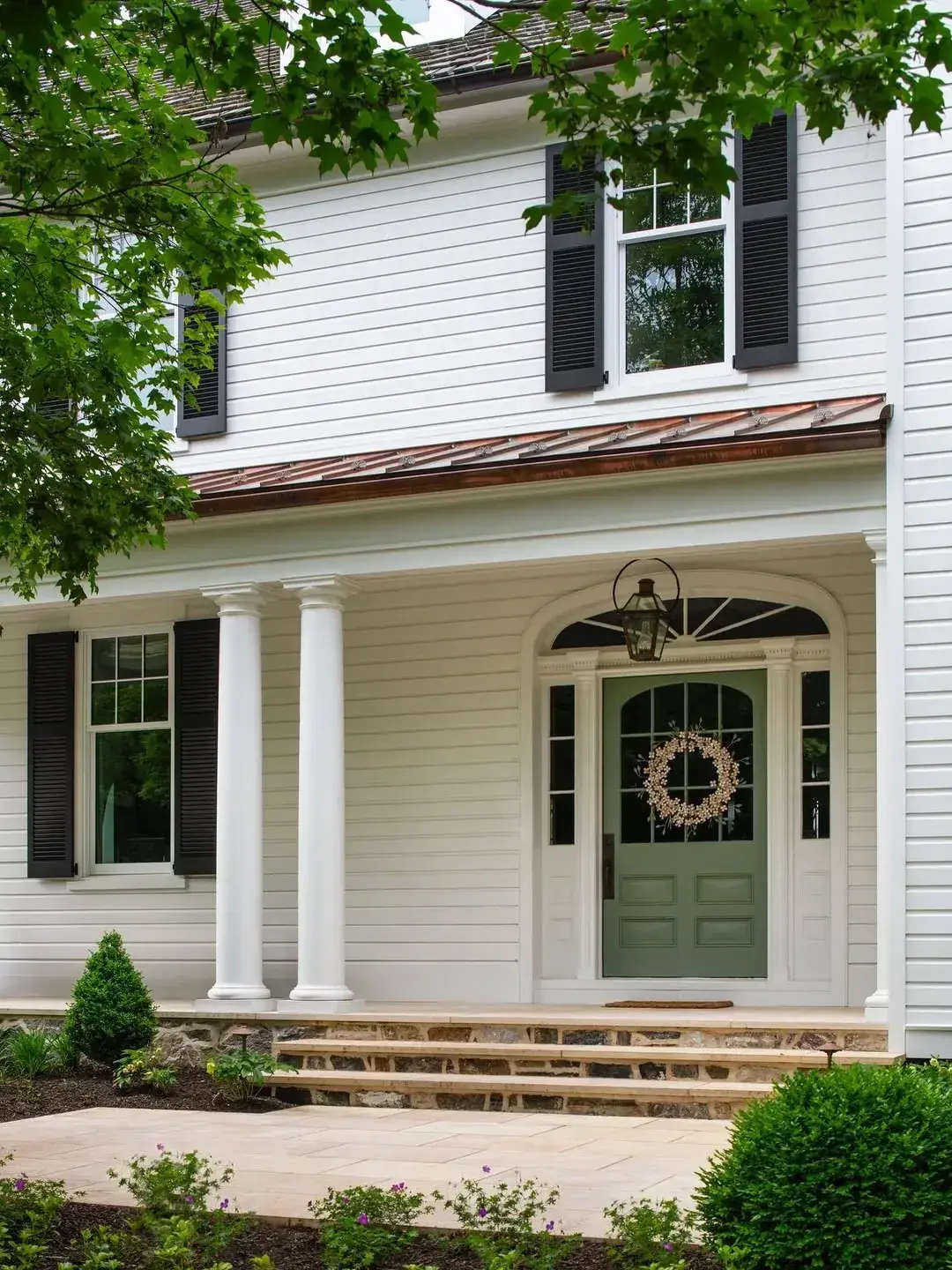
Look at the copper first. The porch roof is still brown and new, with white columns below it. The door is a soft sage with glazed top lights and panels below, dressed with a pale wreath. Sidelights each side bring light into the hall. Black louvred shutters sit on the windows above.
Sage is the right depth for white clapboard. Forest would punch a hole in this facade. Mint would wash out beside so much white. The mid sage holds the centre without shouting, and the wreath confirms the scale. That copper will darken and then drift towards verdigris over many years, and sage sits with both the brown stage and the green stage.
Farrow and Ball Lichen No.19 reads right against white clapboard in exterior satin. Benjamin Moore Guilford Green HC-116 gives a similar mid sage from a different shelf. Shops charge £55 to £95 for 2.5 litres in 2026, which covers a door and shutters twice with paint left for the edges. Paint the top and bottom edges in the same coats, because bare end grain drinks water and swells the stile.
Deep green in shade, where navy would go black
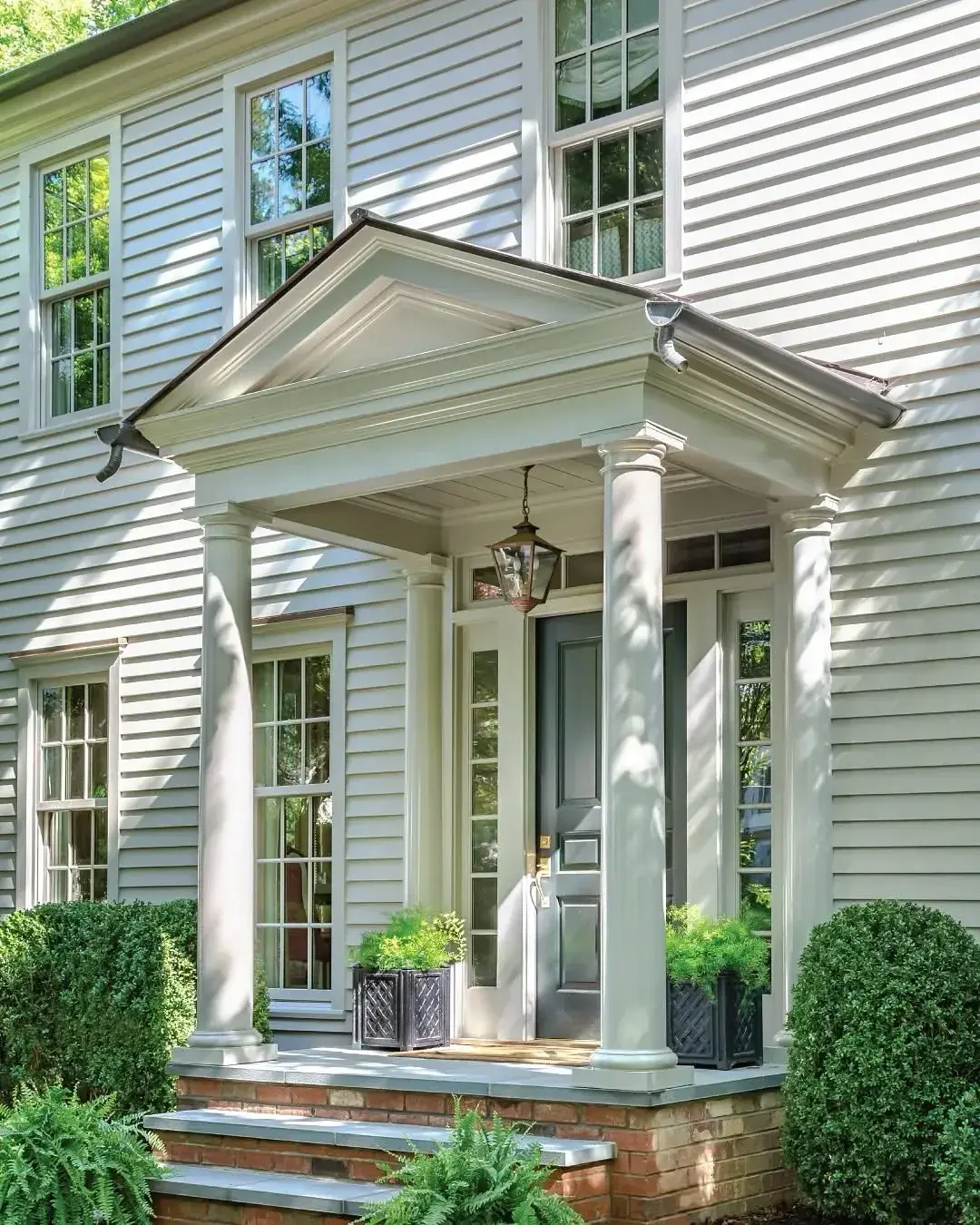
Below the pediment the door sits deep in shade behind four white columns. The paint is a very dark green, almost black for most of the day. A brass knob and letterbox catch the light. Sidelights and a transom bring daylight in from both sides. Black planters with ferns flank the step.
Shade decides this one. In full sun that near-black green would read as colour. Under this roof it reads as depth, which is why the white casing matters. The bright frame holds the dark leaf apart from shadow. Without it the entry would look like an unlit opening.
Farrow and Ball Green Smoke No.47 holds its hue in shade when finished in exterior satin. Studio Green No.93 is the darker fallback if the opening runs very dim. Satin wipes clean and hides filler where gloss would map every repair. Wash the leaf each spring with mild soap, because pollen film dulls dark greens first and twenty minutes with a soft brush brings the colour back.
When the house is green, the door stays quiet
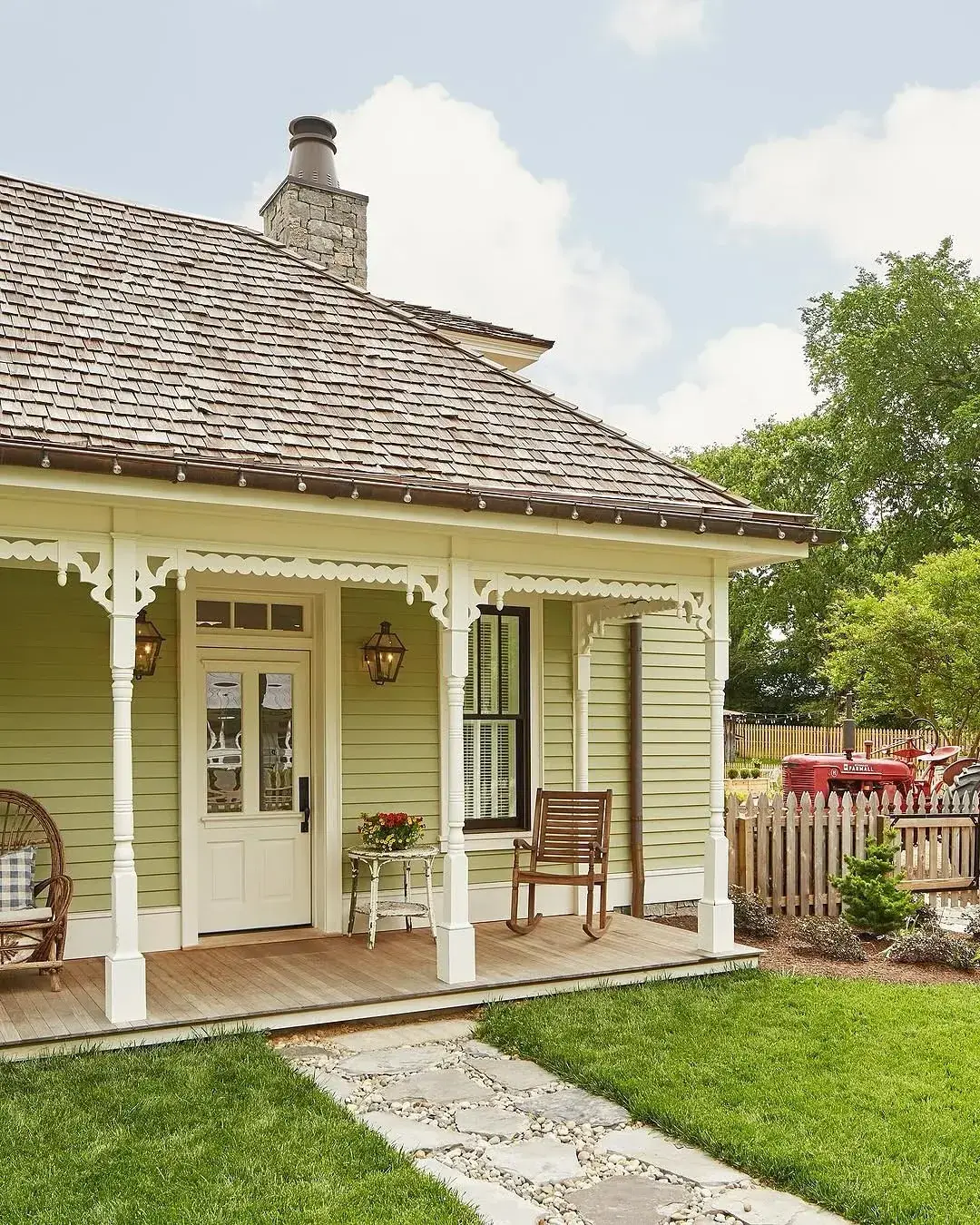
Above the deck the green here is the house, not the door. Weatherboard in pale sage runs across the whole facade with white fretwork at the porch. The door itself is cream with glazed top lights. Rockers sit on the timber deck. A cedar shingle roof caps it.
Painting the leaf green as well would lose the opening against the boards. The front needs to signal itself, so cream does that job while sage covers everything else.
Little Greene Sage Green 80 suits weatherboard when mixed for exterior use. Guilford Green HC-116 from Benjamin Moore offers a close mid sage from another range. Budget £95 to £150 for 5 litres of premium exterior satin in 2026, which covers a cottage facade of this type twice. Keep the door and the trim in the same warm white so the green has one clean edge to sit against.
Mid olive, glazed, left open
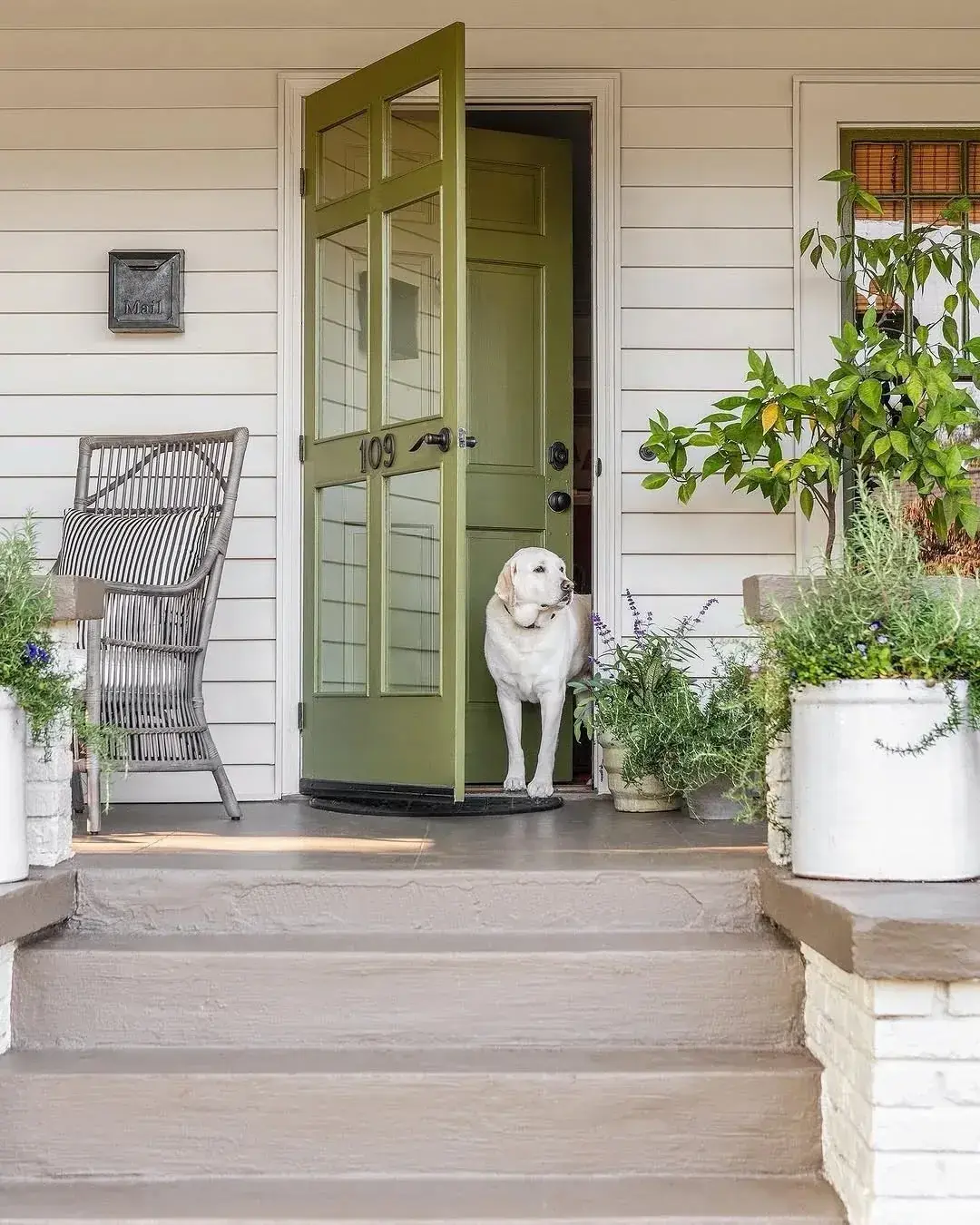
In this picture the door stands open, top half glazed with panes over panels. The paint is a mid olive with yellow in it, lighter than the heritage greens elsewhere on this page. House number 109 sits on the stile. Black lever and deadbolt match the mail slot on the wall. White pots with citrus and rosemary crowd the step.
Glazing changes the maintenance. Each rebate where glass meets timber holds water, and paint fails there first. Bed the glass properly and back prime the beads before fixing, because a glazed leaf finished only on the faces starts to peel at the bars within two winters. The open view shows the edges are painted, which matters more on a glazed door seen from both sides.
Farrow and Ball Bancha No.298 tracks this mid olive in an exterior mix. Benjamin Moore Kennebunkport Green HC-123 runs a fraction deeper for the same door. A wicker chair like the one pictured lists at £120 to £250 in 2026 from Cox and Cox and similar suppliers. Keep planting off the paintwork, because leaves that sit wet against the stile keep the film damp and shorten its life.
Pale mint in a white brick shelter
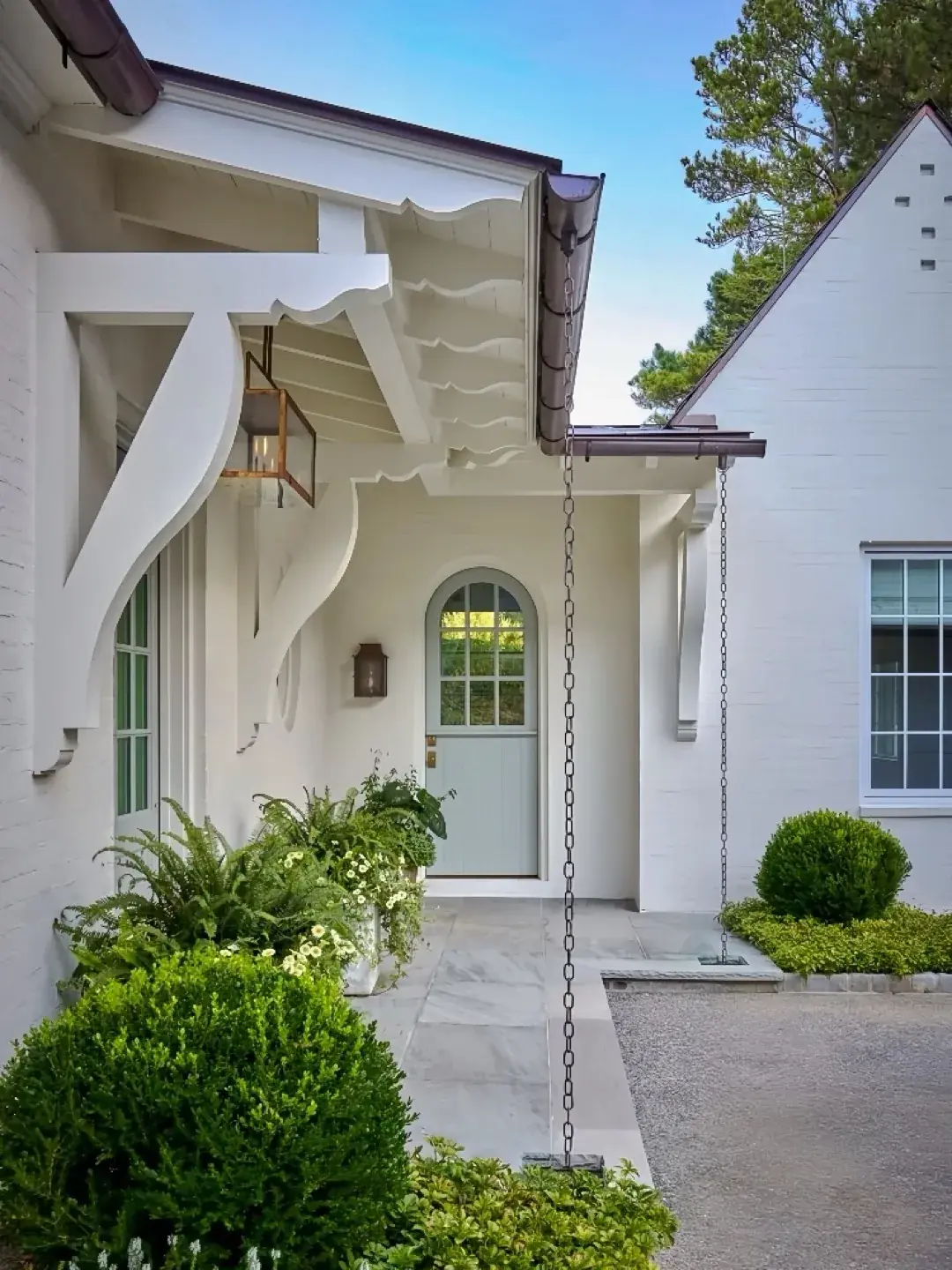
The chains come first in this picture. Rain chains hang each side instead of downpipes under a deep white canopy. The door is a pale grey-green Dutch leaf with an arched glazed top, set in white painted brick. Scrolled brackets carry the canopy. A copper wall light sits beside the door with a larger lantern below the boards. Ferns and clipped box fill the beds.
Pale greens need shelter and this entry gives it. The canopy takes the sun and most of the rain, so a colour that would bleach on an exposed leaf holds here. The split Dutch leaf helps too. The top can stand open for air while the bottom stays shut, which suits a house with a dog or small children.
Farrow and Ball Cromarty No.285 catches this pale mint in exterior satin. Little Greene Slaked Lime 105 stays paler still for sheltered entries. Rain chains in this length list at £30 to £70 each in 2026. Prime the meeting rail at the split on all faces, because rain tracks straight in there once the film cracks.
Near-black green on a white hut with a turf roof
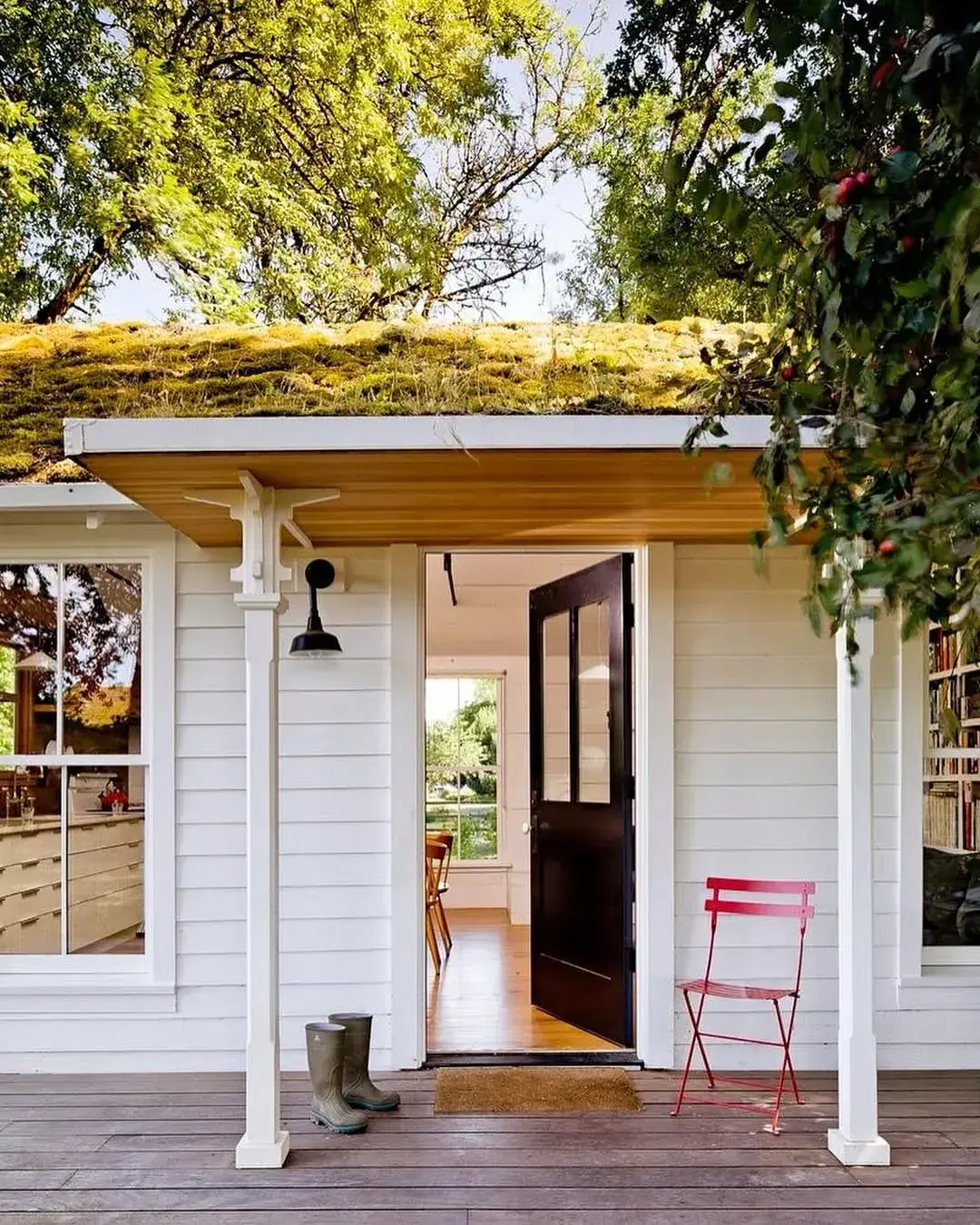
Below the turf the door stands open on a white boarded hut. The paint is near-black green, darker than any other on this page. A black wall light sits beside it. Wellies wait by the post. A red metal chair is the only strong colour on the deck.
Dark works because everything else is pale. White boards, pale deck, bright sky. The door is the single dark shape, so it anchors the whole front even though the hut is small. That turf roof throws shade and drips water onto the walls, which is why the door and the trim need a paint that tolerates damp.
Farrow and Ball Off-Black No.57 gives the same soft black-green in an exterior mix. Little Greene Jack Black 119 drops even darker for huts that can take it. Timber decking boards of this type list at £25 to £45 per square metre in 2026, with exterior satin at £25 to £45 for 750ml in 2026. Lift the leaf off its hinges and coat it horizontal, because runs show worst on dark paint viewed from the path.
Frequently Asked Questions
Which green calms red brick without looking festive?
Choose a dark olive with grey in it and keep white woodwork between paint and masonry. The pale frame stops the two strong hues touching. Sample against mortar as well as brick, since pointing shifts the whole read.
Does soft sage fade on a sunny front?
It pales quickly where sun lands all day, especially on wide facades. Cottage walls, canopies, and shaded aspects suit it far better. Always trial a full board outdoors before ordering tins.
What metal flatters an olive leaf?
Aged brass and copper. Both carry warmth that deepens muted paint. Cool chrome stands apart and leaves the entrance feeling disconnected. Repeat one warm finish across knob, knocker, and lantern.
Can a cottage carry a pale mint door?
Only with cover overhead and planting kept back. A deep porch or canopy shields the delicate tint from sun and rain. Without shelter it chalks and reads washed out within a couple of seasons.
How do you keep a shaded door from going black?
Surround it with bright casing and generous glazing. White trim holds a deep leaf apart from shadow. Sidelights and a fanlight pull daylight into the opening so the hue still registers.
When should a south facing green be recoated?
Inspect each autumn for chalking on rails and raised panels. Touch up small sunburn before frost sets in. Earthy olives hold well, while cleaner yellow greens drift sooner and want earlier attention.
In order
- Choose a greyed green rather than a clean one; olive, bronze or near-black.
- Test the sample with foliage behind it, outdoors, at two times of day.
- On a house with new copper, choose a green that will still work against verdigris.
- Use exterior satin, two thin coats, with all four edges primed and painted.
- Skip green entirely if the house already has green shutters or a green roof.
This article may contain affiliate links. We may earn a commission at no extra cost to you.