Rustic Cabin Living Room Ideas Built Around One Old Piece

Add us as a preferred source to see more stories on Google.
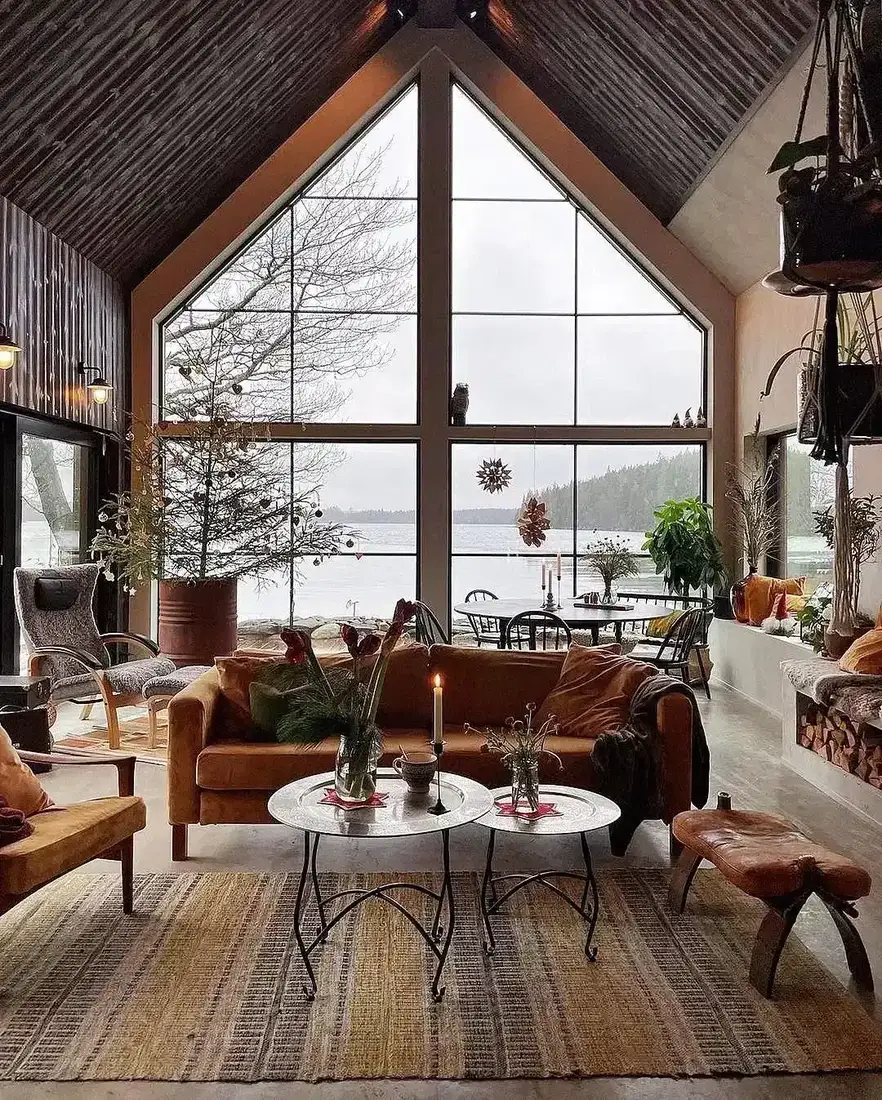
The barn conversion below stays elegant for a specific reason. One old structure carries the room, and everything new around it keeps quiet.
The fault is rarely the beams. It is the headcount of rough surfaces, which is why one stone hearth reads as history while stone plus beams plus distressed timber reads as a restaurant set.
What follows reads the rooms through that lens, with the measurements that let you repeat each decision at home.
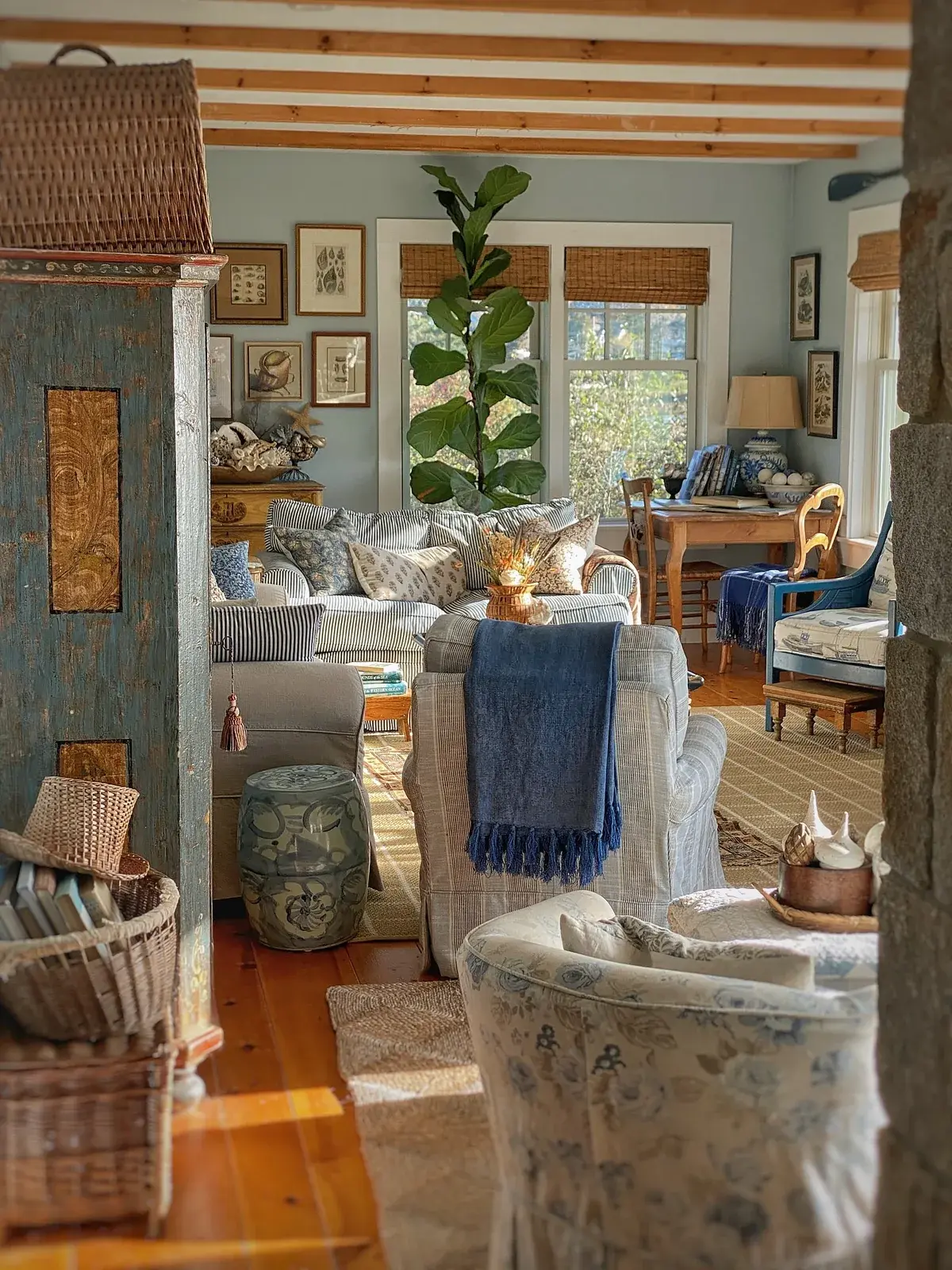
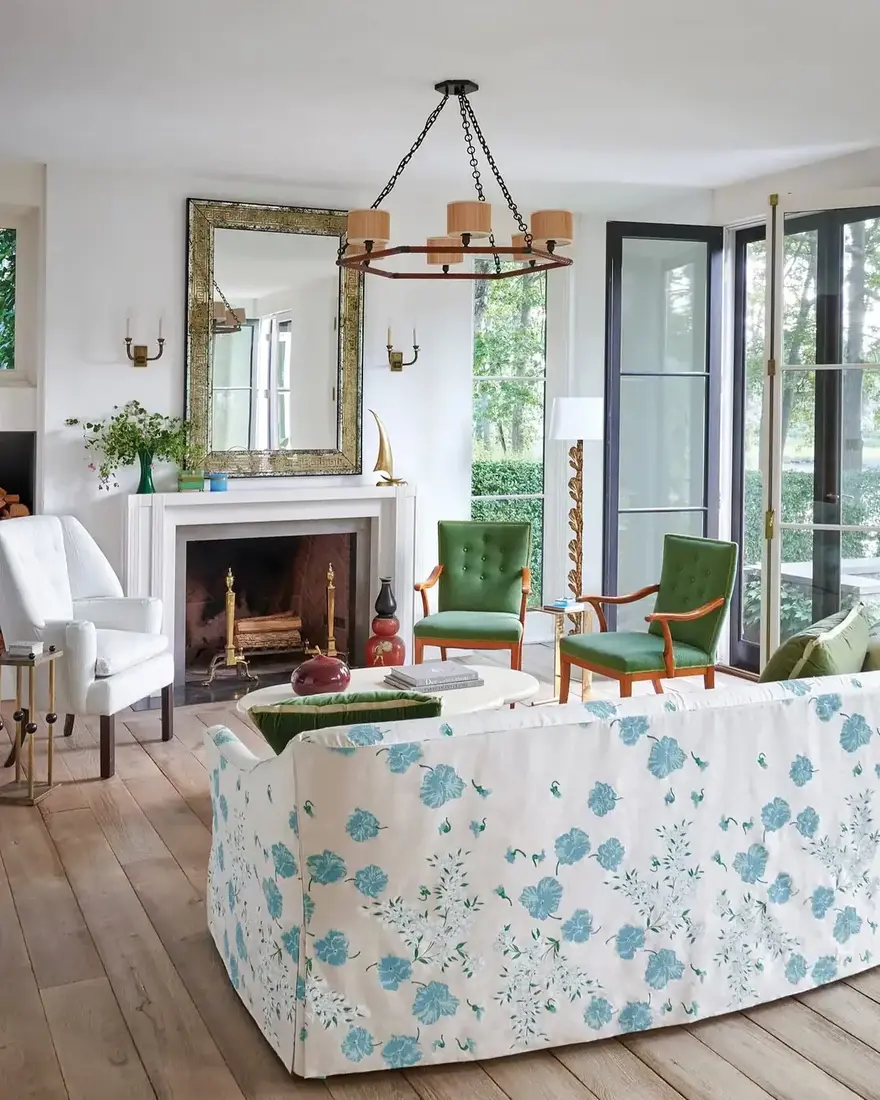
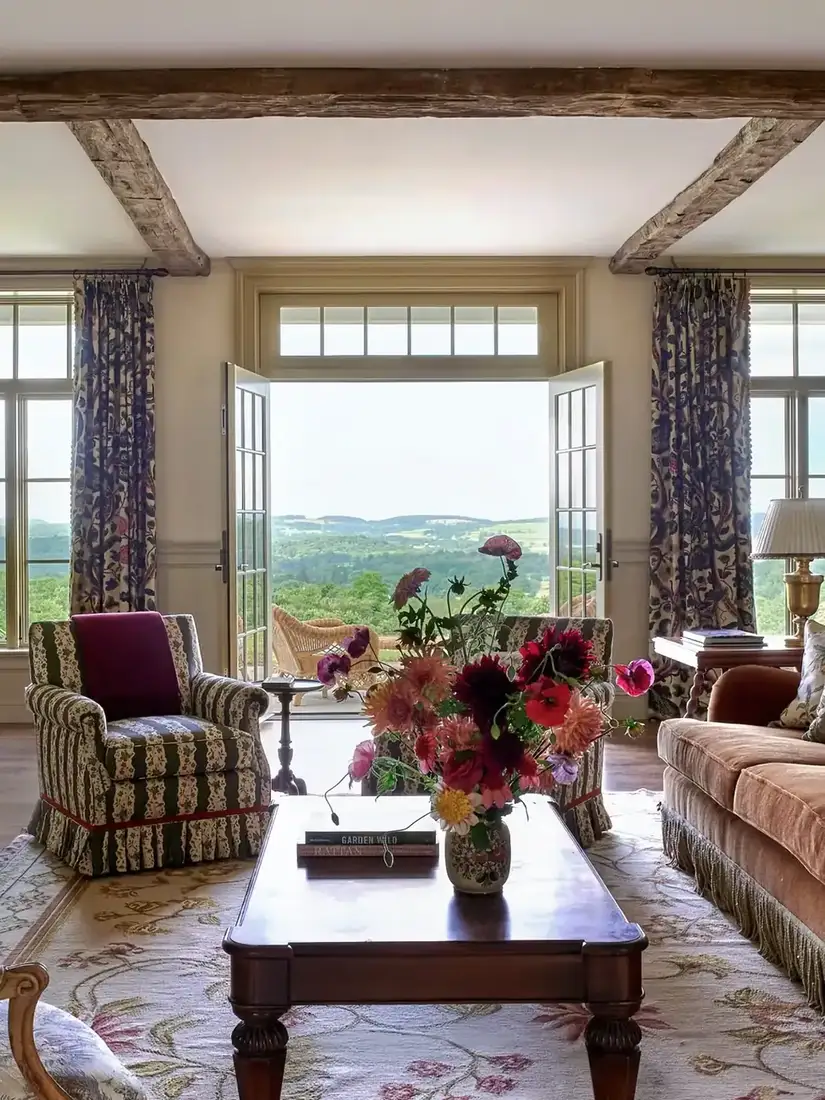
Patterned armchair that stays a single echo
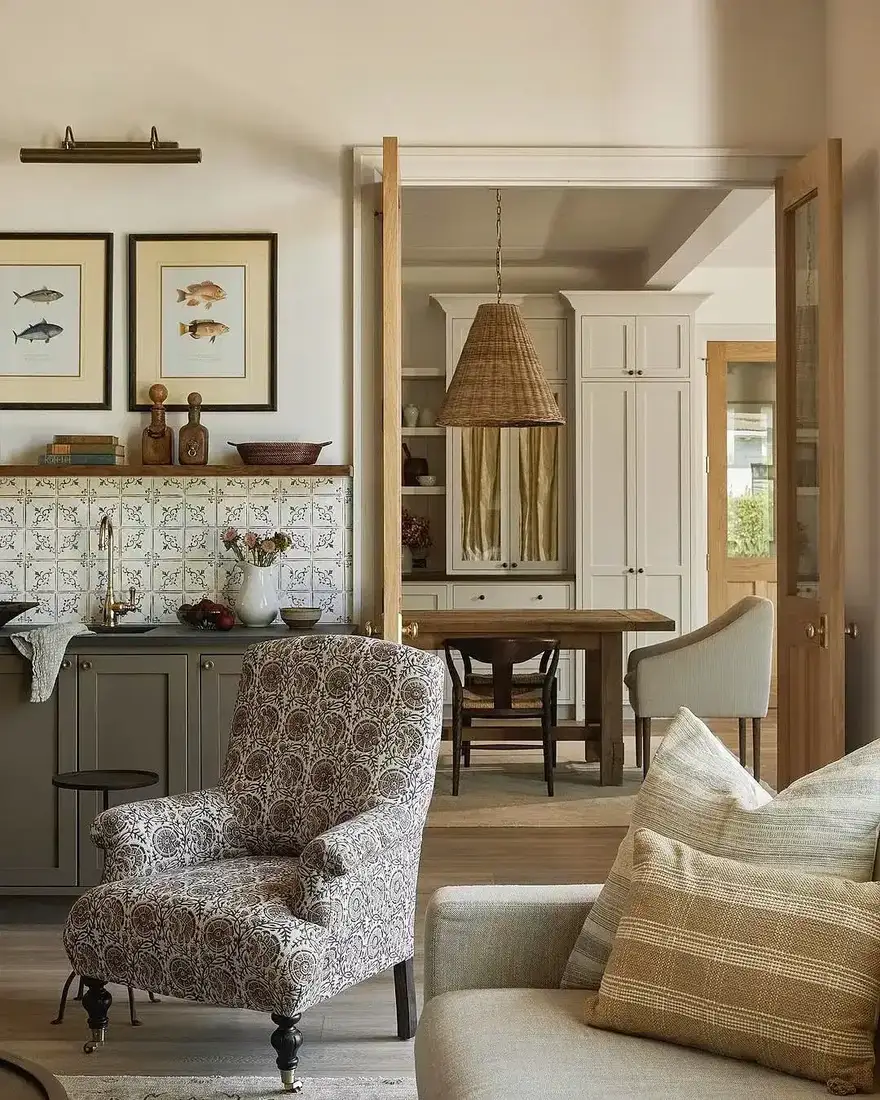
The armchair shows how much pattern a cabin tolerates, which is exactly one chair. Its motif sits at cushion scale, legible up close without throwing colour across the room, while the timber around it carries the larger texture. That division of labour keeps the peace: architecture handles the big gestures and upholstery whispers. The scales never meet. If your sofa wore the same print, the whisper would become a second voice arguing with the beams.
Look at the arms first, because solid sides would double the patterned square metres. An open-legged chair with visible floor beneath it occupies less of your sightline than a skirted block of equal width. Timber legs around 150mm high let the rug run underneath, so your seating floats instead of rooting. The cushion in plain oat linen then gives your eye one restful plane before the pattern resumes.
Lighting stays low beside it. A table lamp with its shade centre near 1200mm from the floor throws warm light across the weave at your sitting height, which flatters both the fabric and your book. Expect £70 to £160 in 2026 for linen-shaded lamps of that height at Dunelm or John Lewis. Patterned armchairs of this scale from Sofas and Stuff run £650 to £1,200 in 2026, which stings until you divide it by the ten winters the chair will serve. Farrow & Ball School House White No.291 on your plasterwork would keep the timber honest.
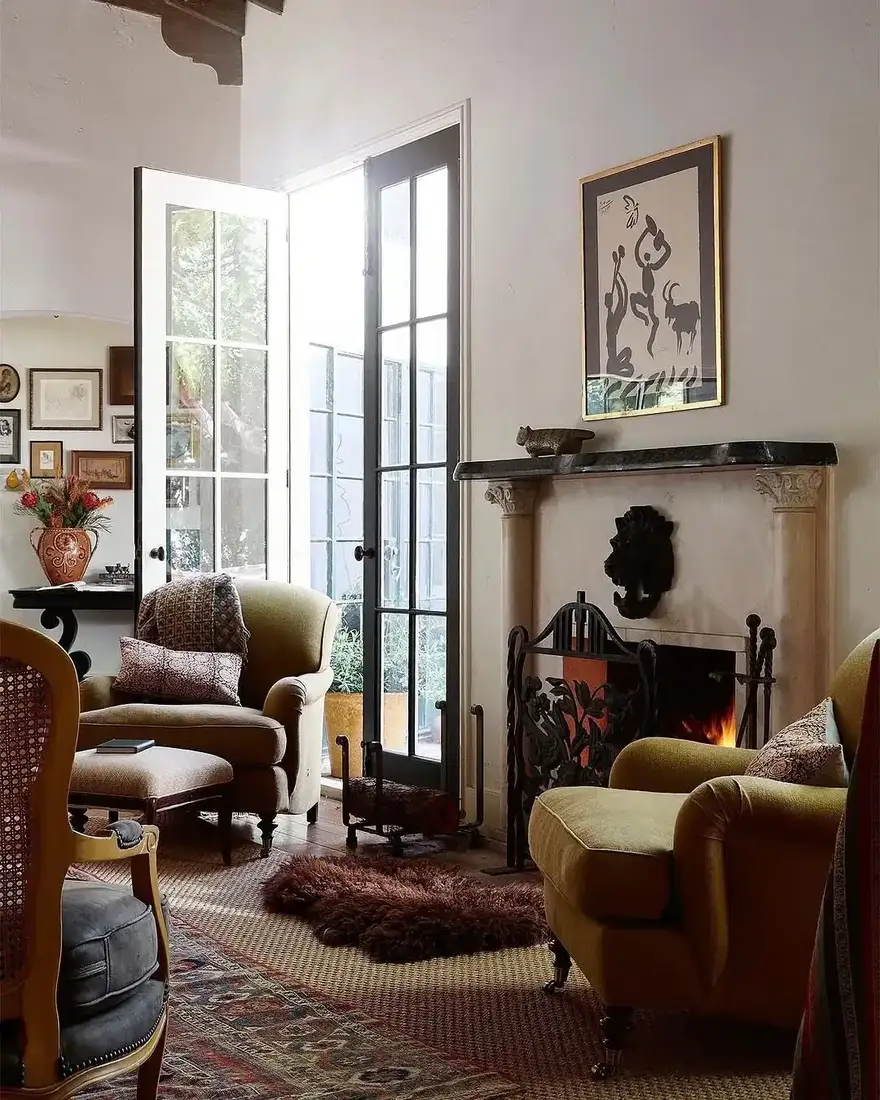
Stone hearth that does the carrying
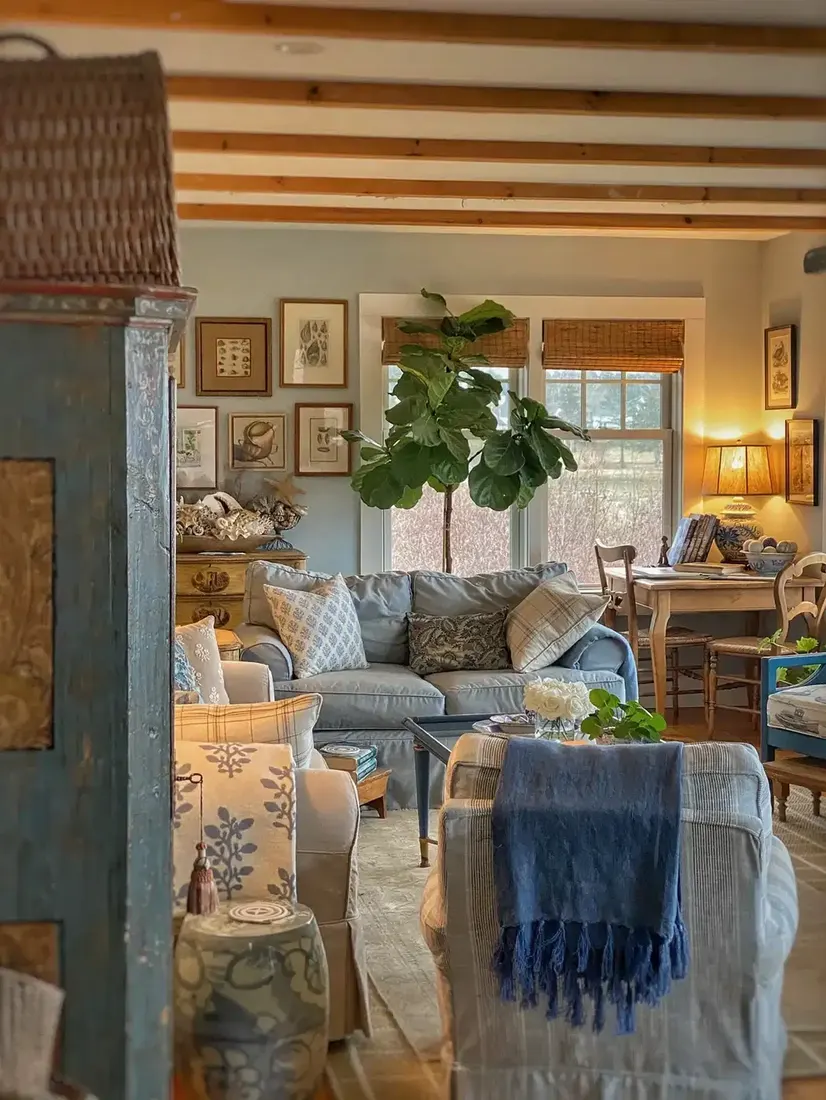
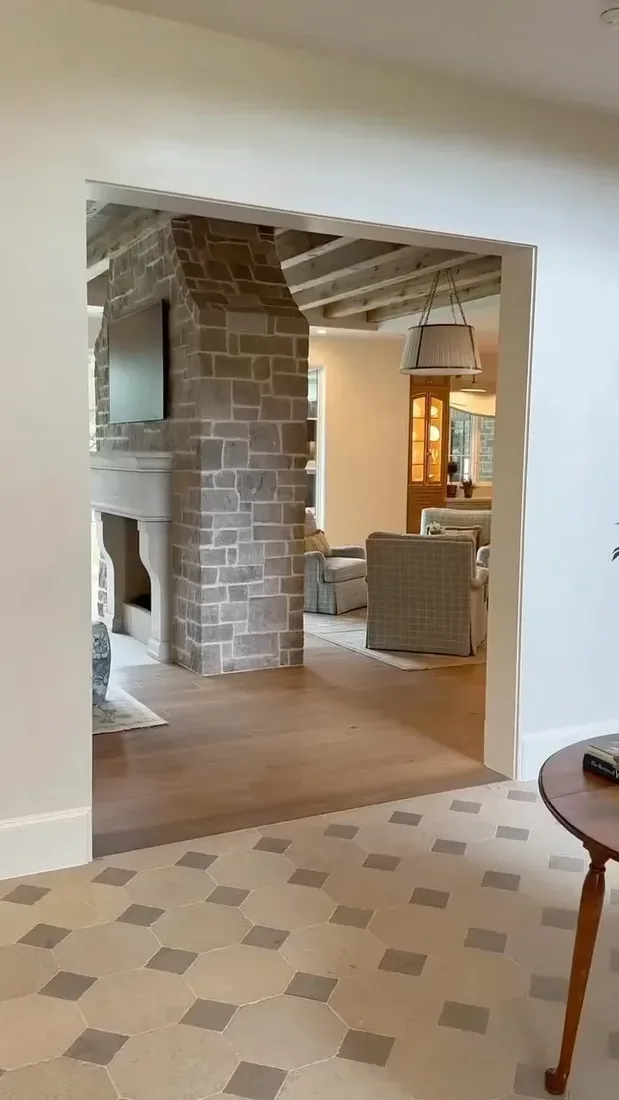
In that room the hearth is the old element, so nothing else competes for age. The stone rises full height with irregular joints and tonal shifts no new cladding reproduces, while the mantel beam spans it in a single oak length. Because the wall already gives texture and shadow in one weathered move, the sofa can afford to be completely plain. That plainness is not emptiness; it is the frame the stone needs.
The governing measurement is the mantel height, which sets every other line in the room. A beam face around 150mm deep at roughly 1350mm from the hearth floor puts art and lamps above it within easy reach while keeping flames visually contained. Hang a picture with its centre near 1500mm over the beam and the composition locks for you from every seat. Reclaimed oak beams of mantel section cost £180 to £450 in 2026 from architectural salvage yards.
Notice how the textiles stay inside one tonal family. Throws in oat and stone stripes sit with the mortar joints instead of fighting them, and the cushions repeat putty rather than introducing sage or rust. Two cushions per seat is plenty here, since you sit against this wall more than you look at it. Wool throws near 130cm by 180cm are £60 to £140 in 2026 at John Lewis. Little Greene Portland Stone 77 on adjacent plaster would sit quietly with that masonry.
Chequered rug that keeps the floor calm
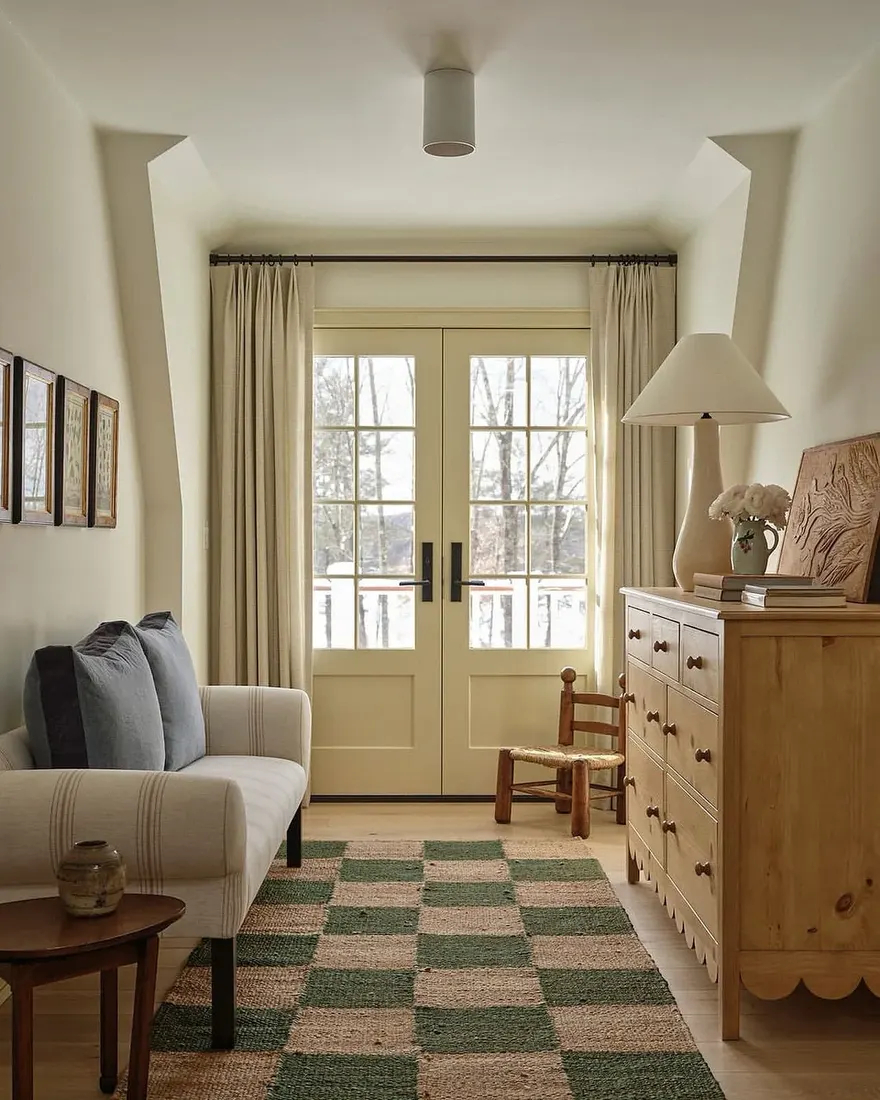
The rug demonstrates the quiet-floor principle that lets a rough wall talk. Its chequered weave reads as one mid tone from the doorway, since the checks sit near 100mm square and blend at distance. A large motif underfoot would compete with the stonework. Distance simplifies the check into texture you can live with. Your floor then becomes the field against which the hearth performs, which is the whole point of keeping it plain.
Size decides whether the trick works. The rug runs beneath the front legs of both sofa and chairs, around 200mm of overlap, which stitches the seating into one island. A rug that stops short of the furniture leaves each piece floating on bare boards, and the room scatters. For a two-seat arrangement, 160cm by 230cm is the working minimum; larger rooms take 200cm by 290cm without strain. Wool chequered rugs near 200cm by 290cm cost £250 to £600 in 2026 from Armadillo or Weaver Green.
That check wants plain company above it. Cushions in solid flax and a single stripe cushion echo the rug without restating the grid. Keep your palette to putty and oat, since a third hue at floor level would pull your attention downward. Jute pads beneath stop the weave creeping on boards. Farrow & Ball Pointing No.2003 on your skirting would bridge rug and plaster.
Plain linen sofa that softens the timber
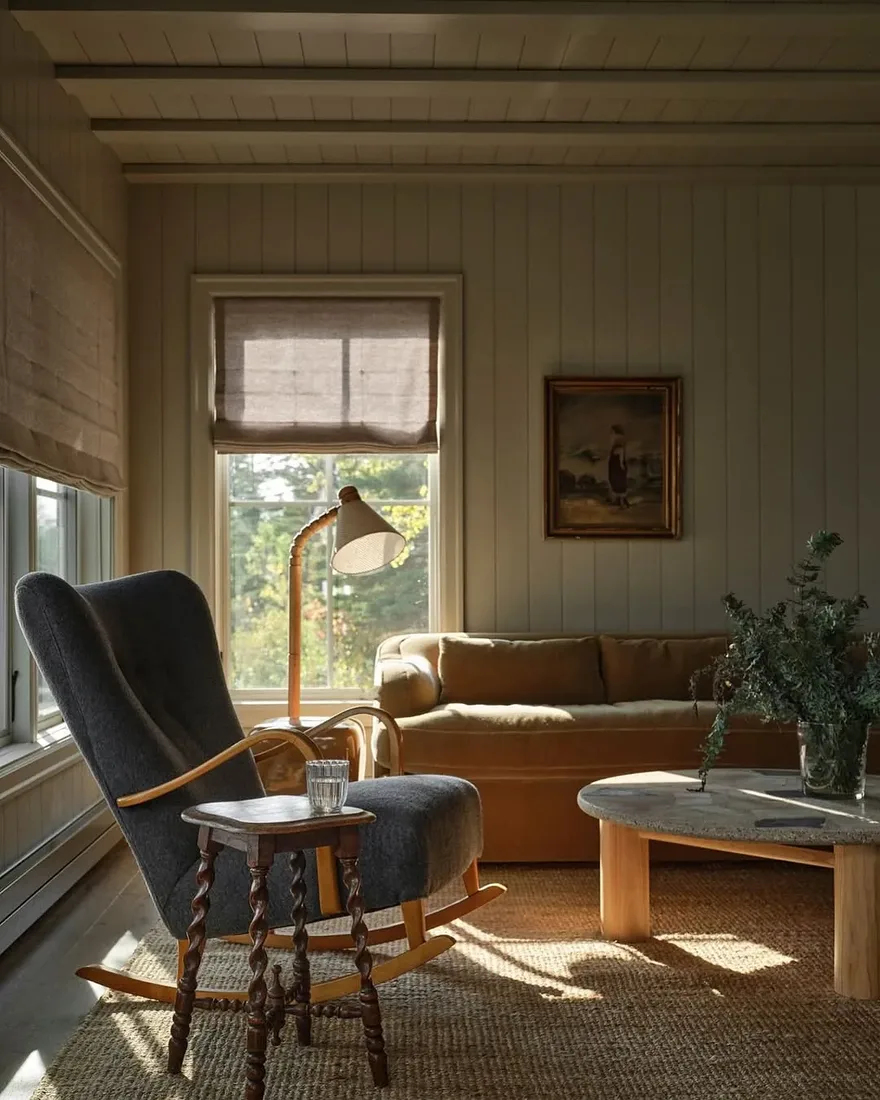
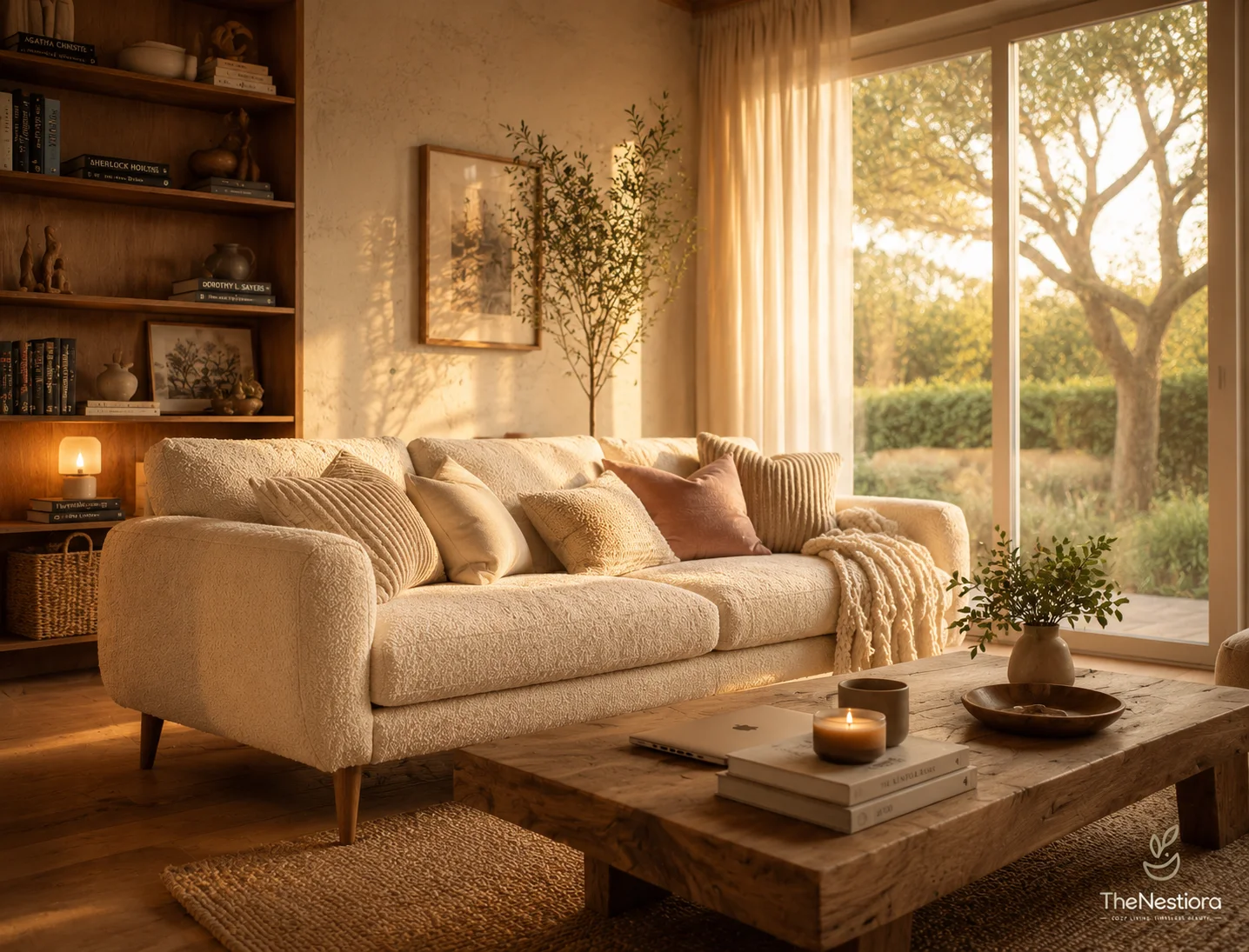
This is the restraint the whole argument depends on, stated as plainly as the room itself. Dark beams cross overhead with real mass, so the seating answers in pale washable linen with almost no detail. The contrast does the decorating: rough above against soft below, dark against light, age against new. Without that pale softness the beams would press down, and you would feel the ceiling more than the room.
Proportion keeps the minimalism from feeling bare. The sofa length runs near two thirds of the visible wall, which leaves breathing room at each end for a lamp table and a basket. Seat depth around 600mm suits leaning back with a book, while the low back near 700mm from the floor keeps sightlines open to the beams for you. Linen loose covers in oatmeal from Maker & Son or Sofa.com run £1,100 to £2,200 in 2026 for a two-seater.
The jute rug underneath adds the second texture the scheme permits. One flat plant fibre plus one washed linen is enough variation when timber supplies the third. A 160cm by 230cm jute rug for your floor is £90 to £220 in 2026 from Dunelm or Nkuku. Little Greene Slaked Lime 105 on your walls would hold the paleness without turning blue beside dark wood, though sampling it on two walls matters because north light greys everything.
| Surface in view | Treatment that stays calm | Budget in 2026 |
|---|---|---|
| Beams or stone, one only | Leave untouched and unlit from above | £0, plus restraint |
| Walls beside old timber | Warm plaster white, flat matt | £45 to £65 per 2.5 litres |
| Main sofa | Plain linen loose covers, oat or putty | £1,100 to £2,200 |
| Floor | Single jute or wool rug, no motif | £90 to £600 by size |
| Second texture only | One leather chair or oak stool | £400 to £1,100 |
Tall glass that borrows the landscape
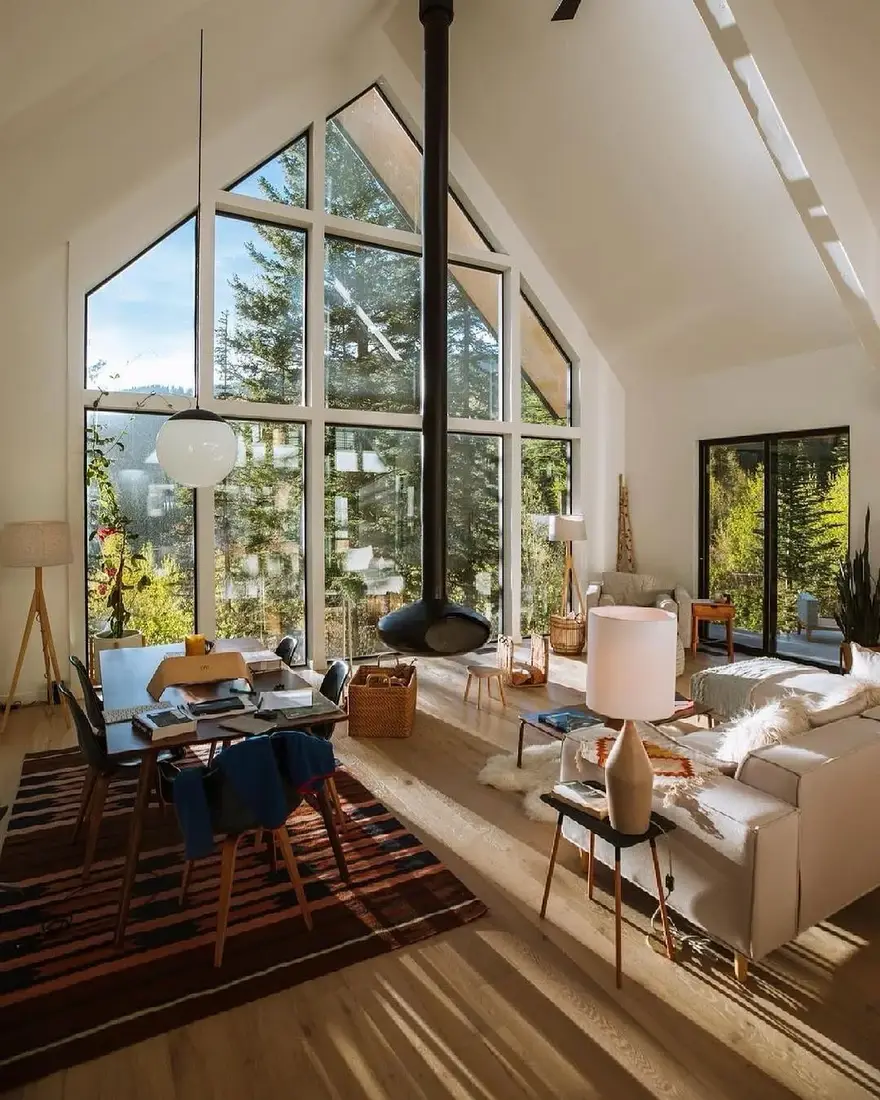
The A-frame changes the equation from texture to volume, since glass replaces one whole wall. Your eye travels up the slope to the ridge instead of resting on a hearth, so your room needs weight low down to stop the height feeling draughty. A deep plain sofa and a heavy wool rug anchor the floor while the glazing does the talking above. Height without ballast reads as a chapel; with ballast it reads as shelter.
From this angle the glazing bars supply the only pattern the room needs. Their regular grid steadies the view beyond, which shifts by season and weather, so the interior can stay almost still. Curtains here would fight the architecture, while a simple linen blind stacked fully clear preserves the line. If your nights run cold, a single layer of thermal interlining behind plain linen takes the edge off without bulk.
Seating faces the glass rather than the fire, which reverses the usual cabin layout. Keep chair backs below 800mm so nothing interrupts the view from your main seat. Nothing tall between you and the glass. Low oak stools near 400mm high double as side tables beside the fire basket. Farrow & Ball Wimborne White No.264 on the gable plaster would bounce daylight deep into the plan. Made-to-measure linen blinds for tall drops run £120 to £260 per window in 2026 from Hillarys.
Boarded ceiling that wants lamplight
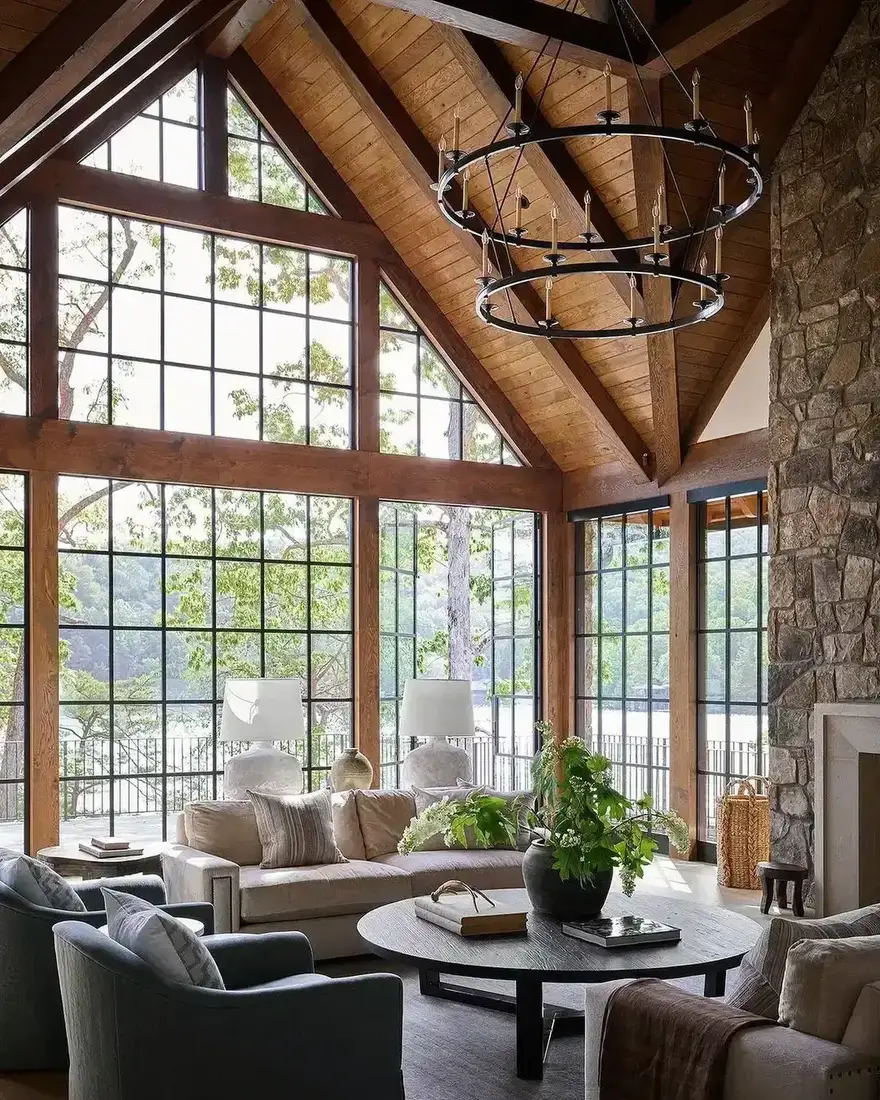
A boarded ceiling brings warmth and one strict lighting rule. Downlights punched across it flatten every board joint into glare, while lamps kept below eye level let the timber glow in bands. The room above obeys the rule: table lamps and a low floor lamp carry the evening, and the ceiling stays in soft shadow. Shadow overhead reads as height, which a lit ceiling never gives you.
The boards themselves want a finish that keeps their honey tone without shine. Oil wins here. A single coat of matt hardwax oil deepens the grain and stops dust settling into open pores, while varnish would bounce light back at you all evening. Osmo Polyx-Oil in raw matt covers around 24 square metres per litre at £55 to £80 in 2026. Recoating takes a weekend every five years or so, which suits a room you already love.
See how the stone fireplace stays secondary here. It burns well and holds logs, yet it defers to the ceiling as the old element by keeping its lines plain and its surround narrow. Two textures leading would argue; one leads and the other serves, which is why your eye rests. Stone-clad fireplace kits of that width are £800 to £1,800 fitted in 2026. Little Greene Bone China Blue 178 would cool the bedding textiles if your timber runs orange.
Stone arch that frames the view beyond
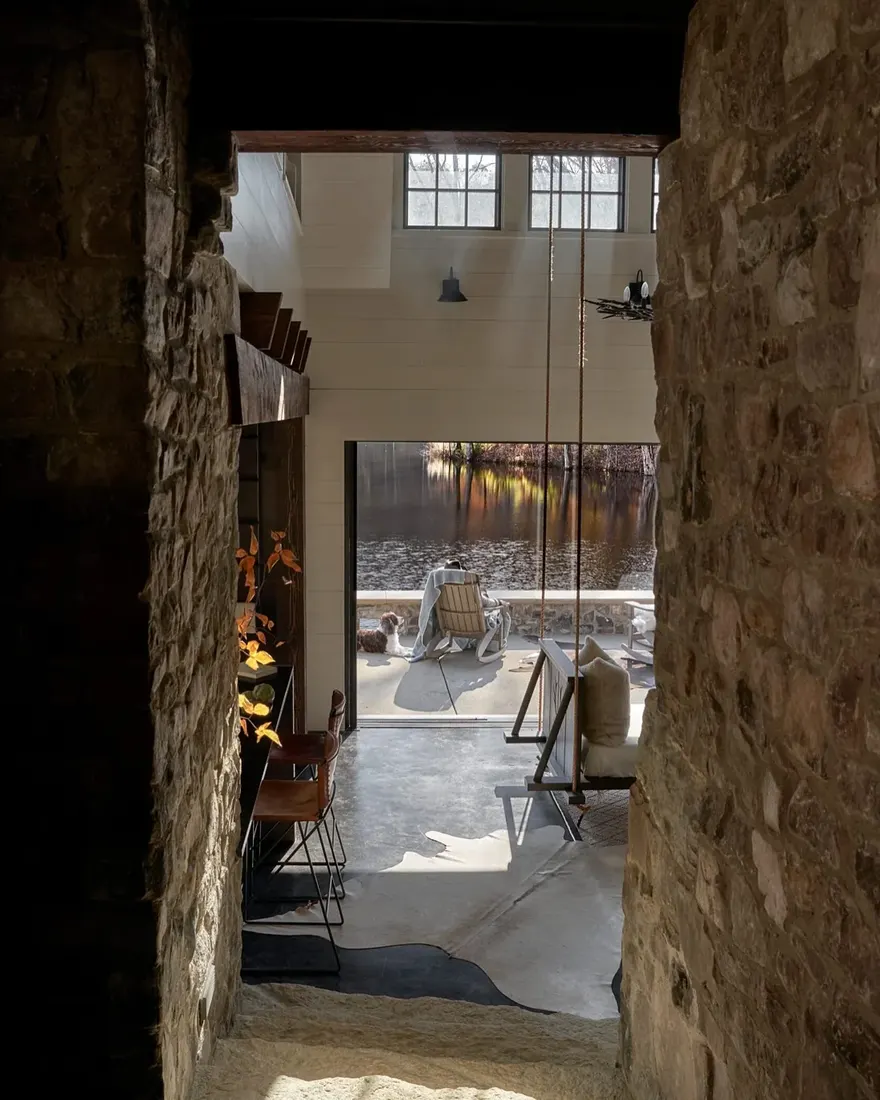
The arch is architecture doing the decorating, which is the cheapest ornament a cabin gets. Its curve slows your passage between rooms and frames the glimpse beyond, so the plan feels larger than its square metres. Thick stone reveals hold that curve honestly, while a thin decorative arch would read as applique. Mass is the point here, and the room lets it speak by keeping your furniture low on both sides.
One echo ties the arch to the seating end. A single stone-topped stool or a slate hearth repeats the material without repeating the shape, which is enough kinship. Full repetition in a second arch or a matching surround would turn character into formula. Your plain furnishings then carry the comfort: a deep sofa in putty linen with its back kept below the arch spring line near 1800mm.
Limewash suits stone reveals better than emulsion, since it moves with the masonry and keeps a soft edge. A 5 litre tub covers roughly 30 square metres at £40 to £70 in 2026 from traditional suppliers. Loose linen covers for your two-seater in putty run £400 to £800 in 2026. Farrow & Ball Shadow White No.282 on adjacent walls would keep the stone luminous after dark.
| Fitting | Mounting height from floor | Lamp to specify |
|---|---|---|
| Table lamp beside chair | Shade centre near 1200mm | Warm bulb near 2700K, 6W LED |
| Floor lamp behind sofa | Shade top below 1600mm | Warm bulb near 2700K, 8W LED |
| Picture light over mantel | Tube near 1700mm, angled down | Warm strip near 2700K |
| Wall light on timber | Plate near 1500mm, shaded | Warm bulb near 2700K, 4W LED |
Painted cabinet that supplies the one colour
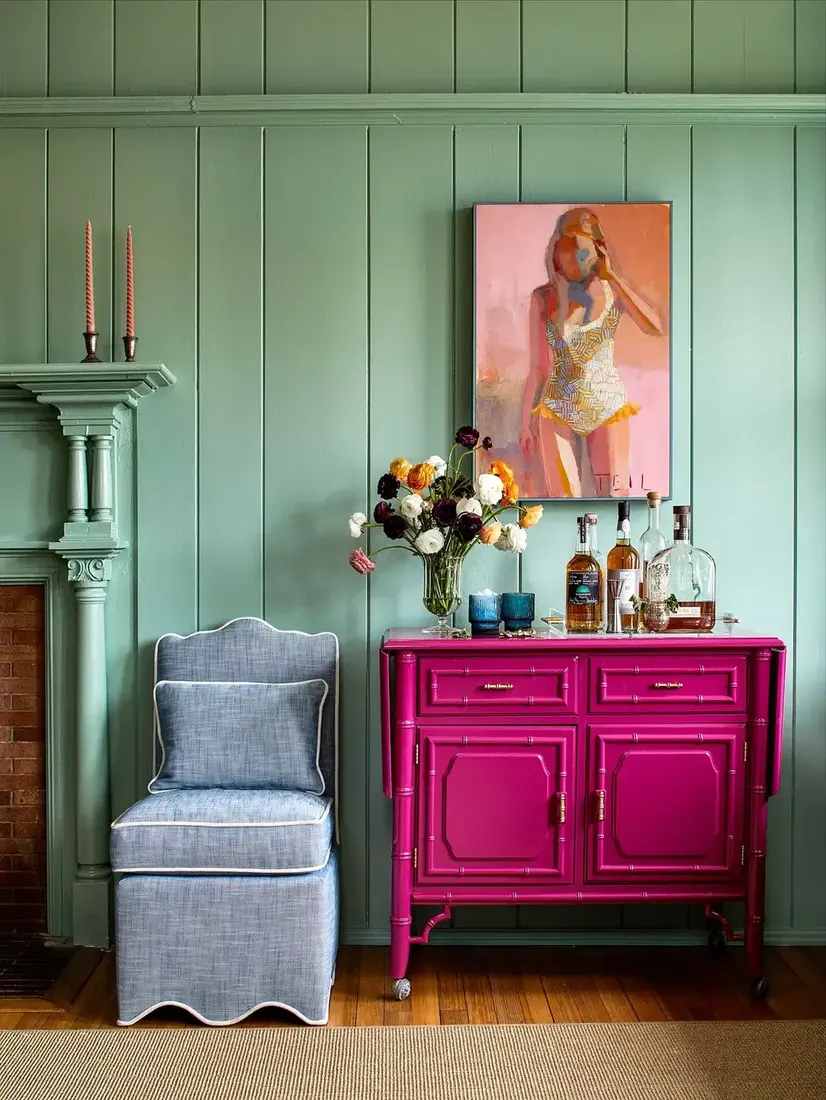
That cabinet earns its place by the single-note rule: one painted piece may sing while everything else hums. Its blush tone lifts the whole corner without asking your walls or sofa to join in, and the mint plaster behind stays muted enough to behave as a neutral. Two painted pieces would start a palette; one painted piece reads as a found object you love. Cottages absorb this better than cabins, so borrow the licence sparingly.
Scale keeps the colour from shouting. The cabinet stands narrow with open cane panels that lighten its mass, so the pink arrives in slats rather than slabs. Slats, not slabs. A solid block of the same colour at double the width would dominate your wall. Cane-front cabinets near 800mm wide are £250 to £600 in 2026 on Etsy or at Dunelm. Little Greene Blush No.267 gets you close to that faded rose.
The lesson for a cabin is proportion, not colour. If your room wants one warm note against timber, confine it to a single small piece and keep the large surfaces plain. Mint walls belong to cottage stock; beside heavy beams they would chill, so keep cabin walls in putty and let the small piece carry the warmth. Bamboo-look pieces sit best with one rattan neighbour and no more.
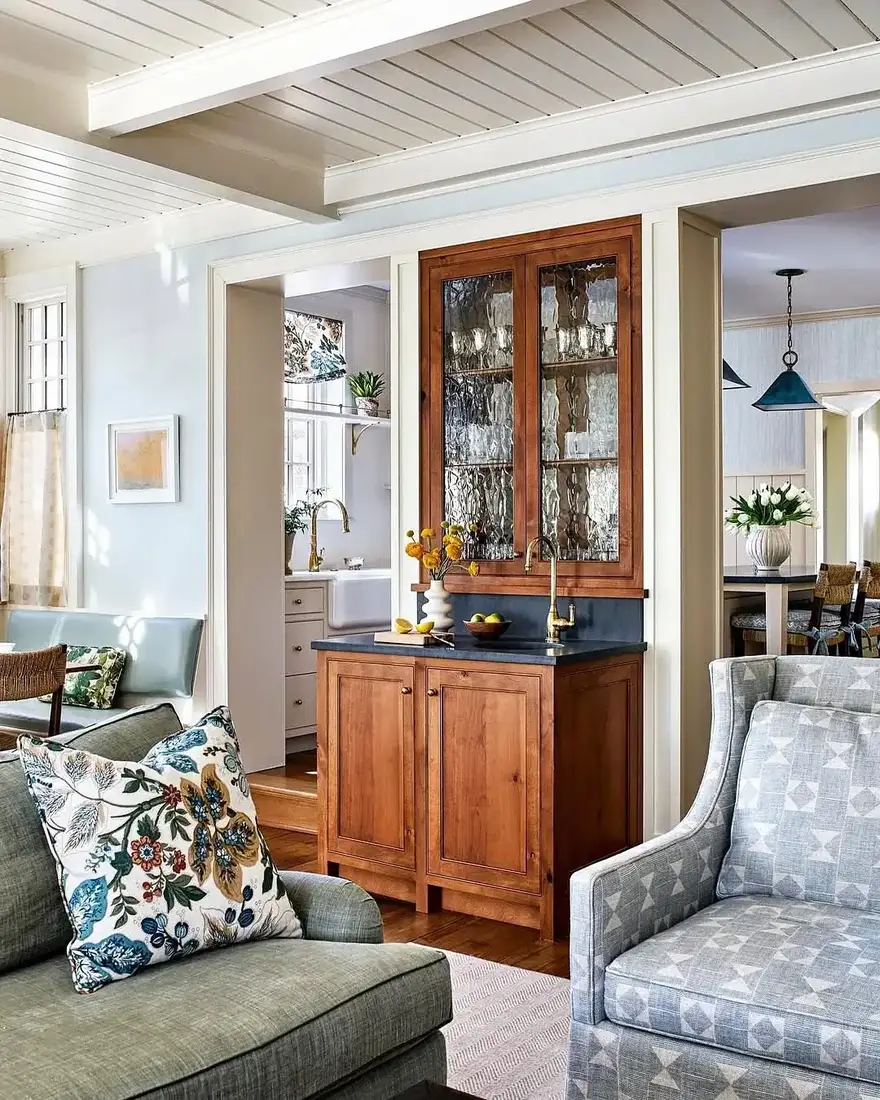
Glass cabinets that keep beams in charge
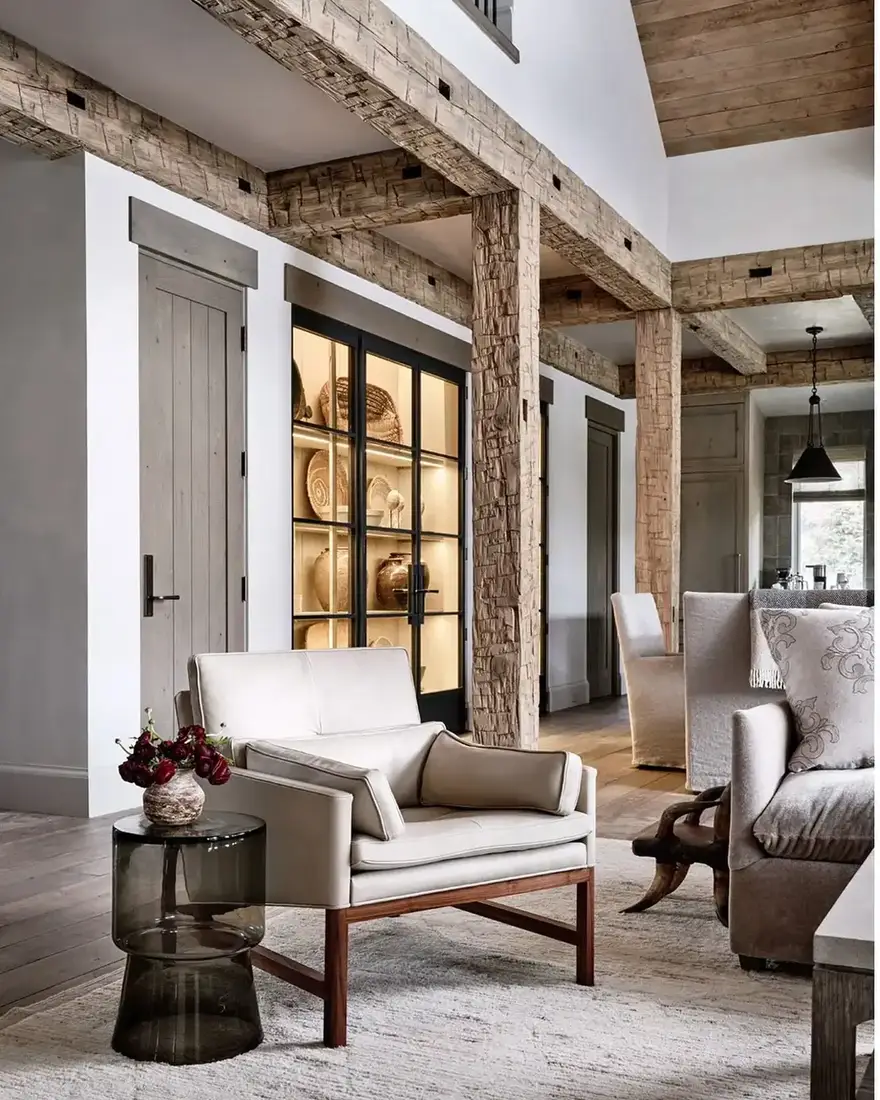
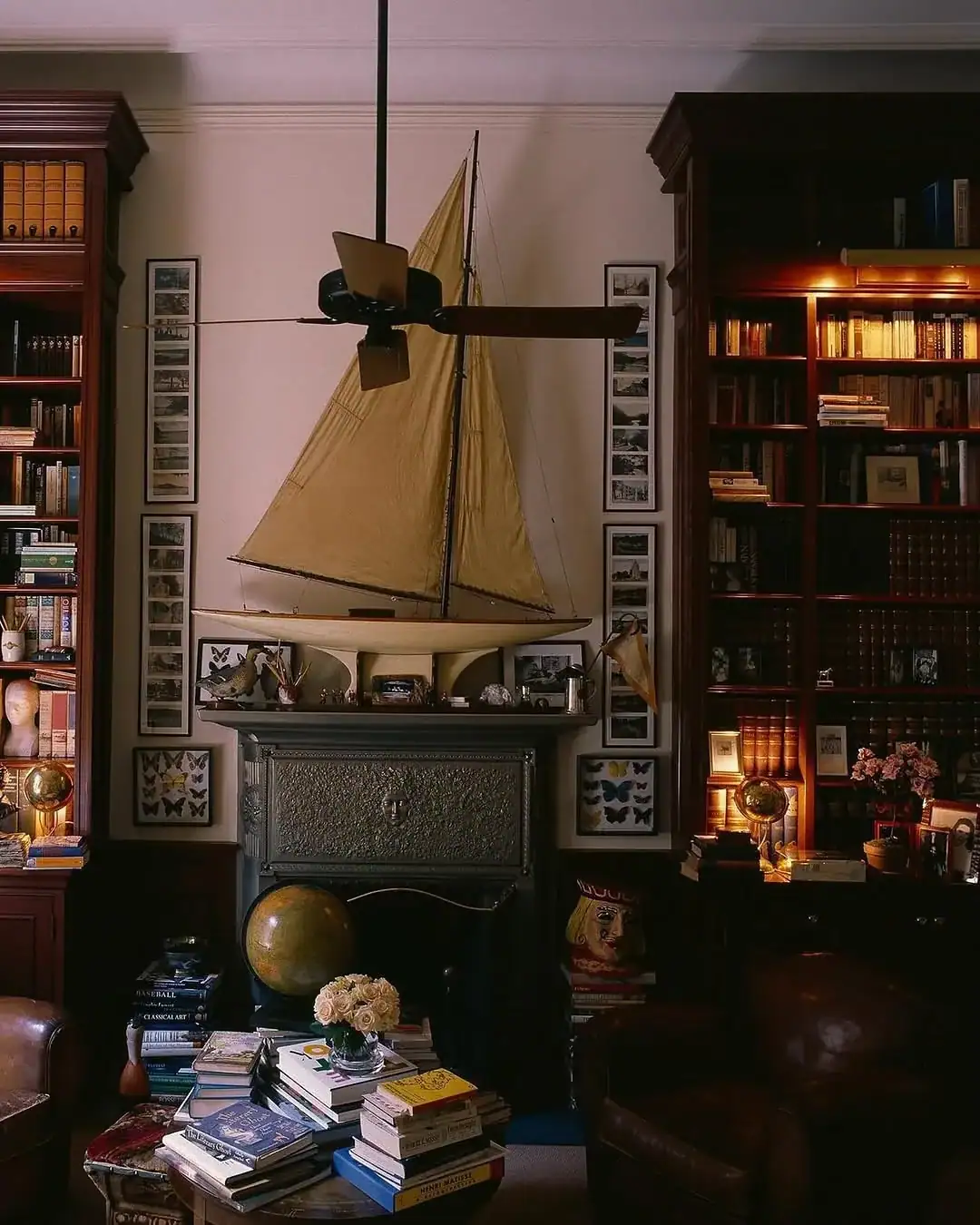
Glazed fronts solve the cabin storage problem without visual weight, which open shelves rarely manage. Behind glass, crockery beside folded linen reads as one calm band, while open boards gather a fussy edge of small objects. Glass calms it. The beams above stay the undisputed old element because the cabinets below reflect light instead of competing. Reflection stays quieter than display, which is why the beams keep the room.
Look at the mantel line running between the cabinets, since it stitches the whole wall into one composition. A single oak length at picture-ledge depth holds two or three objects with space around each, and the glass doors flank it symmetrically. Symmetry here is servant, not master: it organises without insisting. Keep your cabinet interiors to two tones, cream china with folded oat linen, and the calm holds.
Inside lighting makes the difference after dark. A warm strip near 2700K along the cabinet top turns the glass into a lantern at 8W per metre. Glazed dressers of that width run £900 to £2,000 in 2026 from Neptune or Cotswold Company. Farrow & Ball Joa’s White No.226 inside the cabinets would lift china without glare. Your timber mantel then needs nothing more than oil, refreshed once a year.
Blue door that spends the colour budget once
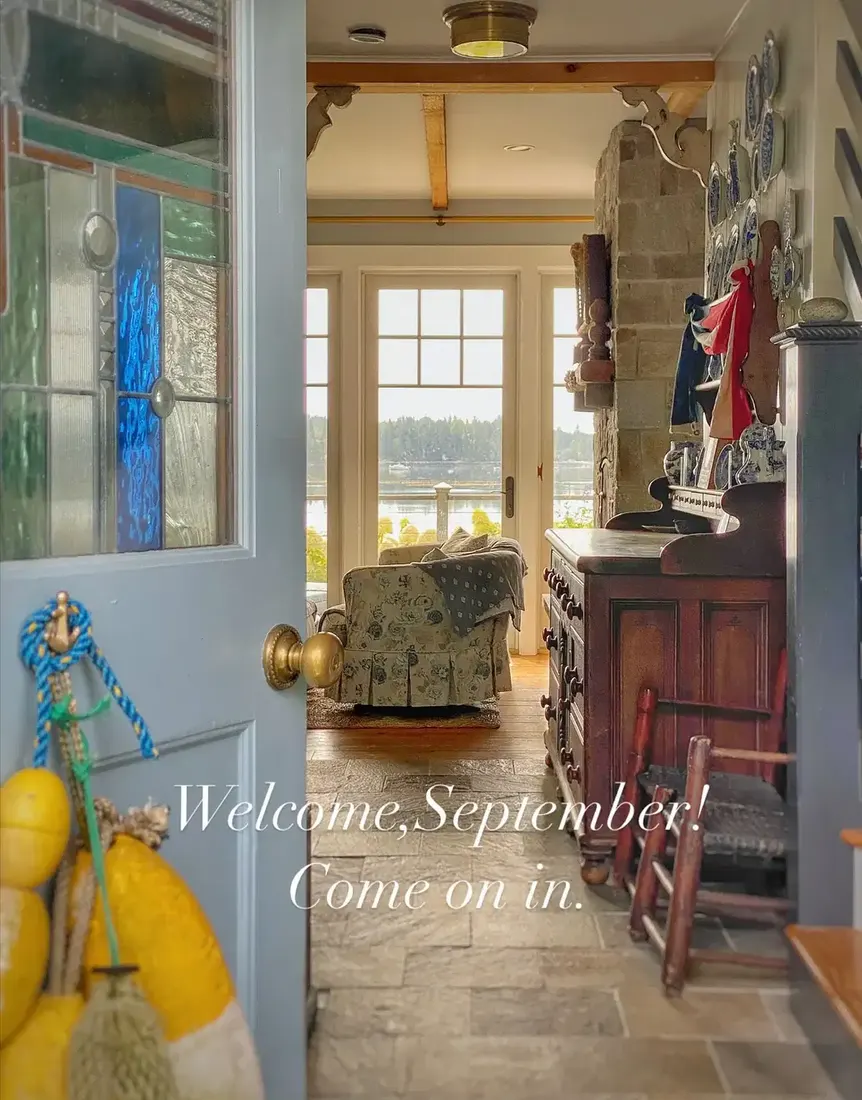
The blue door spends the room’s entire colour budget in one place, which is exactly how an accent should behave. Your eye lands on the saturated panel between calm plaster and old timber, registers it, and moves on rested. A second blue piece nearby would split the vote and halve the effect. Entryways suit this single spend because you pass through rather than sit with it.
The shade matters more than the idea. A deep inky blue with green inside it sits with aged oak, while a bright primary blue would shout against your beams. Little Greene Dock Blue 252 or Farrow & Ball Hague Blue No.30 gets you close to that depth. A litre of exterior-grade eggshell runs £28 to £45 in 2026, and a stable door of that style is £700 to £1,500 made to measure, which sounds steep until the draughts stop and the latch clicks properly for the first time.
Threshold textiles stay plain to protect the moment. A single coir runner plus one flat indoor mat handles your boots without adding motif, since pattern at the door meets pattern nowhere else. Your bench cushion in plain ticking repeats the utility register. Keep wall hooks to a short run of five or fewer, because a full kit wall would turn arrival into storage.
Frequently Asked Questions
How many rough textures can one room carry?
One old surface should lead, with a second quiet texture in support. When rough stone meets old beams above distressed boards, the eye stops resting and starts inventory, which is the moment a cabin turns into a set.
Is reclaimed timber always better than new?
Old wood carries uneven marks that new distressing copies too evenly. If your budget runs to one salvage piece, spend it on the mantel or beam your visitors touch, and use plain new oak elsewhere.
Which sofa fabric suits beams and stone?
Washed linen or a calm boucle in putty or oat, with no motif. The plain weave gives your rough masonry something soft to lean against, and loose covers survive fireside life.
How should a cabin be lit in the evening?
Lamps with shaded bulbs near 2700K, kept below eye level around your chairs and hearth. Overhead spots bleach out the marks that make old timber beautiful, so leave ceilings in gentle shadow.
Can painted furniture join a timber room?
A single small painted piece works as the one colour note, ideally blush or ink blue. Keep large surfaces in plaster and linen, since two painted pieces start a scheme the beams did not ask for.
Where does money go first in a cabin?
The hearth beam and the main rug, because they cover the most visible ground. Lamps and throws can follow from high street shops, with salvage finds beside them, while your structure holds the room.
In order
- Stand in your doorway and count rough surfaces, keeping one as the lead.
- Give the lead the largest uninterrupted run in your room, whether hearth or beams.
- Set a plain linen sofa against it with one jute rug under the front legs.
- Hold the palette to putty and oat with timber alongside, allowing a single muted note at most.
- Mount lamps below eye level with warm bulbs near 2700K throughout.
- Echo the old material once in your stool or mantel, never across the room.
- Remove the third rough texture before it turns character into theme.
This article may contain affiliate links. We may earn a commission at no extra cost to you.