8 White Kitchen Ideas: Saved Ones Are Cream, Bone or Greige

Add us as a preferred source to see more stories on Google.
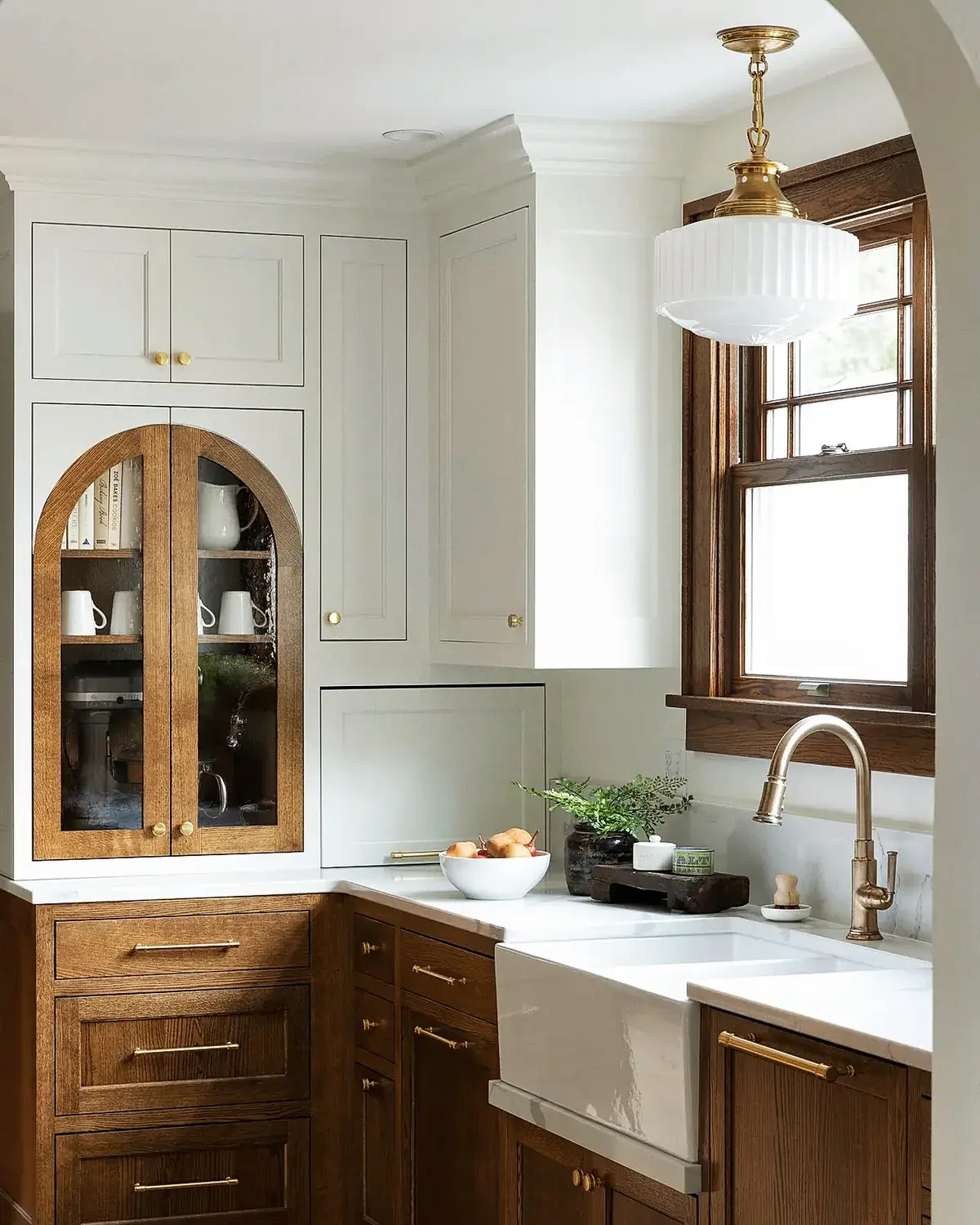
Almost none of the white kitchens you have saved are white.
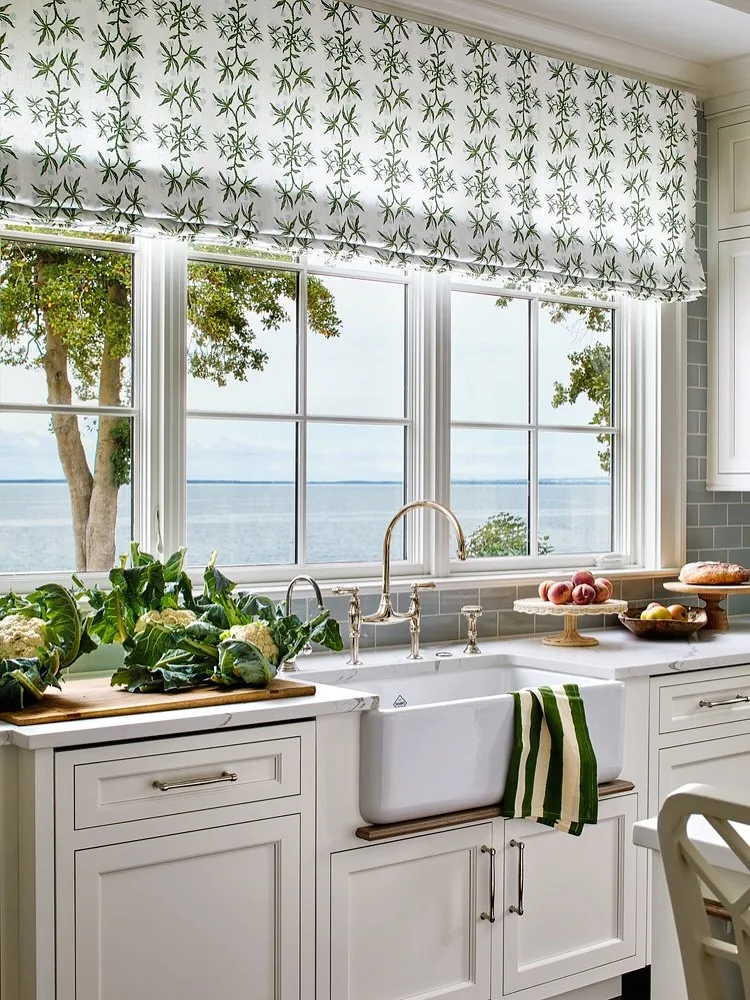
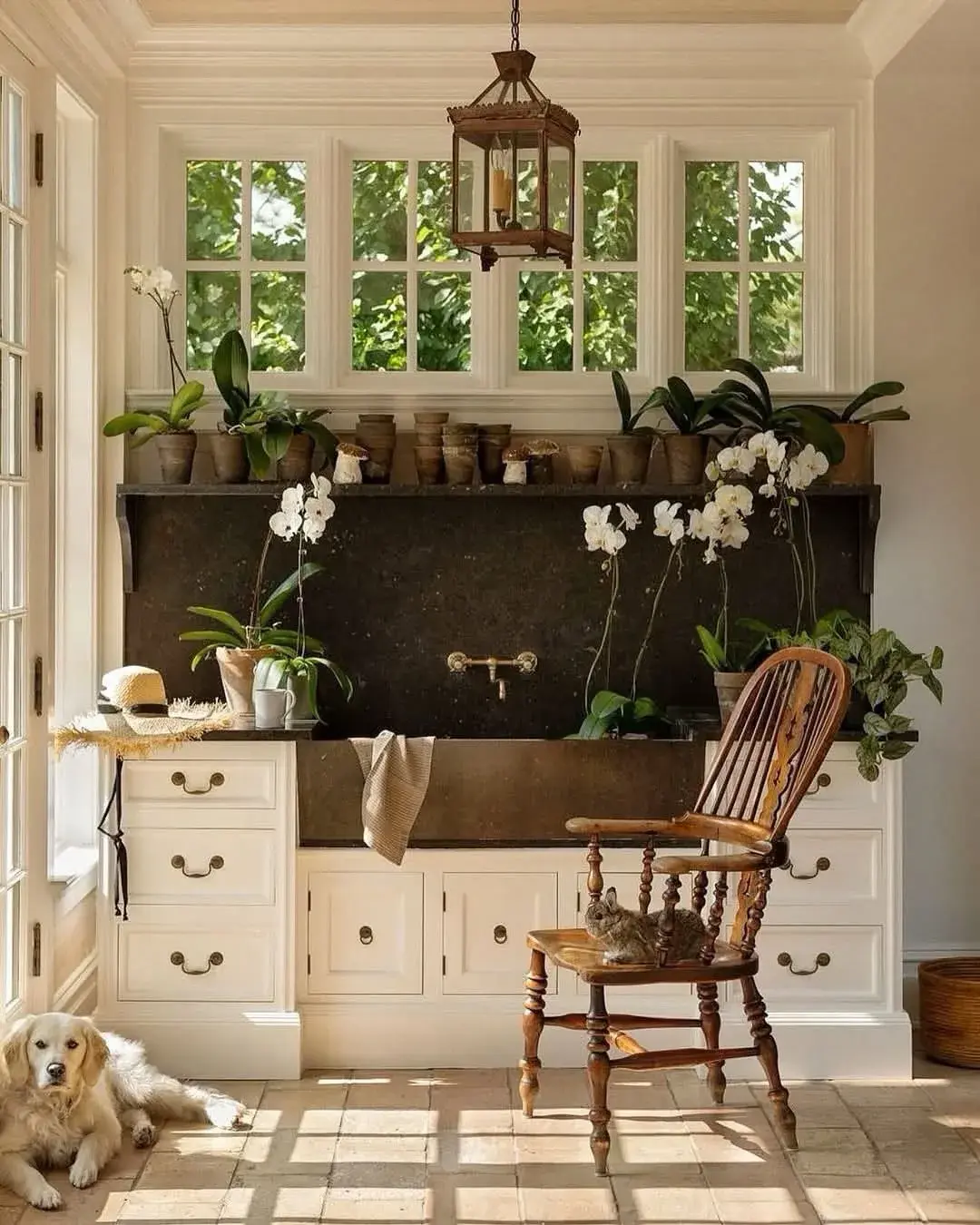
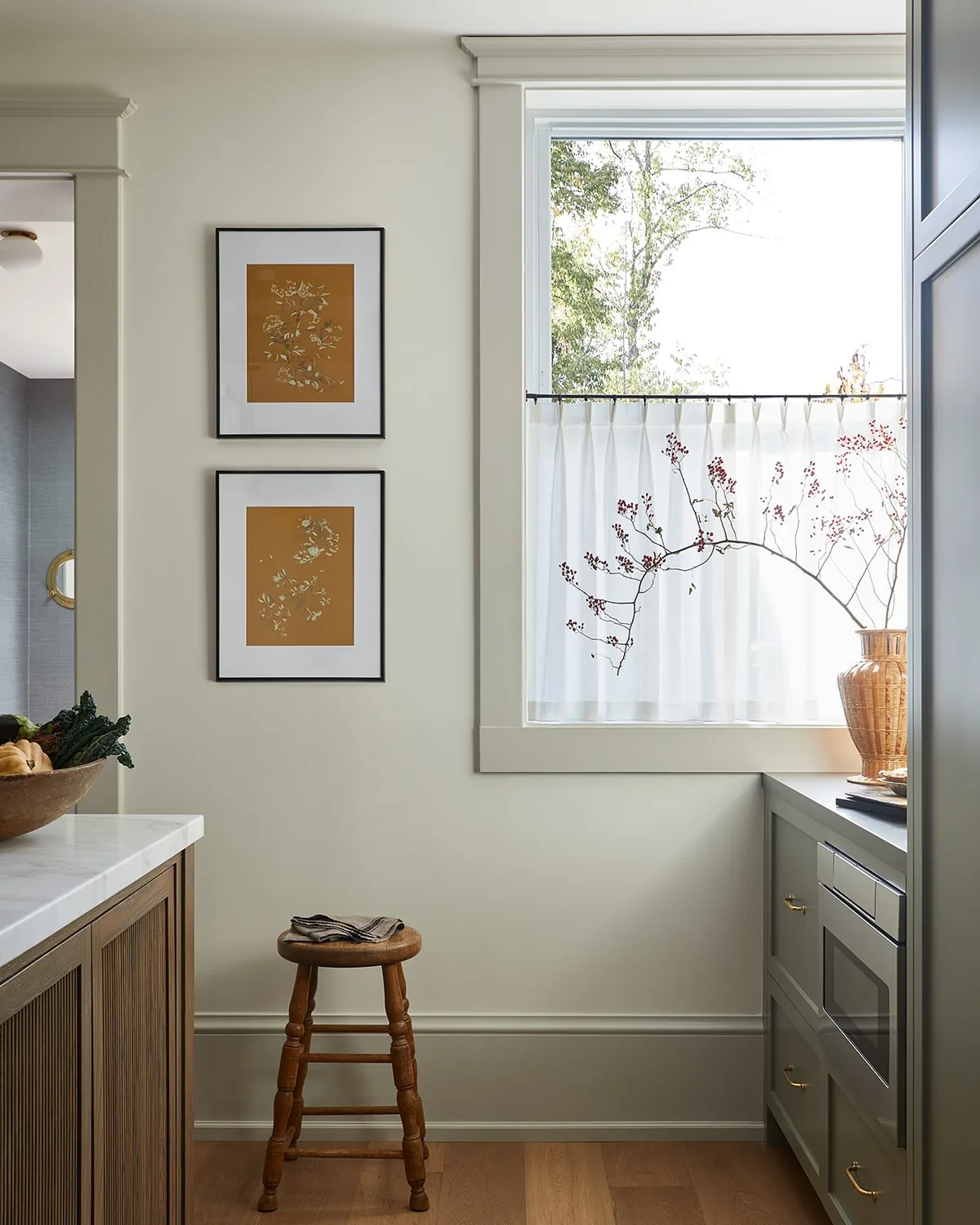
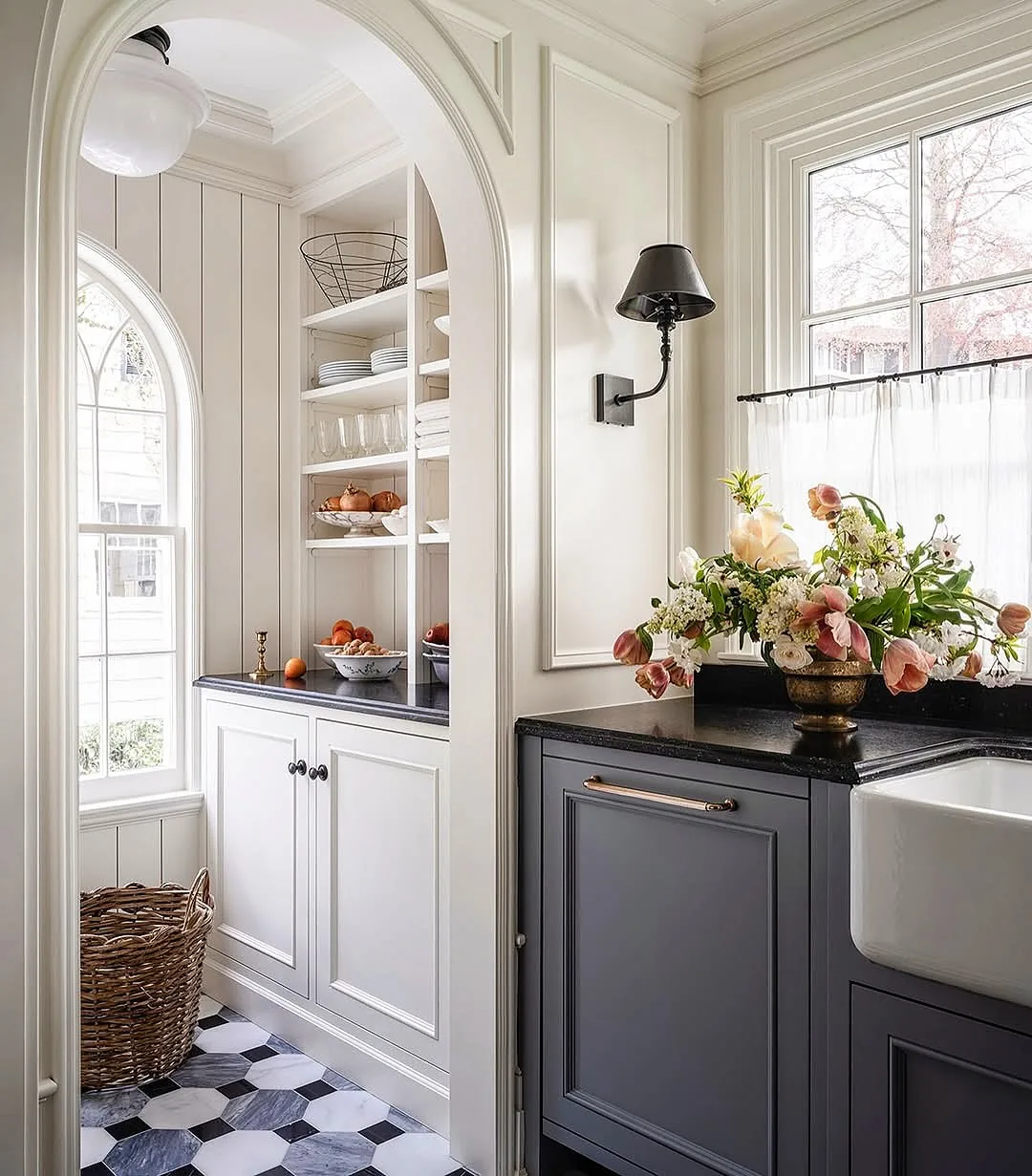
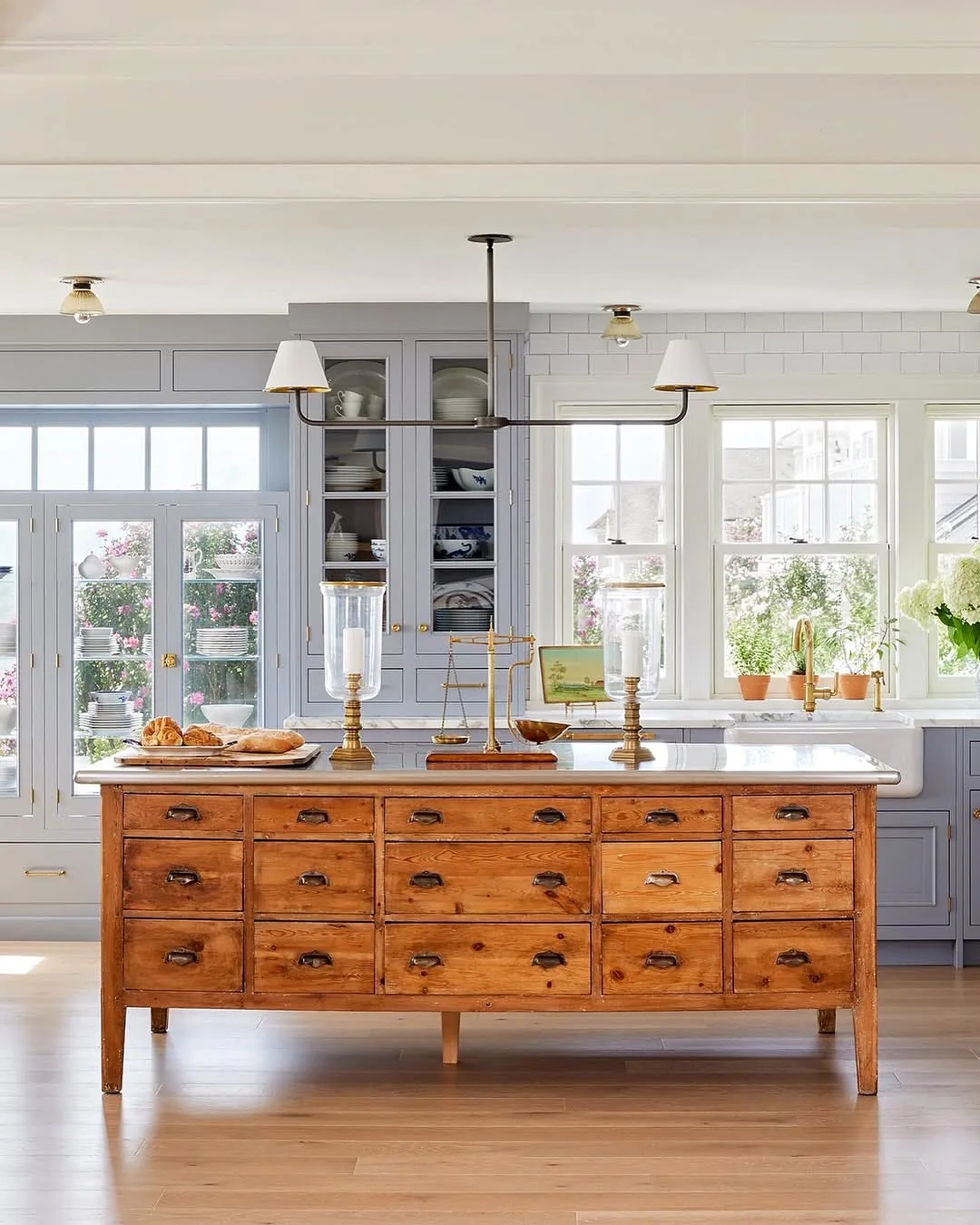
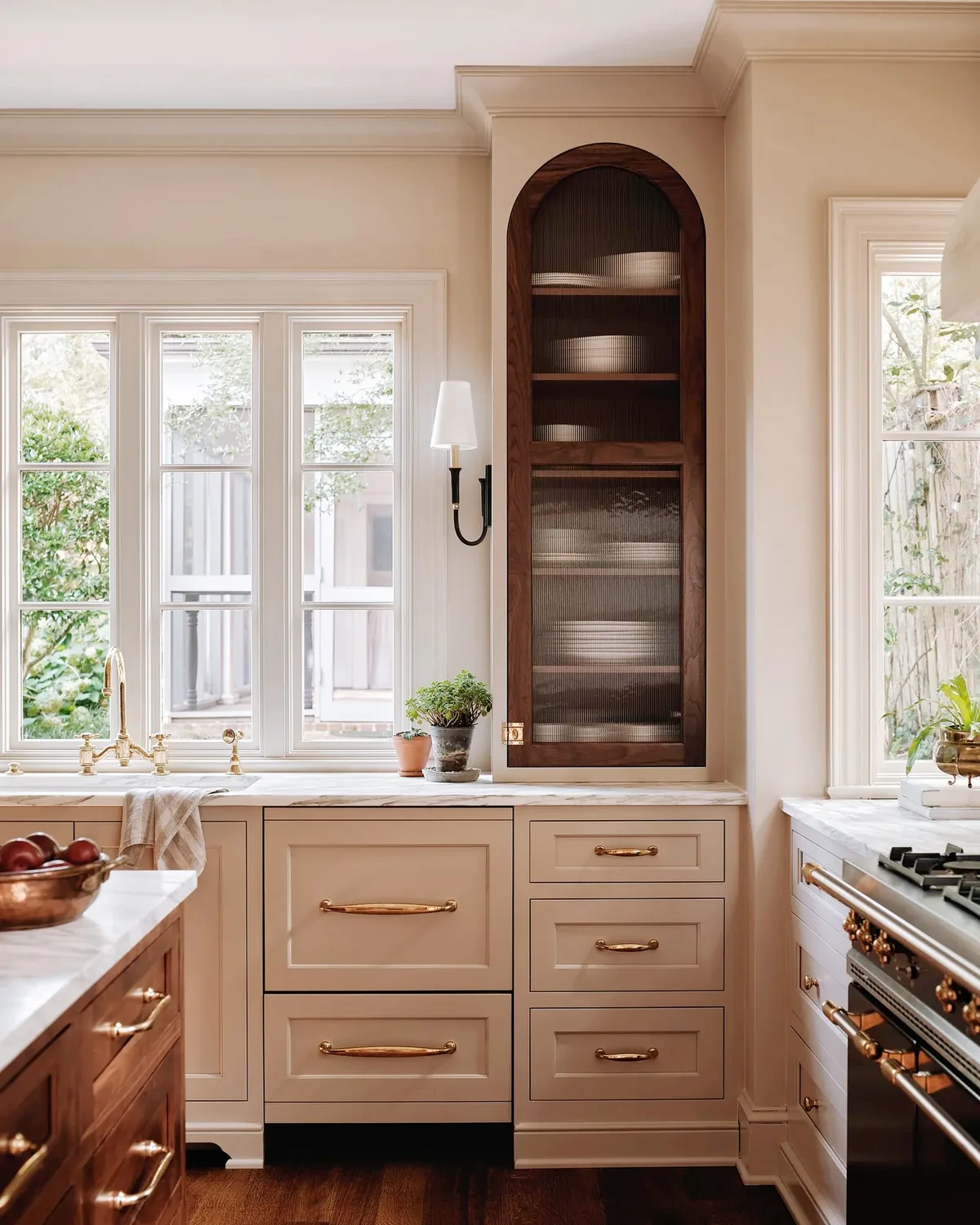
Look at the cabinets below, then at the marble worktop directly underneath them. The worktop is white. Against it the cabinets read as bone, with a faint grey-green sitting in them, and the distance between those two is roughly the distance between the kitchen people photograph and the kitchen people end up with.
The paint chip will not warn you about this. Cream, bone and greige all look crisp on bare plaster and under showroom lighting; they only separate out when something genuinely white is standing next to them, which in a finished kitchen means the worktop, the sink, or the ceiling.
The colour is warmer than you think
That comparison between cabinet and worktop is why paint should be tested against something solid. Bare plaster flatters every off-white. Hold your sample beside white marble or a white butler sink and the cream in it appears immediately.
Colours that live in this family:
| Budget | Colour | Reads as |
|---|---|---|
| Premium | Farrow & Ball Pointing | Warm bone, very slight yellow |
| Premium | Farrow & Ball Old White | Grey-green cast, closest to the cabinets above |
| Mid | Benjamin Moore White Dove OC-17 | Soft and creamy, forgiving in most light |
| Mid | Little Greene Slaked Lime | Chalky, quiet warmth |
| Trade | Dulux Natural Calico | Cream without going custard |
Buy two sample pots, because one misleads. A single sample tells you very little, because your eye adjusts to whatever it is given; two side by side tell you which way a colour leans within about ten seconds.
The second material is doing the work
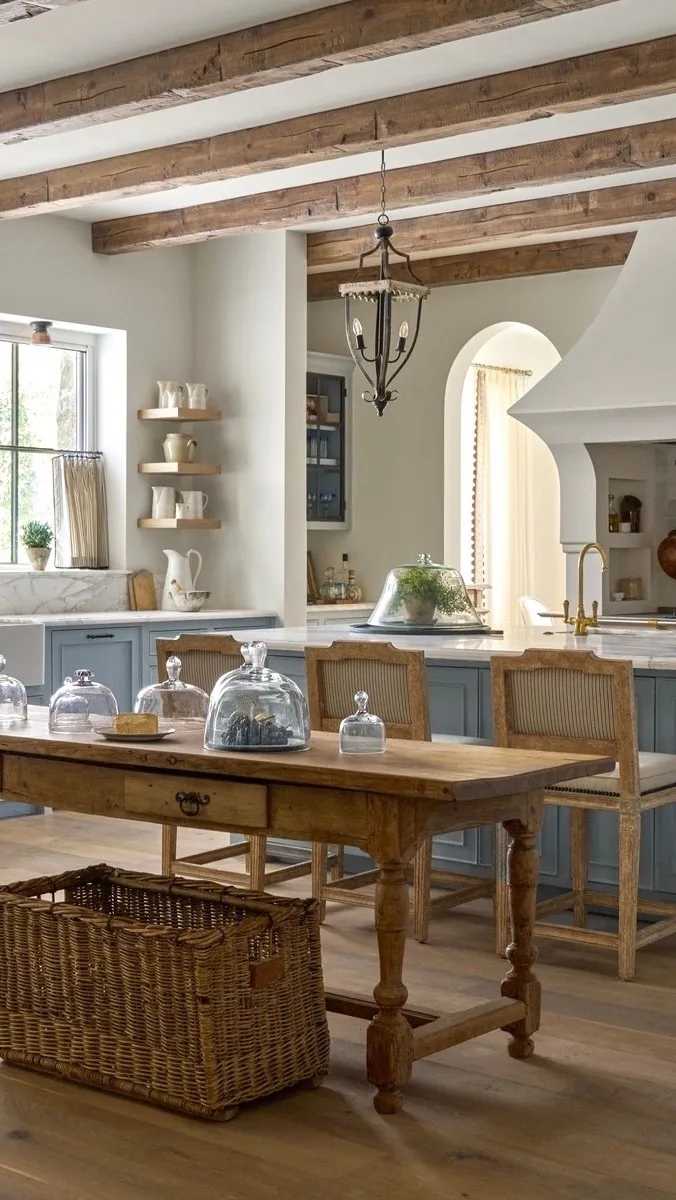
The arched glazed cabinet in that first kitchen is the detail everyone saves, but the arch is not what makes the room warm. The oak appears three times: in the arch, in the lower cabinets, and in the window frame, which has been stained dark and left as timber.
That repetition is the mechanism. One piece of timber in a pale kitchen reads as an accident; three readings of the same tone read as a decision, and the eye stops treating it as an interruption and starts treating it as the room’s second colour.
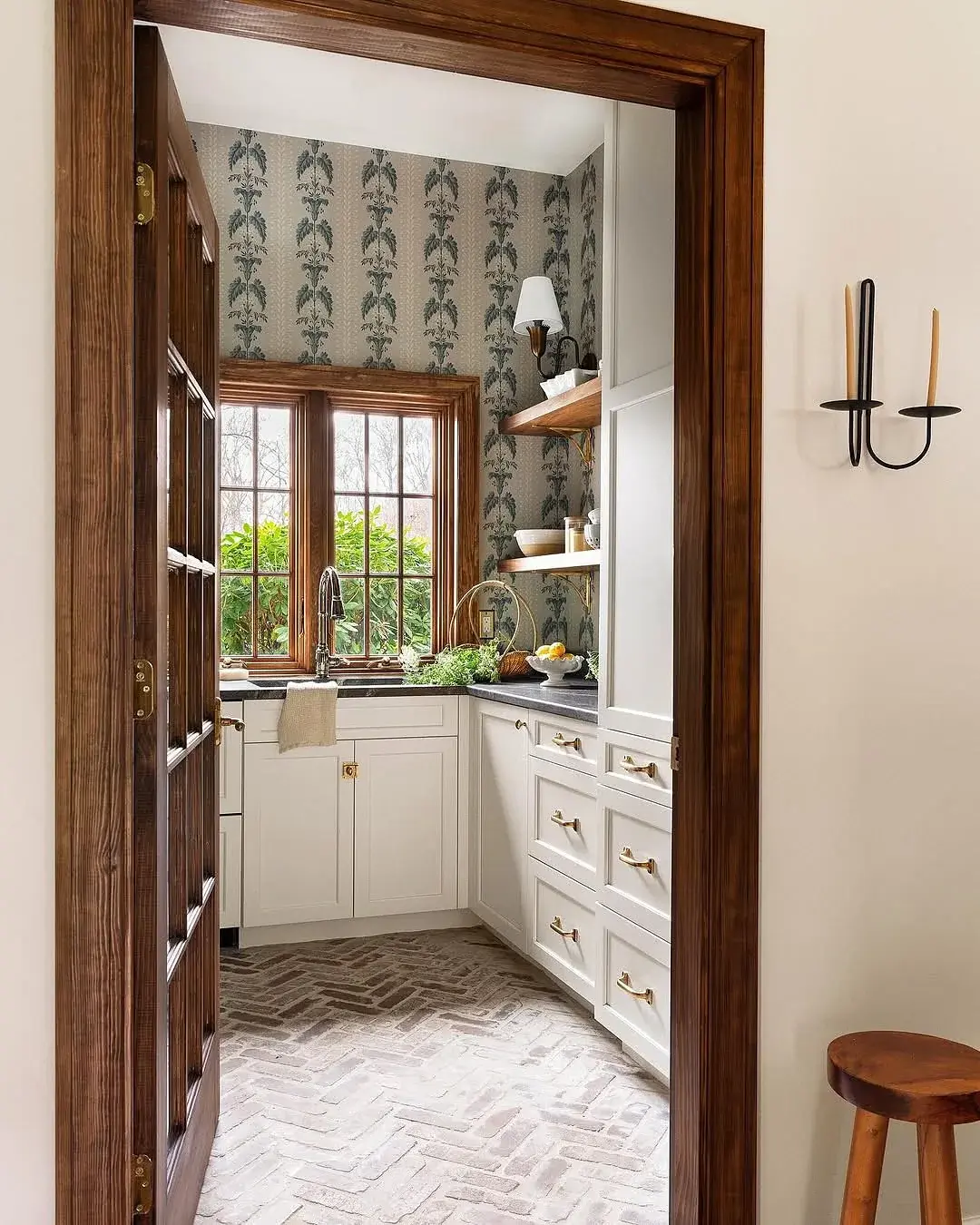
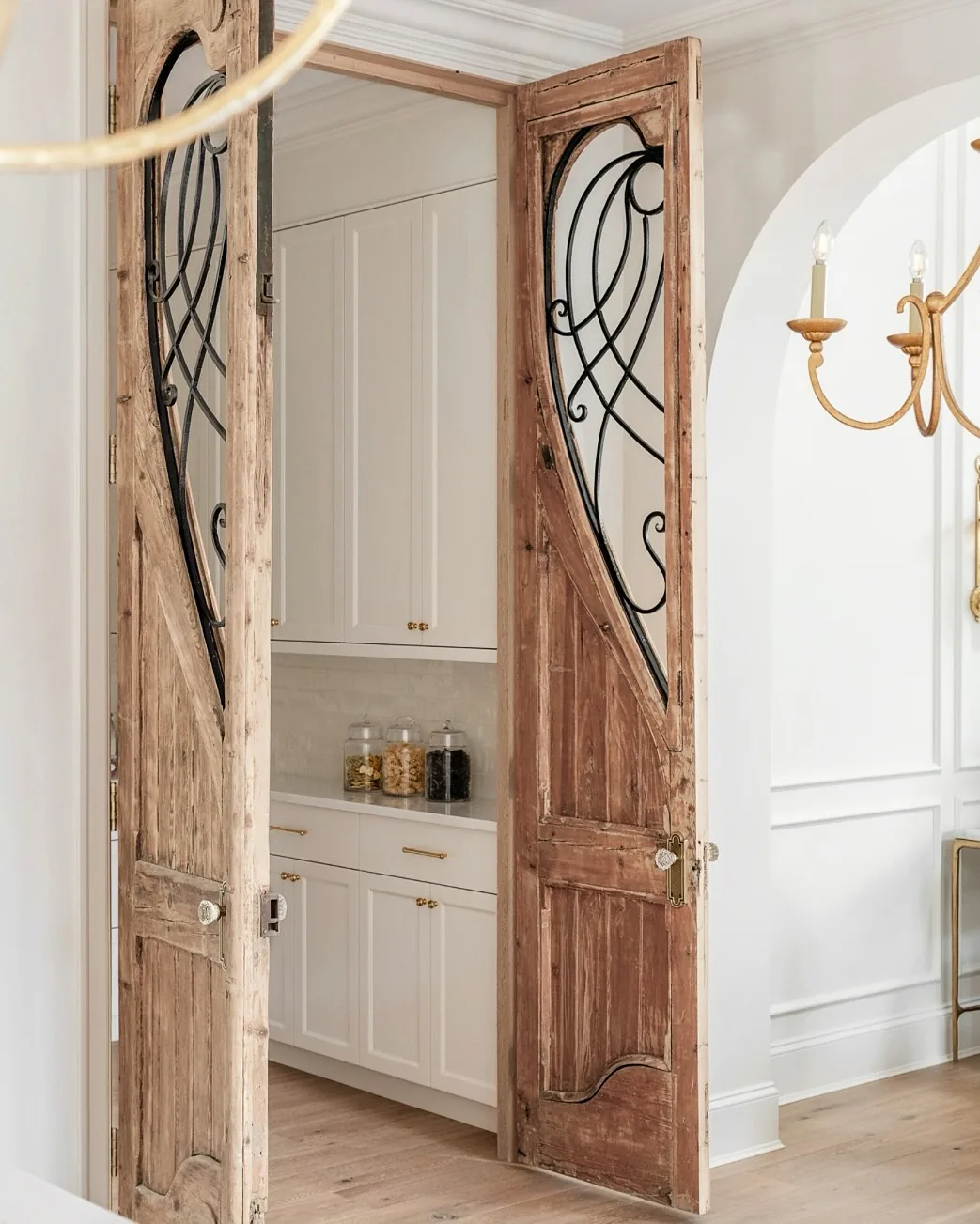
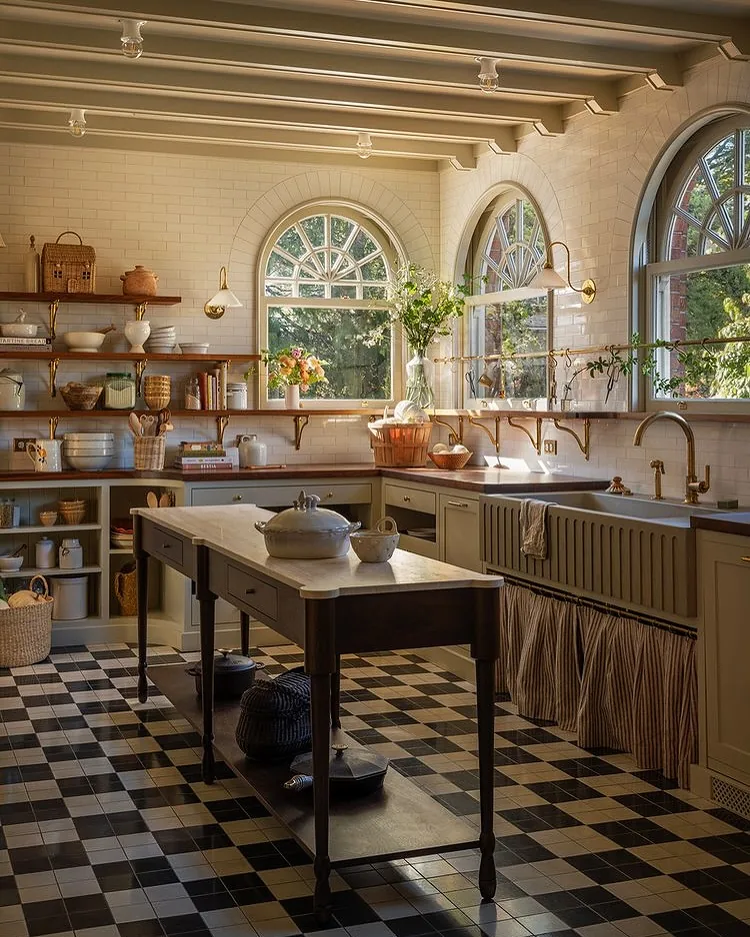
The scullery above runs the same structure with a different material. Cream cabinets, and everything grounding them is dark: soapstone worktops, a stained door frame, oak shelves, and a reclaimed brick floor laid in herringbone. Swap that brick for pale tile and the room loses most of its character, though nothing else has changed.
If you cannot change the floor, stain the window frames and door architraves instead. That is the cheapest version of this move: a tin of wood stain and a weekend, and you can always paint over it later if the room goes another way.
Hardware is the cheapest honest change
Both kitchens above use unlacquered brass, and the finish is the entire point.
Unlacquered brass is raw metal with no protective coating. It arrives bright and dulls over months into the soft, slightly uneven tone in those photographs, and that patina is what people are responding to when they save these rooms. Lacquered brass holds its showroom shine for a year or two, then wears through in patches around the handles that get used most, which reads as damage, not age.
| Budget | What to look for | Roughly |
|---|---|---|
| Premium | Armac Martin, deVOL unlacquered brass | £25 to £45 per handle |
| Mid | Corston, Plank Hardware | £10 to £20 |
| Budget | Unlacquered brass cup pulls from general marketplaces | £3 to £6 |
The cheap version is genuinely fine here, which is rare in a kitchen. Handles are solid metal in a simple shape and there is very little for a manufacturer to get wrong. Check one thing before you order: that the listing says unlacquered or raw brass rather than “brass finish”. That usually means brass-coloured plating over zinc, and it will never patina.
Shape matters as much as finish. Those kitchens pair cup pulls on drawers with small round knobs on doors, which is a traditional combination. Long bar pulls in identical brass would give you a much more contemporary room.
When black replaces the timber
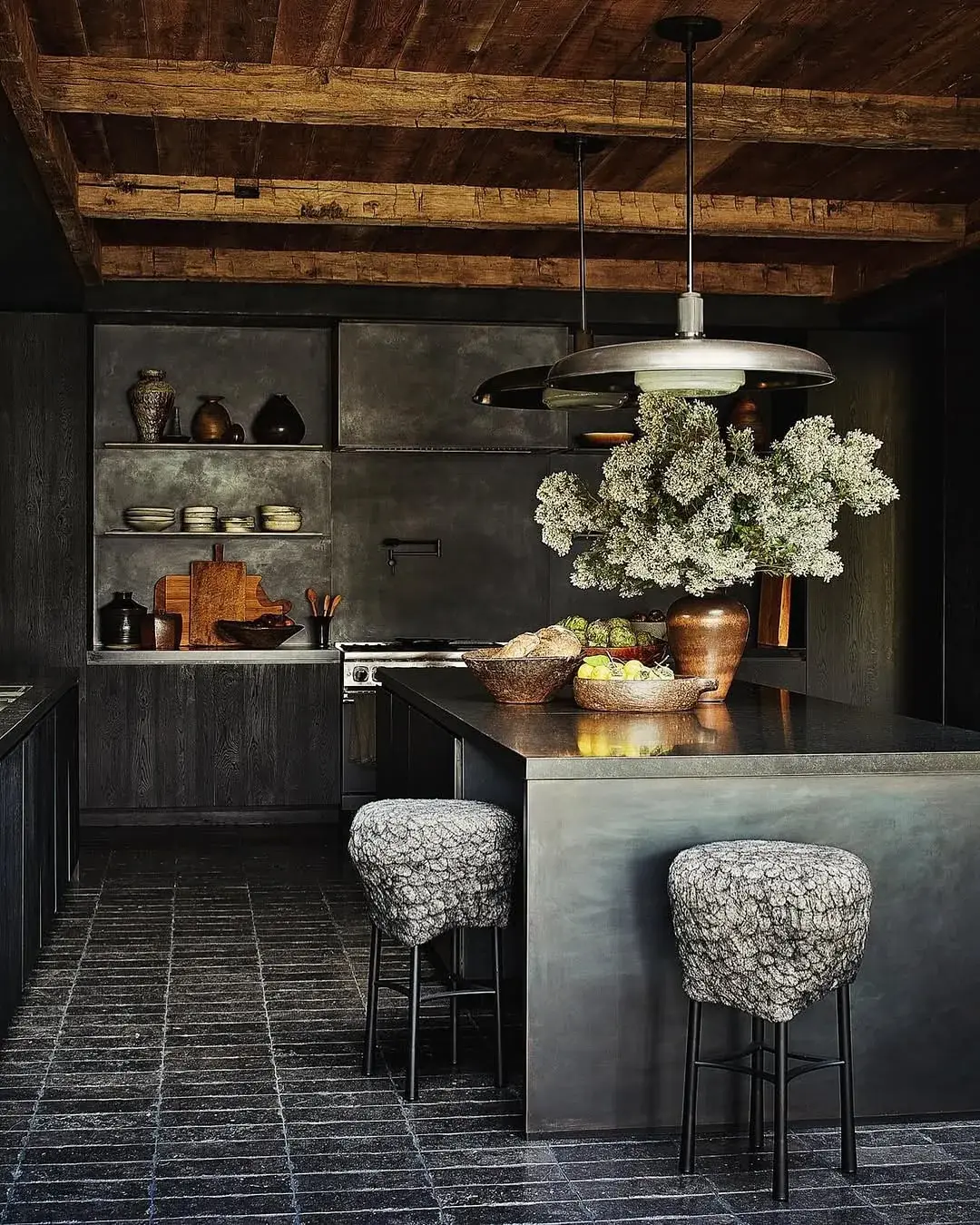
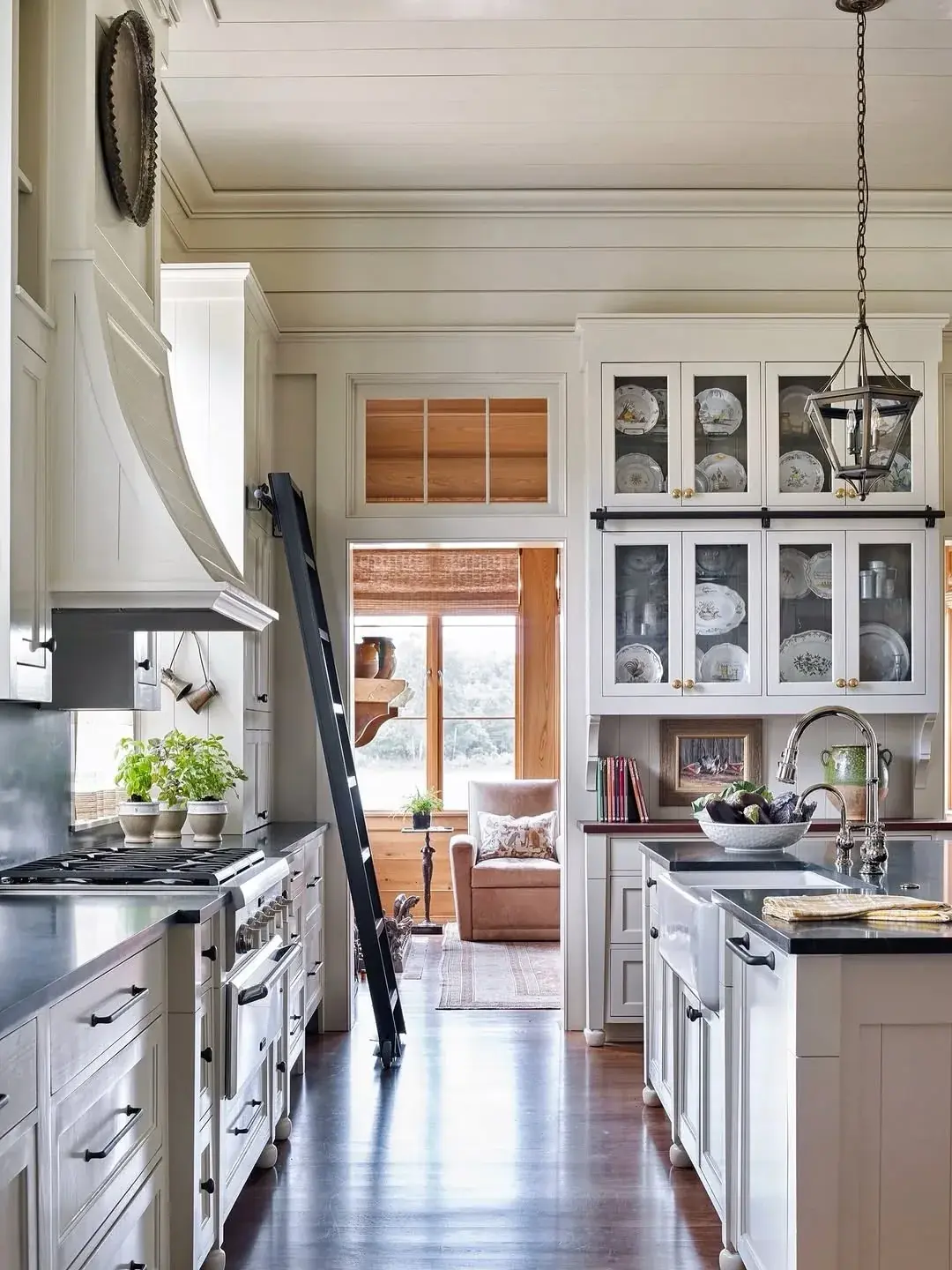
This kitchen keeps the structure and moves the warmth. Cream cabinets on bun feet, honed black worktops, and matt black iron hardware instead of brass.
It works for the same reason, since the pale colour never carries the room alone. What changes is temperature. Brass gives a softly golden room; black gives a crisper one, and it wants warmth supplied elsewhere, which is why the floors here are dark stained timber and the ceiling is a warm off-white that calms the contrast.
Black is also the more forgiving choice in a kitchen that gets used, because it does not show fingerprints the way polished metal does. In a household that cooks properly every day, that is not a small consideration.
Daylight forgives what bulbs punish
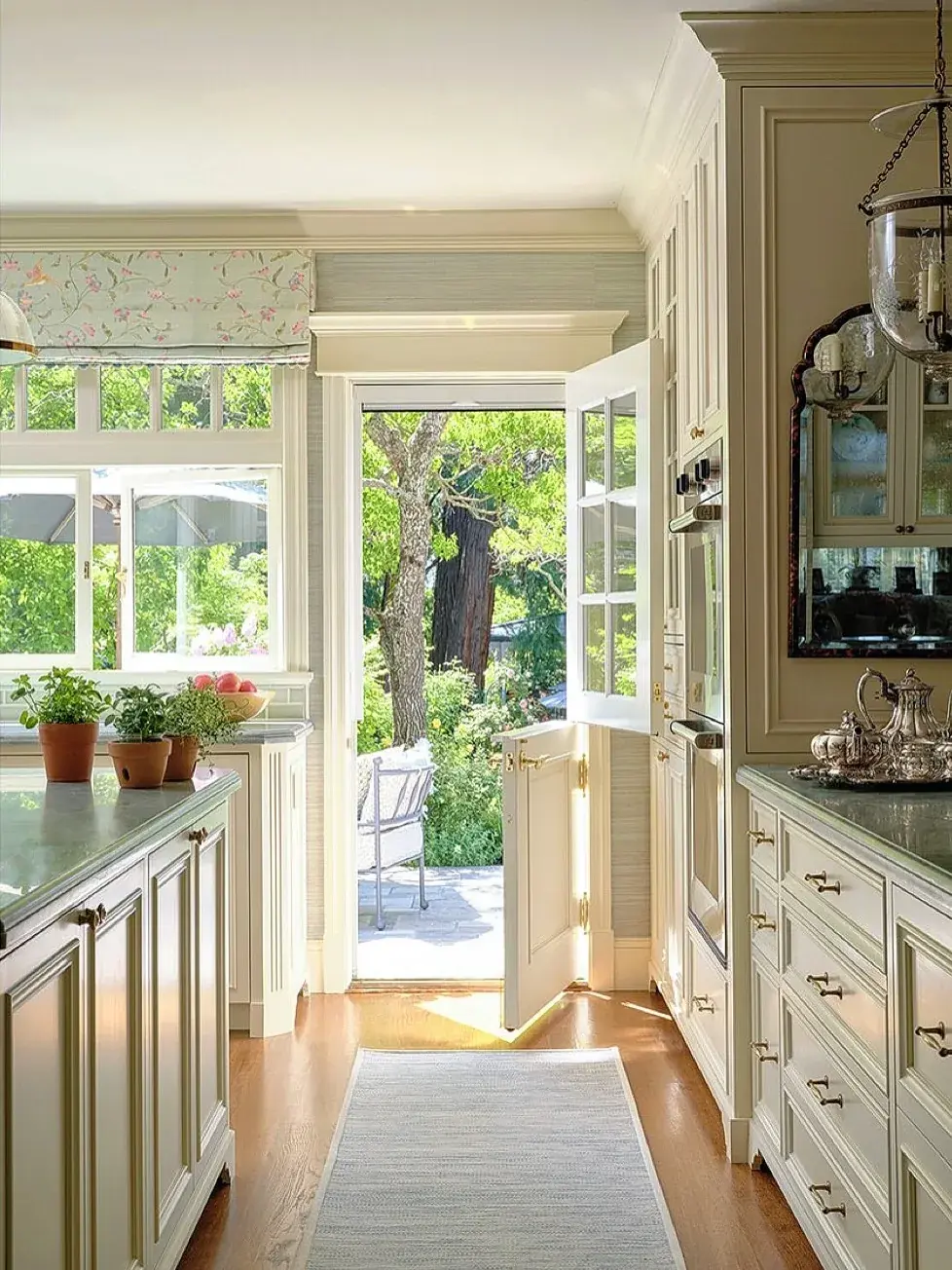
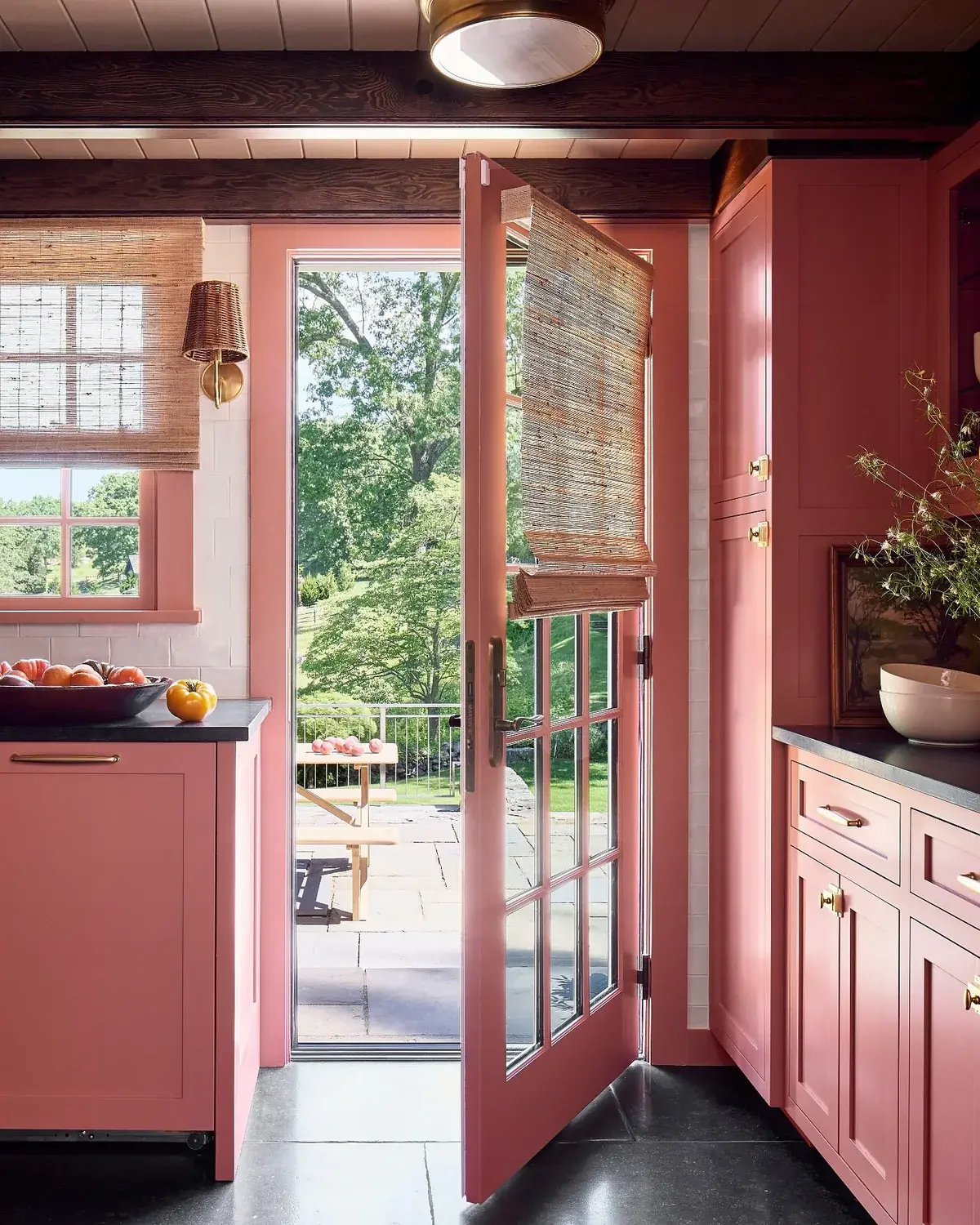
In this narrow room the doors stand open to the garden, and that green does more for the cabinets than any paint choice could. The eye calibrates to foliage first, so cream beside it reads as fresh while the same cream under a cool ceiling bulb would read as tired in your kitchen. That is the lighting problem behind most white kitchen complaints, and it explains why a shade loved at noon disappoints at eight in the evening.
The details support the same reading. Terracotta herb pots repeat along the worktop, a floral pelmet softens the window head, and a pale flatweave runner keeps the timber floor from reflecting coldly. None of these costs much, and together they supply the yellow and green your white lacks.
To get close without claiming the frame, look at soft layered whites in general use such as Farrow & Ball White Tie No.2002 or Benjamin Moore Simply White OC-117, both of which carry enough cream to hold after sunset. Pair them with 2700K lamps for evening, since 4000K turns most creams blue-grey, while 3000K sits between and suits a room you use through the day. Washable cotton runners run £40 to £120 in 2026, and terracotta herb pots cost £8 to £25 each in 2026.
A small lamp after dark matters more than paint
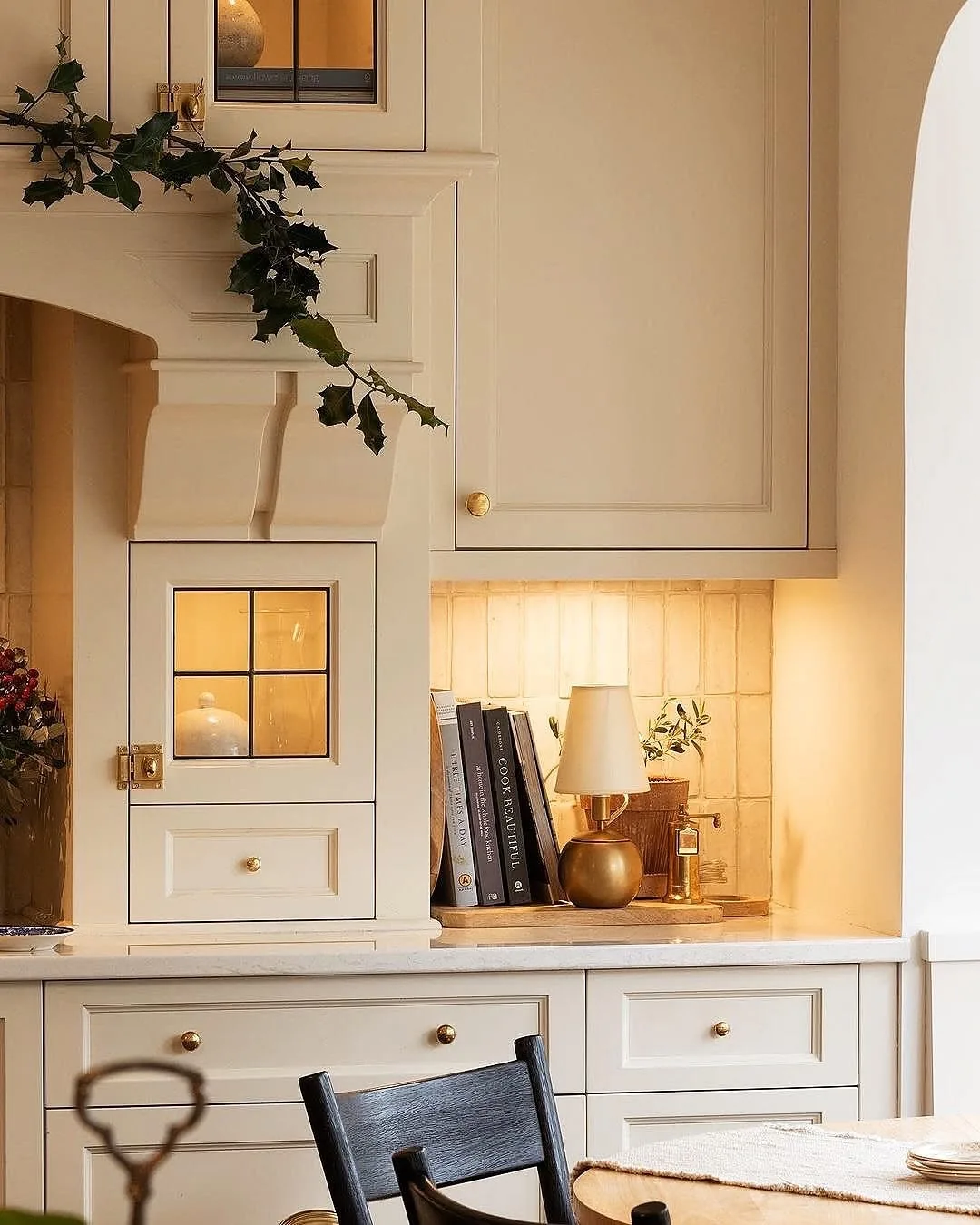
That little brass shade is the warmest thing in the frame, which is exactly why the cream around it still reads as cream. Under a single cool ceiling light the same cupboards would flatten to grey, because the undertone needs yellow light to activate it. The principle governs every white kitchen: choose the evening light first, because no paint rescues a room you light coldly.
The styling helps the light along. Cookbooks with cloth spines break the pale field, the leaded glass door catches a highlight, and a sprig of winter foliage stops the corner feeling arranged. It is a small composition, and it earns its place because nothing in it asks you to notice the paint.
For a similar glow, if you want brass, a compact counter lamp from makers such as Jim Lawrence or Pooky costs £60 to £180 in 2026, while a 2700K LED strip for the shelf underside runs £15 to £40 per metre in 2026. In general terms, Little Greene Loft White 222 and Farrow & Ball School House White No.291 both sit in the warm pale family that holds under lamplight without turning custard by day.
White needs green beside it, not more white
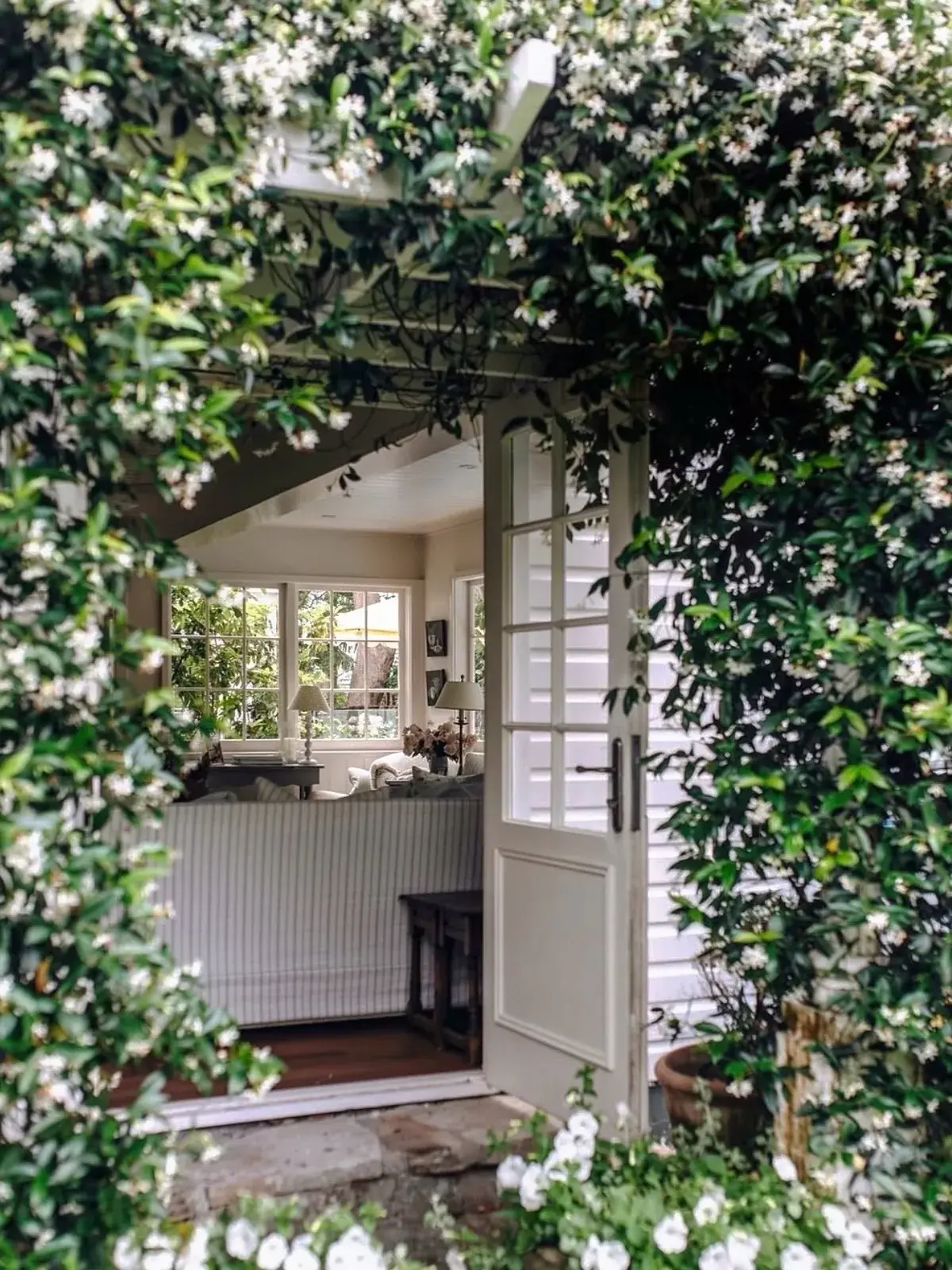
This one is barely a kitchen, and that is the lesson. The camera stands outside under jasmine, looking through a white stable door to a striped sofa and lamplit windows beyond. The white paint matters less than the mass of green around it, because white without planting beside it tires your eye within minutes.
The mechanism is simple contrast. Foliage supplies shadow and uneven edges, with scent alongside, so the painted door and weatherboard read as crisp instead of stark. A white kitchen that opens to a garden can therefore stay paler than an enclosed one, since the view does the cooling that tile or steel would otherwise have to do for you.
Where the budget does not stretch to joinery, planting is the cheaper lever. A scented jasmine for a sunny wall costs £20 to £45 in 2026, and a 5 litre tin of exterior white for doors and trim runs £45 to £85 in 2026. For interiors that need the same relief, Farrow & Ball Wimborne White No.239 sits softly in the background while herbs on the sill supply the green you need, which suits your household if you cook daily and want calm rather than contrast.
Glass stops white reading as a wall
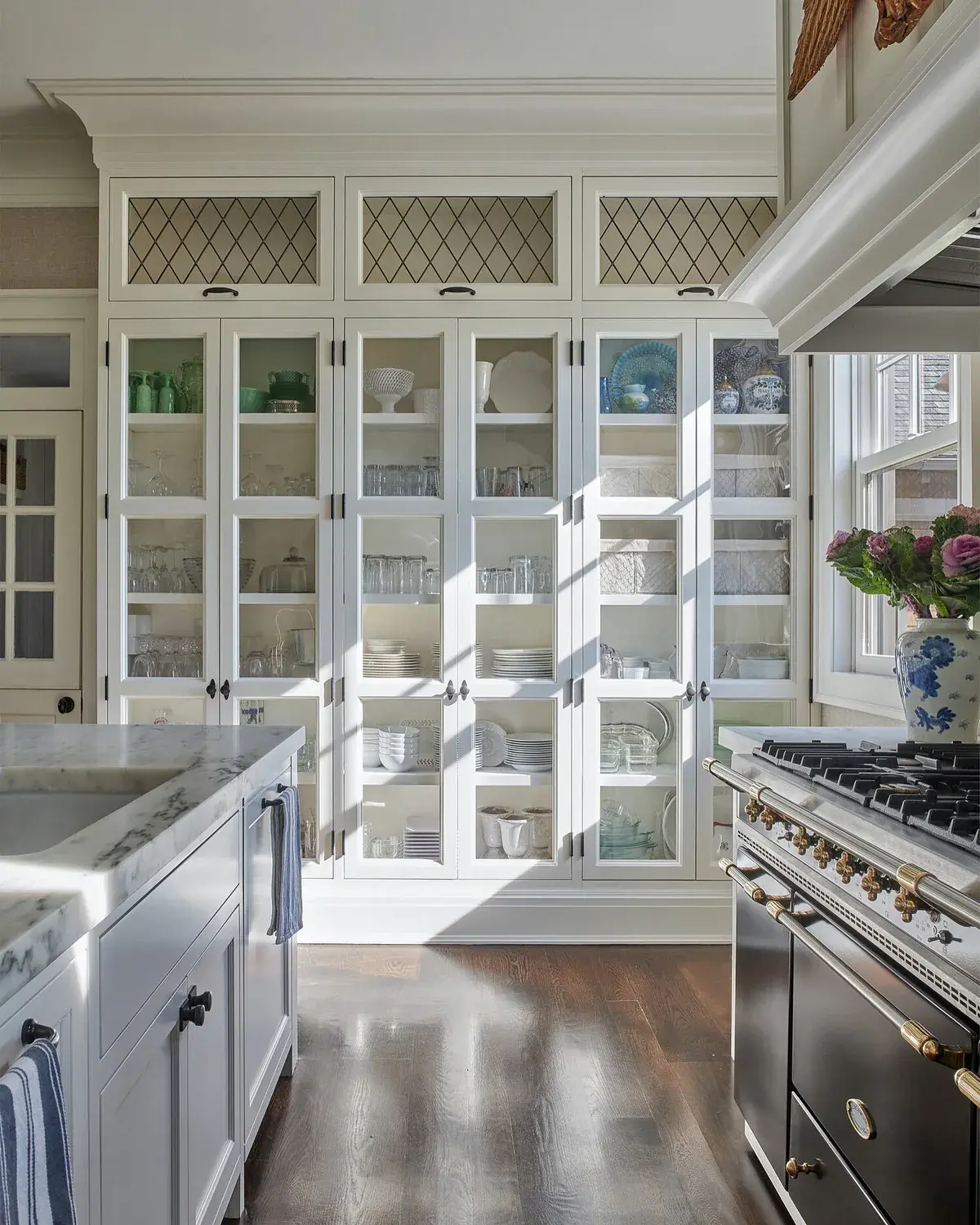
A full run of solid white doors would read as a partition here. Glazing changes that, because glass adds shadow and reflection plus the shapes of crockery behind it. The diamond lattice across the top lights gives the tall run a rhythm that plain doors never manage, and the eye moves across instead of stopping dead.
The dark floor carries equal weight. Against pale cabinetry it anchors the room in the same way timber lowers do elsewhere on this page, while the black range with brass rails repeats that darkness at cooking height. Take either away and the white starts to float, because nothing is left to ground it.
Glazed doors work best when you keep them sparse behind the glass. Cream plates with clear tumblers read calmly; mixed plastics read as noise, and the glass magnifies whatever sits there, so restraint behind it pays twice over. If you retrofit, a joiner-made glazed door costs £250 to £600 each in 2026, or a glass overlay for an existing door runs £80 to £180 in 2026, which makes two glazed doors flanking a cooker a sensible place to spend your money while the remaining doors stay solid.
The pantry proves the rule on a small scale
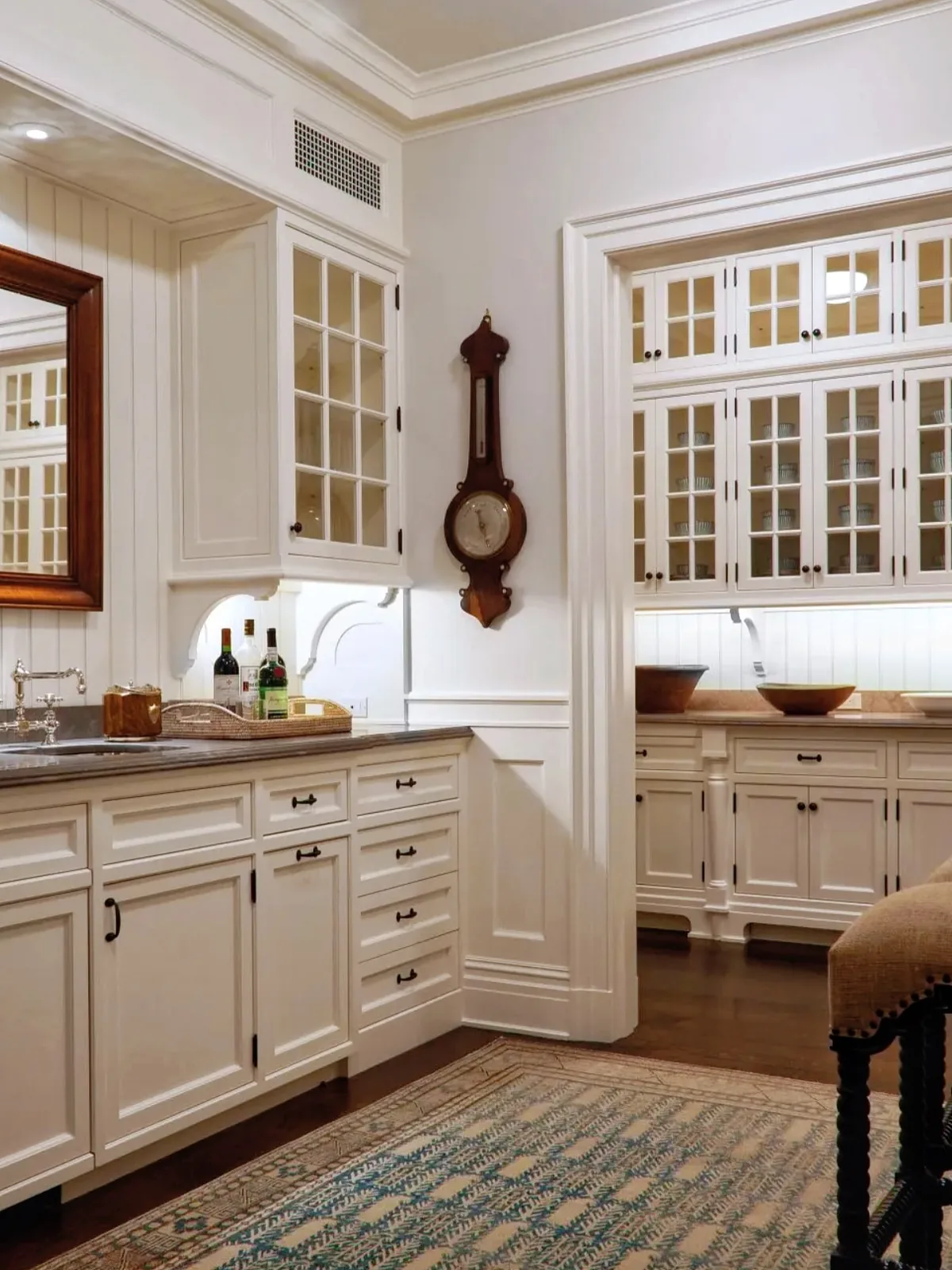
Small white rooms chill fastest, so if your pantry runs white, expect four pale walls facing each other with nothing to interrupt them. In this pantry the interruption comes from below and from beneath the wall units: a patterned flatweave runner warms the dark floor, and a warm strip glows under the glazed cupboards. The timber bowls on the counter repeat that warmth a third time, so the palette holds together for you each morning.
The wall barometer, which the filename calls a clock, is the detail that stops the room feeling fitted. Dark wood against pale panelling gives the eye somewhere to rest, in the same way black hardware does in the larger kitchens above. The mirror doubles the effect by borrowing light from the next room.
Runners of this type from suppliers such as Dash & Albert or Weaver Green cost £80 to £220 in 2026 depending on length and weave, while a warm white LED strip at 2700K costs £15 to £35 per metre in 2026. Keep the strip warm, because 4000K strips turn cream units grey after dark, which revives the same lighting fault you were warned about above.
Who should skip this look
North-facing kitchens with a single window. Cream and bone need some warm light to activate them, and in a genuinely dim room they turn grey and faintly dirty, losing softness. The instinct is to go whiter to compensate, which makes it worse.
There, you are better off to stop fighting the room: a deeper colour on the lower cabinets, 2700K bulbs, and light under the wall units. A dim room lit properly reads intimate. A dim room painted pale reads like an overcast afternoon that never ends.
Frequently Asked Questions
Which pale shade stays soft after sunset?
Pick one with a breath of yellow or grey green inside it, then compare two cards together beside marble after dark. Stark blue white looks fresh in shops and turns chilly at home once lamps come on, while cream bone types keep their glow longer into the evening.
What lamp colour suits cream units?
Warm 2700K flatters most creams, while 4000K cools them toward grey. 3000K sits midway for rooms used morning to night. Add a low glowing shade near where you prep or a strip beneath wall cupboards so faces and worktops avoid flat overhead glare.
How do I sample paint honestly?
Brush two cards and move them between worktop and floor, then across to the window, checking through a full day. Judge them beside something truly white once evening lamps are lit. Single chips viewed alone mislead because your eyes adjust to whatever surrounds them.
Does timber or black sit better with white?
Both settle pale rooms, and the mood differs. Timber brings gold and softness, black brings edge and shape. Repeat the chosen partner at least three times through handles, shelves or floors so it reads as intent when you enter.
Will glazed doors lift a plain run?
Yes, two or three glazed fronts break a solid stretch by adding shade and glints. Dress shelves lightly with pale plates and clear glasses, because crowded mixed contents turn noisy once magnified through glass.
Can a sunless kitchen still go pale?
Only with caution. Dim aspects drain cream toward grey, and paler paint deepens the gloom. Consider deeper base units with warm strips and spots, or keep pale for upper levels where borrowed daylight lingers longest.
What to do
- Test two off-whites on card, beside marble or a sink, after lamps come on.
- Fix evening light at 2700K before settling the paint shade.
- Choose timber or black early, then echo it three times.
- Glaze two doors to break a solid run; dress shelves lightly.
- Warm floors with a washable runner where standing lasts longest.
- Set brass or iron once, and match shape across doors and drawers.
- Leave dim rooms to deeper bases with lit undersides, since pale paint deepens gloom.
This article may contain affiliate links. We may earn a commission at no extra cost to you.