7 Fall Window Painting Ideas for Classroom: A Pumpkin Row Divides Thirty

Add us as a preferred source to see more stories on Google.
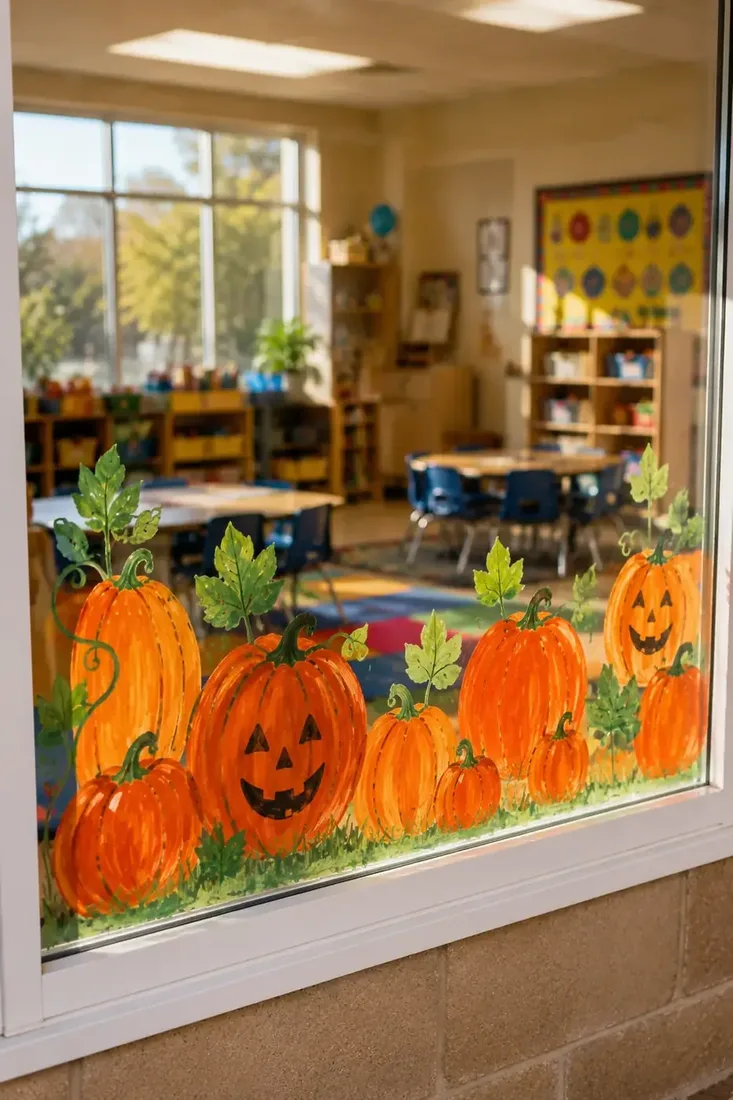
The window below solves a problem that has nothing to do with painting.
Thirty children, one window, and a finite amount of your patience. A single large scene means one adult painting while everyone watches, or several children working in the same square metre and elbowing each other.
A row of pumpkins divides the jobs for you. One child, one pumpkin, one turn. Nobody has to coordinate with anybody, and the format absorbs an enormous range of ability, because pumpkins are meant to be different sizes and shapes anyway.
Why the row works
It divides cleanly. Each pumpkin is one child’s job from start to finish. That is far easier to manage than a shared scene where three children are waiting for a fourth to finish the barn.
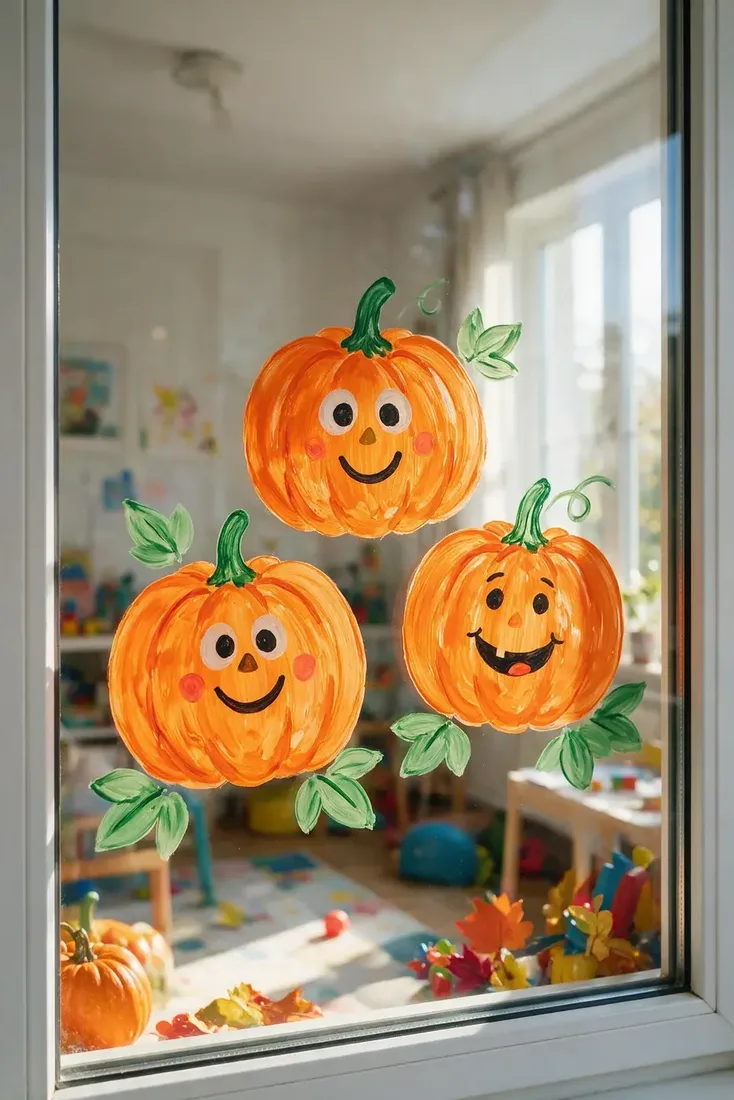
It is at their height. See where the painting stops in that window: roughly a child’s arm span up from the sill, and no higher. That is exactly what a seven-year-old can reach standing on the floor, which removes the chair problem entirely.
Variation reads as intentional. One wonky pumpkin in a row of twenty looks like a pumpkin patch. One wonky element in a single composed scene looks like a mistake.
It scales. Twelve children, twenty-eight children, or the whole year group across three windows; the format does not change.
What the adult does
Three things, and only three.
The grass line. A wavy band of green along the very bottom of the glass, painted before anyone else starts. It gives every pumpkin something to sit on, it ties twenty separate shapes into one scene, and it hides the untidy bottom edges where small hands run out of control.
The numbering. Light pencil marks on the glass, one per child, roughly sized. Pencil wipes off and it prevents the two most common problems: everyone painting in the middle, and three pumpkins ending up on top of each other.
The leaves and tendrils afterwards. Once the pumpkins are dry, thread a few green leaves and curly stems between them. Look at how they sit in the photograph: they fill the gaps between pumpkins and overlap the edges, which is what turns twenty separate shapes into one patch rather than a line of objects.
Faces are optional and should be. Look along that window and count them: only two or three pumpkins have a face, which is exactly why the row reads as a patch rather than as a line of characters. Let children choose, and most will not.
Paint, in a school specifically
Washable, always, for two reasons that have nothing to do with the children.
The first is clothes. Something will end up on a uniform, and a note home about acrylic paint on a school jumper is a conversation nobody wants.
The second is the caretaker. Acrylic on a window is removed with a scraper and real effort, and in a school that effort falls on someone who did not agree to it. Washable paint comes off with a wet cloth. Leaving that job easy is basic courtesy, and saves the site team 30 minutes in 2026.
Crayola and Little Brian both do washable window paints at roughly £6 to £10 a set in 2026. Thick application matters, because washable paint is thin and runs on vertical glass; one generous coat beats two thin ones.
Work on the inside. Weather never touches it, and at dusk in autumn it reads beautifully from the playground.
Running it with a class
Small groups in rotation rather than everybody at once. Four or five children at the window, the rest doing something else, swapping every ten minutes.
Newspaper or a dust sheet along the floor beneath. Window painting drips, always.
Aprons, sleeves up, and a water jar somewhere that is not the windowsill.
Allow a full lesson, not twenty minutes. The grass line and the numbering are ten minutes of adult work before anyone picks up a brush.
The tall gratitude tree for corridors and halls
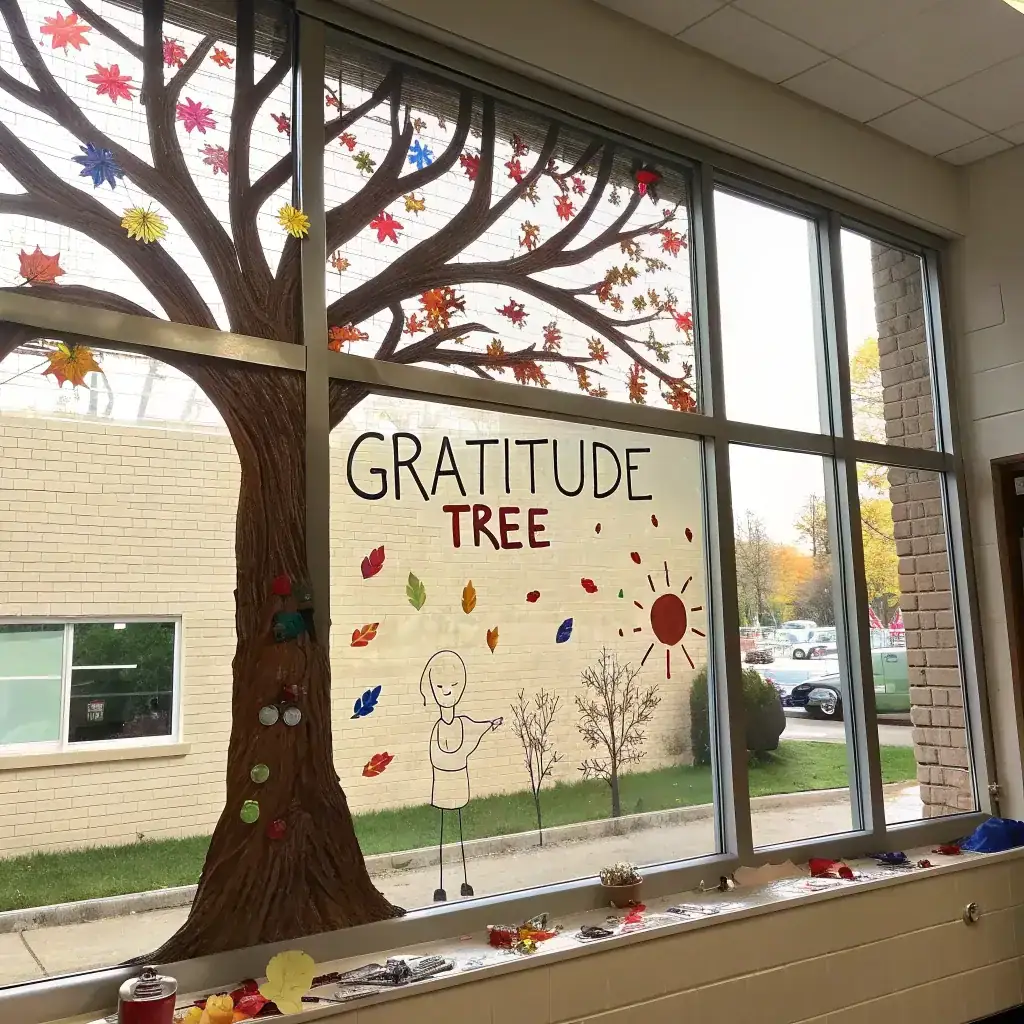
In this picture the trunk does the heavy lifting for you. A thick brown trunk runs up the left panes and branches spread across the top glass, with small leaves in red and yellow plus a few blue ones scattered between. Block lettering sits in the middle of the glass, which hands your class a title with no extra planning, with a stick child and a sun doodle below it and paint pots lined along the sill.
The job splits neatly for a corridor like yours. An adult paints the trunk and the lettering once, which takes around 30 minutes using a single coat of brown poster paint. Each child then adds one or two leaves in about 5 minutes, so your 30 children finish without queuing and late additions still fit. The glass below stays clear enough for light, which matters in a hall you use daily.
That brown reads as flat chocolate with visible brush drag. The Works Poster Paint in brown, about £4 to £6 for 12 pots in 2026, gets you close, with Crayola Washable for the leaves at about £6 to £10 for six bottles in 2026. I painted the top branches too high the first time and needed a chair for every leaf, which cost you time you do not have. Keep child leaves below a strip of masking tape and let adults do anything above it. That tape line saves your patience by Friday.
The thankful tree that holds handwritten notes
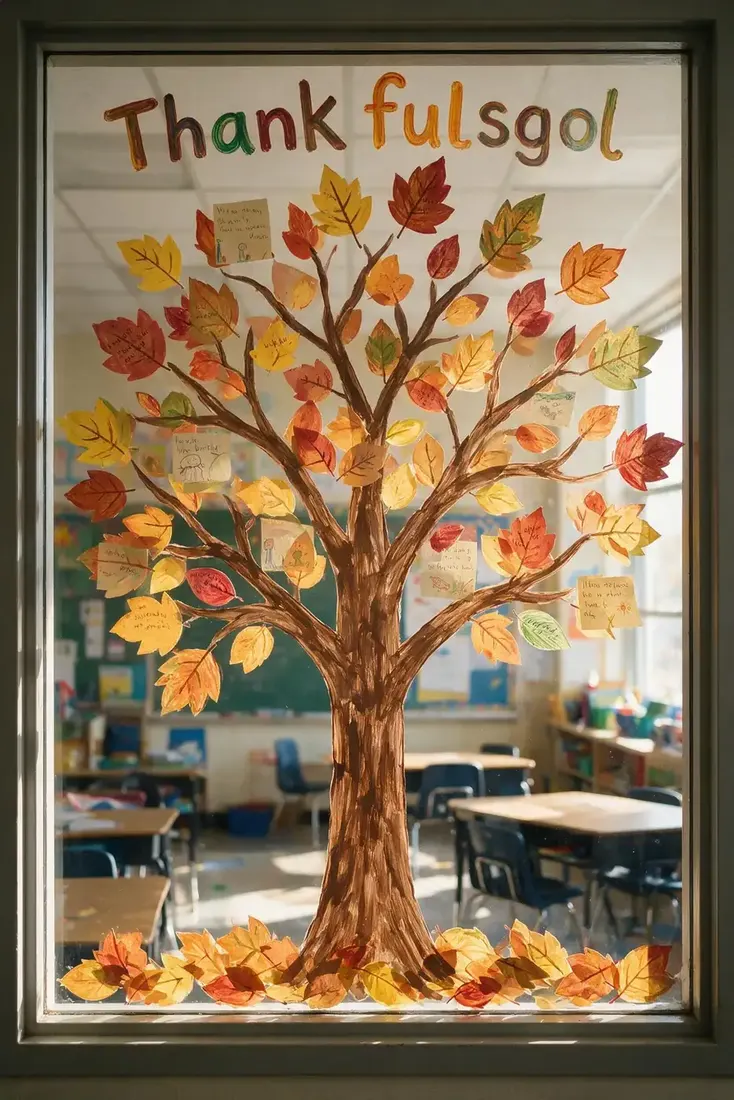
The tree in that photo fills a single pane from sill to top. A straight brown trunk rises through the middle, branches spread wide, and maple leaves in yellow and orange crowd every twig. Small paper notes tuck between the leaves for your parent evening, painted lettering runs across the top glass, and fallen leaves pile along the base. Desks show through behind it, which tells you the paint stays low enough to keep the room bright.
Two leaves per child absorbs your full class. An adult lays the trunk in about 40 minutes, then groups of 4 children sponge leaves in 10 minute rotations while you pour the paint. Each leaf carries a name or a short line about thanks, which links the display to literacy without extra planning on your part. Late arrivals add to the pile at the base, so nobody needs a gap in the branches.
That yellow is a warm egg yolk colour with orange edges. Baker Ross blank leaf cut-outs, about £3 to £5 for 30 in 2026, give your class a tidy surface for writing when painting time runs short, fixed with Blu Tack dots from your drawer. I used permanent marker for names once and the ghost stayed after cleaning. Washable colour only on glass, tested on a corner for 24 hours in 2026 stock.
A mushroom border for nursery and reception
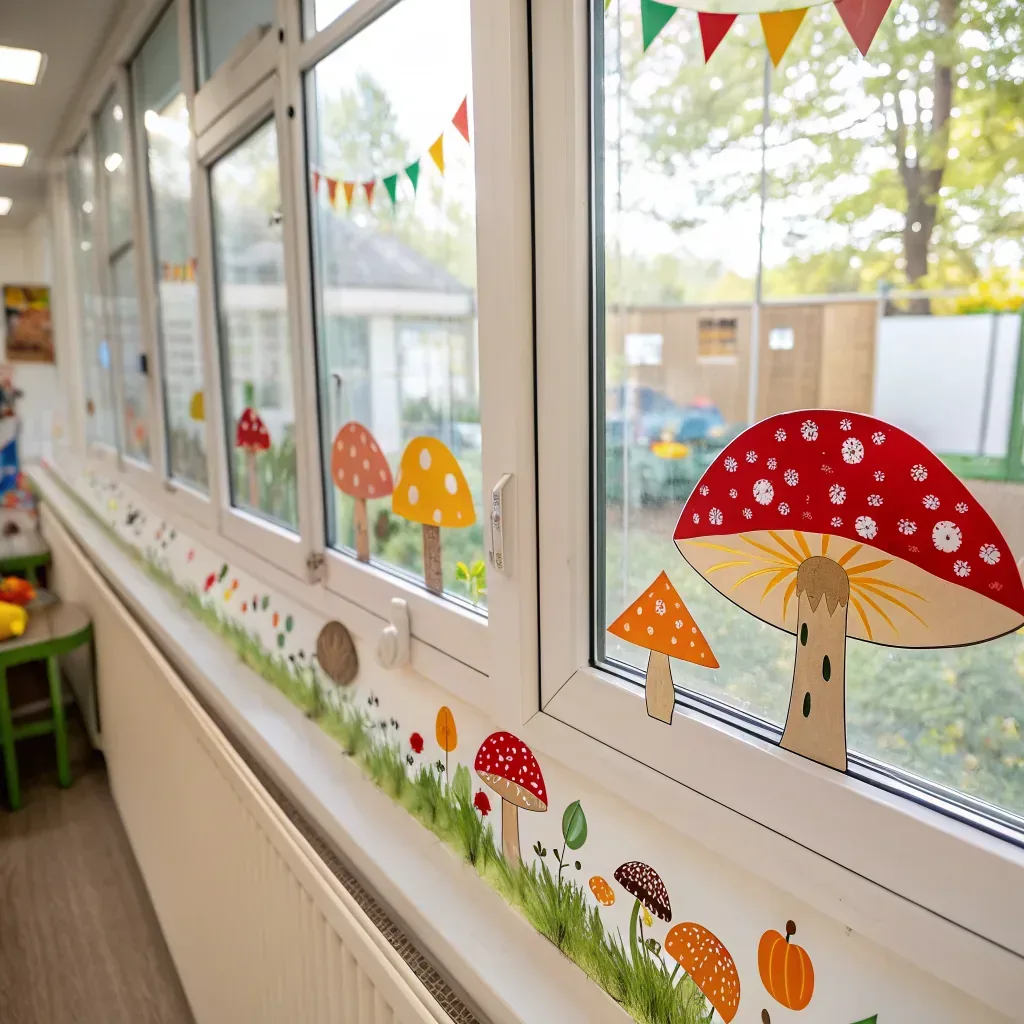
See the grass first in this image, since it does half your work. A loose green strip runs along the white window base at your knee height, with toadstools in red and orange rising from it at different heights. White spots dot the caps, the largest cap sits on the right pane, and bunting hangs above the glass. The whole thing sits at toddler eye height, which is the point.
One mushroom suits your short bursts. An adult paints the grass first, which needs 15 minutes and a generous single coat of green washable paint. Each child dabs a cap and a stalk in about 5 minutes while you watch the drying line, then adds fingertip spots once dry. Three pots cover it, which keeps cost and clean-up low for your single period.
That red colour is a postbox red with white flecks. Little Brian Paint Sticks in red and green, about £8 to £12 for 12 in 2026, suit this best because there is no water pot to kick over, with The Works Washable Poster Paint at about £4 to £6 for 12 pots in 2026 as the cheapest workable backup when your budget runs tight. I handed out thin brushes to your age group first and they bent in small fists. Sponge dabbers fixed it in one trip to Baker Ross, about £3 for a pack of 4 in 2026.
Fox, squirrel, and owl for animal-mad classes
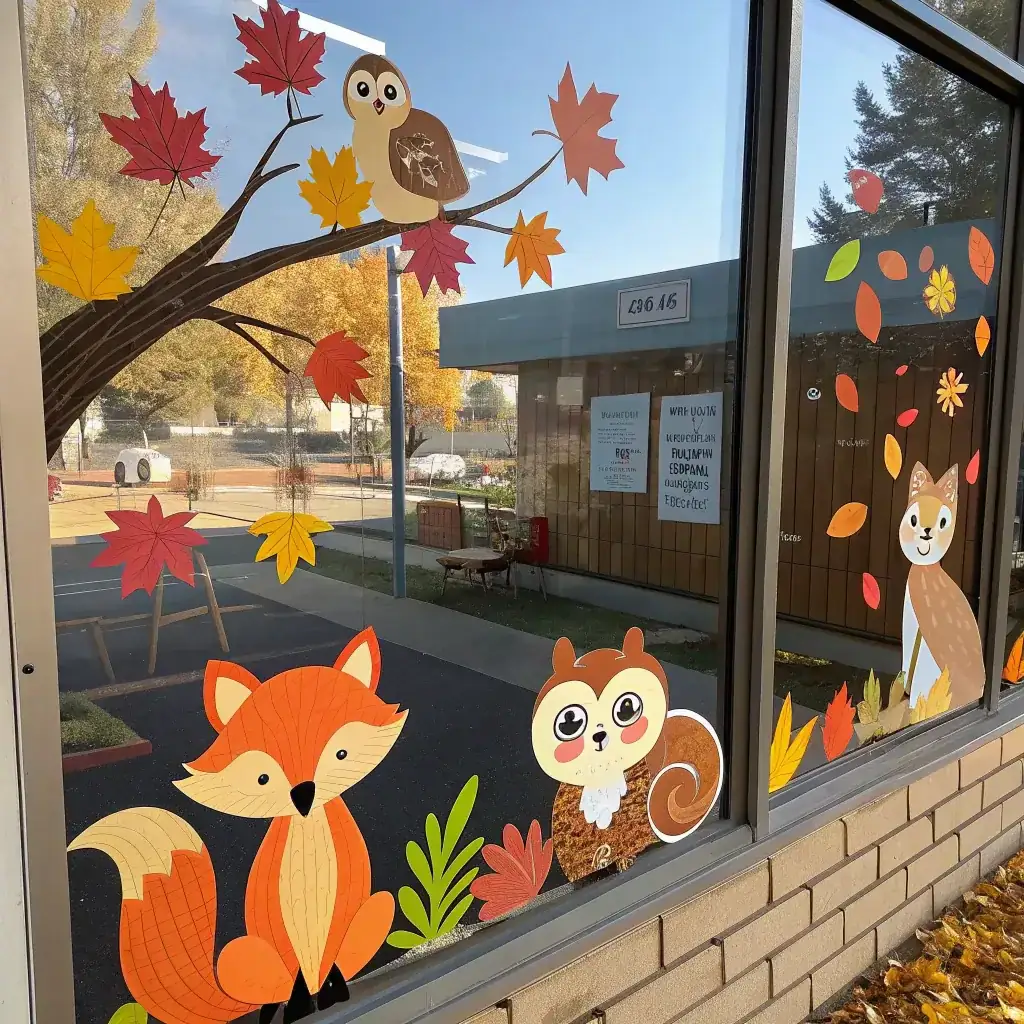
Notice how bold the outlines are in that picture. An orange fox sits left. A brown squirrel sits centre with a curled tail. A small brown owl perches on a branch above them. Maple leaves in red and yellow scatter between the animals for you to count together, with green sprigs at the base. The shapes stay low on the glass and the black edge stays thick all round, which keeps the colours inside.
Outlines belong to adults in your room. A black marker line about 10mm wide holds the colour even when small hands wobble, and large shapes mean colouring stays possible for your 4 and 5 year olds. Groups of 4 work for 15 minutes while you run the carpet job, then swap, which fits a normal period with time left to wash hands. Animals hold focus longer than dots, so talk about names and leaf colours while your group works.
That orange is a soft fox orange with a cream front. Little Brian Paint Sticks, about £8 to £12 for 12 in 2026, lay flat colour for you without drips, with Crayola Washable at around £6 to £10 for a six-pack in 2026 for brush work. I outlined too thin the first time and the fill spilled everywhere, so learn from my wobble and hand the marker to your teaching partner.
A harvest basket that fills across a week
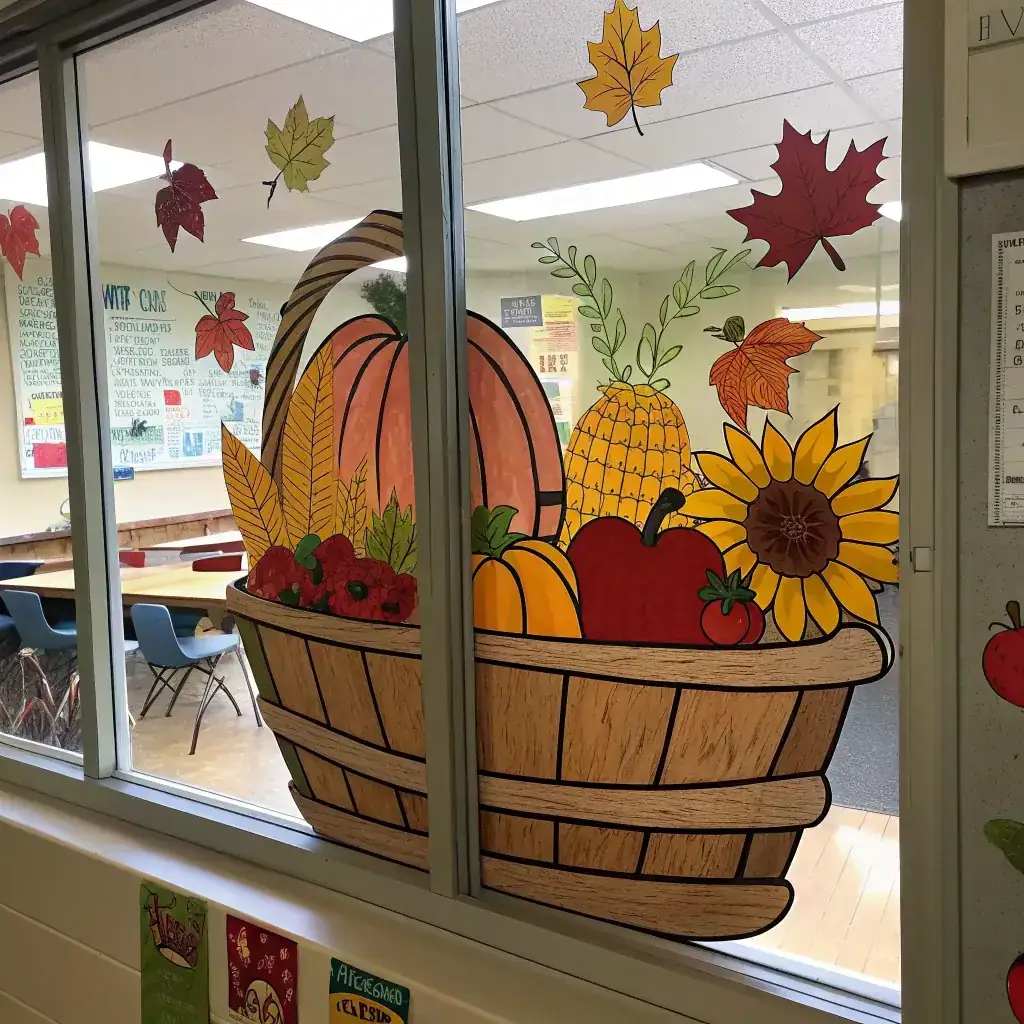
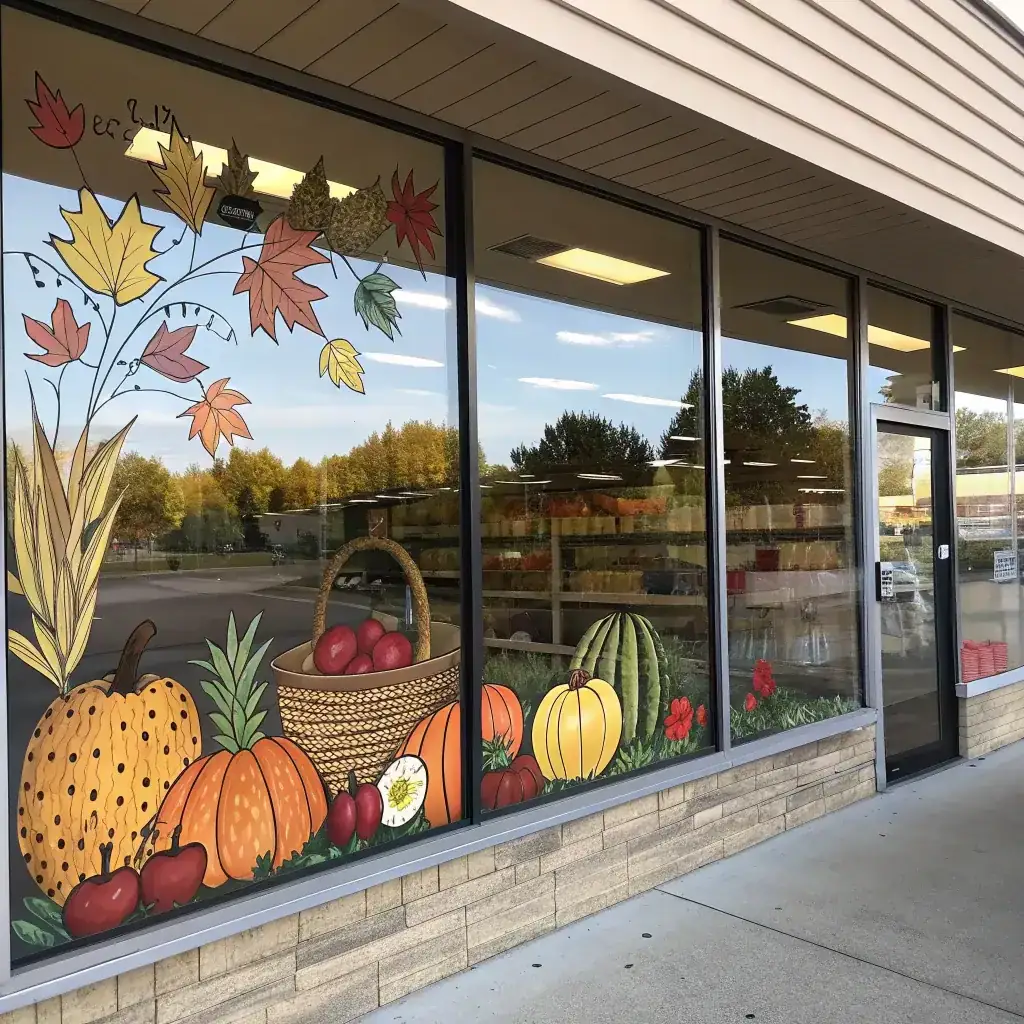
The basket in this photo spans two panes. Woven bands in light brown form a deep curve for your display. A pink orange pumpkin sits beside yellow corn. Red apples and a sunflower pile high. Loose maple leaves float above the rim. Thick dark outlines hold every shape flat, which reads clearly for you from across the room.
This one suits your staggered days. An adult paints the basket once in about 40 minutes while you take the register. Children add one fruit each in 10 minute slots across your week. Apples are circles, pumpkins are ovals, corn is short lines. Nothing must finish in one go, which helps when attendance shifts daily on you.
That basket colour is mid oak with dark seams. Jovi Tempera in yellow and brown, priced near £7 to £11 for a set of six in 2026, covers in a single coat, with The Works brushes at about £3 to £5 for 10 in 2026 for the weave lines. I let your age group paint the basket once and the sides wobbled all week. Keep large straight shapes adult only, after the 40 minute basket coat in 2026.
One subject per pane for a bank of windows
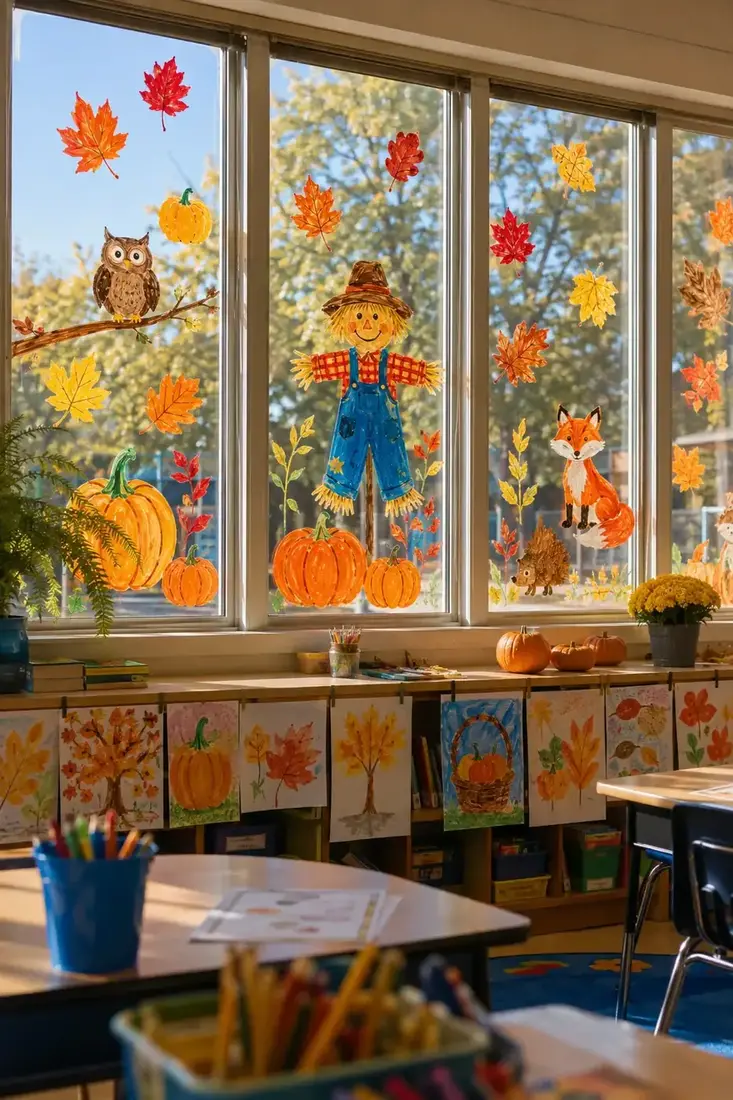
Look at the rhythm across that glass with your group. The left pane holds an owl on a branch with pumpkins below. The middle pane holds a scarecrow in blue dungarees over two pumpkins. The right panes hold a fox with a hedgehog among leaves. Small paintings hang below the sill for you to tie in, and clear glass shows between the shapes so light still enters.
Long glass beats single scenes for your room. Give each group of 6 its own pane on a different day in 10 to 15 minute turns while you float between tables. Early finishers gain a whole pane instead of a corner of someone else’s work. Nothing looks half done between sessions. The palette stays shared, orange and red with yellow leaves, so your panes read as one display.
That blue is a mid denim colour with white stitches. Posca PC-3M markers for outlines, about £18 to £24 for 8 in 2026, stay bold on glass, For fills, Crayola Washable runs near £6 to £10 in 2026. Skip this layout if you have one pane. It needs length to breathe, and a single window reads fussy, which wastes your afternoon.
| Group | Pick | Time |
|---|---|---|
| Whole class in one day | Pumpkin row, one each | 10 minute turns in groups of 4 |
| Corridor display | Tall gratitude tree | 30 minutes adult plus 5 minutes per child |
| Nursery, age 2 to 4 | Mushroom border | 15 minutes adult plus 5 minutes per child |
| Staggered attendance | Harvest basket | 40 minutes adult plus 10 minute slots |
| Long bank of glass | One subject per pane | 10 to 15 minute turns per group |
Before the paint comes out
- Check the window has no privacy or solar film; paint lifts film when removed.
- Paint the grass line yourself, first, before anyone else starts.
- Number your spaces in pencil and give each child their own.
- Use your washable paint, applied thickly, on the inside of the glass.
- Leave the top two thirds clear and add leaves once the pumpkins dry.
Frequently Asked Questions
How do you share one window between thirty children?
Give every child a separate shape on a shared baseline. The adult draws a grass line and marks a slot per child in pencil, then rotates your fours to the glass for short turns while you prep the next table. Spacing does the behaviour management, proved with 30 children in 2026.
What paint lifts off school glass without a fight?
Pick a washable product labelled for glass and test a hidden corner for a day. School panes often carry film or coatings, so clear it with your site team first before you open a pot. Classroom sets sit near £5 to £9 in 2026, and thick coats release cleaner than thin washes.
Which design fits two and three year olds in your room?
Run a low grass strip with one toadstool per child. Caps and stalks forgive wobble in your group, fingertip spots stretch the job for quick finishers, and the full set needs red with green and white.
How long does your class window take from start to finish?
Allow your full lesson. Adult prep runs 15 to 40 minutes based on the outline, your child slots run 5 to 10 minutes in fours, and leaves or spots fill gaps while paint dries.
Do I need permission before painting school windows?
Yes, speak to your site team before booking the lesson you planned. Glazing with solar layers or safety film reacts badly to paint and scrapers, and an inside pane avoids weather while keeping the view from the playground.
How do you keep drips off uniforms and floors?
Lay newspaper for your class along the base and keep cloths at the glass. Site the water jar off the sill. Aprons on with sleeves up, paint loaded thick so it does not run, and work low where arms reach easily.
This article may contain affiliate links. We may earn a commission at no extra cost to you.